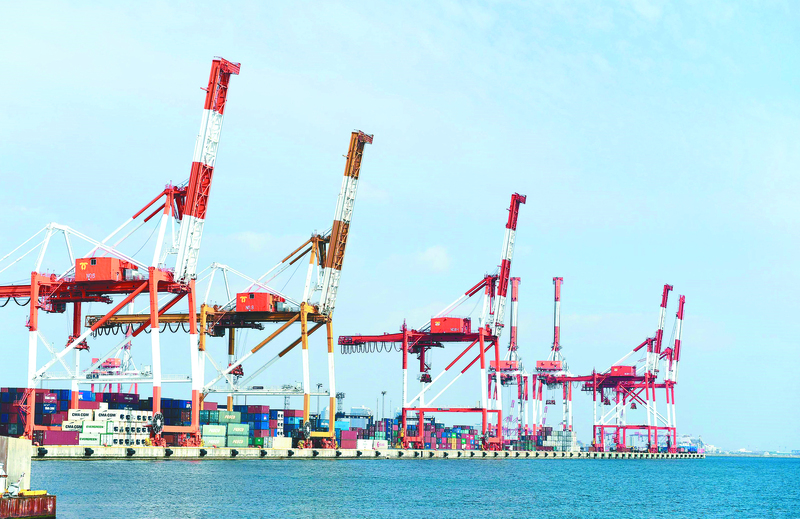
KOBE -- Giraffes play a leading role in the distribution of goods at Kobe Port -- not real ones but giant, red-and-white gantry cranes that use their long "necks" to load and unload container ships.
Seen in the morning or evening sun, these "giraffes of the sea" appear almost like they are walking in the savannah.
In mid-January, I joined a boat tour around Kobe Port for parents and children.
The children on the cruise were excited by the close-up views of sites such as Kawasaki Heavy Industries Ltd.'s submarine construction dock, the manmade Port Island, and the Kobe Ohashi bridge that connects the island to central Kobe.
When we approached the gantry cranes, they let loose with a huge cheer.
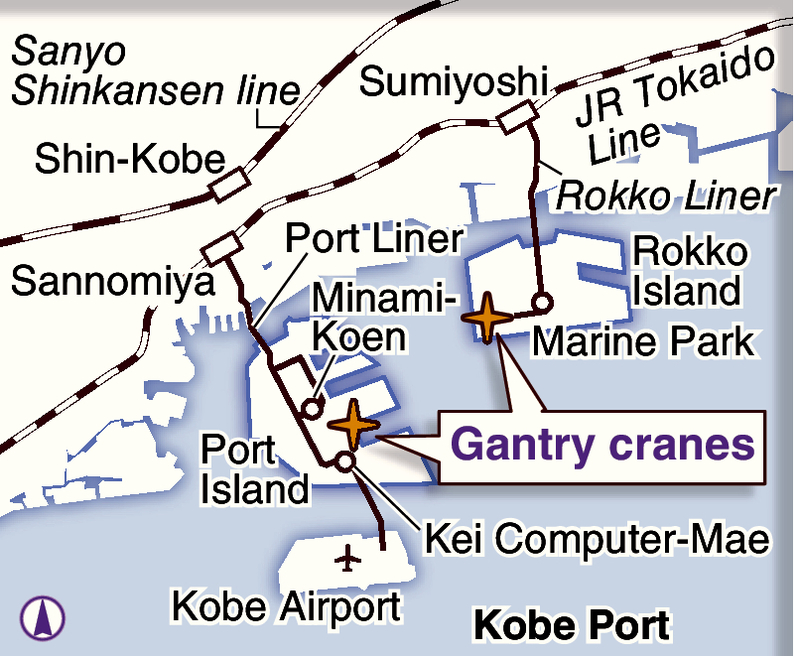
The gantry cranes' main habitats are on Port Island and Rokko Island. The largest of the cranes are more than 120 meters tall.
"They're huge, many times bigger than a real giraffe," said a 10-year-old elementary school boy, so amazed by the sight he forgot to press the shutter on his camera.
"The view from the sea is pretty good, eh?" our guide, Kiyoshi Morita, 64, director of general incorporated foundation Port of Kobe Japan, said with a smile.
These tours began in 2009, according to the Kobe city government. Being able to see the gantry cranes up close attracts many adult customers as well.
"We get more bookings every year," said Kenichi Yamada, 44, an assistant manager at the city's Minato general bureau.
The gantry cranes quickly grab containers while moving from side to side on rails.
At 49, Kobe Port had the most gantry cranes in the country last year, according to the Tokyo-based Japan Association of Cargo-handling Machinery Systems. That is more than the 44 cranes at Tokyo Port and the 38 cranes at Yokohama Port.
"They've long been a symbol of Kobe Port," said Tetsuya Shiraishi, 61, managing director of the association.
Their large number attests to the major role gantry cranes play in distribution.
Kobe Port opened in 1868, developing into a trading port. In 1994, it was No. 6 in the world in the number of containers it was handling (calculated by 20-foot containers).
However, the port's facilities were damaged in the 1995 Great Hanshin Earthquake. Compounded by an economic slowdown, Kobe lost its spot as Asia's premier international port to the one in Busan, South Korea.
It took until 2017, more than 20 years, for the number of containers handled to recover to pre-earthquake levels.
Branded goods popular as gifts
The image of gantry cranes standing proud under a blue sky is gaining notice as a new symbol for Kobe.
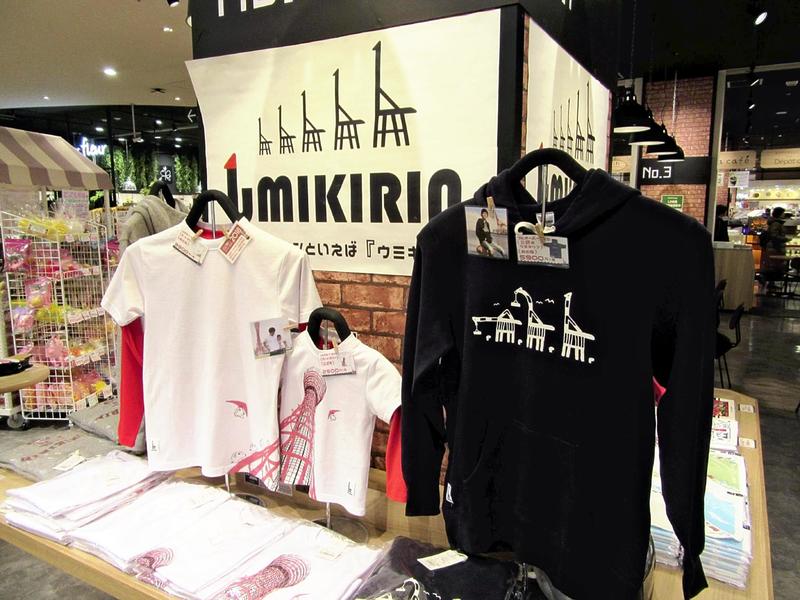
The apparel and accessory label UMIKIRIN, which means "giraffe of the sea" in Japanese, launched in February 2017.
"It's not a typical tourist souvenir, but something that has the essence of Kobe," said Kazuhiko Miyata, 51, a Kobe native who has worked at a major mail-order company.
The brand's T-shirts, sweatshirts and other products, bearing gantry crane and container designs, are popular as gifts and stylish casual wear.
"They haven't gotten a lot of attention, but gantry cranes are a symbol of the port city of Kobe. I want people to know more about their charm," Miyata said.
One of the designs has a crane with its neck (or arm) bent downward, as if it were bowing. A lowered arm means the crane is loading containers.
This design was added after a request from someone involved in the port, who said it is a good symbol to show the port is active. On the tour, many of the cranes we saw had their arms lowered.
The popular folk duo Yuzu has a song called "Akai Kirin" (Red giraffe) whose lyrics were written by duo member Yujin Kitagawa, which goes:
"The red giraffe in the crimson sky,
What is it thinking, what is it seeing?"
The sight of these enormous structures, which most people have never even touched, as if they were giraffes against the evening sun, is grandiose and gentle, and even a bit gloomy.
Kobe Port has existed for more than 150 years. With vigorous trade, its giraffe herd could grow even larger.
-- Access
Clusters of gantry cranes can be found at two spots in Kobe Port. The first can be found about 30 minutes from Sannomiya Station via the Port Liner, getting off at either Minami-Koen Station or Kei Computer-Mae Station and walking the rest of the way.
The second is on Rokko Island, which can be reached in about 30 minutes from Sumiyoshi Station on the JR Kobe Line or Uozaki Station on the Hanshin Railway Main Line, getting off at Marine Park Station.
Read more from The Japan News at https://japannews.yomiuri.co.jp/