Tower of human skulls in Mexico casts new light on Aztecs
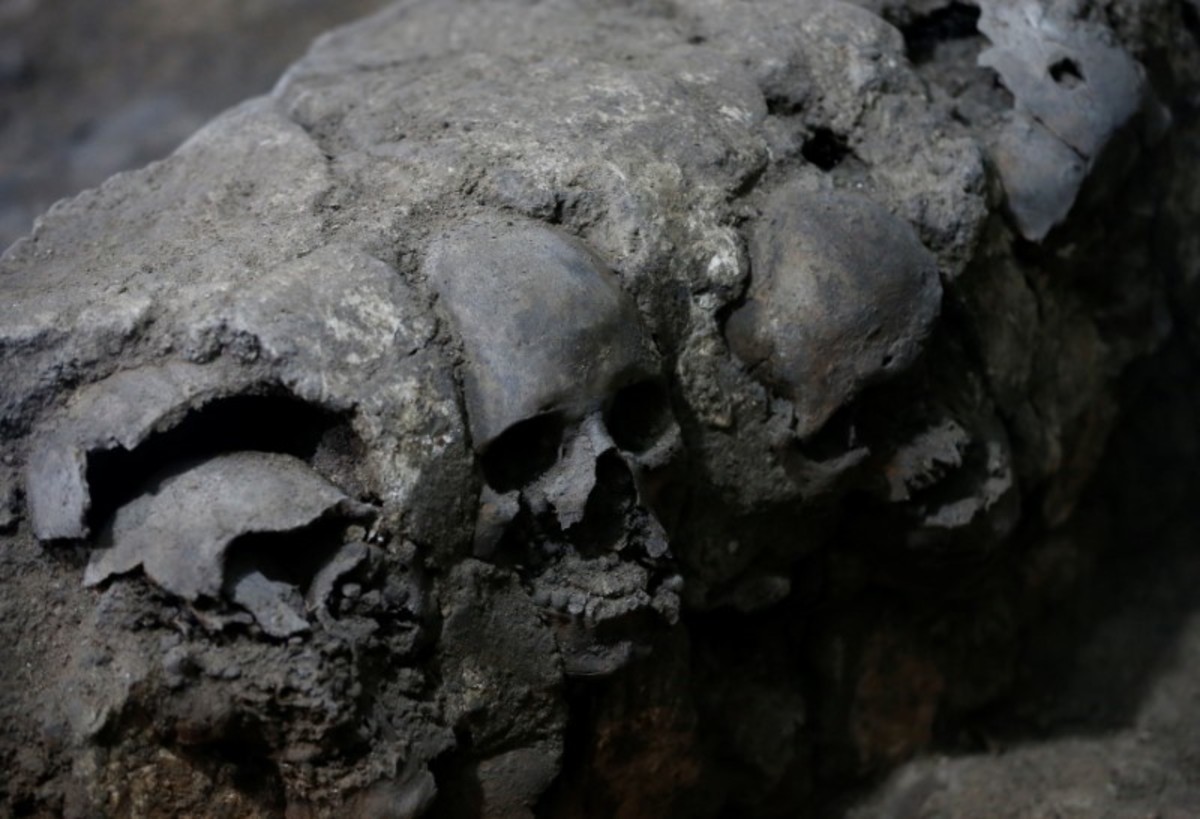
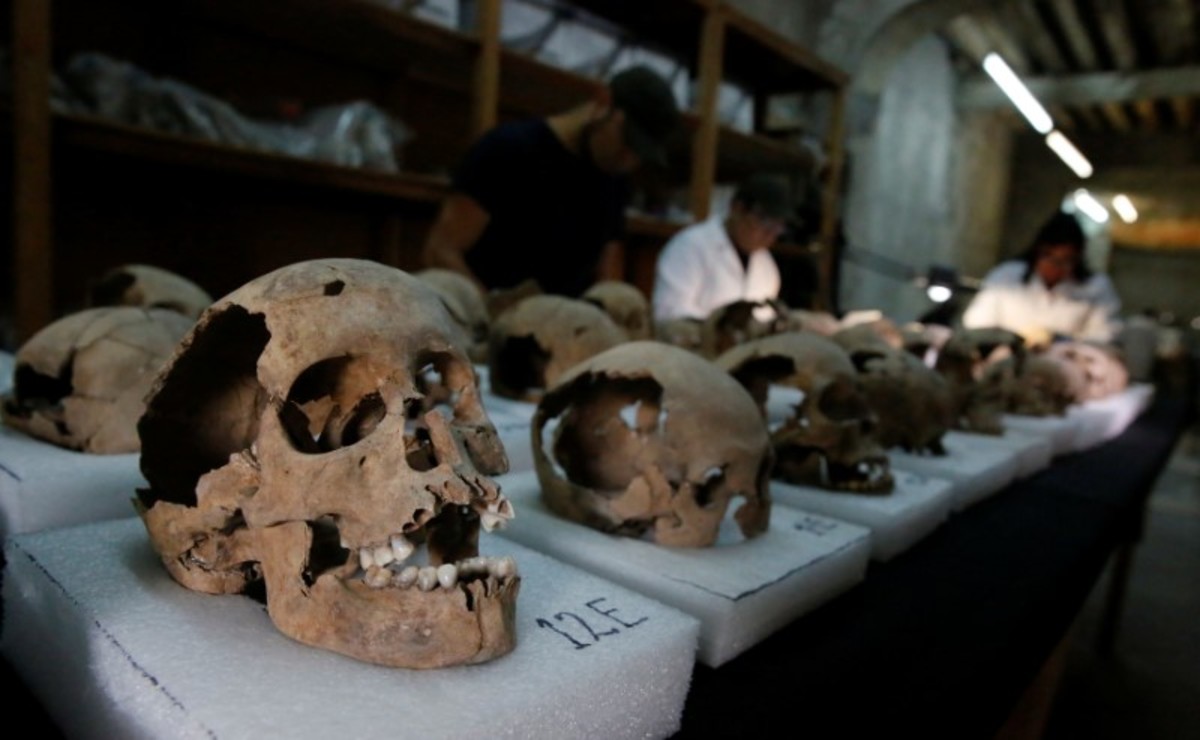
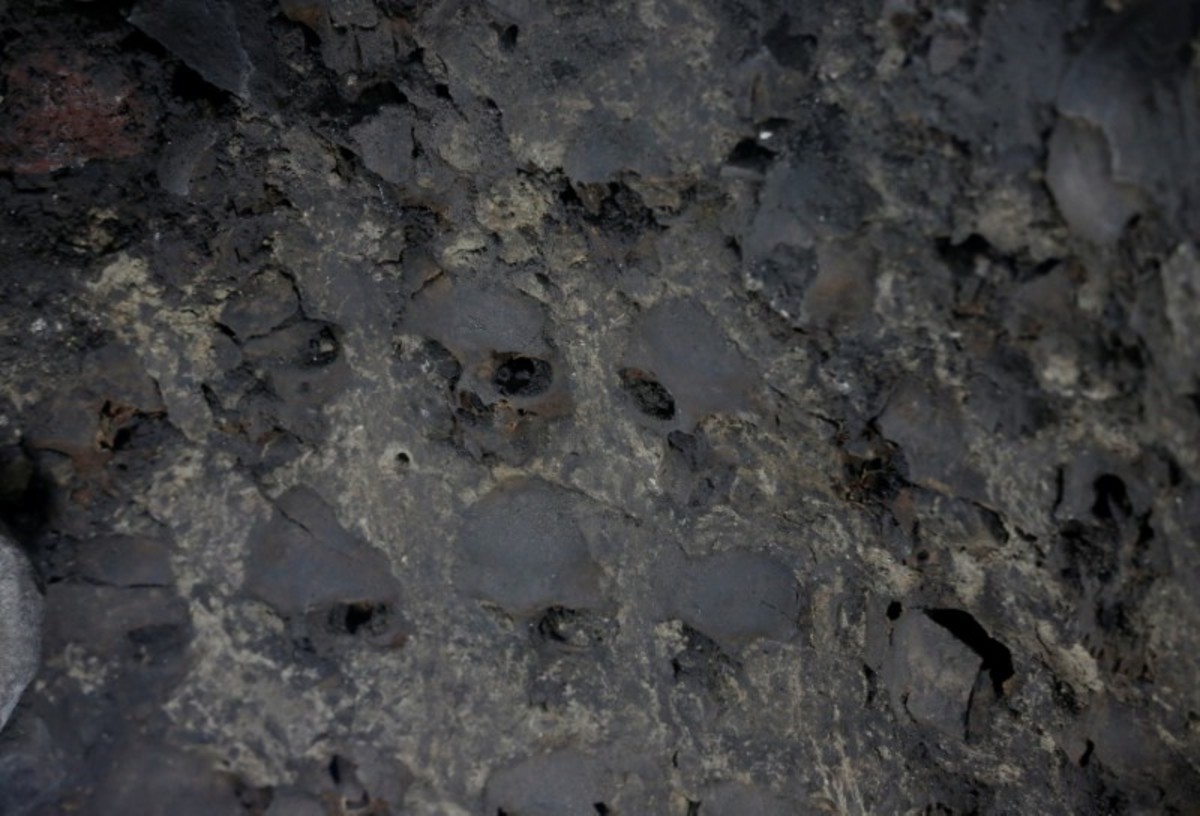
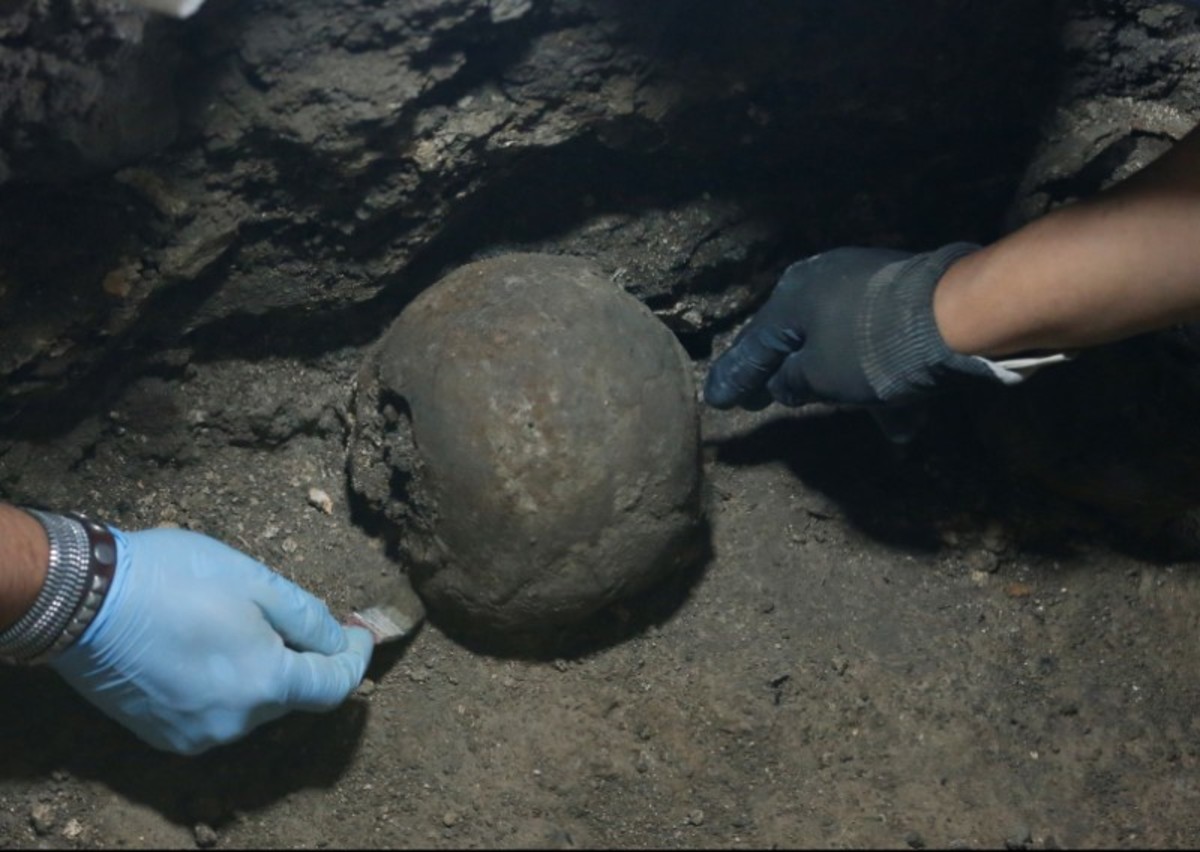
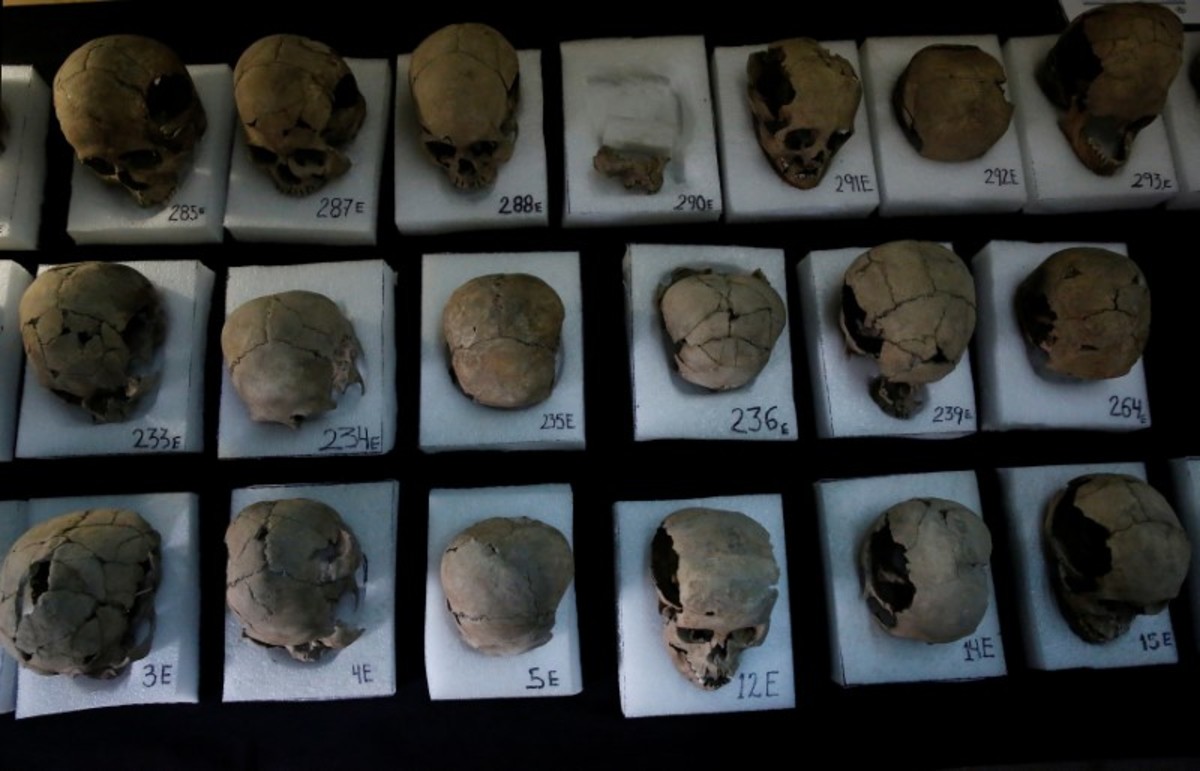
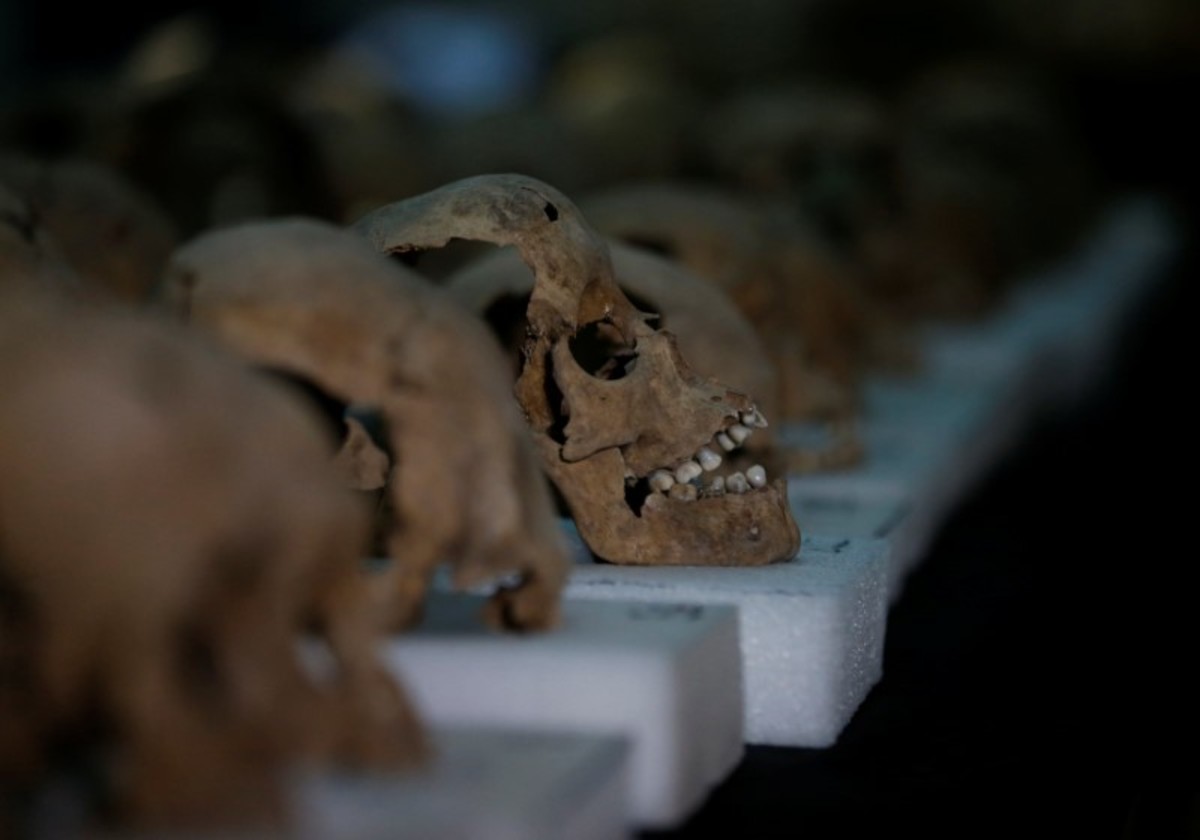
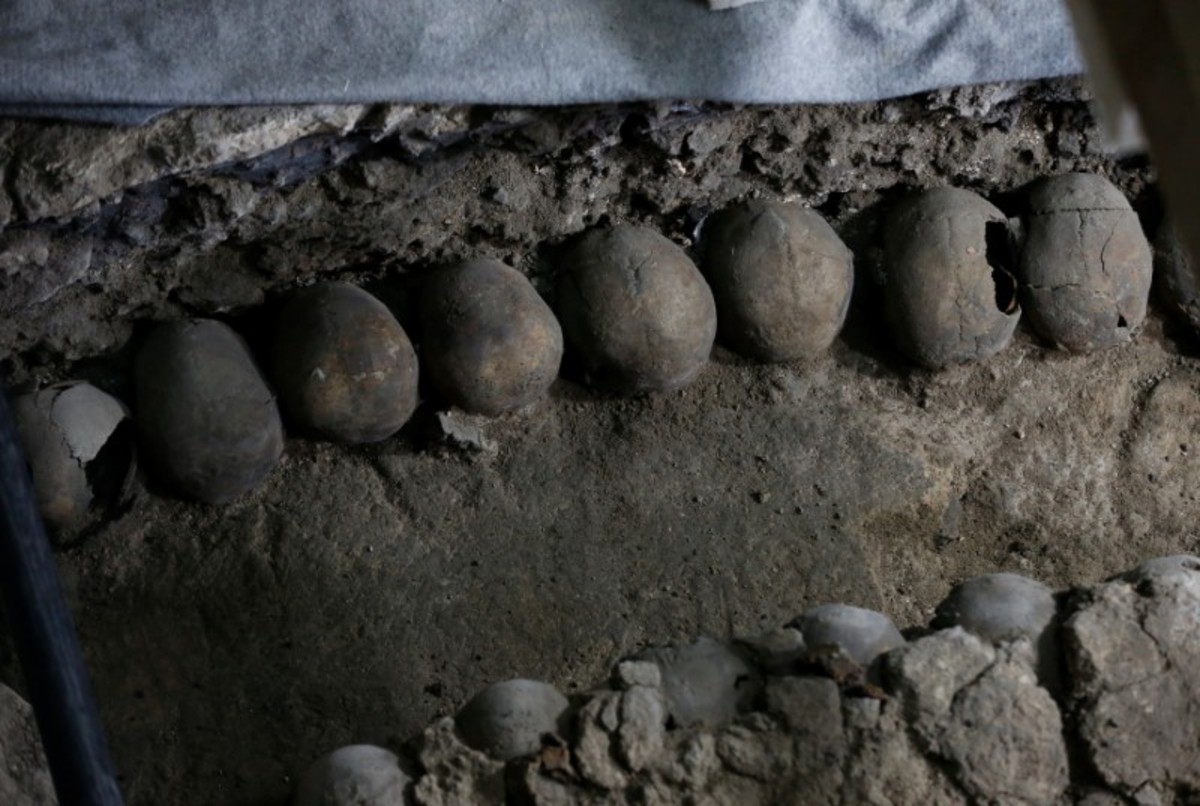
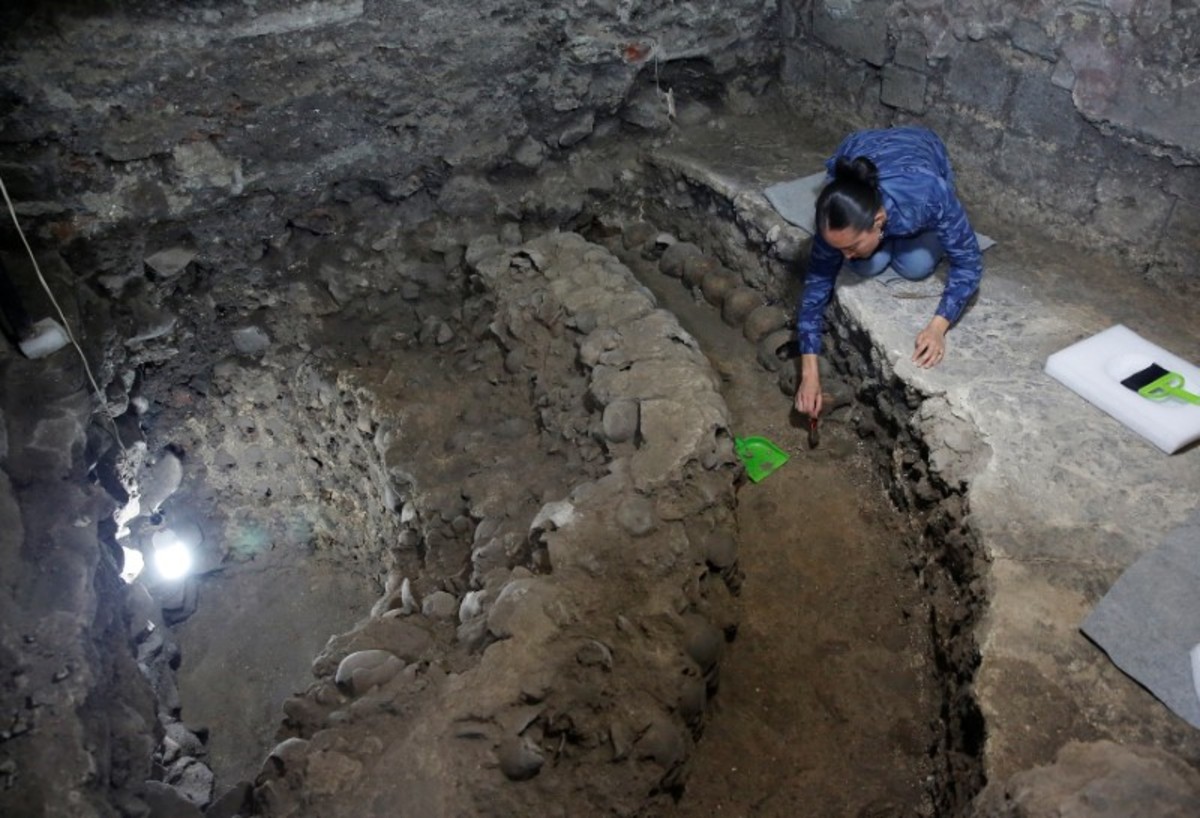
Skulls are seen at a site where more than 650 skulls caked in lime and thousands of fragments were found in the cylindrical edifice near Templo Mayor, one of the main temples in the Aztec capital Tenochtitlan, which later became Mexico City, Mexico June 30, 2017. REUTERS/Henry Romero
MEXICO CITY (Reuters) - A tower of human skulls unearthed beneath the heart of Mexico City has raised new questions about the culture of sacrifice in the Aztec Empire after crania of women and children surfaced among the hundreds embedded in the forbidding structure.
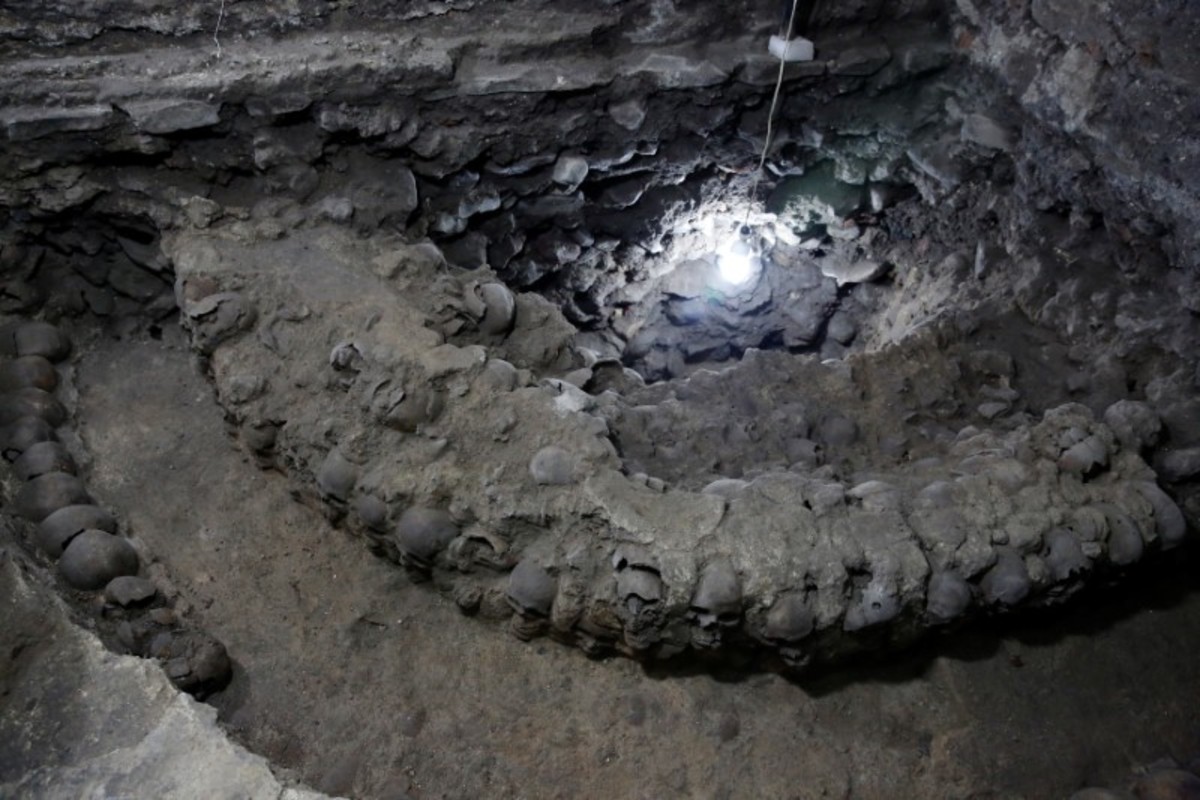
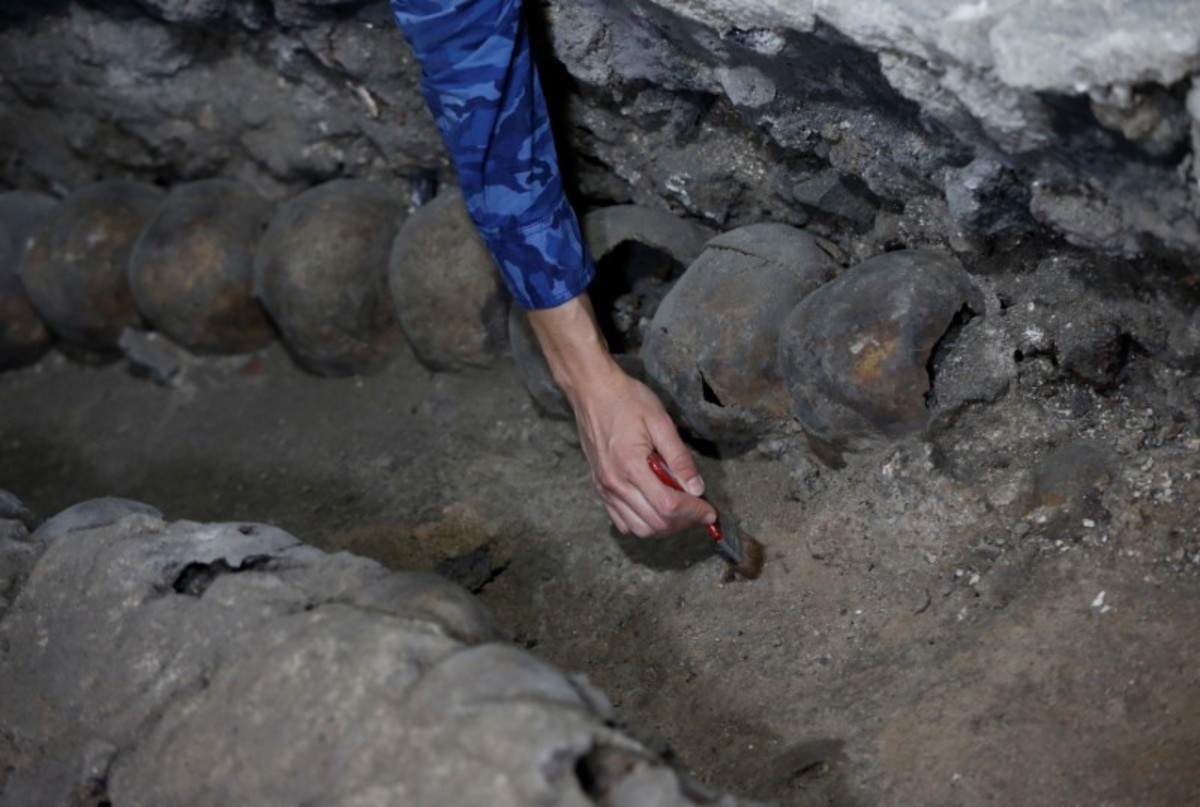
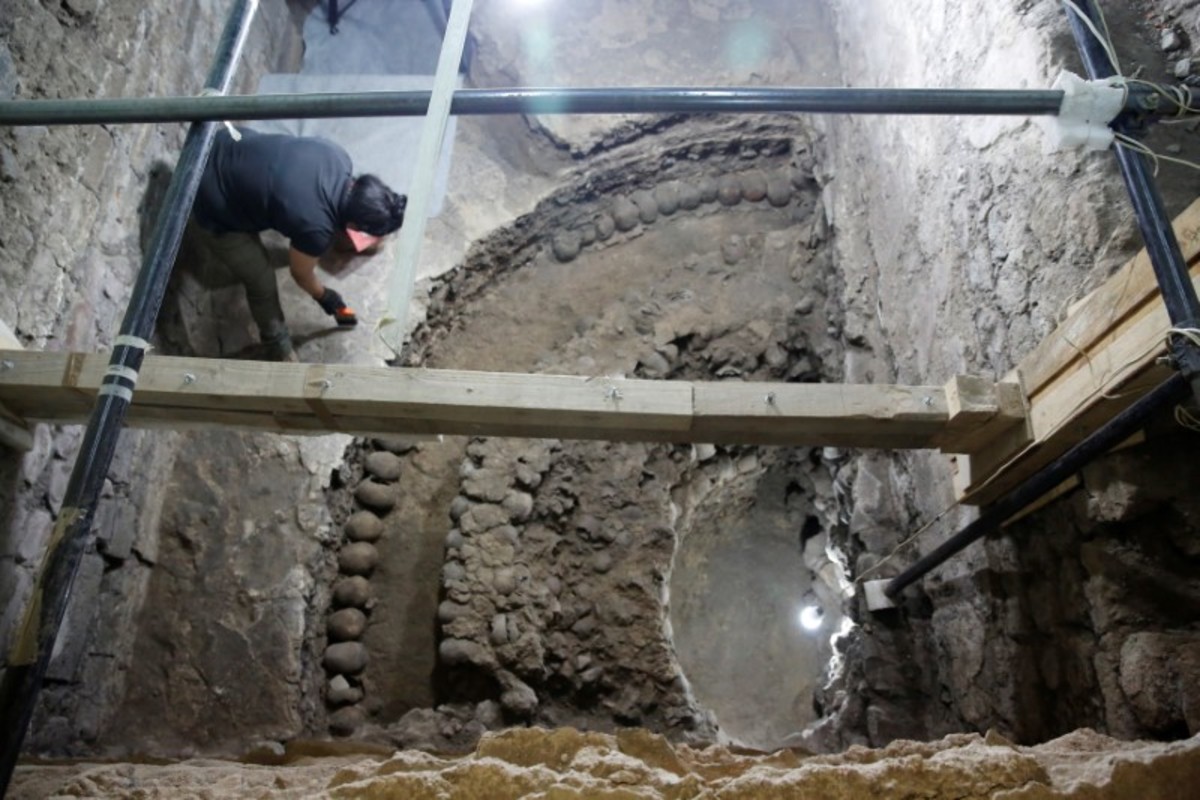
Archaeologists have found more than 650 skulls caked in lime and thousands of fragments in the cylindrical edifice near the site of the Templo Mayor, one of the main temples in the Aztec capital Tenochtitlan, which later became Mexico City.
Skulls are seen at a site where more than 650 skulls caked in lime and thousands of fragments were found, in the cylindrical edifice near Templo Mayor, one of the main temples in the Aztec capital Tenochtitlan, which later became Mexico City, Mexico June 30, 2017. REUTERS/Henry Romero
The tower is believed to form part of the Huey Tzompantli, a massive array of skulls that struck fear into the Spanish conquistadores when they captured the city under Hernan Cortes, and mentioned the structure in contemporary accounts.
Historians relate how the severed heads of captured warriors adorned tzompantli, or skull racks, found in a number of Mesoamerican cultures before the Spanish conquest.
But the archaeological dig in the bowels of old Mexico City that began in 2015 suggests that picture was not complete.
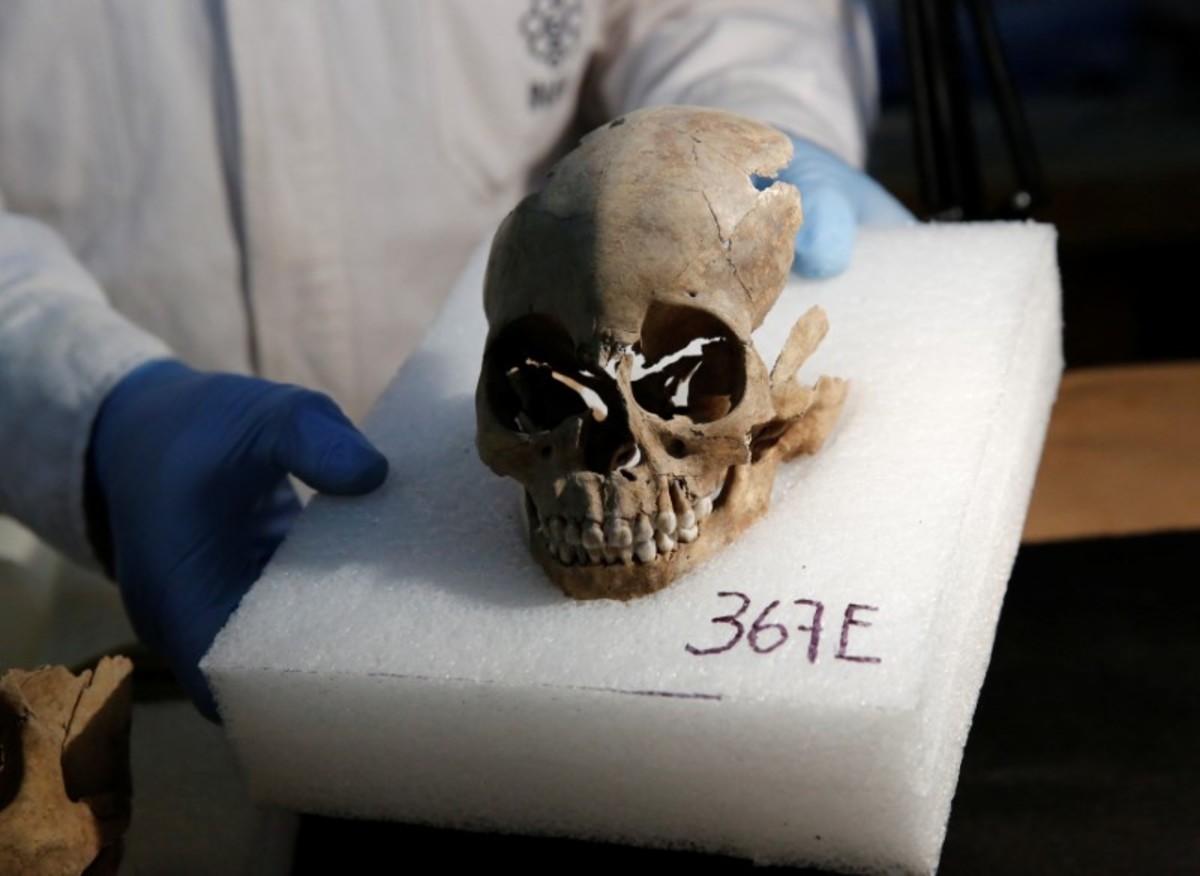
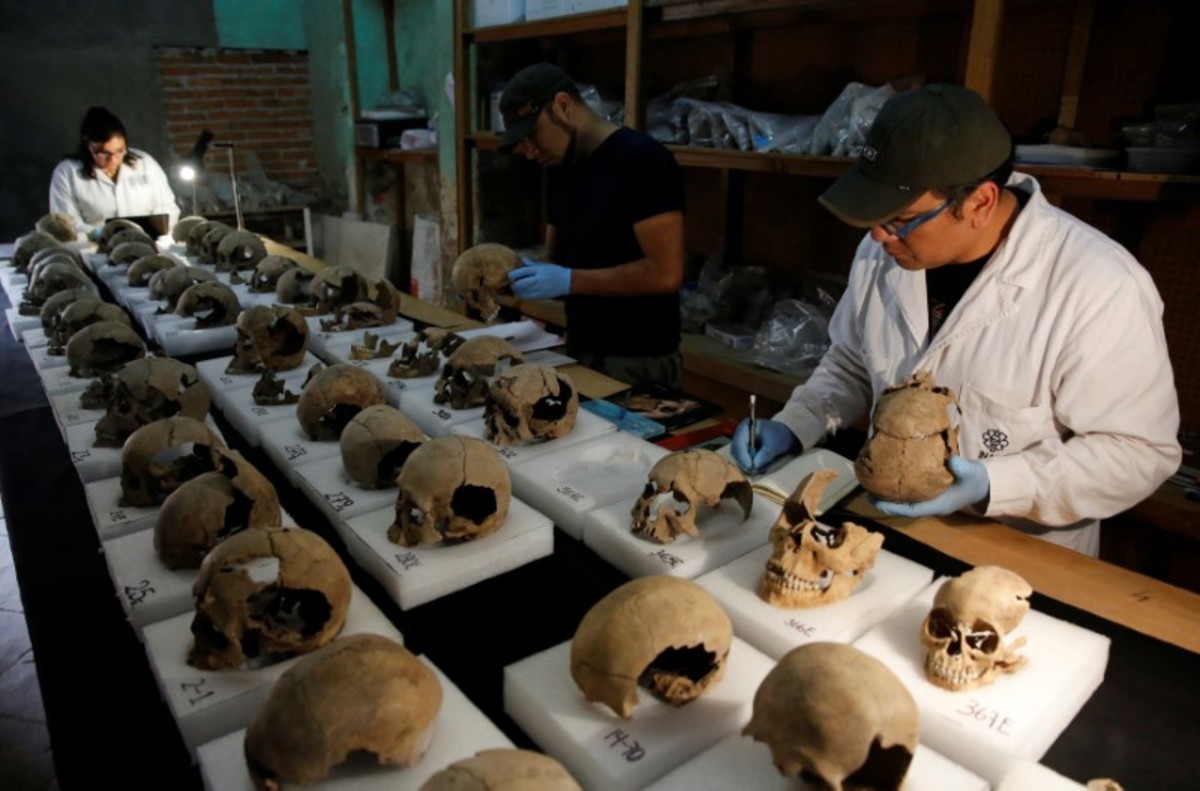
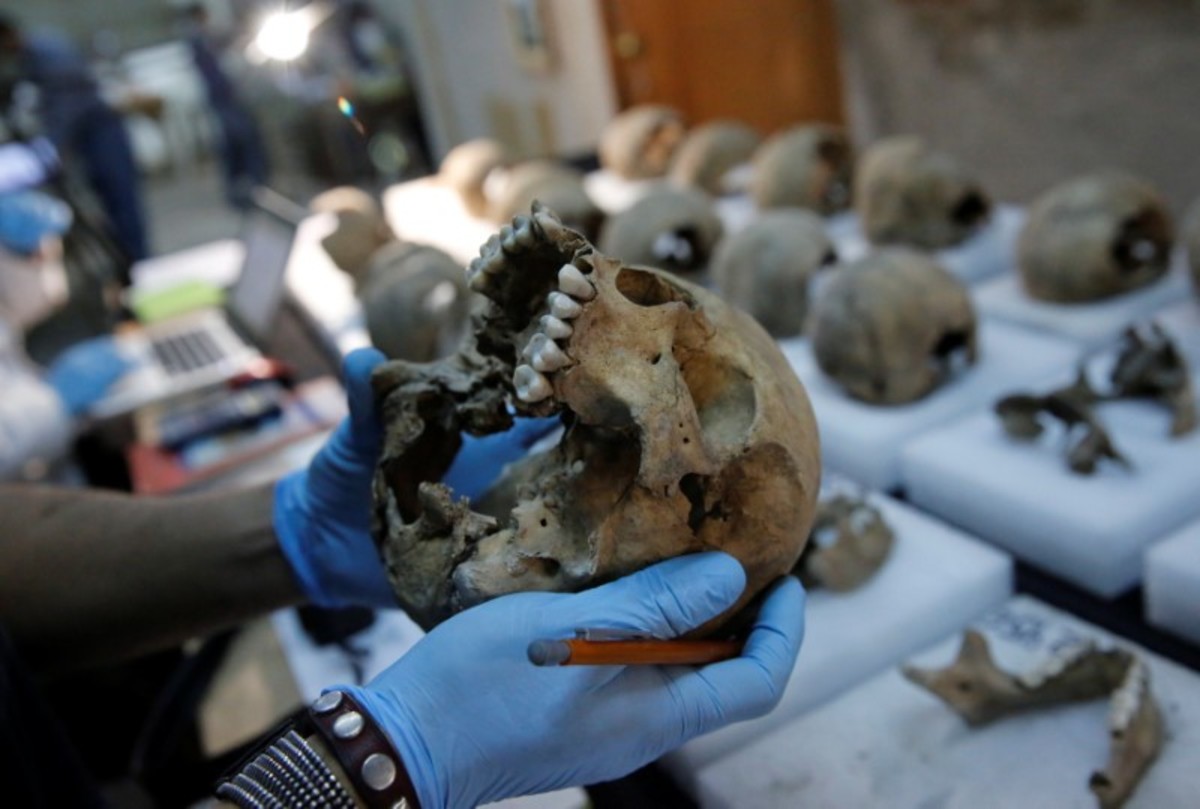
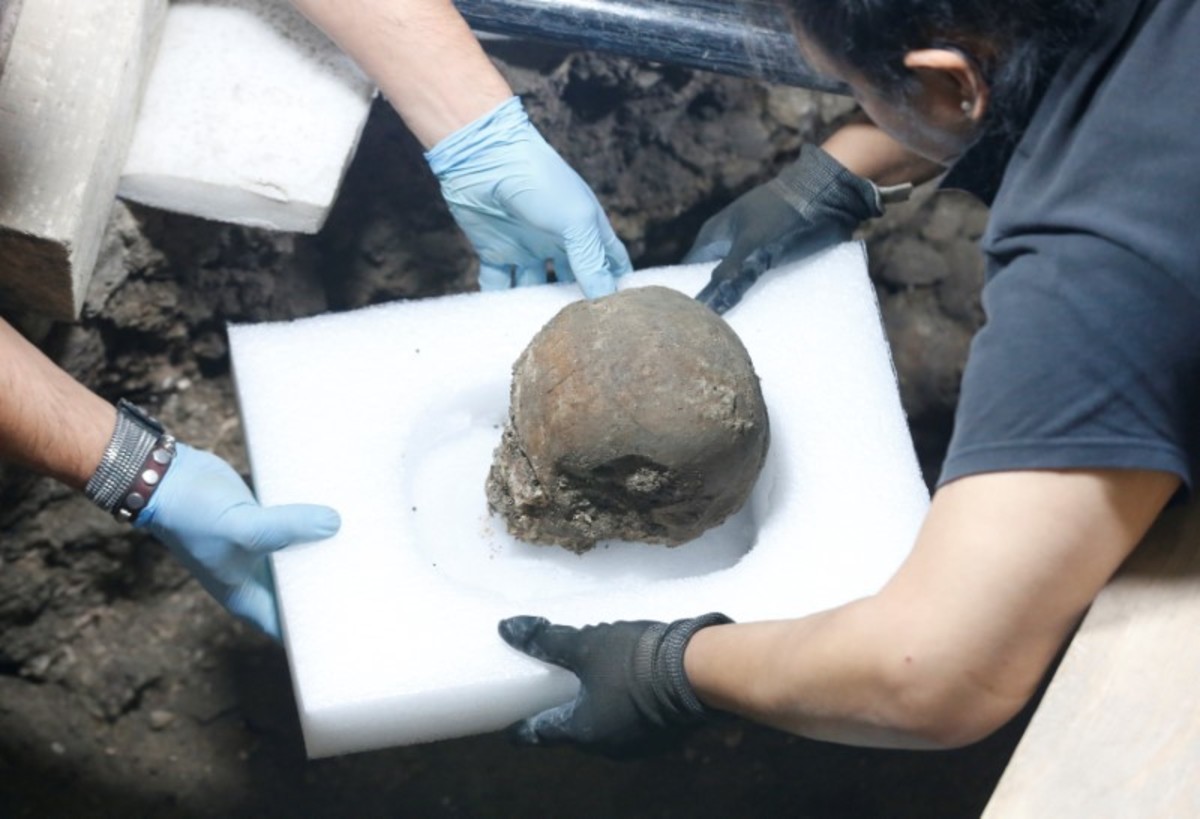
Abel Guzman, a biological anthropologist from the National Institute of Anthropology and History (INAH), examines a skull discovered at a site where more than 650 skulls caked in lime and thousands of fragments were found in the cylindrical edifice near Templo Mayor, one of the main temples in the Aztec capital Tenochtitlan, which later became Mexico City, Mexico June 30, 2017. REUTERS/Henry Romero
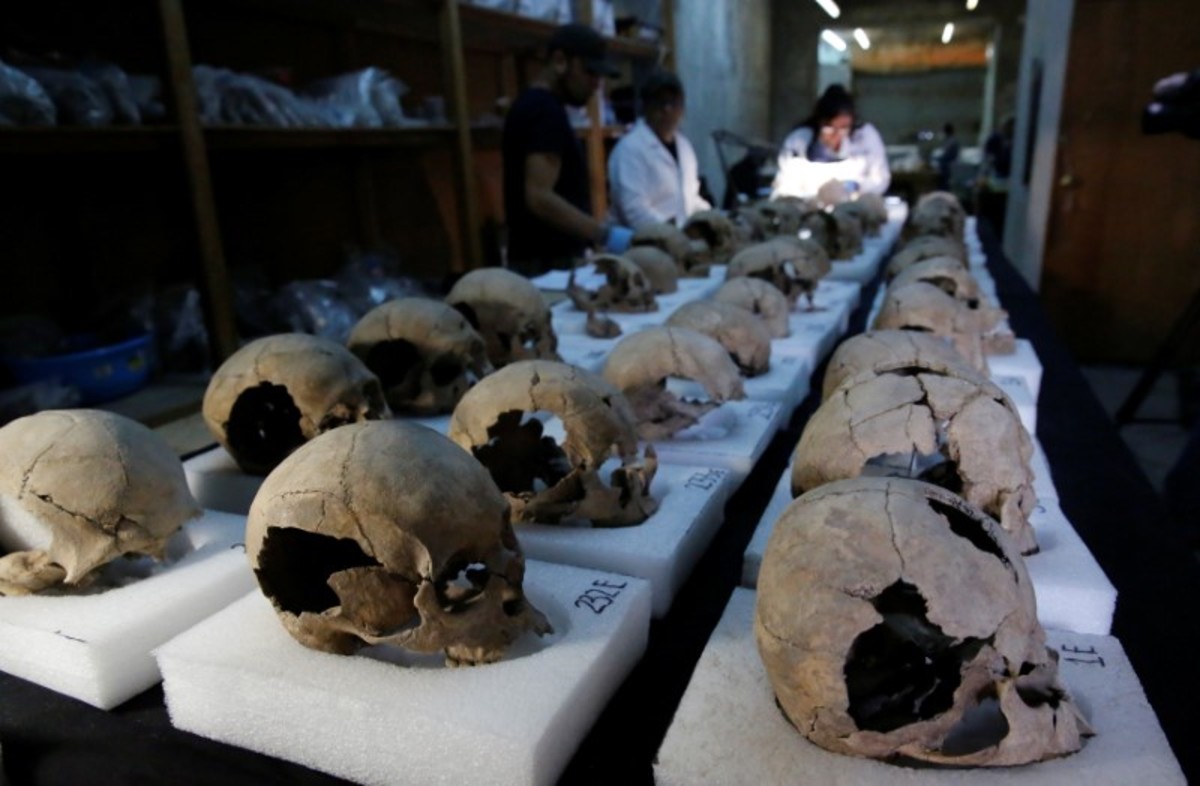
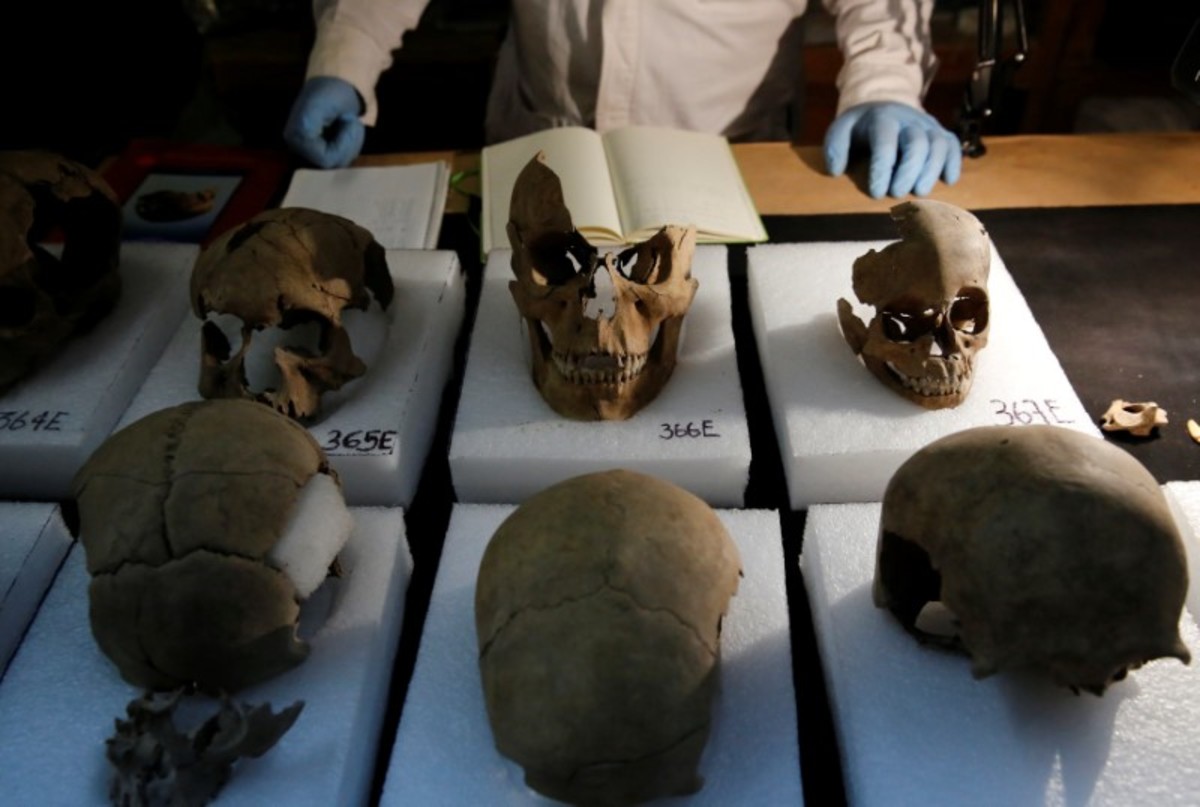
"We were expecting just men, obviously young men, as warriors would be, and the thing about the women and children is that you'd think they wouldn't be going to war," said Rodrigo Bolanos, a biological anthropologist investigating the find.
"Something is happening that we have no record of, and this is really new, a first in the Huey Tzompantli," he added.
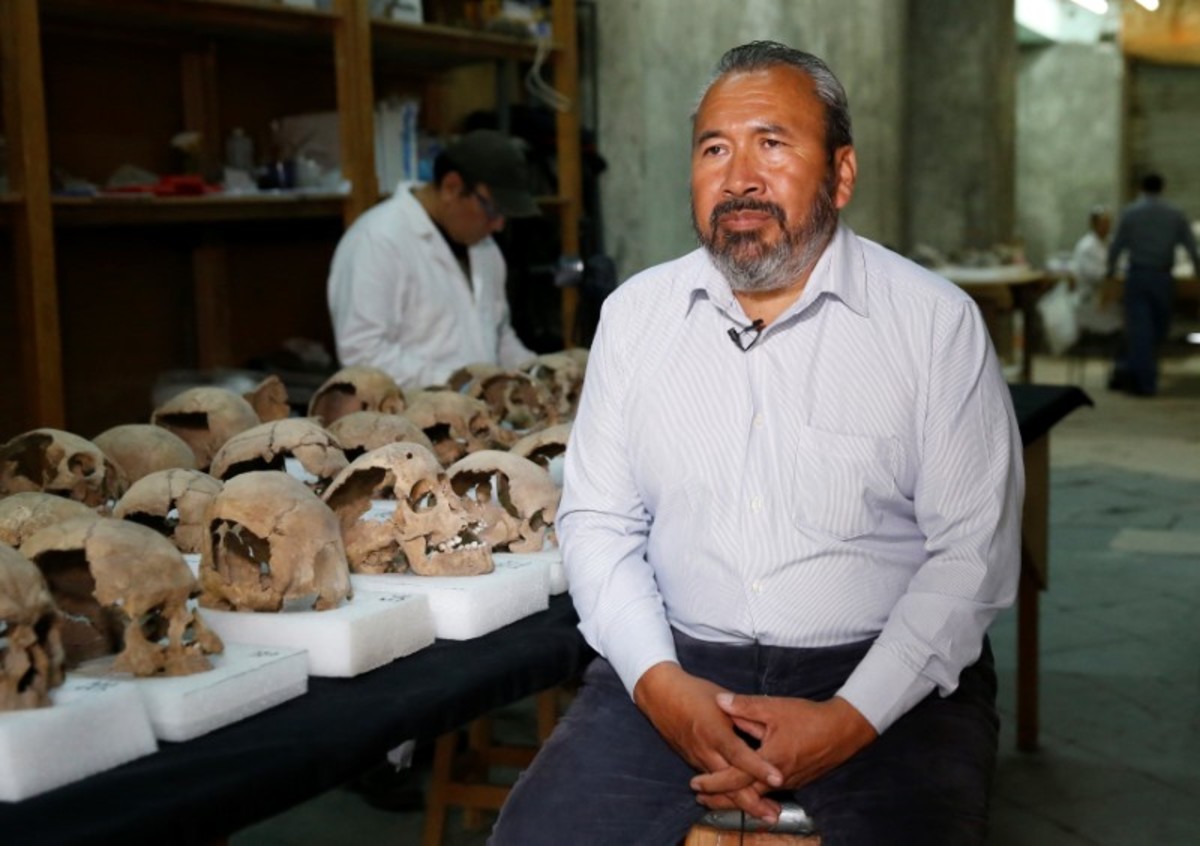
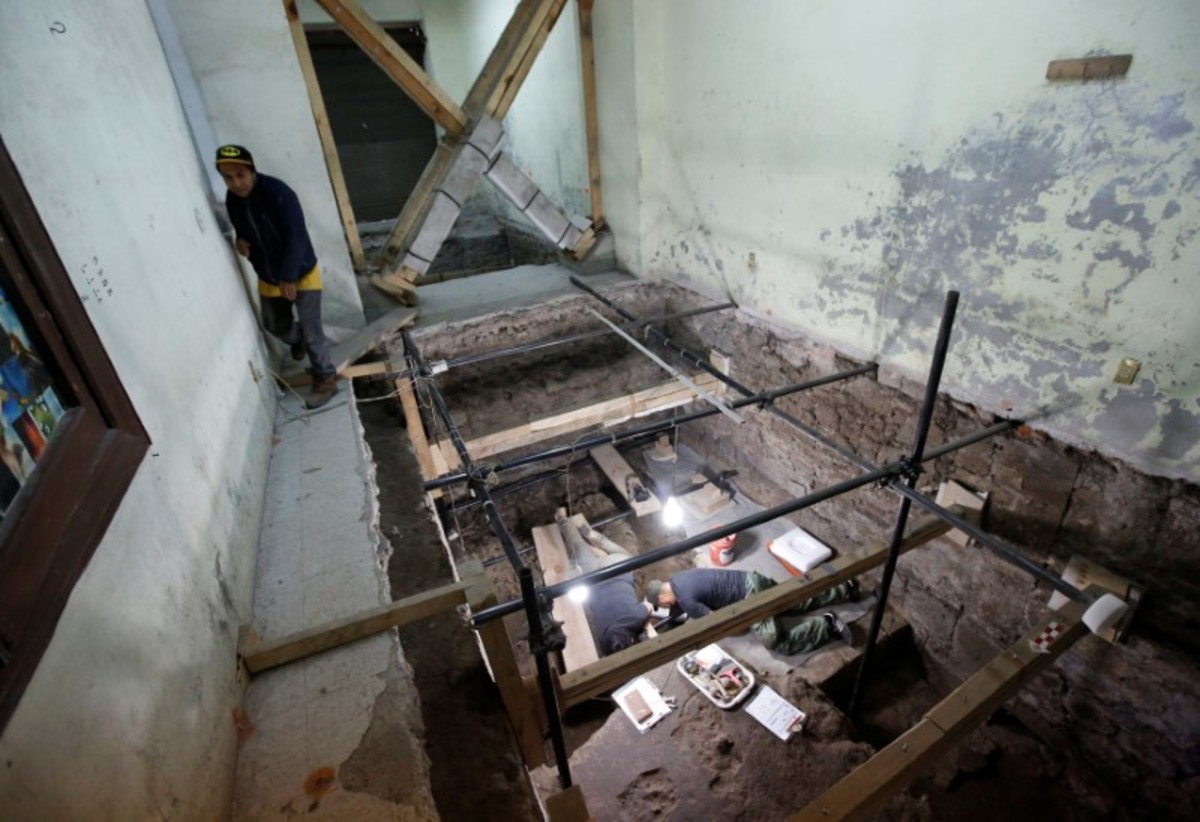
Raul Barrera, one of the archaeologists working at the site alongside the huge Metropolitan Cathedral built over the Templo Mayor, said the skulls would have been set in the tower after they had stood on public display on the tzompantli.
Biological anthropologists from the National Institute of Anthropology and History (INAH) examine skulls discovered at a site where more than 650 skulls caked in lime and thousands of fragments were found in the cylindrical edifice near Templo Mayor, one of the main temples in the Aztec capital Tenochtitlan, which later became Mexico City, Mexico June 30, 2017. REUTERS/Henry Romero
Roughly six meters in diameter, the tower stood on the corner of the chapel of Huitzilopochtli, Aztec god of the sun, war and human sacrifice. Its base has yet to be unearthed.
There was no doubt that the tower was one of the skull edifices mentioned by Andres de Tapia, a Spanish soldier who accompanied Cortes in the 1521 conquest of Mexico, Barrera said.
In his account of the campaign, de Tapia said he counted tens of thousands of skulls at what became known as the Huey Tzompantli. Barrera said 676 skulls had so far been found, and that the number would rise as excavations went on.
Biological anthropologists from the National Institute of Anthropology and History (INAH) examine skulls discovered at a site where more than 650 skulls caked in lime and thousands of fragments were found in the cylindrical edifice near Templo Mayor, one of the main temples in the Aztec capital Tenochtitlan, which later became Mexico City, Mexico June 30, 2017. REUTERS/Henry Romero
The Aztecs and other Mesoamerican peoples performed ritualistic human sacrifices as offerings to the sun.
(Writing by Dave Graham; Editing by Matthew Lewis)
Skulls are seen at a site where more than 650 skulls caked in lime and thousands of fragments were found in the cylindrical edifice near Templo Mayor, one of the main temples in the Aztec capital Tenochtitlan, which later became Mexico City, Mexico June 30, 2017. REUTERS/Henry RomeroRodrigo Bolanos, a biological anthropologist, and Ingrid Trejo, an archaeologist from the National Institute of Anthropology and History (INAH), work at a site where more than 650 skulls caked in lime and thousands of fragments were found in the cylindrical edifice near Templo Mayor, one of the main temples in the Aztec capital Tenochtitlan, which later became Mexico City, Mexico June 30, 2017. REUTERS/Henry RomeroRaul Barrera, an archaeologist from the National Institute of Anthropology and History (INAH), speaks during an interview with Reuters at a site where more than 650 skulls caked in lime and thousands of fragments were found in the cylindrical edifice near Templo Mayor, one of the main temples in the Aztec capital Tenochtitlan, which later became Mexico City, Mexico June 30, 2017. REUTERS/Henry RomeroSkulls are seen at a site where more than 650 of them caked in lime and thousands of fragments were found in the cylindrical edifice near Templo Mayor, one of the main temples in the Aztec capital Tenochtitlan, which later became Mexico City, Mexico June 30, 2017. REUTERS/Henry RomeroSkulls are seen at a site where more than 650 of them caked in lime and thousands of fragments were found in the cylindrical edifice near Templo Mayor, one of the main temples in the Aztec capital Tenochtitlan, which later became Mexico City, Mexico June 30, 2017. REUTERS/Henry RomeroAbel Guzman, Rodrigo Bolanos and Miriam Castaneda from the National Institute of Anthropology and History (INAH) examine skulls at a site where more than 650 of them caked in lime and thousands of fragments were found in the cylindrical edifice near Templo Mayor, one of the main temples in the Aztec capital Tenochtitlan, which later became Mexico City, Mexico June 30, 2017. REUTERS/Henry RomeroLorena Vazquez, an archaeologist from the National Institute of Anthropology and History (INAH), works at a site where more than 650 skulls caked in lime and thousands of fragments were found in the cylindrical edifice near Templo Mayor, one of the main temples in the Aztec capital Tenochtitlan, which later became Mexico City, Mexico June 30, 2017. REUTERS/Henry RomeroIngrid Trejo, an archaeologist from the National Institute of Anthropology and History (INAH), works at a site where more than 650 skulls caked in lime and thousands of fragments were found in the cylindrical edifice near Templo Mayor, one of the main temples in the Aztec capital Tenochtitlan, which later became Mexico City, Mexico June 30, 2017. REUTERS/Henry RomeroRodrigo Bolanos, a biological anthropologist from the National Institute of Anthropology and History (INAH), examines a skull at a site where more than 650 skulls caked in lime and thousands of fragments were found in the cylindrical edifice near Templo Mayor, one of the main temples in the Aztec capital Tenochtitlan, which later became Mexico City, Mexico June 30, 2017. REUTERS/Henry RomeroSkulls are seen at a site where more than 650 skulls caked in lime and thousands of fragments were found in the cylindrical edifice near Templo Mayor, one of the main temples in the Aztec capital Tenochtitlan, which later became Mexico City, Mexico June 30, 2017. REUTERS/Henry RomeroAbel Guzman, a biological anthropologist from the National Institute of Anthropology and History (INAH), examines skulls discovered at a site where more than 650 skulls caked in lime and thousands of fragments were found in the cylindrical edifice near Templo Mayor, one of the main temples in the Aztec capital Tenochtitlan, which later became Mexico City, Mexico June 30, 2017. REUTERS/Henry RomeroLorena Vazquez, an archaeologist from the National Institute of Anthropology and History (INAH), works at a site where more than 650 skulls caked in lime and thousands of fragments were found in the cylindrical edifice near Templo Mayor, one of the main temples in the Aztec capital Tenochtitlan, which later became Mexico City, Mexico June 30, 2017. REUTERS/Henry RomeroRodrigo Bolanos, a biological anthropologist (R), and Ingrid Trejo, an archaeologist from the National Institute of Anthropology and History (INAH), work at a site where more than 650 skulls caked in lime and thousands of fragments were found in the cylindrical edifice near Templo Mayor, one of the main temples in the Aztec capital Tenochtitlan, which later became Mexico City, Mexico June 30, 2017. REUTERS/Henry RomeroRodrigo Bolanos, an archaeologist from the National Institute of Anthropology and History (INAH), works at a site where more than 650 skulls caked in lime and thousands of fragments were found in the cylindrical edifice near Templo Mayor, one of the main temples in the Aztec capital Tenochtitlan, which later became Mexico City, Mexico June 30, 2017. REUTERS/Henry Romero
Sign up to read this article
Read news from 100’s of titles, curated specifically for you.