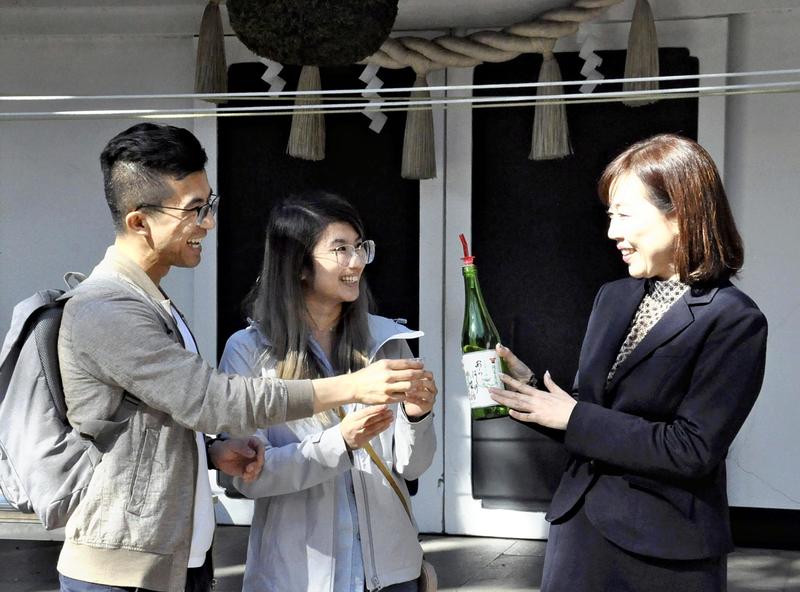
On a recent fine clear day, Ishikawa Brewery Co. in Fussa, Tokyo, welcomed a group of four from Toronto for its guided tour. The tourists sampled some products in front of the company's facility, which was decorated with a sugidama, a large ball made from Japanese cedar branches that is a traditional symbol in the sake industry.
Ishikawa is among many breweries that are targeting non-Japanese consumers amid the shrinking domestic market for sake. A brewery tour with an English-speaking guide is available throughout the year.
The four from Canada learned about the sake production process and the history of the brewery from the guide, Kaiko Hatakeyama. One of the participants, a man in his mid-30s, said he became a sake enthusiast when he tried sake at an event in Toronto. While preparing for the trip to Japan, he happened to see Ishikawa Brewery's tour online.
"I like sake even more now after learning about the traditional methods used by this brewery that has been around for over 100 years," he said.
Ishikawa started to provide tours in English in 2012 as part of its efforts to lure tourists from overseas. At first, these tours were attended by about 400 foreign guests a year, but the number has risen in recent years. The brewery welcomed more than 2,000 foreign visitors in 2018, with last year's figure totaling about 1,350. It has also started posting videos on Instagram.
"Visitors can enjoy not just the sake, but also seeing the facilities. These places also seem to be fascinating tourist destinations," Hatakeyama said. "We'll continue our publicity efforts in the run-up to the Tokyo Olympics and Paralympics."
According to a survey conducted by the National Tax Agency in fiscal 2017, there were about 1,500 breweries producing sake nationwide. Of the about 1,400 breweries that responded to the survey, eight sold more than 10,000 kiloliters a year each, whose combined shipment volumes accounted for over 40 percent of the market. Nearly 80 percent of all breweries sold 200 kiloliters or less each, for a total market share of about 10 percent.
The number of small and midsize breweries are on the decline as many of them face financial difficulties. For these smaller breweries, the upcoming Games are a golden opportunity to promote sake.
The Japan Sake and Shochu Makers Association also offers a helping hand to make sake breweries into tourist destinations. The organization will start a project by this spring to dispatch for a limited time to breweries certified tour guide-interpreters who have learned about sake.
"Brewing facilities themselves are a tourism resource," said Shuso Imada, director of the Japan Sake and Shochu Information Center in Tokyo. "Breweries can directly earn what visitors spend at their facilities, so they must use them to their advantage."
Some breweries have been putting an emphasis on making products that can better attract overseas drinkers.
Nanbu Bijin Co. in Ninohe, Iwate Prefecture, for example, has developed Awasake Sparkling as part of a mission to make a product that will be chosen by visitors who want a drink to celebrate with during the Tokyo Games.
To make the product as enjoyable as Champagne, the brewery has the sake undergo a second fermentation in the bottle, as is done in the traditional Champagne method.
Awasake Sparkling has a light mouthfeel that might be easier for sake novices to drink. The bottles are corked so that they pop when opened. It won the Sake Competition's sparkling category in 2017 and 2018.
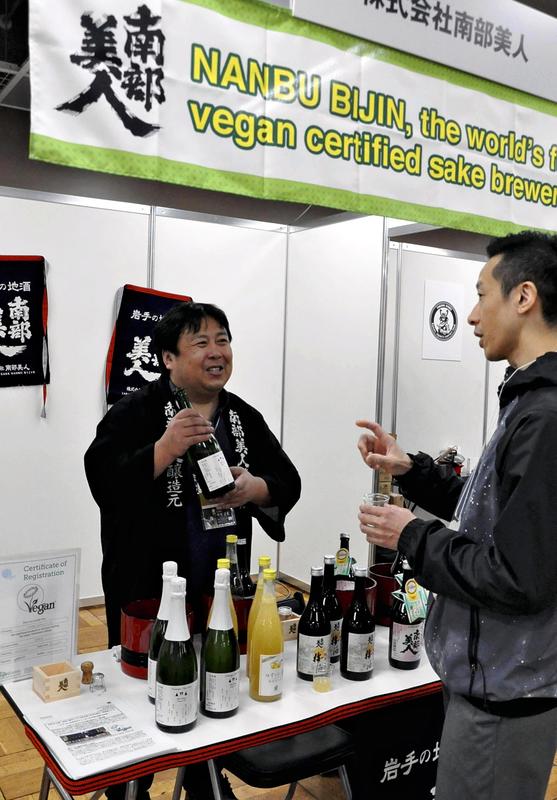
Nanbu Bijin has also acquired certifications from domestic and foreign vegan organizations, a first for sake. This means the brewery's products do not use any animal-derived substances. As a result, Nanbu Bijin products are on the menu with other vegan items at a renowned Japanese restaurant in Tokyo.
More and more breweries, including Nagai Sake Inc. in Gunma Prefecture, are following suit in acquiring vegan certifications.
"During the Olympic and Paralympic Games, people with diverse values will visit Japan," said Nanbu Bijin President Kosuke Kuji. "As not everybody knows the ingredients in sake, these certifications assure them that they can drink our products free of concern."
Read more from The Japan News at https://japannews.yomiuri.co.jp/