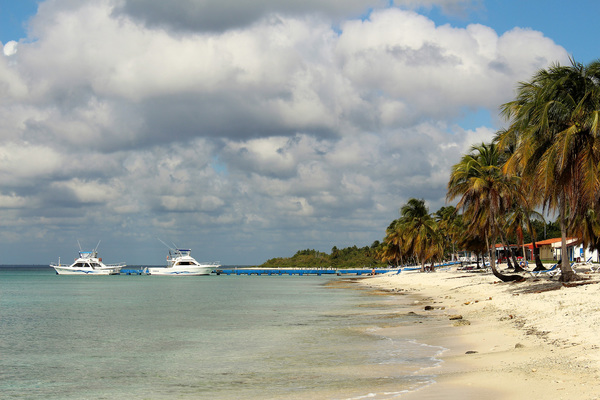
MIAMI _ Cuba's historic cities, vibrant culture and sandy beaches were the star performers of the economy in the first half of the year, pulling in 23.2 percent more visitors than in the first six months of 2016.
But other areas of the economy limped along and failed to meet government targets, according to Cuban officials.
Tourism helped propel the Cuban economy to 1.1 percent growth in the first half of 2017, but other areas of the economy turned in sub-par performances as Cuba faced a cash crunch and difficulties in getting trade credits. Oil deliveries from Venezuela also slid, a drought gripped the island and commodity prices were weak _ eating into export revenue.
During a closed-door report to Cuba's parliament, the National Assembly of People's Power, which was later published in state media and broadcast on national television, Economy Minister Ricardo Cabrisas outlined the high and low points of the economy so far this year.
Last year the Cuban economy declined by 0.9 percent, so a slight uptick represented progress. "Even in the middle of complex circumstances, a modest encouraging result has been achieved," Cuban leader Raul Castro said during a National Assembly speech.
In addition to tourism, the construction, transportation, communications and non-sugar agriculture sectors contributed to the slightly positive results, Cabrisas said.
Cuban officials have estimated economic expansion at 2 percent for 2017, but even 1.1 percent growth during the first half of the year raised some eyebrows.
"That was a surprise, but essentially they're still talking stagnation," said Richard Feinberg, a professor at the University of California at San Diego and author of the book "Open for Business: Building the New Cuban Economy." "The theme of Raul's speech and the others (at the National Assembly) was one of austerity, continued cutbacks on imports and harder times for the average Cuban."
"The major sources of growth can't compensate for the declines in other sectors," economist Carmelo Mesa-Lago said. The sugar harvest didn't reach its target; nickel prices are better but still weak compared to average prices in 2014-15, imports are down, exports of both products and services have declined and there's been a reduction in the oil supply, he said.
"The second half of the year will be worse than the first," Mesa-Lago said. "I would say stagnation or very tiny growth."
Even though much of Cuba's debt has been forgiven or renegotiated, Cabrisas outlined a scenario in which Cuba is having trouble getting trade credits because of late payments to suppliers. Export revenue during the first half of the year fell short by more than $400 million and imports were expected to be $1.5 billion less than the targeted level by the end of the year.
"Cutting imports substantially affects everything in the economy. Lack of inputs for manufacturing could lower production," said Mesa-Lago, a professor emeritus at the University of Pittsburgh. Even though tourism appears to be humming along, it also requires food and other imports for travelers.

"Logically this growth means greater strain on all support services and supplies to respond to the greater number of visitors," wrote Jose Luis Rodriguez, Cuba's former economy minister, in an article that appeared in Cubadebate, a government-affiliated website.
But so far this year, Cuban Tourism Minister Manuel Marrero has painted a rosy picture for tourism. In a speech quoted by ACN, the Cuban news agency, Marrero said through June, 2.67 million international travelers had visited Cuba, putting it in easy striking distance of surpassing last year's record of just over 4 million international arrivals.
He said that visitors from the United States were up 150 percent through June but also noted the pending restrictions on U.S. travel by President Donald Trump. Trump has asked for regulations that would prohibit Americans traveling to Cuba in the people-to-people category from going individually and require them to travel as part of organized groups. He's also said there will be increased auditing of U.S. travelers to the island to make sure they're not going to Cuba for tourism.
Trump's plan also calls for barring U.S. business with military enterprises on the island _ a move that would include many military-run hotels and other tourism services.
"People-to-people travel was the easiest way for Americans to go to Cuba; tourism may be hurt by the Trump restrictions," Mesa-Lago said.
Still, Marrero predicted that Cuba would finish the year with 4.7 million international visitors, 500,000 more than had been anticipated. In 2018, he said, Cuba hoped to receive 5 million visitors, which will require an increase in lodging.
Currently, he said, Cuba has 67,769 hotel rooms. It plans to add another 431 rooms by year's end as part of a plan to construct 100,000 rooms through 2030, according to Marrero. That's supplemented by 22,000 rooms currently for rent in private homes, Marrero said.
Meanwhile, tourism revenue hasn't kept pace with the growth of visitors _ a factor that some commentators on state-run media sites have highlighted. Even though tourist arrivals were up 23 percent, Marrero estimated revenue from tourism was up only 9 percent to $1.5 billion through the first six months of the year. The government has estimated that Cuba will close the year with $2.755 million in tourism revenue.
With Cuban ally Venezuela in economic crisis, steady oil supplies from the island's benefactor are in question. Through June, Cabrisas said, Cuba spent $99.6 million more than it had planned on imported fuel.
"The situation in Venezuela is certainly worse this year, and Cuba hasn't been successful in getting oil from Angola and Algeria because they have cash problems," Mesa-Lago said.
In recent years, Venezuela has reduced its shipments of subsidized oil to the island and this year Cuba signed an agreement to receive nearly 250,000 tons of oil and diesel fuel from Russia.
Cuba has its own oil production, but it isn't enough to meet the island's daily needs. Through May, petroleum production met Cuba's plan, Cabrisas said, and was expected to finish the year at 16,000 tons above the target.