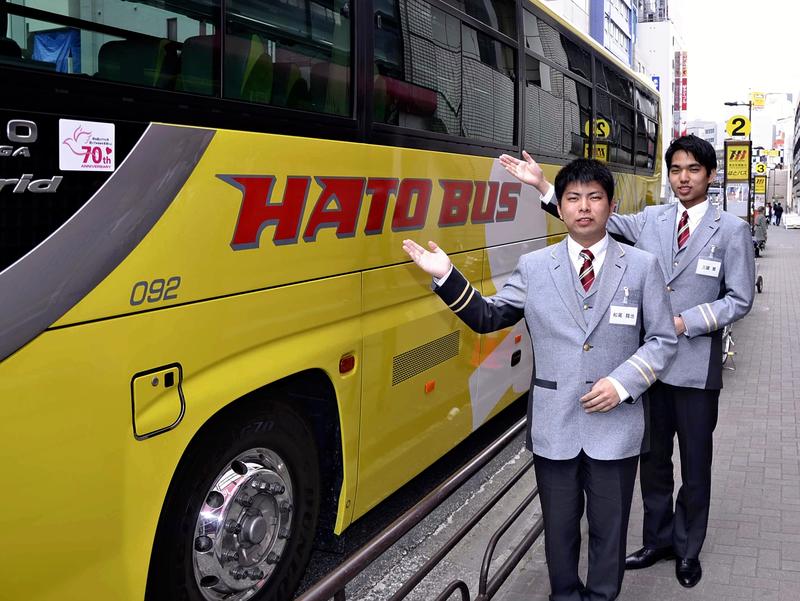
At the end of this month, Hato Bus customers will see something for the first time in the company's 70-year history as a mainstay on the Tokyo tourism scene -- two male bus guides.
With tourism to Japan expected to boom leading up to the 2020 Tokyo Olympics and Paralympics, Hato Bus is seizing the opportunity to provide services from a new perspective and add a new chapter to its history.
Hato Bus Co., the company that operates the tourist bus line, said that it hired a total of 26 new guides this year. Gender has never been part of the criteria for hiring, but the company would only get a male applicant once every few years, if that.
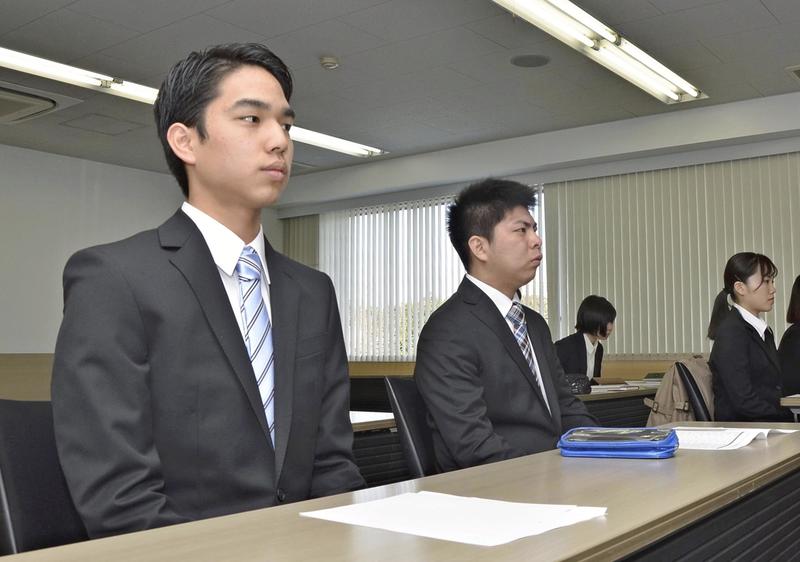
This time, the company said two male applicants fulfilled all of its requirements. With their hiring, the total number of bus guides increased to 153.
The company repurposed a nap room into a waiting room for the male guides, and also designed a new uniform for them.
Tokyo native Ran Mikuni, 18, was one of the two hired after showing his enthusiasm.
"I like livening things up in front of people, and my specialty is informing people about things," Mikuni said. "Hato Bus wrote the history of tourism in Tokyo. I want to sharpen my skills so that people will say that male guides are good, too."
His new colleague, Ryuji Matsuo, an 18-year-old from Nagasaki Prefecture, became mesmerized after watching the bus guide calmly conduct a tour while on a school trip as a high schooler.
An outgoing sort, he had taken to the karaoke mike on stage at his high school's cultural festival, and performed "Otoko wa Tsurai yo" (It's Tough Being a Man), the theme for the long-running movie series, at a singing skill test.
"Hato Bus is well-known even in rural areas, and there are people who say they would like to ride the bus at least once in their life," Matsuo said. "My aim is to help create enjoyable memories of Tokyo."
The company's business started on March 19, 1949, with a sightseeing bus tour on a course past the Imperial Palace, Asakusa and other major sights. Users peaked around the time of the 1964 Tokyo Olympics, when it had about 1.23 million customers for the period from July 1964 to June 1965.
Although there was a decline after that, recent years have seen a resurgence, and it now gets about 900,000 customers annually. Including optional tours outside and inside Tokyo, the company offers a selection of about 1,000 courses per year.
The two male guides have already had their induction ceremony, and will make their debuts at the end of this month. In preparation, they have been receiving training on customer relations, bus maneuvering and other aspects.
Both said they were determined not to disappoint the customers, and were committed to learning the ropes quickly to become independent while bringing a freshness to the job.
Looking ahead, a company official said: "We can possibly put the men in charge of handling and shipping baggage that are not entrusted to the female bus guides. We want to provide that little extra something that will be possible from having a male employee."
Read more from The Japan News at https://japannews.yomiuri.co.jp/