So, 14 kilometres down and just 3,346 to go. After a brief summer fling over 10 years in the making, the bicycle-mad city of Utrecht will bid a tearful farewell to the Tour as the peloton heads off on a week’s worth of potentially fiendish stages through the Netherlands, Belgium and north-west France.
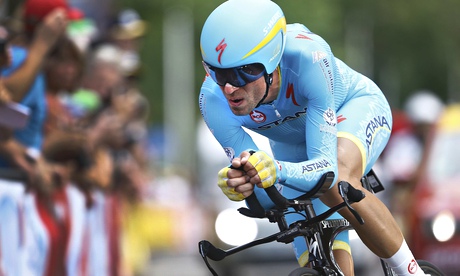
Although far from barbarous, these assorted parcours ought to offer up a mouth-watering array of technical challenges and have every chance of creating potentially race-ending dilemmas for assorted general classification contenders as they struggle to cope with coastal crosswinds, the teeth-rattling perils of riding at high speed across dastardly French cobbles and one particularly brutal church-lined climb. BMC will be confident of nursing Rohan Dennis through these obstacles in yellow and, with their weighty war chest, almost certainly have the personnel to do so.
Having been zipped into the maillot jaune after Saturday’s individual time trial, Dennis will have the honour of leading the peloton out of Utrecht as the riders make their way to Zeeland, an old western Dutch province from which a newer but better-known southern hemisphere nation takes its name. With large tracts of the area submerged below sea level, the cyclists will make their way along the coast on a journey that could be considerably enlivened by the intervention of North Sea crosswinds.
Should the air currents of the day rise to the occasion – and plenty of the riders will hope they do not – there’s every chance of chaos as the peloton is quite literally blown apart and splits into echelons, those groups of riders stretched diagonally across the road as each takes short pulls on the front before rotating and sheltering from the wind.
With road-width limited, the last place any competitor will wish to find himself is in that long line of forlorn riders snaked out in single file behind the main group, hanging on for grim death just to stay in touch with the wheel in front. A particular skill at which lanky Dutch and Belgian rouleurs are particularly adroit, echelon riding provides much potential for inter-team chicanery and skulduggery as riders collude to “put it in the gutter” and deposit assorted rivals out the back and out of contention. Both here and in Thursday’s stage six along the similar terrain of the Normandy coastline from Abbeville to Le Havre, much will depend on the weather.
At the mercy of the gods, the riders are unlikely to appreciate one of the better ones apparently riffing on their considerable pain as they pass the seven chapels that line the winding, upwards route to Monday’s stage three finish at Mur de Huy, a punishing climb with an average gradient of 9.3% – rising to 26% on one particular bend – which traditionally serves as the finish of the Flèche Wallonne Classic, won in April this year by Movistar’s Alejandro Valverde.
Then it’s on to the pavé, a hellish surface that ought to provide no end of entertainment on Tuesday, as the peloton clatters across seven sectors of these attritional, energy-sapping cobbles en route from Seraing to Cambrai. In a deliberate nod to another famous old Classic, four of them feature in Paris-Roubaix, where each stone is almost certainly a mini-memorial to tyres blown, flesh grazed and dreams dashed.
On a wet day, the greasy surface can send even the most seasoned riders slithering towards the crowd-lined verge. When it’s dry, riders enjoy the comparative luxury of choking dust and the suffocating heat generated by the throngs of enthusiasts lining a narrow, broken and uneven route more accustomed to serving tractors towing farm machinery.
It was on just such a stage last year that the eventual winner, Vincenzo Nibali, took nearly three minutes out of Alberto Contador, while Chris Froome did not even make it to the first sector. Of the four big race favourites, the Colombian Nairo Quintana is expected to fare worst on the cobbles, having “recced” but never raced on them. Carnage seems inevitable as up to 198 riders attempt to position themselves in something approaching safety at the head of the field. Only a small fraction of them will fit there.
And so to the sprinters. With Mark Cavendish entering the race in such brilliant form, it’s a genuine disappointment he will not go wheel-to-wheel against his German rival Marcel Kittel in this year’s Tour following his season of illness and injury.
Flat and long, Wednesday’s spin from Arras Communauté Urbaine to Amiens Métropole, followed by Livarot to Fougères on Friday, look nailed on to be fought out by the fast men. In a Tour that Froome and other GC hopefuls believe doesn’t really start in earnest until stage 10’s jaunt up the mountains, the perilous week ahead will provide no shortage of opportunities for each of them to ruin their chances before they get within a goat’s bleat of a Pyrenean foothill.