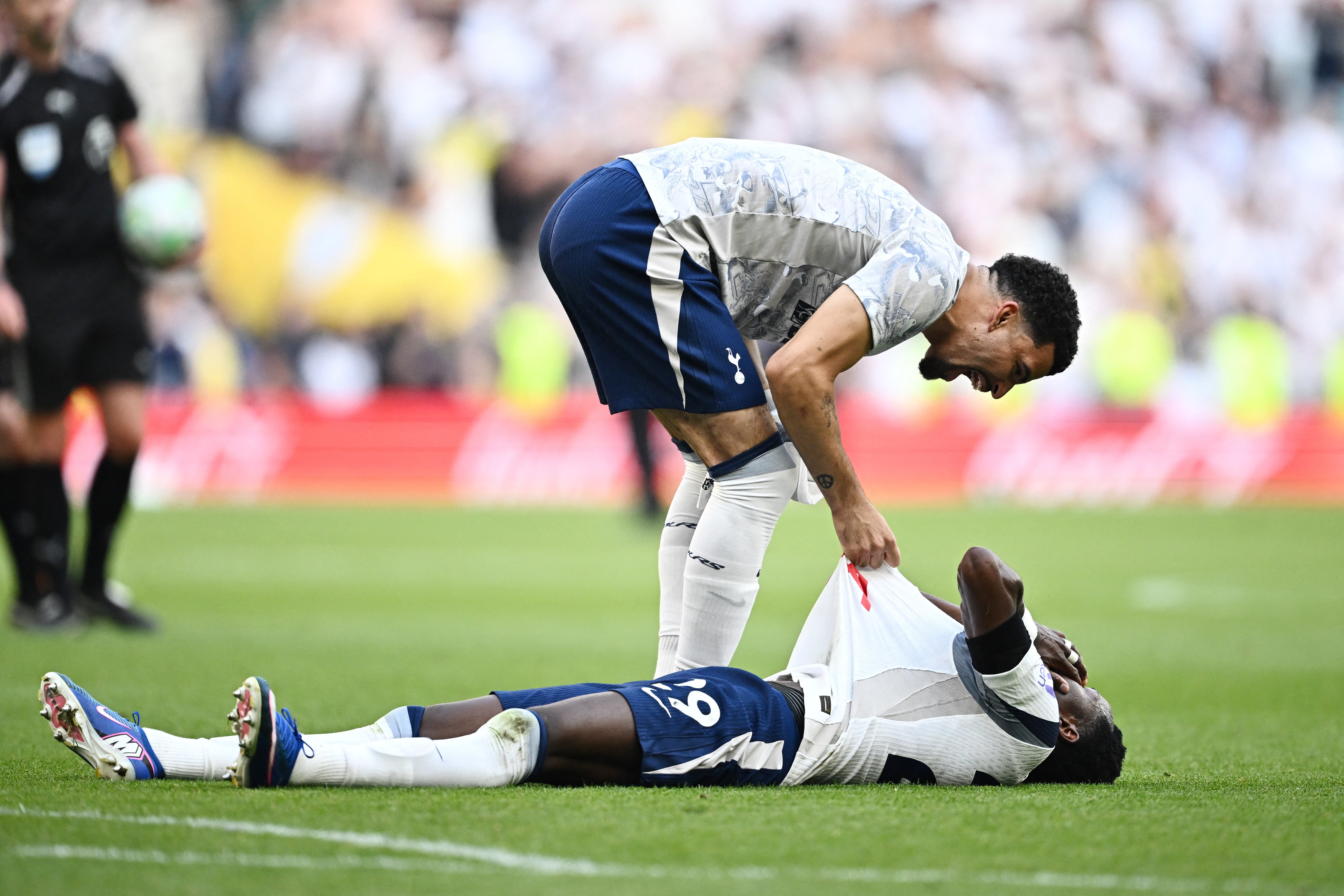
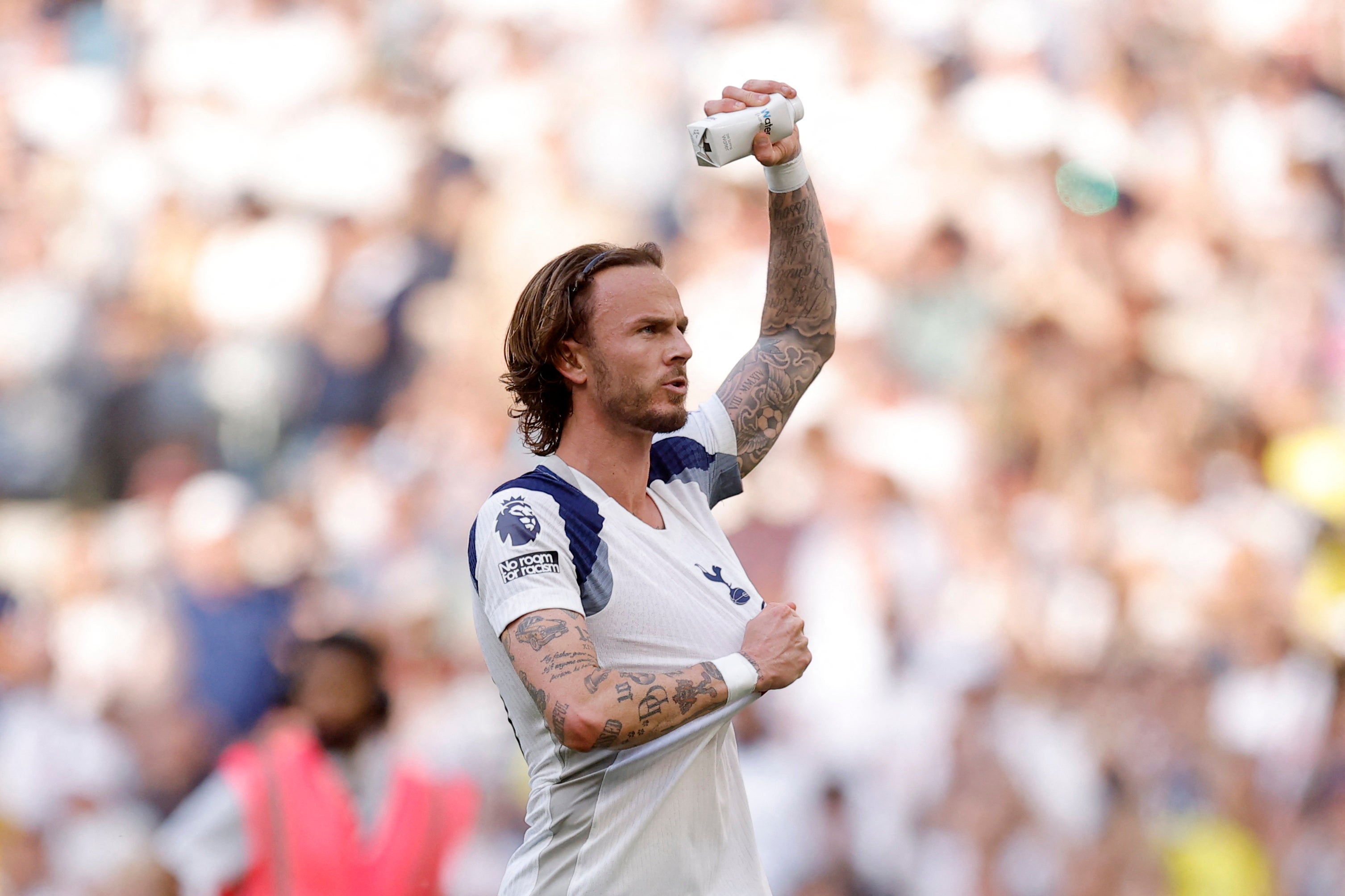
When the full-time whistle blew, James Maddison bent over on his haunches gasping for breath. Kevin Danso collapsed in a heap. Roberto De Zerbi ran onto the pitch like he’d won a trophy before remembering himself and turning back to shake hands with David Moyes. All around them, Tottenham fans erupted with relief.
This could have been Spurs’ lowest ebb, on an afternoon when relegation loomed and smirking Arsenal fans passed them on the Victoria Line. Instead, this was a day of shared joy and collective catharsis. In those lost weeks under Igor Tudor, Spurs fans were resigned to their fate; just a few games later, the nightmare is over, for now at least.
Spurs supporters gave their team a deafening soundtrack, and the players responded with a performance full of commitment and energy in blistering north London sunshine. Danso was immense at the back and Joao Palhinha was everywhere, including Everton’s box where he pounced on a rebound to score the only goal. And Antonin Kinsky – embarrassed under Tudor – made a heroic, full-stretch save to deny the Everton substitute Tyrique George what would have been a nerve-jangling equaliser in added time.
It was far from a vintage footballing display. Spurs ended with Djed Spence and Pape Matar Sarr on the wings, square pegs in round holes trying to plug the drain. But Tottenham clung on to a 1-0 victory to record their third home win of the season, and the most important in these parts for many years, given West Ham did what they needed to in east London. The Hammers are down after a 14-year run in the Premier League.
So for Tottenham, there is no humiliating relegation. They will not become the first Championship team with a 62,000-seater stadium, the first with a 23,000 square-foot megastore, the first to fill their pints from the bottom up. They will not travel to Lincoln City, who won League One singing “Tottenham away, ole ole!”. A £250m black hole has been avoided.
There is a chance now to reset under De Zerbi, who reaffirmed his commitment to the job this week. Amid the battle, there were fleeting signs of his football here in the sharp one-touch passing that split open Everton like a tin can in the first half. De Zerbi’s overzealous antics on the touchline will annoy opposing managers and fans, and perhaps Spurs need a bit of that right now.
“We deserved this day, this win,” De Zerbi said. “We deserved to stay up because we made 11 points in seven games. My players played a fantastic game, especially in the first half they played very well, and I’m proud.”
He hailed the supporters, who greeted the team bus with gusto before kick-off. “They were fantastic, the fans. Before the game, they arrived with big emotion. Next season the target is to make them happier, to stop this suffering.”
But none of the optimism should dilute the harsh lessons relegation would have served. Spurs are a club that built a gleaming stadium and thriving commercial arm, which became London’s NFL home and staged sell-out concerts. But somewhere along the way they appeared to forget about the primary purpose of a football club, the reason this 143-year-old institution exists.
So when clubs like Brentford, Brighton and Bournemouth pour all their heart, soul and resources into running sophisticated football operations, while Tottenham run an events business with a football team, perhaps none of us should be surprised when Spurs finish 17th and far less wealthy clubs qualify for Europe.
Above all, there has been a lack of any coherent plan for what Tottenham should be and what a Spurs side should look like. To appoint managers as tactically and spiritually diverse as Nuno Espirito Santo, Antonio Conte, Ange Postecoglou and Thomas Frank in succession is proof of that, while Brentford followed seven years of Frank by appointing his set-piece coach. The Tottenham squad is now a mishmash of players who are either completely different or entirely the same, without blend or balance.
And if Daniel Levy can be blamed for some of those decisions, then the post-Levy regime has hardly covered itself in glory. The move by sporting director Johan Lange and CEO Vinai Venkatesham to appoint Tudor seemed fraught with risk from the start, and after only a few games of his disastrous reign, it seemed like an act of self-flagellation.
They did at least have the courage to U-turn with just enough time left for De Zerbi to recover the ship. Spurs will be a Premier League team again next year. This magnificent stadium will remain a top-flight venue. They will not become the first Championship side with a microbrewery.
Tottenham fans deserve to revel in the moment. But real progress will only be harnessed by the lessons Spurs learn from narrowly avoiding the greatest sporting debacle in Premier League history.