
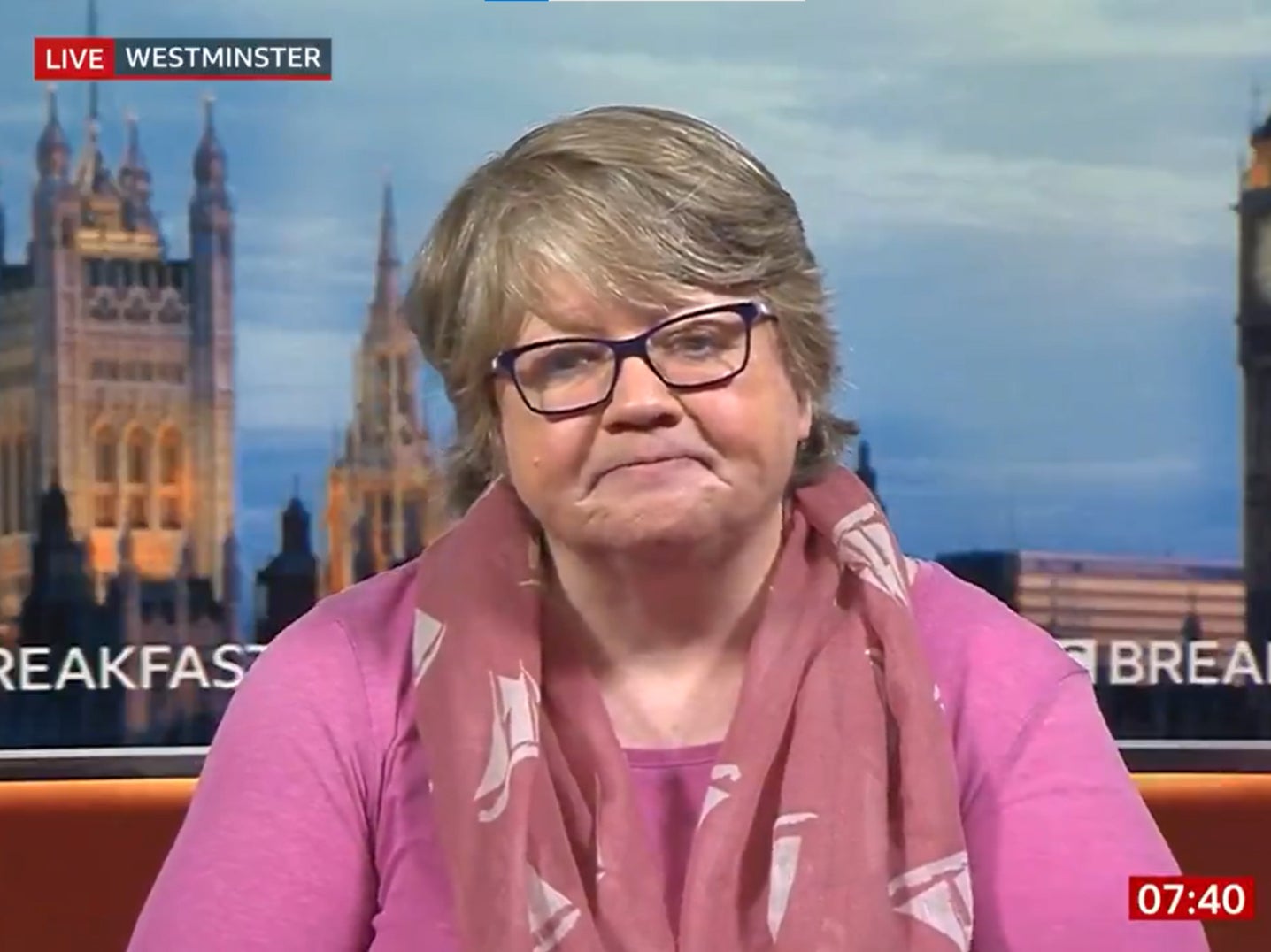
Thérèse Coffey is being roasted on social media after she said claimants can work two hours extra per week in order to make up for the £20 uplift of Universal Credit the government plans to scrap at the end of the month.
But in the interview with BBC Breakfast, she fails to acknowledge the earning taper that means those who work more hours, receive less benefits.
During the interview, the Secretary of State for Work and Pensions said: “I’m conscious that £20 a week is about two hours’ extra work every week – we will be seeing what we can do to help people perhaps secure those extra hours, but ideally also to make sure they’re also in a place to get better paid jobs as well.”
"£20 a week is about two hours extra work every week, we will be seeing what we can do help people perhaps secure those extra hours”
— BBC Breakfast (@BBCBreakfast) September 13, 2021
On #BBCBreakfast Work and Pension Secretary Thérèse Coffey says the increase to universal credit was always temporary.https://t.co/tHeCXwNJyZ pic.twitter.com/RbZNtIn3PQ
When asked to provide more details about asking people to work for longer, the minister said: “It’s a temporary uplift recognising the reason that it was introduced is coming to an end.”
Coffey’s comments have led people to accuse her of not knowing how Universal Credit works because it seems Coffey has forgotten that there is an earning taper for claimants - though there were plenty of people online to remind her.
Deputy Labour leader, Angela Rayner criticised Coffey’s comments and argued that doing two hours per week simply would not be enough to make up for the £20 that is going to be scrapped by the government.
Sign up to our free Indy100 weekly newsletter ‘The Viral Democracy’
She tweeted: “This is a lie and the Work and Pensions Secretary either knows she’s lying or shouldn’t be in the job.
“An additional £20 for a UC claimant isn’t 2 hours work, that’s not how the taper works.
“An extra £20 would require £50+ worth of hours, that is how the UC system works.”
This is a lie and the Work and Pensions Secretary either knows she’s lying or shouldn’t be in the job. An additional £20 for a UC claimant isn’t 2 hours work, that’s not how the taper works. An extra £20 would require £50+ worth of hours, that is how the UC system works. https://t.co/i4HzfDzJO8
— Angela Rayner (@AngelaRayner) September 13, 2021
While Shadow Cabinet Minister for Mental Health Dr Rosena Allin-Khan tweeted about the difference the £20 uplift can make to families on a low income which the government plans to get rid of soon.
£20 a week is not 'about two hours extra work' to the carer who already works way beyond their contracted hours without extra pay.
— Dr Rosena Allin-Khan 💙 (@DrRosena) September 13, 2021
£20 a week is the difference between heating and eating. https://t.co/gnHHOm6zmT
Resolution Foundation, an independent think tank that aims to improve “living standards for those on low to middle incomes” also explained why Coffey’s comments are not true.
If only this were true. A Universal Credit claimant on the National Living Wage will take a home as little as £2.24 from an extra hour’s work. A small increase in working hours will be nowhere near enough to cover the £20 a week cut coming their way next month. https://t.co/Efeaf3ZVS4
— Resolution Foundation (@resfoundation) September 13, 2021
People on Twitter were quick to point this factor out to the Tory minister and also highlighted that for every £1 earned a claimant loses 63p from their Universal Credit money since the taper rate is 63 per cent and so would need to work way more hours than Coffey said in order to earn £20.
Why does the bbc show this as though what she’s saying is right when she’s got it wrong and it’s shocking the work and pensions secretary doesn’t even know how universal credit works. https://t.co/S438KQSW2t
— Luke Kenny (@LukeKenny90) September 13, 2021
Sorry, but again. Universal Credit isn’t just about getting more working hours. She’s meant to know this right? 💁🏻 https://t.co/iuZVd0EUA5
— Jarvo (@CityView1904) September 13, 2021
Clueless about reality https://t.co/fN5aGted5F
— terry christian (@terrychristian) September 13, 2021
What's more worrying: that she knows this is complete nonsense and is peddling it anyway, or that she doesn't understand how the benefits system she's in charge of actually works? https://t.co/QtANtpNL8A
— Tim Bale (@ProfTimBale) September 13, 2021
Except it's not, because for every additional £1 earned the UC claimant loses 63p so to make that £20 up gross, an adult aged over 23 on min wage would need to work an extra 6 hours.
— Vonnie Sandlan (@VonnSand) September 13, 2021
It's quite concerning that the Work and Pensions Secretary does not understand how UC functions. https://t.co/QmQqk40IvF
This is a much worse version of not knowing the price of a pint of milk. To take home £20 will take many a lot more than 2 hours work https://t.co/YDjG0LivWg
— Dr Xand van Tulleken 🏳️🌈 (@xandvt) September 13, 2021
Secretary of State for Work and Pensions clearly doesn't understand how Universal Credit works and how it is docked when you work longer hours...or worked out the costs of additional childcare, transport etc, let alone whether those extra hours are there to be worked. https://t.co/eTLeFqMQ6y
— Bertha Mason (@ThornfieldHall) September 13, 2021
A Government Spokesperson told Indy100: “Many claimants are eligible for an in-work allowance, which means that the taper rate does not apply and people keep more of what they earn. For the lowest earners working two hours more per week at National Living Wage can add up to around £20.
“Universal Credit will continue to provide vital support for those both in and out of work and it’s right that the Government should focus on our Plan for Jobs, getting people back into work and helping those already employed to progress and earn more.”
The Universal Credit uplift was first introduced back at the start of the first lockdown as a temporary measure due to people being affected by the pandemic.
However, this scheme will now end on 6th October as confirmed by the government.
According to research from YouGov and food poverty charity the Trussell Trust, this will leave recipients £1,040 a year worse-off.