People must plan for their older age much earlier in their lives, and be clear about what the state will and will not provide for them, a government minister has urged.
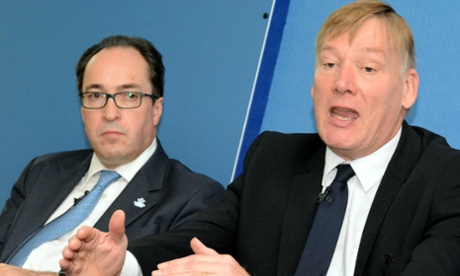
Local government minister Kris Hopkins, speaking at the Conservative party conference in Birmingham, said that while the state was there to provide a safety net for vulnerable people and those “who have not been able to look after themselves or make that provision”, it was an individual’s responsibility to plan for his or her later years.
Hopkins told delegates at a Guardian seminar: “Individuals need to consider their future and I don’t think they should consider it in older life: your pension, your future and thinking about what’s your life plan.”
That responsibility, he added, includes people looking after their own health and making “some life choices”. Younger people, he said, could not expect the same system to be in place in 20, 30 or 40 years’ time, and would have to plan for themselves.
The event, part of the Guardian’s Ageing Population series on preparing for demographic change, asked whether citizens or the state should have the responsibility of ensuring a decent future for older people. Too often older people were making “cliff-edge decisions” at a time of crisis, said Janet Morrison, chief executive of the charity Independent Age. She called for a more positive message about how to make life changes and to maintain “the convoy [of networks and support] you build up through your life.”
Dame Clare Tickell, chief executive of the housing provider Hanover, agreed that people should be making positive choices and added that “downsizing should not be a distress purchase”.
Sir Merrick Cockell, senior adviser to the PA Consulting Group and former leader of both Kensington and Chelsea council and the Local Government Association, said families should talk more openly about future plans, not just discussing their wishes for end-of-life care, but thinking about what will happen after retirement.
“We have to think about the stages of thinking ahead, what might be necessary, what might be triggered at certain points in a planned but relatively sensible way,” Cockell said. “Not great interventions but a slowly increasing level of support so that ultimately people stay in the homes they want to stay in and have the right level of care. Those sorts of family debates are difficult but we have to encourage them.”
But Morrison said she was concerned about the growing numbers of people who are ageing without families to support them.
Frail elderly people were often being “batted between hospital and home”, said Mike Adamson, acting chief executive of the British Red Cross. He said a focus on preventive services would help people to live independently for longer, adding that “a pound [spent] now saves pounds later”.
Morrison called for an honest debate about the financial challenge facing public services. “There is a real black hole in the finances of the health service but also, and just as importantly, there is a black hole in the finances for social care,” she said.
“So I think we need to be more honest with people, to say we are going to have to pay more for a joined-up health and social care system. We need to be able to have a single budget for that and we need to pay more, whether that’s through general taxation, whether that’s through targeted taxation or you personally – if you can afford to do so – having to pay more.”
Hopkins responded that tax increases could not be justified until there was public confidence in services and systems.
The panellists rejected the suggestion of a minister for older people. Tickell said the creation of such a position would risk sidelining the issue, while Adamson said that action at a local level was needed to delay or reduce the need for care. Technology offers opportunities to not only save money but help people to lead longer, healthier lives, said Cockell.
Panellists agreed that there was a need to reframe the debate on the ageing society, to make it relevant and engaging for younger people, and acknowledge that older people could expect not only to live longer but to remain healthy, active citizens until an older age.
Coming into retirement used to be seen as edging towards dying, said Cockell, but it should be regarded as “edging towards the second half of your life”. Keeping the public involved in the debate was difficult, he added, as “people generally switch off the moment you say the word pensions”.
Tickell added: “We need to be anticipating what is going to interest people and resonate with them and make sense. We need to bring this stuff to life, something that people will want to engage with.”
Read more from the Guardian Big Ideas at the 2014 party conferences.