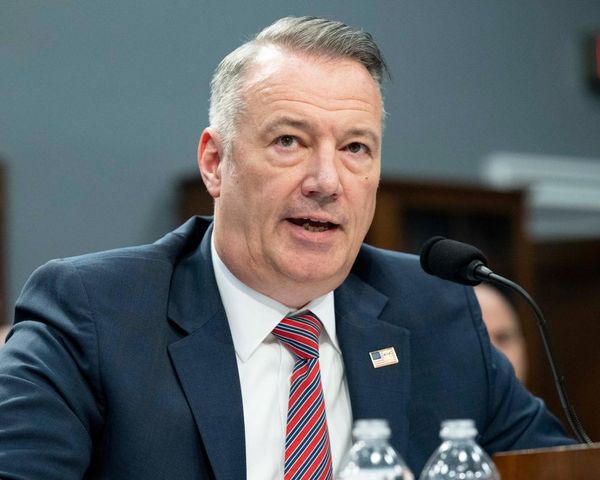
Tory leadership hustings - Summary
That was the third leadership hustings organised by the Conservative party for the two candidates left in the leadership contest, Boris Johnson, the favourite, and Jeremy Hunt. By now many of their lines are well rehearsed. But the right questions can still produce new insights. Here are the main points.
- Boris Johnson refused to rule out proroguing parliament to prevent MPs blocking a no-deal Brexit. (See 9.12pm.) My colleague Rowena Mason has the full story here.
- Johnson claimed that the SNP would have their “guns spiked” after Brexit because they would find it much harder to argue for independence. He said:
A really good Brexit will help to cement the union because there are all sorts of ways in which post-Brexit we will be able to intensify the union.
I would also point out that the SNP will effectively have their guns spiked because once we make a great success of Brexit they will have to argue to the people of Scotland that they want to rejoin the EU, join the euro, join the Schengen area, submit Scotland to every type of EU regulation and lose control, which they will have just gained, of Scottish fishing.
Is that really a great manifesto for the SNP? Absolutely not.
We can entrench and protect and enhance the union by making a success of Brexit and having a sensible approach.
There is some merit in Johnson’s argument, although it is not the consensus view on the impact of Brexit on the union, and there are strong grounds for thinking Brexit is actually helping the SNP. See 11.27am for more.
- He claimed that his tax policies would be “very, very progressive” - despite the fact that the Institute for Fiscal Studies has published an analysis showing they are extremely regressive. Asked about the IFS analysis, Johnson said:
They are talking about one particular aspect of what will actually be a very, very progressive approach. If you want to look at how I view society and how to tax society, look at what we did in London where we massively expanded the living wage and put millions of pounds in the pockets of the poorest families in society.
As mayor of London Johnson only had a tiny impact on the amount of tax paid by individuals, through council tax. But the IFS has analysed his two major income tax proposals. One would give £9bn to mostly the wealthiest 10%. And the other would distribute £11bn more widely, but with the richer families gaining more than poorer ones.
- Johnson said that he would champion the people who deliver public services, saying that “You’ve got to love up the people that you lead.” He said that, as London mayor, he had been in charge of the Tube when jobs were being cut and the service was being modernised. Explaining how he did it, he went on:
We had some very tough arguments. But the way I think I was able to prevail and to make the reforms - and it was basically closing a load of ticket offices and radically changing the way the Tube works - I was able to do it because as chairman of Transport for London I put my arms around everyone in that organisation and I championed them. And you’ve got to love up the people that you lead, if you see what I mean. It’s very important. I mean it. If you are a leader in a great mixed economy like ours, you can’t just be the chief consumer. You are the chief producer. You are the person who leads that public service, you are the person who champions those people. You’ve got extol what they’re doing as well as reforming them.
- Johnson said he would increase education spending by around £5bn. (See 7.55pm.) He has already said that he would level up school spending so that every secondary school in England received at least £5,000 per pupil. One analysis said this would cost around £50m, but the figure Johnson came out with tonight suggests he is planning a more extensive education spending spree than some assumed.
- He said that he wanted the UK to adopt a tougher approach to Brexit talks with the EU - or to show “a little bit more resolve”, as he put it. (See 7.29pm.)
- He called for a cross-party solution to the problem of how to better fund adult social care. (See 7.44pm.)
- Jeremy Hunt said he had a programme called “right to own” which would help 1.5m young people buy their homes. This would also help the Tories win over younger voters, he said, describing this as one of his key aims. He explained:
Margaret Thatcher got 1.5m council tenants onto the housing ladder through her right to buy scheme. I have an equally ambitious scheme called right to own which will help 1.5m young people get on the housing ladder, people who can’t afford a mortgage or a deposit.
And the way we will do that is by gifting people land that already has planning permission so that the increase in the value of the land is not something that goes to developers but goes to the young person who can’t afford to get onto the housing ladder. We will be publishing details of those plans in the next few days. But that is a central part of my mission to get more young people to support our party, because that is so important for our future.
- Hunt rejected an IFS analysis implying his tax and spending plans were unaffordable. He said all his promises were affordable.
All my commitments are funded through a pledge that I will keep reducing debt as a proportion of GDP over the economic cycle so we won’t be building up debt for future generations,” he said
We actually have now about £26bn of headroom a year, which is why we can afford some of these commitments.
That’s all from me for tonight.
Thanks for the comments.

Updated
Boris Johnson refuses to rule out proroguing parliament to stop MPs blocking no-deal Brexit
Last night Liz Truss, the chief secretary to the Treasury and probably the most senior of the many proxies that Boris Johnson’s campaign team has been sending out to do interviews on his behalf, told Newsnight that Johnson was definitely ruling out proroguing parliament to facilitate a no-deal Brexit
Emily: He’s [Mr Johnson] definitely ruling out proroguing or suspending parliament?
— BBC Newsnight (@BBCNewsnight) June 26, 2019
Liz Truss: “That’s right”
Tory MP Liz Truss says Boris Johnson does not want to use “archaic manoeuvres” and has been “extremely clear” that the UK will leave the EU on 31 October#newsnight pic.twitter.com/qy63AIWATr
Only - Johnson is not ruling it out. This is what he said when he was asked categorically if he was willing to rule out proroguing parliament for this purpose. (See 7.52pm.) He replied:
I’m not attracted to the idea of a no-deal exit from the EU but, you know, I think it would be absolutely folly to rule it out. I think it’s an essential tool of our negotiation.
I don’t envisage the circumstances in which it will be necessary to prorogue parliament, nor am I attracted to that expedient.
This is a good example of how the Johnson camp has been delivering different messages to different audiences - and how he is managing to attract the support of Tory leavers like Steve Bakers and Tory remainers like George Osborne.

Q: What do you think the impact of the green economy on the economy?
Hunt says he is about to say something unpopular; he thinks we need to dig up the roads, so that we can install ultra-fast broadband.
But at the same time the government could install electric car charging points.
The Conservatives are practical, he says - doers and not just talkers.
And that’s it.
I will post reaction and a summary soon.
Q: What would you do to encourage more diversity in higher education?
Hunt says some degrees are good, some aren’t. There are degrees that cost £50,000, but that don’t give young people back the earning power they need.
He says in Switzerland and Germany every young person gets a qualification that will get them a decent job.
This is something that requires huge reform. The Conservatives should be the party that provides ladders of opportunity. Whether people climb those ladders is up to them.
Q: How would you improve intra and intercity travel?
Hunt says he will say something unpopular with some Tories:
I will deliver HS2.
He can understand why some people might not want it. But, at the time of Brexit, the UK has to show confidence.
He says he lived in Japan for two years. They launched their first high-speed rail in 1964.
And he says the Tories have to show they can spread prosperity. Projects like HS2 are seen as proof of the Tories’ commitment to the whole country.
Q: The NHS has taken on the status of a national religion, and is often said to be beyond sensible management. Do you agree? And do you agree that people should take more responsibility for their health?
Hunt says the NHS cannot do everything. But he is proud of it, and he wants it to go on doing everything it currently does. He says it is very important to know that, if people need healthcare, they can get it for free.
He says personal responsibility is important.
But he compares it to other health systems around the world.
He says he would like the NHS in a decade’s time to have the best cancer survival rates in Europe. He knows that can be achieved.
Q: So what role does personal responsibility play?
Hunt says he does not favour rationing services.
But there is a big role for personal responsibility. He launched a childhood obesity strategy involving parents.
Q: Would you use our nuclear deterrent in extreme circumstances?
Hunt says his father, in his last job, was responsible for the nuclear deterrent. They thought about this a lot in his family. If you have a deterrent that you are not willing to use, it is not a deterrent. The lesson from this is that you have to be strong to be safe.
Q: [From a police and crime commissioner candidate] Will you increase police funding?
Hunt says the government had to cut spending to get the budget under control. It was right to do that. But in two areas the cuts went too far - in social care, and in policing, where there has been a delayed impact. Crime falls for a while when you cut police numbers, but then goes up.
Q: What about stop and search?
Hunt says he agrees with Sajid Javid and Boris Johnson about the need for stop and search.
Q: You need all available talen in your Brexit negotiating team. Would you include Nigel Farage?
No, says Hunt - to applause.
He says Farage does not want a deal. But Hunt says he does want a deal. It won’t be easy, “but we Conservatives have done more difficult things in the past”.
Q: So how will you deal with the Brexit party?
Hunt replies:
There is only one way to deal with the Brexit party. And that is to Brexit.
He says the Conservative party has always been best when it has had radical reformers and one nation Conservatives in it at the same time.
He says it is “dangerous” to label people as remainers or leavers. He voted remain, but he wants to deliver Brexit.
Someone from the audience is shouting a question about no-deal. (We can’t hear from the live feed, because he does not have a microphone.)
Hunt says he would expect all his ministers to follow cabinet policy.
Q: What would you do about student debt? The interest rates bear no relationship to what the government pays?
Hunt says the system feels unfair. The government ends up paying a large sum.
He says cutting student loan interest rates to about 3% would cost about £1.3bn. That sounds like a lot of money. But unless the government acts on this, Jeremy Corbyn could win an election.
Q: Will you have a policy equivalent to Thatcher’s right to buy scheme. How about exempting homes worth less than £1m from stamp duty?
Hunt says he has a plan called right to own. It would help 1.5m young people buy homes.
Hunt is now taking questions from the audience.
Q: What would your first three piece of legislation be?
Hunt says first he would pass a no-deal bill to prepare the UK for no-deal. We will have to expand capacity at ports like Dover.
Second, he would have a budget, so those tax cuts happen straight away.
Third, he has said he would abolish illiteracy. Nearly a third of primary school pupils not able to read or write to the appropriate level.
Q: Would you spend more on this?
Yes, says Hunt.
But he says it is not just about spending.
He says he would make extra spending conditional on reform.
Q: You are going to spend £15bn more on defence. How much would you spend on education.
Hunt says he would keep reducing debt over the economic cycle.
Q: How do you respond to the IFS critique of your tax and spending policies?
Hunt says he disputes some of their figures. But he says cutting corporation tax makes sense. About half the spend will be recuperated, through more tax. But it would also increase economic growth, he says.
Q: What is your plan to encourage entrepreneurs?
Hunt says he thinks tuition fee interest rates are too high. When he set his first business, he did not have student debt. That is what he wants to get rid of tuition fees for people who set up small businesses. Only a relatively small number of people would benefit.
Q: Boris Johnson says everyone will claim to be an entrepreneur.
Hunt says he will only waive fees for people who set up a business employing 10 people for five years. If too many people apply, that will be excellent.
Updated
Q: What relationship do you have with your foreign counterparts?
Hunt says he has good relationships with his counterparts. But they are direct relationships. A friend tells you how things are.
Q: The Japanese foreign minister is telling you not to go for no-deal? (See 9.23am.)
Hunt says the Japanese do say that. But he tells them that the British fought for democracy in the second world war. The Brexit decision must be honoured. If people think the UK will cancel Brexit to avoid no-deal, they are wrong.
Hunt says he would do everything possible to ensure Nicola Sturgeon could not exploit Brexit.
But he says more than 1m people in Scotland voted for Brexit. Their wishes have to be honoured.
Hunt's Q&A
Q: Why do you want to be prime minister?
Hunt says he wants to change the country.
He says it is a great country. If you are British, you have won the lottery ticket of life. But it could be better.
Q: Are you worried you could be the shortest-serving PM in history?
Hunt says that could happen if we get it wrong.
He also says he would resign if he failed to deliver Brexit.
Of course, no PM is going to last any time at all if they don’t deliver Brexit and deliver it very quickly.
UPDATE: I’ve corrected the last two sentences to make it clear Hunt was saying he would resign if he did not deliver Brexit.
Updated
He says, as an entrepreneur, he wants to kick start the economy.
He says, as foreign secretary, he also wants Britain to walk tall in the world.
His dad was in the navy. His generation won the cold war. And he says he wants to increase defence spending. Britain is back, and its voice will be strong in the world.
He would be the first PM who had been responsible for the NHS. He has always thought the Tories need a social mission as well as an economic mission. And social care is crucial. He wants every older person to be treated with respect.
And he wants to help young people too. He wants to abolish illiteracy.
And he says he knows what it is like to win a marginal seats, he says.
He says he would aim to attract more young voters.
We can’t be the party of aspiration unless the most aspirational people are voting for us.
And he would promise not to hold an election until Brexit has happened.
He says, faced with Jeremy Corbyn, the Tories can do better. They can choose their own Jeremy.
He ends by saying he wants to deliver Brexit and unleash the potential of the UK.
Jeremy Hunt's opening speech
Jeremy Hunt is speaking now.
He says it has been an amazing campaign. And he suggests it is time to bring the Tory conference back to Bournemouth.
- Hunt suggest bringing Tory conference back to Bournemouth.
He says the internet has been kind to him. People have suggested various hashtags. One was HuntyMcHuntface. Be careful how you say that at home, he says.
He says the Tories are at a crucial moment. If they get it right, they can send Jeremy Corbyn packing.
He says the Tories have not talked enough about how to deliver Brexit. He is an entrepreneur. He asks the audience how many of them have set up a business. That is the Conservative party, he says - the party of business.
He says entrepreneurs know how to negotiate. And the first rule of a negotiation is being willing to walk away.
A Jeremy Hunt campaign video is now being shown.

Q: I’ve been thinking about the collective noun for Conservative members. A division, I think. What will you do to unite the party?
Johnson says sadly this is true.
But the problem has been caused by a lack of decision.
Once the UK is out of the EU, it will be easier to bring people together.
Voters think they cannot trust the Tories or Labour on this.
Q: Can they trust you?
Yes, says Johnson.
He will take people forward with his vision, including trust in the market and trust in private enterprise.
They have not been selling it properly. But it is time to get back to that tune, he says.
And that’s it.
Johnson expresses surprise it is over so soon.
Johnson says he would increase education spending by around £5bn
Q: What can you do to help schools?
Johnson says the number one thing he will do when he gets into Number 10 will be to increase schools funding.
He says his core message is about “levelling up” this country.
Brexit happened because too many places felt left behind, he says.
He says there are 500 towns in the UK that could be doing so much better.
Q: How much extra will you spend on education?
Around £5bb, says Johnson.
- Johnson says he would increase education spending by around £5bn.
Q: I have been waiting 40 years for Brexit. Would you be willing to prorogue parliaement to get Brexit through?
Johnson says he would rather trust the common sense of MPs.
Q: Yesterday you said you were not attracted to archaic devices like prorogation. Will you rule it out?
Johnson says he is not attracted to a no-deal either, but he won’t rule it out.
He is not attracted to the idea of proroguing parliament, and he does not think it will be necessary.
Johnson promises pro-public service approach, saying 'You've got to love up the people you lead'
Q: [From a councillor who lost her seat at the election] What will you do to give the country a good transport system?
Johnson apologises to the woman for her losing her seat. He says it was the fault of MPs for not delivering Brexit.
He says the UK has been a world leader in transport in the past.
Rail needs to be affordable. You need to have governments that can take tough choices, that can get reforms without causing the system to collapse.
As London mayor he modernised the Tube. Some jobs had to go. The unions did not like it. Ticket offices were closed. But he got it done because he put his arm around Transport for London.
You have got to love up the people you lead.
If you are a leader, you cannot just be a consumer. You have got to extol the service.
(The RMT would probably contest this account of Johnson’s mayoralty.)
Johnson calls for cross-party solution to adult social care
Q: How would you fix the care crisis?
Johnson says this is probably the biggest challenge facing the country (which is what he said about housing a moment ago).
He says there should be a cross-party consensus. He would “literally” bring the parties together.
- Johnson calls for cross-party solution to adult social care.
He says two principles should apply: that no one should be at risk of losing their home, and that everyone should be treated with dignity in old age.
Q: What will you do to all more people to own their own homes?
Johnson says this is the great challenge of the age.
He says infrastructure is key. He says Crossrail should be extended. He cites the huge amount of building going on in the Vauxhall area of London. Why is that? Because George Osborne agreed to build a new tube station there, funded by future revenue.
Q: What do you think of Jeremy Hunt’s plan to cut tuition fees for students who become entrepreneurs?
Johnson says, under that plan, you would get a lot of people calling themselves entrepreneurs.
Johnson claims he would adopt 'very, very progressive' approach to tax - despite IFS saying rich would gain most
Q: Where will the money come from?
Johnson says there is ample headroom.
And he says there are some taxes you can cut, leading to an increase in revenue.
He says he will adopt a “very, very progressive approach” to taxation.
- Johnson claims he will adopt a ‘very, very progressive approach’ to taxation. In an analysis out yesterday (pdf), the Institute for Fiscal Studies said almost the opposite about Johnson’s plans. It said one of his two main tax proposals would give £9bn to mostly the richest 10% of the population.
Q: What will you do for special educational needs?
Johnson says every kid should have the best education.
He wants to level up, and fund education properly.
He says that is fundamental to Conservatism - giving people opportunity.
And he includes further education in that - it can transform people’s lives.
Johnson claims Brexit will make it harder for SNP to argue for independence
Johnson is now taking questions from the audience.
Q: I will have to decide who is best for the country and who is best for the party. Who should be it?
Johnson says he would be best for both. Delivering Brexit will lighten up the economy.
Q: What comes first - country or party?
Both, says Johnson.
Q: But what about the threat to the union.
Johnson says the SNP will have their “guns spiked” by Brexit. They would have to promise to join the euro, join the Schengen area and give up control of fishing - just after getting it back.
- Johnson claims Brexit will make it harder for the SNP to argue for independence.
Johnson says he wants to show 'little bit more resolve' in negotiations with EU
Q: Are you in contact with EU negotiators?
Johnson says he is in contact with people around the world who are wishing him well. But he is not in contact with Michel Barnier. That would be “presumptious”.
He says it is time for “a slight change in our approach”.
He is a “very irenic kind of guy”, he says.
But in the end this is a great country. We have made a great offer to the EU, with the £39bn. There is a a
I think a little bit more resolve is called for and a little bit more sense that we can get this done.
- Johnson says he wants to show “a little bit more resolve” in negotiations with the EU.
Q: Yesterday you said the chances of a no-deal Brexit were a million to one. Do you stand by that?
Yes, says Johnson.
He claims there has been a “change of mood” at Westminster. MPs now know they have to get this over the line. If they don’t, there will be democratic retribution.
Johnson's Q&A
Hannah Vaughan Jones, a journalist, is chairing. She is asking the first questions.
Q: Is it a lifelong ambition to be PM or are you doing it out of a sense of ambition?
Johnson says his sister Rachel says he once said he wanted to be world king. He disputes that. He has had lots of ambitions in his life. At one point he wanted to be a rock start.
Q: How would an Australian points-based system work?
Johnson says he wants to continue to attract talent.
The system should respond to the need of the economy. People should come to the UK in response to need. And they should come in a way that is democratically controlled.
Q: What are the downsides?
Johnson says we have not yet seen what the downsides are. Let’s look at the upsides, he says.
Q: What about non-workers, family members and students?
Johnson says family members already have a lot of rights.
On students, he starts waffling, saying Bournemouth has a good university, and he has one of its hoodies that he goes jogging in.
He says he would lift the cap on students coming to the UK. They would not be included.
Updated
Boris Johnson's opening speech
Boris Johnson is now giving his opening speech.
He says the Conservatives are suffering because they have not delivered Brexit. But the darkest hour is before dawn, he says.
He says there are three things to do.
First, they need to get Brexit down by 31 October. If they don’t, they will erode trust.
Kick the can again, and we kick the bucket.
He says they need to disaggregate the withdrawal agreement, give the EU nationals their rights - he asks people to applaud this point, and they do - keep the money in “creative ambiguity”, and negotiate a new deal.
And the way to get a deal is to prepare for no deal, he says.
He says there are people who say it can’t happen.
I say nonsense. The planes will fly.
And after the UK is out, they can unite the country, this “awesome foursome”. This is what he did as London mayor, he says. He says he ensured London no longer had any of the poorest boroughs in the UK, and he brought people together.
And he will ensure there is full-fibre broadband across the UK.
He wants modern Conservatism. Over the last three years they have not done enough to make the moral case for Conservatism, he says.
Then the Tories can defeat Jeremy Corbyn, who would be an economic and political disaster.
Updated
Boris Johnson is going to go first.
At the hustings a Johnson campaign video is being shown first.
There is a live feed of the hustings here.
Tory leadership hustings
The Tory leadership hustings is starting soon.
According to ITV’s Paul Brand, people were queueing to get into the venue in Bournemouth two hours ago.
Queueing in Bournemouth for the next round of Tory hustings... pic.twitter.com/3VcRp6FoDN
— Paul Brand (@PaulBrandITV) June 27, 2019
Updated
Kezia Dugdale, the former Scottish Labour leader, has said there is a serious prospect that Jeremy Corbyn could agree to stage a second Scottish independence referendum, to win SNP support in a hung parliament.
In a BBC Scotland interview to mark her last full day as an MSP, Dugdale also said she believes Boris Johnson could take a gamble and call a second referendum if he wins the Conservative leadership contest. She said:
I can see a scenario where the SNP go to Jeremy Corbyn and say we will will vote for every one of your budgets in the lifetime of your parliament in return for indyref2 [a second independence referendum].
At that point the Labour party has to decide does it appease the SNP and give them indyref2 in order to be in power - or does it give up the prospect of being in power in order to protect the union?
She added that Johnson might “roll the dice on indyref2 because he feels like it”.
Dugdale has been a fierce critic of Corbyn’s leadership, and quit after two years as Scottish Labour leader in part because of their clashes over policy and Labour’s direction. She has now left frontline politics entirely, to become director of the John Smith Centre for public policy at Glasgow university.
Corbyn has recently denied he has any plans for informal deals or coalitions if he failed to win an outright Commons majority, and insists Labour would operate as a minority government.
His Scottish advisors are adamant Corbyn would not offer such a deal to the SNP. Even so, he has shown some ambivalence about a second referendum in the past, suggesting that if Scottish voters wanted one, that could not be ignored and he would decide once he became prime minister.
Dugdale said she believed the yes campaign would lose a second referendum – they lost by 45% to 55% in the 2014 vote, because of the significant economic challenges. The SNP needed to find credible answers on the economy and Scotland’s currency, she said.
Nicola Sturgeon, the SNP leader, claimed during the 2017 general election campaign that Dugdale had admitted soon after the UK voted to leave the EU in June 2016 that a new independence vote may be needed – a claim Dugdale angrily denied.

Afternoon summary
- Ken Clarke, the father of the house of Commons and veteran Tory pro-European, has said that he does not think in practice either Boris Johnson or Jeremy Hunt would be willing to countenance a no-deal Brexit on 31 October - even though both Tory leadership candidates say they are keeping this option open. (See 5.26pm.) Clarke was speaking before another Conservative party hustings tonight, in Bournemouth, which will be the second in front of an audience of Conservative party members (and the third if you include last night’s digital one). It starts at 7pm, and I will be covering it live.
- Jeremy Corbyn faces mounting dissent over the decision to readmit Chris Williamson to Labour, with the deputy leader, Tom Watson joining MPs and peers to demand he lose the whip, while nearly 70 Labour staff members wrote to express their outrage. Corbyn has said he was not personally involved in the decision to reinstate Williamson yesterday. The Labour MP Wes Streeting has described this as “handwringing nonsense”.
This is handwringing nonsense. https://t.co/p6qkPw2Xry
— Wes Streeting MP (@wesstreeting) June 27, 2019
- Ministers have been told to investigate issues with universal credit after new estimates showed benefits overpayments and underpayments have reached their highest levels, the Press Association reports. Excessive payments of benefits excluding state pensions increased 4.6% to £4bn last year, the National Audit Office said. At the same time the Department of Work and Pensions was estimated to have underpaid claimants by £1.9bn, an increase of 2.2% in a year. These are the highest figures since the current method for estimating fraud and error was introduced in 2005/06. Gareth Davies, the head of the NAO, said the DWP must “work to understand the reasons for high fraud and error rates for Universal Credit”. “The value of fraud and error in benefit spending is a longstanding and costly issue for the department,” he added.
I will be covering the Tory hustings starting at 7pm, but for the next 45 minutes or so the blog will be on hold (unless something major happens).
Johnson and Hunt would not support no-deal Brexit on 31 October despite what they say, says Ken Clarke
At the press gallery lunch Ken Clarke also said that he did not believe Boris Johnson or Jeremy Hunt would take the UK out of the EU without a deal on 31 October, even though both of the claim they would be willing to do so. He explained:
I don’t think either candidate believes leaving with no-deal makes the slightest sense at all.
Jeremy hedges it, Boris does his usual thing of changing the way he expresses it day by day.
He’ll make his mind up what he’ll actually do regardless of what he has said if he actually finds himself prime minister.
And I’m sure Jeremy will start getting back common sense if he finds himself prime minister.
Neither of them thinks we’re going to leave with no deal on October 31 - it is in all practical terms utterly impossible.
Speaking at a press gallery lunch today, Ken Clarke, the veteran Tory pro-European, said the Brexit crisis was doing “terrible, terrible damage” to the political institutions of the country. He told journalists:
When you think no more ridiculous turn events can take place, another ridiculous turn of events does take place ...
The worrying thing for someone like me is that it is doing terrible, terrible damage to the political institutions of this country.
Politicians quite rightly are usually held with low regard.
I’ve never known politicians in a political system held in such contempt as they are by perfectly sensible members of the public at the moment.
And the traditional centre-right politics, centre-left politics is collapsing - as it is in the Western world... it’s a deep underlying discontent that people have lost confidence in their old, regular politicians, and regular blocs and so on.
At the moment we are at a fairly dire time and not making much progress towards getting out of it, it seems to me.


In an article in this week’s Spectator, James Forsyth says, if Boris Johnson become prime minister, civil servants will advise him to request an emergency EU summit for September. Forsyth says:
I understand that the civil service will immediately urge prime minister Johnson to request a special September meeting of the EU Council. They argue that without such a move, the Commission’s negotiating mandate won’t change. Nothing could happen therefore before the October Council, which would be cutting things too fine.
Even Johnson’s confidants think that the EU will, at least initially, try to call his bluff — and reject the idea of reopening the withdrawal agreement. This is when things will get really interesting. Under Boris Johnson, the UK’s government response to this would be to ramp up no-deal planning.
Watson urges Corbyn to 'show leadership' and remove whip from Chris Williamson
In an interview with the BBC Tom Watson, Labour’s deputy leader, said he and the other 90 MPs and peers signing the letter about Chris Williamson (see 2.34pm) wanted Jeremy Corbyn to remove the whip from him. He said that, because the party disciplinary process had led to the national executive committee (NEC) panel lifting Williamson’s suspension, a parliamentary disciplinary process was now needed. He explained:
We have never had an MP accused of stirring up so much upset in a particular community in Britain. It required a full inquiry. And that’s why [the NEC] decision is so bewildering ...
Sadly the only route left is for Jeremy to step in, show leadership, remove the whip and allow our chief whip to do a proper inquiry.
Watson said that Williamson was entitled to a proper investigation.
What I would say is that Chris Williamson is entitled to a proper investigation. The magnitude of the allegations against him are so great, and the upset and the anger caused obviously required referring to that kind of inquiry.
And he said that he was “bewildered” by the decision by the NEC panel. ‘What they have done is taken away a proper disciplinary inquiry that would have got to the facts of this case,” he said.
Watson also said he had not discussed today’s open letter with Corbyn yet, but he said they would be talking in due course.

Earlier today, before the Tom Watson letter about Chris Williamson was released (see 2.34pm), Jeremy Corbyn was asked about the Williamson row by the BBC. He said:
We deal with antisemitism very, very seriously. There is no place of antisemitism in our society and obviously not in our party as well. And anyone that makes antisemitic remarks can expect to be at the very least reprimanded and, if they are very serious, and if they are engaged in antisemitic activity, then they are expelled from the party.

Labour party staffers join call for Chris Williamson to be suspended again
This is from the New Statesman’s Patrick Maguire.
NEW: 68 Labour staff have put their names to this letter to Jennie Formby. They say that Chris Williamson’s presence in the party makes them feel “unwelcome” at work pic.twitter.com/854kwa5Dww
— Patrick Maguire (@patrickkmaguire) June 27, 2019
Jennie Formby is Labour’s general secretary.
Brexit civil servant in charge of no-deal planning quits
The top government official in charge of no-deal Brexit planning has quit just as the chances of crashing out of the EU appear to have increased. As my colleague Lisa O’Carroll reports, Tom Shinner, 33, director of policy and delivery coordination at the Department for Exiting the EU, was in charge of coordinating the domestic policy implications of Brexit across government departments to ensure a smooth exit from the EU.
This is from ITV’s Paul Brand, who was covering the Boris Johnson visit to Portsmouth.
Asked a few Conservative members in Portsmouth what they made of Boris Johnson after his visit. 3/4 I spoke to will be voting for him.
— Paul Brand (@PaulBrandITV) June 27, 2019
Asked one “what about his personal life?”
“I don’t give a damn!” pic.twitter.com/jM9iJvMHYt
Peugeot to build Astra in Cheshire if UK secures good Brexit deal
Peugeot said it will build its new Vauxhall Astra car at its Ellesmere Port plant but only on the condition the government secures a good Brexit deal.
The decision is a major boost for the embattled British car industry and the 1,100 employees at the plant, whose future had been thought to be dependent on winning the Astra contract.
The Astra is the bestselling model under the Vauxhall and Opel brandsand will be built in Rüsselsheim, Germany, as well as at Ellesmere Port, near Liverpool.
However, PSA Group, the parent company of the Peugeot, Citroen and Vauxhall brands, gave a clear warning against a bad Brexit deal. In its announcement, PSA Group said:
The decision on the allocation to the Ellesmere Port plant will be conditional on the final terms of the UK’s exit from the European Union and the acceptance of the New Vehicle Agreement, which has been negotiated with the Unite trade union.
Theresa May is expected to have meetings with Saudi Crown Prince Mohammed bin Salman and Turkish president Recep Tayyip Erdogan on Saturday in the margins of the G20 summit, the Press Association reports. The meetings will follow Friday’s face-to-face talks with Russian president Vladimir Putin. Other meetings have been lined up on Saturday with Australian counterpart Scott Morrison and UN Secretary General Antonio Guterres.

Jeremy Hunt has been visiting the Isle of Wight too.
Great to be back in the place where my parents got married, the Isle of Wight. I met with a fantastic group of Conservative members and talked about how important it is to back businesses. They are the life blood of places like the Isle of Wight. #HastobeHunt pic.twitter.com/skJixu8PXK
— Jeremy Hunt (@Jeremy_Hunt) June 27, 2019
Updated
Here is some expert comment on the attempt by Margaret Beckett and Dominic Grieve to use amendments to the estimates next week to prevent a no-deal Brexit. (See 2.06pm.)
From the Hansard Society’s Brigid Fowler
If people are just seeing news re: Beckett/Grieve ams tabled to so-called '#estimates', we flagged this summer's estimates process in a recent piece - see below. (Short thread) 1/ pic.twitter.com/l9zZ01dhiP
— Brigid Fowler (@Brigid_Fowler) June 26, 2019
The Beckett/Grieve ams are tabled to the motions to authorise the 2019-20 spending of depts whose estimates have been chosen by the Backbench Business C'tee for separate debate & vote (this yr, 4 depts - DFID, DoE, DWP, HCLG). Motions & ams are here: 2/ https://t.co/uYTWTeaoxf
— Brigid Fowler (@Brigid_Fowler) June 26, 2019
The Beckett/Grieve ams seek to make parliamentary authorisation for these 4 depts' 2019-20 spending conditional on either the UK leaving the EU only with a Withdrawal Agreement, or approval by the Commons of a motion giving explicit approval for a #nodeal Brexit. 3/
— Brigid Fowler (@Brigid_Fowler) June 26, 2019
I'm not surprised someone's giving the estimates process a go as an anti-#nodeal move, since estimates are one of few things gov *has* to put before HoC before summer & where it can't get round needing HoC approval. We (& others) have been speculating about this possibility. 4/
— Brigid Fowler (@Brigid_Fowler) June 26, 2019
But trying to amend an estimates motion is rare (the last time such an amendment was moved was 2002). And, even if the move proves not to go very far, bringing 'the power of the purse' into play represents an escalation in the Commons-government tussle. /ends
— Brigid Fowler (@Brigid_Fowler) June 26, 2019
From the Institute for Government’s Hannah White
In my view this is the most promising procedural route available to MPs seeking to prevent a new Prime Minister pursuing a no deal exit...https://t.co/H5uClBMYPX
— Hannah White (@DrHannahWhite) June 27, 2019
... as @pseaward1 has been arguing for some time. But whether it will succeed will depend on whether enough MPs opposed to no deal realise this is may be the only effective opportunity to prevent it and are prepared to vote for the motion before no deal seems imminent.
— Hannah White (@DrHannahWhite) June 27, 2019
From Chris White, a Conservative former special adviser in the leader of the Commons’ office
The latest move by MPs seeking to stop no deal: cut off the Government’s provision to spend money unless:
— Chris White (@cgwOMT) June 26, 2019
1️⃣ The Commons passes a Withdrawal Agreement
2️⃣ The Commons agrees to leave the EU without a Withdrawal Agreement. https://t.co/lXPyIiTNq6
Why is this important? Annual expenditure control remains a constitutional requirement, and the Commons must approve the Estimates each year. Estimates scrutiny has historically been very poor, and the @CommonsProcCom produced a report on this in 2017 https://t.co/wUbaUzTwak
— Chris White (@cgwOMT) June 26, 2019
Tabling amendments to the Estimates that places conditions on the Government’s expenditure is a new tactic - until now MPs opposed to no-deal have tried to capture days to legislate to compel the Government to seek an extension. However chances to do this before 31.10 are scarce.
— Chris White (@cgwOMT) June 26, 2019
This stops short of a vote of no confidence, but ups the stakes on the Government. The Estimates process needs to be completed before the House rises before the summer recess. It’s early to assess chances of success, but the Govt will be taking this very seriously.
— Chris White (@cgwOMT) June 26, 2019
For clarity, the Govt could delay to the Autumn sittings but not to 31.10, so they could pull the debate next week, but not indefinitely.
— Chris White (@cgwOMT) June 26, 2019
Boris Johnson has been posing for photographs on the ferry to the Isle of Wight.


Here is the statement on Chris Williamson organised by Tom Watson in full.
Statement on Chris Williamson pic.twitter.com/WGYx9os2A0
— Tom Watson (@tom_watson) June 27, 2019

Updated
Tom Watson and 90 Labour parliamentarians urge Corbyn to suspend whip from Chris Williamson
Labour’s deputy leader Tom Watson and 90 of the party’s MPs and peers have issued a statement demanding Jeremy Corbyn withdraw the whip from Chris Williamson. The statement said they cannot overstate the “depth and breadth of hurt and anger” at the readmission of the Derby North MP to the party following his suspension over allegations of antisemitism. The statement says:
We cannot overstate the depth and breadth of hurt and anger felt about the readmission of Chris Williamson into the Labour party and the questions that arise about the fairness of the process.
The officer recommendation - that Chris Williamson should be referred to the national constitutional committee for action - was ignored by the members of the NEC panel. That the composition of that panel was changed at short notice seems highly irregular.
Justice needs to be seen to be done and this process has not done that.
Given that the Labour party is being investigated by the EHRC over allegations of institutional antisemitism this case is particularly important.
It is clear to us that the Labour party’s disciplinary process remains mired by the appearance of political interference. This must stop. We need a truly independent process.
We call on Jeremy Corbyn to show leadership by asking for this inappropriate, offensive and reputationally damaging decision to be overturned and reviewed.
Ultimately, it is for Jeremy Corbyn to decide whether Chris Williamson retains the Labour whip. He must remove it immediately if we are to stand any hope of persuading anyone that the Labour party is taking antisemitism seriously.

Updated
Lunchtime summary
- Downing Street has condemned moves by MPs to shut down government spending in the event of a no-deal Brexit as “grossly irresponsible”. The Labour MP Margaret Beckett and the Conservative MP Dominic Grieve have tabled amendments to the government estimates, which are due to be voted on on Tuesday evening, seeking to block a no-deal Brexit. The estimates are motions that approve government spending, and if passed the Beckett/Grieve amendments would prevent the government spending more money on work and pensions, housing, education and international development if the UK left the EU either without a deal, unless MPs had specifically voted to leave without a deal. This is the latest attempt by pro-European MPs to use unusual parliamentary procedures to block a no-deal Brexit. It is not yet known whether the amendments will be put to a vote, or whether Labour - which would have to back the Beckett/Grieve amendments for them to pass - would vote in favour. But Number 10 has described the plan as “grossly irresponsible”. A Number 10 spokeswoman said:
We don’t know if that amendment is going to be selected at this point. Any attempt to deny vital funding to Whitehall departments would be grossly irresponsible. This is government spending for this financial year and funds crucial areas like schools, housing and welfare.
The motions and amendments are on today’s order paper (pdf) starting on page 27. The Beckett/Grieve amendments are worded:
At end, add “provided that the authorisation for the use of resources under this resolution does not apply to such use if the United Kingdom leaves the European Union unless (a) a withdrawal agreement has been ratified or (b) the House of Commons has, prior to the United Kingdom leaving the European Union, agreed a resolution to the effect that it approves the United Kingdom leaving the European Union without a withdrawal agreement.”
Grieve insisted he was not being irresponsible. He said:
What is grossly irresponsible is leadership candidates who intend to be prime minister in four weeks time saying they are prepared to contemplate taking the UK out of the EU without the approval of the House of Commons.
That is incredibly irresponsible constitutionally. The House of Commons has very limited ability to stand up to behaviour of this kind.
What the Commons has is the power to withhold supply and putting in this amendment is intended to prevent the government doing something it shouldn’t even be contemplating.
- Diane Abbott, the shadow home secretary, has said she is “beginning to worry” about Labour’s Brexit stance not being sufficiently pro-remain. (See 10.10am.)
Updated
David Lidington, Theresa May’s de facto deputy, who is backing Jeremy Hunt for next Tory leader, said the new prime minister should make the northern powerhouse his priority. Speaking to reporters during a visit to the Graphene Engineering Innovation Centre at The University of Manchester where he took part in a roundtable with the Northern Powerhouse Partnership, he said the north should be “a priority that is owned by every department”. He went on:
The key thing is that every government department should feel that this is a priority for them. What won’t work is if other ministers and other departments think that Northern Powerhouse is all down to one man or woman. This has got to be a priority that is owned by every department.
What is key is that whether it is Jeremy Hunt or Boris Johnson is that the prime minister personally takes the lead and makes it very clear for them that northern powerhouse remains a cross government priority.
Referring to the Power Up the North campaign, which has seen more than 30 newspapers and news websites in the north of England publishing front pages demanding “a revolution” in how the region is treated by government, he acknowledged that “there is still lots of work to be done” but largely focused on the successes of the powerhouse. He said:
There is a lot to be done still but we shouldn’t underrate the successes we have seen already and that has been in part down to consistent government support - £13bn investment in rail. And we have also transformed regional and local government in England. You now have most people living in the north living in an area which is managed by a metro mayor. That is something that has changed the opportunities for the region in a way that we haven’t seen for decades.
Asked if he would be willing to vote against the government in a no confidence motion to prevent a no-deal Brexit, he replied:
I’m not in the business of wanting to put Jeremy Corbyn into government because I think that would be disastrous for the country on both economic and security grounds but I am very opposed to no-deal. I think it would cause significant harm to the manufacturing industry throughout the United Kingdom and agriculture throughout the United Kingdom and put further strain on the union of the United Kingdom.
Jeremy Corbyn is visiting Hartlepool’s Heugh Battery Museum to meet military personnel during armed forces week, the Press Association reports. He is pledging a series of measures to boost military conditions, including giving “fair pay” to the military in the light of figures indicating that the salary of an army private has effectively dropped by nearly 1,200 between 2010 and 2018.

This is from the Press Association’s Ian Jones.
Theresa May today overtakes Neville Chamberlain - another PM who returned from negotiations in Europe confidently brandishing an agreement. pic.twitter.com/PAIBkkc4YZ
— Ian Jones (@ian_a_jones) June 27, 2019
Although Boris Johnson is well ahead of Jeremy Hunt amongst Conservative party members, surveys suggest (see 12.24pm), amongst the public at large they are much more neck and neck. Ipsos MORI has published some detailed polling, and it says there is “little to choose” between them, although both men enjoy large leads over Jeremy Corbyn in terms of who is seen to be “the most capable PM”. In his story on the figures for the Evening Standard, Joe Murphy says Johnson is just ahead of Hunt on having what it takes to be a good PM, although he says the gap has narrowed in recent weeks.

Guy Verhofstadt, the leader of the ALDE liberal group in the European parliament who has been the parliament’s lead Brexit spokesman, has published an article for Project Syndicate saying Boris Johnson and Jeremy Hunt have “learned nothing whatsoever from the past two years of negotiations with the EU”. Here is an extract:
Though Johnson will most likely soon find himself in a position where he must make good on his promises, he continues to spread untruths. Chief among them is the myth that Britain can tear up the withdrawal agreement that May negotiated with the EU, withhold its financial commitments to the bloc, and simultaneously start negotiating free-trade deals. To Johnson’s followers, however, he is more prophet than politician: only he can deliver a mythical “true Brexit” that will deliver the prosperity promised during the referendum campaign.
As is often the case with populists, reality does not square with Johnson’s ensorcelling combination of false promises, pseudo-patriotism, and foreigner bashing. He and his fellow Brexiteers speak of a “Global Britain” that will trade freely with the rest of the world, even as they drag their country down a path strewn with uprooted trade ties and substantial new barriers to commerce.
(Ensorcelling is a very Johnsonite word. I had to look it up too. It means bewitching.)

Updated

Johnson retains large lead over Hunt in survey of Tory members
ConservativeHome has published one of its regular surveys of Tory party members. It suggests Boris Johnson is on course to win the leadership by a margin of two to one.

Johnson’s lead in this survey is even bigger than the one he had over Hunt in April when ConservativeHome polled Tory members on what was then a hypothetical run-off between these two. This suggests that the weekend revelations about Johnson having a loud row with his girlfriend, Carrie Symonds, in her London flat have done him no harm whatsoever.
Almost 1,300 Tory members took part in the survey. As a sample, the ConservativeHome panel is self-selecting, but in the past their surveys have been a reasonably good guide to how Tory members vote in internal elections.
Theresa May has warned the two men vying to replace her against trying to bypass parliament, insisting they must find a solution to the Brexit deadlock that can win the support of a majority of MPs, my colleague Heather Stewart reports from Japan, where May is attending the G20 summit.

New PM will have chance to address Commons before summer recess, Stride tells MPs
The Conservative party is due to announce the winner of the leadership contest on Tuesday 23 July. Theresa May is then expected to resign the following day, after her final PMQs, with the new prime minister taking office on the Wednesday night.
But the Commons has also agreed to start the summer recess at the end of business on Thursday 24 July, suggesting that the new prime minister will not face the Commons before September.
During business questions in the Commons, Mel Stride, the leader of the Commons, was asked if this was acceptable. He said the new prime minister should have an opportunity to address MPs before the recess, implying that there might be a prime ministerial statement on the Thursday. He told MPs:
The government is very clear that there should be an opportunity for the new prime minister to appear before this house before recess and that, in the event that there is any doubt in that matter, I have no doubt that parliament’s will will be expressed on that particular matter.
Stride also refused to deny a Sun report saying MPs might be asked to sit for two extra weeks at the end of September and in early October to pass Brexit legislation, even though the Commons is normally in recess then because of the party conference season. He said this would be “a matter for the new prime minister”, although he also added:
It is usual for there to be time to be set aside for conference recesses and one might reasonably expect that to be made available in the usual way.

Class sizes in England’s secondary schools are increasing, the Press Association reports. Data from the Department for Education indicates that there is the equivalent of one extra pupil in each secondary school class compared with two years ago. New statistics (pdf) reveal that, as of January, the average class size in state secondary schools was 21.7 pupils, up from 21.2 last year. In 2017, the average secondary class size was 20.8 pupils, suggesting there is now almost the equivalent of one extra pupil in every class.
Boris Johnson backs away from plan to hold specific inquiry into Islamophobia in Tory party
Boris Johnson, the favourite in the Tory leadership contest, has given an interview to ConservativeHome which is well worth reading.
By my count, the interview includes one quasi U-turn (on Islamaphobia) and at least four claims that are either extremely dubious (on MPs and no-deal, and two on Scotland) or potentially misleading (on tax).
Here are the key points.
- Johnson said he was committed to a general investigation into prejudice and discrimination in the Conservative party - instead of the specific inquiry into Islamophobia that he apparently signed up to last week. When asked if he would go ahead with the independent Islamophobia inquiry, which he appeared to endorse in the BBC debate last week when Sajid Javid, the home secretary, bounced all other candidates into agreeing the idea, he replied:
Well I took it up with Saj afterwards, and he said that actually, if I understand it correctly, what we’ve committed to is a general investigation into all types of prejudice and discrimination including antisemitism ... So yes, we’ll have to study exactly what Saj has in mind, but it sounded like a sensible idea when he mentioned it.
This is specifically not what Javid was proposing. In the debate he said:
Do you all agree, guys? Shall we have an external investigation into the Conservative party on Islamophobia?
When the other candidates on stage appeared to agree, or at least not to dissent, Javid said: “Excellent, they agree.”
- He claimed that it was “very, very unlikely” that MPs would vote to delay Brexit again, but he refused to say what he would do if this happened. This claim from Johnson is almost certainly not true. The opposition parties, and dozens of of Tories MPs, are strongly opposed to a no-deal Brexit, and it is probable that, faced with a choice between no-deal and extending article 50 again, the Commons would vote for a further delay.
- He said he did not take being unpopular personally. When asked if becoming a hate figure from some people since the referendum was hurtful, he replied:
Well the great lesson of politics is that when you’re unpopular, it’s not something you should take personally, because what they’re taking against is what they think you stand for.
The flip side of it of course is that when you’re loved, and when you’re popular, that is equally transitory and I’m afraid probably equally superficial.
These are slight illusions, popularity and unpopularity.
- He dismissed claims that his campaign team was dominated by men. When it was put to him that he was running a boy’s club, he replied:
Not at all. On the contrary. Look at my administration in City Hall, which you may recall, which was basically a feminocracy of one kind or another. We had about half and half ... There are lots of female MPs supporting my campaign. I don’t go to these morning meetings myself, but we have lots of women working [on the campaign].
- He said that “most” of his tax policies would be aimed at helping people on low incomes. Asked if his proposal to increase the point at which people start paying the higher rate of tax (a £9bn tax cut that would mostly benefit the richest 10%) would be his first tax policy, he replied:
There will be a package of fiscal measures, most of which will be directed at helping people on low incomes, including lifting thresholds for national insurance and so on.
Lifting the threshold for national insurance does help people on low incomes, but Johnson’s claim is also potentially misleading because lifting the threshold helps wealthier families more.
- He said he thought there was “room” for public spending to increase.
- He said he would only appoint ministers to his cabinet who were willing to accept the possibility of a no-deal Brexit. When it was put to him that this meant ministers like Amber Rudd, Greg Clarke and David Gauke would be unable to serve, Johnson replied:
I want obviously to have a broad range of talent in my Government, the Government that I will lead, but clearly people must be reconciled to the very, very, very small possibility, and I stress it will be a very, very small possibility, that we would have to leave on those terms.
As discussed earlier, the claim that there is only a “very, very, very small possibility” of a no-deal Brexit is highly dubious. Most observers, including the UK government and its EU counterparts, believe the risk of no-deal is quite high and many analysts think Johnson’s policy of ruling out a further extension would make it even more probable.
-
He claimed that failing to deliver Brexit would boost the case for independence in Scotland. He said:
If I were thinking in Scotland about who I want to govern the country, my country, Scotland, and if I were looking at the government of the United Kingdom, and it totally failed to deliver on this essential request from the British people, and it couldn’t even do that, I would think well why am I being governed from London.
This is counter to the conventional analysis. Scotland was the most pro-remain part of the UK, voting 62% to stay in the EU in 2016, and it is more usual for people to assume that seeing it taken out of the EU against its will strengthens the case for independence.
- He claimed Brexit would “strengthen the union”. He said:
This thing, far from damaging the Union, Brexit is going to make life very, very difficult for the SNP indeed. I think it will take away a lot of their arguments, and it will greatly cement and strengthen the union.
Again, this is probably a minority view. This week Gordon Brown, the Labour former prime minister, said the union had never been more at risk.
- Johnson said if he became prime minister he would shelve the biography of Shakespeare that he has been writing.
- He confirmed that he used to refer to Iain Duncan Smith, his new campaign managers, as “Iain Dunkin’ Donuts”. But this was not disrespectful, he said.
I don’t think that showed particular disrespect for the great man. I think I can say that to his face and I think he would be all right.
- Johnson said he refused to attend a Sky News debate this week because he had a prior engagement at a Conservative Friends of Israel dinner.

Boris Johnson has released a video with footage of him campaigning this week. It even includes a dog that looks a bit like Sajid Javid’s one, Bailey (the star of Javid’s own well-received video). Johnson is recorded saying he wants to take on the “gloomadon-poppers, everybody full of negativity about our country”. And, using a line he deploys frequently, he says “the hour is darkest before dawn” (which actually is another untruth, because just before dawn it starts getting light).
We must leave the EU on October 31st, with or without a deal, so we can begin to unite our country, restore trust in our politics, and move beyond Brexit to focus on those issues that make voters’ lives better.
— Boris Johnson (@BorisJohnson) June 27, 2019
Join the team 👉 https://t.co/tGRXu94CmT pic.twitter.com/R184tcLuEf
Diane Abbott says she is 'beginning to worry' about Labour's Brexit stance
Diane Abbott, the shadow home secretary and one of Jeremy Corbyn’s closest allies, has said she is “beginning to worry” about Labour’s Brexit policy. She was replying to a tweet from a fellow leftwinger.
Like you I have supported Labour’s Brexit strategy so far. But like you I am beginning to worry...
— Diane Abbott (@HackneyAbbott) June 27, 2019
Abbott is one of many people in the party who want the party to take a strong pro-remain stance. John McDonnell, the shadow chancellor, said earlier this week that he was pushing for the party to commit to backing remain in a second referendum. But Jeremy Corbyn has been putting off a decision because, he says, he is still consulting the unions and others in the party.
Theresa May has urged the US and Iran to ease tensions in the Gulf. Speaking to journalists en route to Japan for her final global summit as prime minister, May stressed her commitment to the Iran nuclear deal known as the JCPOA [joint comprehensive plan of action]. She said:
I think that what we need to see in relation to Iran at the moment is a de-escalation of the tensions that we have seen in that region and we will continue to work and I will continue to talk with my colleagues, France and Germany, about the importance of us acting to do everything we can to maintain the JCPOA.

Tories move writ for Brecon and Radnorshire byelection on 1 August
In the Commons Julian Smith, the chief whip, has just moved the writ for the Brecon and Radnorshire byelection, triggered by the recall petition against the Conservative Chris Davies.
The byelection will be held on Thursday 1 August.
The government had been originally been expected to move the writ on Tuesday, but the announcement was delayed - prompting speculation that ministers were holding back because otherwise the byelection might have been held on Thursday 25 July, which is due to be the new prime minister’s first full day in office. There is a good chance the Tories will lose the seat, and so delaying the poll will probably spare the new PM some bad headlines just as he’s starting.
No-deal Brexit could shut down car plants in UK, Japan tells Johnson and Hunt
How does Boris Johnson get away so easily with being untruthful? That is a question that deserves a book-length answer, but one point to make this morning is that he manages it partly because so much of his discourse operates in some ambiguous grey zone between the serious and the absurd. There was a good example last night when he said that the chances of a no-deal Brexit are “a million-to-one against”. That is so ridiculous that it cannot possibly be taken as a literal assessment. (The odds on an asteroid hitting the earth are much lower, many experts believe a no-deal Brexit is actually more likely than not, and if Johnson really thought the chances of no-deal were so small, he could not justify spending money on no-deal planning.) But most Tories watching last night’s hustings will have known perfectly well that Johnson was not being literal; they will have taken him as meaning that the chances of no-deal are lower than is generally assumed, which is probably something Johnson genuinely believes.
Just to remind him how disastrous a no-deal Brexit could be, the Japanese foreign minister, Taro Kono, was on the Today programme today talking about it, and he said it could threaten the future of Japanese car plants in the UK. It is fair to assume he was not exaggerating for comic effect. He said:
There are over 1,000 Japanese companies operating in the United Kingdom, so we are very concerned with this no-deal Brexit. That would have a very negative impact on their operations ...
There are a few Japanese auto manufacturers operating in the United Kingdom, and some parts are coming from continental Europe. Right now they have a very smooth operation; their stock for each part is only for a few hours.
But if there is a no-deal Brexit, and if they have to go through actual customs inspections physically, those operations may not be able to continue. And many companies are worried about the implications, because they do not know what is going to happen. They don’t know what happens legally or physically. So some companies have already started moving their operations to other places in Europe.
We do not want to disrupt the economic relationship with the UK. So we’ve been asking the UK government: let the Japanese companies know what they can expect and things should happen smoothly without any disruption.
Whenever we have had meetings [with the UK government] that was the issue - please no no-deal Brexit.
Kono also said that he hopes whoever won the Tory leadership contest would take account of Japanese concerns about a no-deal Brexit.
Here is the agenda for the day.
9.30am: Steve Barclay, the Brexit secretary, takes questions in the Commons.
After 10.30am: Mel Stride, the leader of the Commons, makes a statement about next week’s Commons business.
11am: The Tory MP Crispin Blunt speaks at the launch of the new Conservative Drugs Policy Reform Group
7pm: Boris Johnson and Jeremy Hunt take part in Tory leadership hustings in Bournemouth.
And Theresa May is in Japan for the G20 summit.
As usual, I will be covering breaking political news as it happens, as well as bringing you the best reaction, comment and analysis from the web, although I will be focusing mostly on the Tory leadership contest. I plan to publish a summary at lunchtime and then another late afternoon. And then after that I will be here to cover the Tory leadership hustings.
You can read all the latest Guardian politics articles here. Here is the Politico Europe roundup of this morning’s political news. And here is the PoliticsHome list of today’s top 10 must-reads.
If you want to follow me or contact me on Twitter, I’m on @AndrewSparrow.
I try to monitor the comments below the line (BTL) but it is impossible to read them all. If you have a direct question, do include “Andrew” in it somewhere and I’m more likely to find it. I do try to answer questions, and if they are of general interest, I will post the question and reply above the line (ATL), although I can’t promise to do this for everyone.
If you want to attract my attention quickly, it is probably better to use Twitter.

Updated