
Do give my colleague Jessica Elgot’s explainer on Labour’s rebel motion tomorrow a read to be fully in the loop about its chances to derail a no-deal Brexit.
I’m going to wrap up now, goodnight.
Updated
Michael Deacon from the Telegraph has just endorsed Rory Stewart. I’ll let this sentence speak for itself.
In a comment piece (paywalled), titled “Rory Stewart just gave a speech that blew his Tory leadership rivals out of the water”, Deacon writes:
Rory Stewart is different from the other Tory leadership contenders in just about every significant way. And just about every insignificant way, too. All the rest have launched their campaigns in the usual stuffy and soulless Westminster conference rooms. This evening, Mr Stewart launched his campaign in a crimson circus tent.
It sounds eccentric. But I’d rather say idiosyncratic. Because – apart from the odd semi-mystical flourish about “energy” and “the wisdom of humility” – Mr Stewart’s speech wasn’t dismissible as quirky or daft, an amusing little sideshow. It was serious. It showed intelligence, wit, maturity, and real feeling. It extolled such unfashionable conservative virtues as moderation, and the spirit of compromise, and economic prudence, and realism (“I’m a Conservative because I’m a realist… I’m a Conservative because I believe in prudence. In that, I’m more of a Conservative than anybody in this race”). And it elegantly dismantled what he called the “fairy stories” of both Jeremy Corbyn, and the leadership rivals who believe, or claim to believe, that a no-deal Brexit would be easy.
His way of answering questions marked him out from his rivals, too. He answers were direct, without the customary sneaky evasions; but they were also reflective, discursive, well structured, thought through. Not soundbites, but little off-the-cuff essays. More importantly than that, he didn’t simply tell the person in the audience what he or she wanted to hear.
[...]
He declined, but respectfully, and without the usual spluttering clichés about traitors and The Will of The People.
In other politics news, former Scottish National party MP Natalie McGarry has been released from custody pending a potential appeal, six days after she was sentenced to 18 months in prison for embezzling more than £25,000 from pro-independence campaign groups.
Following her sentencing last week, a number of people questioned the merits of jailing an obviously vulnerable new mother, including one of the groups she stole from, Women for Independence, and Labour’s Margaret Curran, who was shadow Scottish secretary until losing her seat to McGarry in the 2015 general election.
The 37-year-old was granted bail on Tuesday whilst judges decide whether she has legal grounds to appeal against the conviction or sentence.
The decision to grant bail was taken by Judge Lord Turnbull at a private hearing at the Court of Criminal Appeal in Edinburgh, which McGarry did not attend.
Her legal team argued that McGarry had received “defective” legal representation during previous sheriff court proceedings, that she suffers from poor mental health and does not pose a risk to public safety.
During a protracted legal process, McGarry changed counsel several times, then pleaded guilty in April but later refused to accept her own guilty plea.
She embezzled the largest amount, £21,000, from Women for Independence (WfI) , a campaign group she helped set up and fulfilled the role of treasurer. The money was intended to go to a food bank in Perth and Kinross and a campaign group, Positive Prisons, Positive Futures.
She also admitted embezzling £4,661 in the course of her role as treasurer, secretary and convener of the regional SNP association.
Last week at Glasgow Sheriff Court, McGarry’s lawyer detailed a catalogue of mental ill health starting before she entered parliament in 2015, including depression and anxiety as well as postpartum depression, which she experienced after the birth of her daughter in November 2017.
Sheriff Paul Crozier told her that he had no option but to jail her, because her fraud was “of the most serious kind,” and relating to a position of trust.
The NDA-story surrounding Dominic Raab is starting to make some waves on Twitter.
This from Jack Sommers, head of news at the Jewish Chronicle:
Incredible. This, THIS, is Maria Miller’s reasoning for saying accusations against Dominic Raab were ‘vexatious’ https://t.co/OnPqRMgwoN pic.twitter.com/5bmrQC49cr
— Jack Sommers (@jack_sommers) June 11, 2019
Boris Johnson’s hide-and-seek of the past few days seems to keep working out for him. This from talkRadio’s political editor Ross Kempsell:
70 Tory MPs now backing Boris Johnson
— Ross Kempsell (@rosskempsell) June 11, 2019
This just in from the Telegraph’s Anna Mikhailova:
New: Jeremy Hunt will only take part in TV debates *all* candidates agree to - suggesting he is waiting for Boris Johnson to make the first move.
— Anna Mikhailova (@AVMikhailova) June 11, 2019
Hunt's spox said tonight: 'We will take part in the debates all candidates agree to'https://t.co/AsIsO2G3oX
My colleagues Rowena Mason and Poppy Noor are reporting that Boris Johnson will finally break his silence and face public scrutiny at his campaign launch event tomorrow.
Read the full story here:
The Daily Mirror’s Pippa Crerar is a lot more sceptical about the success of the Labour motion, and points out that many Tories who back it in principle could end up voting against it, just like Rory Stewart.
He won't be the only Tory MP to take this decision. Even if they're resolutely opposed to No Deal it's politically tricky for them to walk through lobbies on a Labour motion. Tory architects of plan know it will be hard to convince them. https://t.co/odZgVbko2e
— Pippa Crerar (@PippaCrerar) June 11, 2019
Green MP Caroline Lucas spoke to Channel 4 about the way the motion might be done tomorrow. She said there is such anger and concern among MPs at the prospect of parliament being suspended, that rebel Tory MP’s might be won over to back it.
“Essentially what we’re seeking to do is to stop the prorogation of parliament, we’re trying to stop whoever is the new prime minister from careering over the edge of a cliff, we’re trying to get the steering wheel off them,” Lucas said.
Boris Johnson, currently the most likely next Prime Minister, is being accused of having recommended the sale of bomb parts to Saudi Arabia that were expected to be used in Yemen, shortly after dozens of civilians were killed in an airstrike.
My colleague Dan Sabbagh reports, full story below:
While Rory Stewart apparently won’t be voting for Labour’s motion, the former Conservative and now independent MP Nick Boles has just announced that he will jet back to London to do just that:
I am abroad so I have not been able to sign the procedural motion tabled for tomorrow. But I will be flying back specially tomorrow morning to vote for it. Only if it passes do we have any chance of stopping a No Deal Brexit on 31 October.
— Nick Boles MP (@NickBoles) June 11, 2019
The excitement about Rory Stewart refuses to ebb down for now.
This from the New Statesman’s editor-in-chief Jason Cowley:
Stewart is using the contest to introduce himself to a wider public and to be ready for next time. The Conservatives have mostly run out of ideas and are now ideologues. The decline is deep. https://t.co/3H66ckrfKK
— Jason Cowley (@JasonCowleyNS) June 11, 2019
Updated
My colleague Rafael Behr has written a piece on the existential dilemma the Conservative party is facing, and echoes Tory leadership hopeful Sajid Javid’s view that the party must come up with something beyond delivering Brexit.
This is also very interesting from the Times’ Iain Martin:
Today met several MPs backing Boris because he will definitely do no deal. And an anti-no deal MP backing Boris because he will avoid no deal and get a concession out of Macron and Merkel. Someone is going to end up disappointed.
— Iain Martin (@iainmartin1) June 11, 2019
Well, well, well... Rory Stewart seems to have back-paddled on what he said just over an hour ago. It really doesn’t get boring.
Bomb defused https://t.co/fe3CgNdCF5
— Jessica Elgot (@jessicaelgot) June 11, 2019
My colleague Jessica Elgot explains the planned Labour motion in more detail here:
And here a bold prophecy from LBC Radio’s James O’Brien:
For good or ill, Rory Stewart would absolutely annihilate Jeremy Corbyn in a general election.
— James O'Brien (@mrjamesob) June 11, 2019
My colleague Patrick Wintour on Rory Stewart’s performance today:
In terms of energy, biography and intellect, @rorystewart operates on a different level to the rest of the field making @borisjohnson look like a monochrome buffoon. Apart from revealing he personally planted 5,000 trees, he says he advocates compromise. He has no chance.
— Patrick Wintour (@patrickwintour) June 11, 2019
Earlier Steve Baker, the leading Tory Brexiteer and deputy chair of the European Research Group, put out this statement about his colleague, Tory MP Oliver Letwin, backing the Labour motion:
Oliver Letwin brings closer a general election which could leave Conservatives holding as few as 26 seats. Colluding with this Labour leadership to deny Government control of the Commons business is unconscionable for being firmly against the national interest.
My colleague Andrew Sparrow says it would be fair to assume that Baker feels the same about the prospect of Rory Stewart voting for Labour’s motion.
More praise for Rory Stewart, here from the FT’s Sebastian Payne:
Rory Stewart’s leadership campaign is reminding me of Jeremy Corbyn in 2015. Quirky, unconventional yet authentic. The 500 people turning up to his launch and millions on social media show he’s tapped into something. His compromise/moderation message is what lots of folks want. https://t.co/IqdxbC3Iw3
— Sebastian Payne (@SebastianEPayne) June 11, 2019
And here Lewis Goodall from Sky with his view on Stewart:
You’ve got to hand it to Stewart: he’s doing it differently. In a generally tedious contest, he’s made it a little bit better.
— Lewis Goodall (@lewis_goodall) June 11, 2019
.@RoryStewartUK has at least made a difference to this race- done it his way, has influenced the debate, said pretty fearlesslesy what he thinks about the frontrunner and much of the (incorrect) prevailing wisdom in the Conservative party. Can’t say that of all, or most.
— Lewis Goodall (@lewis_goodall) June 11, 2019
That said, Rory Stewart’s plan is basically just May’s plan, to get her deal through Parliament, an idea which, you might have noticed, she tested to destruction. Thus it is as deluded as many of the ideas of his colleagues.
— Lewis Goodall (@lewis_goodall) June 11, 2019
The Irish PM, Leo Varadkar, has warned MPs not to assume that because they have blocked Theresa May’s Brexit deal, they will get a better one when a new prime minister is in place, my colleague Lisa O’Carroll reports.
Varadkar said:
I’m a little bit concerned that some people in London seem to think that because the House of Common failed to ratify the agreement that that automatically means they are going to get a better one and that’s a terrible political miscalculation and I hope that’s not the one that’s being made across the water.
They made some miscalculations along the way, initially they thought that after the UK decided to leave that Ireland might fall into line, that we might leave too and we didn’t and we are not.
And some thought when push came to shove that Ireland would be abandoned that EU unity would break and they were wrong about that.
And I really hope that they are not making a further political miscalculation.
Twitter is still in fits about Rory Stewart’s remarks regarding his willingness to back a Labour motion aimed at blocking no-deal.
This from Labour MP Keir Starmer:
Good to have you on board @RoryStewartUK https://t.co/v9zKAPQG6p
— Keir Starmer (@Keir_Starmer) June 11, 2019
One Robert Peston seems to be blown away by Stewart’s launch.
.@RoryStewartUK electrified this tent. He delivered the most coherent and lyrical launch speech of any candidate. On this showing the Tories have found a proper star. But they will reject him, because his “moderate” views are out of touch with his party. Labour will be relieved
— Robert Peston (@Peston) June 11, 2019
This just in from BuzzFeed’s Alex Wickham.
NEW: Dominic Raab is refusing to lift a non-disclosure agreement he entered into with a female former colleague
— Alex Wickham (@alexwickham) June 11, 2019
The man who wants to be Prime Minister told BuzzFeed News the right time to lift the NDA was in court in 2012, not nowhttps://t.co/ngaIJTPZB7
BuzzFeed News asked Dominic Raab if he would be willing to release a former female colleague from the confidentiality provisions she entered after one of his most high profile supporters, Maria Miller MP, told the BBC that the claims of bullying made against him were “vexatious”.
From my colleague Jessica Elgot:
💣 Rory Stewart suggests he could back Labour’s move to change the parliamentary agenda to allow time to block no deal. Huge deal if a Tory leadership candidate supports this (and a sacking offence from cabinet..)
— Jessica Elgot (@jessicaelgot) June 11, 2019
This from Sky’s Beth Rigby:
Rory Stewart says his 'instinct is to be wholly supportive' of a Labour's move to legislate against a No Deal, prorogation. Joining Oliver Letwin.
— Beth Rigby (@BethRigby) June 11, 2019
"I am entirely against No Deal and I am entirely against prorogation" >> This will enrage the party.
Rory Stewart says he is minded to support Labour move to allow MPs to legislate to block no-deal Brexit
Rory Stewart has just told the audience at his launch event that he is minded to back the Labour motion being debated tomorrow intended to allow MPs to rule out a no-deal Brexit. Asked about it, he said:
A proposal is now being brought forward through legislation to try to take no-deal off the table, and I believe prorogation off the table.
The first thing is, I am entirely against no-deal and entirely against prorogation. I haven’t read the details of this. My instinct is I would be wholly supportive of a move that tried to do that. Why? Because no-deal is not a credible threat. Nobody can get no-deal through parliament because we, including me, will stop no-deal going through parliament.
This is extraordinary. The government is likely to whip its MPs to vote against the Labour motion. If Stewart were to defy the whip and back it, or even abstain, he could be sacked - one day ahead of the first vote in the Tory leadership contest.
Here is Michael Gove on the Labour motion being debate tomorrow.
While I would prefer to leave the EU with a better deal, we must not rule out no deal. If ultimately it came to a choice between no deal and no Brexit, I would choose no deal. Labour’s plans to seize control of the business of the Commons must be resisted. #ReadytoLead
— Michael Gove (@michaelgove) June 11, 2019
That’s all from me for today.
My colleague Jedidajah Otte is taking over now.
Stewart says, if elected leader, he will walk through every county in the country, listening to people. He will use the energy he picks up to make the UK a better nation.
And that’s it. His opening speech is over.
Back to the Rory Stewart launch, and Stewart has just been talking about how many trees he has planted.
He is now talking about his father, a Scot who used to wear a kilt when he was working in Asia. He says he has been thinking of his father because they visited the D-day beaches together.
Stewart says his father loved being in the army, but was furious with the officers at D-day.
His father was a battle school instructor. He taught solidiers how to manoeuvre. But at D-day his commanding officer ignored this, and told soldiers to march nine-abreast. They were killed.
He says the lesson his father learnt from this was that courage is in the space between cowardice and foolhardiness.
(Stewart talks more about his father in the very interesting interview he gave to Nick Robinson’s Political Thinking podcast. Stewart’s father ended up deputy head of MI6.)
Longshot candidate Mark Harper conducted his own post-hustings briefing, saying his message to MPs that Brexit on 31 October appeared very unlikely received “a better reception than I thought”.
His message, Harper said, was that it was untenable for the party to
again solemnly promise a departure date and then botch it: “If we get this wrong we’re dead”.
Harper, who said he was was confident of getting the 16-plus backers needed to get past the first stage of voting, said Tory MPs were “in a realistic frame of mind” about Brexit, a view which promoted some polite scepticism from the assembled media.

Updated
Stewart says public services are not good enough.
When he sees an 88-year-old woman looking after a doubly-incontinent 92-year-old man, he knows it is not good enough.
He would get every civil servant to have a sign on their desk saying, ‘Would you be proud to put your mother or brother or sister in this hospital? And would you be proud to bring a visitor from abroad here?’
Stewart says we are a serious country. That means being serious about defence, about security, about our parliament.
We should challenge every country in the world to match our level of integrity and our level of seriousness.
Stewart says he loves his country, and its diversity.
He does not believe in promising what he cannot deliver, he says.
There is no no-deal that we can push through parliament.
And he does not believe in spending money the government does not have. He says the other candidates have already made spending promises worth £80bn.
Rory Stewart accuses his leadership rivals of peddling 'fairy stories'
Stewart says he will talk about the elephant in the room - the great prancing elephant - and he is not talking about Boris Johnson, he jokes.
He says he is talking about negativism. No to the deal, no to parliament, no to everything.
But democracy is founded on the word yes, he says.
He says the other candidates are giving the voters “fairy stories”.
- Stewart accuses his leadership rivals of peddling “fairy stories”.
The Conservative MP Gillian Keegan has just introduced Rory Stewart at his campaign launch. She says he has the life experience to be PM.
Stewart says he has been travelling all over the country. And people tell him they want leadership, she says.
People say it is a terrible time to be PM, he says.
But the country faces a choice. On the one hand, there is populism.
Stewart says he believes in people. He hates the fact the other side have taken the word populism.
On the one side, there is a fairy story. And on the other there is realism.
The civil service in Northern Ireland has published a paper (pdf) on what a no-deal Brexit would mean for the region, the Telegraph’s Peter Foster reports. As he explains in a Twitter thread, the conclusions are sobering.
Foster’s thread starts here.
So this morning you may have read versions of the "EU fixes Irish border" in event of a #brexit no deal....and yet 🚨🚨🚨🚨🚨 today NI civil service publishes paper on what 'no deal' looks like for Northern Irish businesses. What did they find? (Tldr: it's not good!) 1/Thread pic.twitter.com/dHdy2ZvxFV
— Peter Foster (@pmdfoster) June 11, 2019
And here is his conclusion.
In conclusion: "The report provides further evidence of the difficulties that would arise in continuing
— Peter Foster (@pmdfoster) June 11, 2019
status quo trade between NI and Ireland in a no deal context and of the consequent risk to the NI economy."
Which will be great for the peace process, right? 10/ENDS
Here is the BBC’s Norman Smith on the Stewart event.
Waiting for @RoryStewartUK launch... I’m thinking Sally Bowles, cabaret, top hat,twirling cane..... pic.twitter.com/2R7rcKlSSt
— norman smith (@BBCNormanS) June 11, 2019
Rory Stewart's campaign launch
Rory Stewart, the international development secretary, is about to start his campaign launch. It’s a rally at the Underbank on the South Bank in London (a venue normally used for comedy).
There is a live feed here.
Here are two more questions from BTL about the Labour motion tomorrow that are worth answering.
Any bill passed under this procedure would not just say that UK cannot leave the UK without a deal. That is because to a certain extent it is out of the government’s hands. It is up to the EU to decide whether or not to agree a further extension. (The EU 27 have to agree unanimously.) Parliament cannot legislate for things that are impossible to guarantee - ie, the sun to shine on Sunday - or, at least it is not supposed to.
Instead, the bill will probably be similar to the Yvette Cooper Act, which required the prime minister to hold a vote to give MPs the chance to order the PM to seek an article 50 extension.

As drafted, tomorrow's opposition day Motion is not in the form of an Humble Address. What makes it binding upon the government?
What’s known as a humble address, or a motion for a return (of papers) is a specific, binding procedure used to force the government to publish certain papers. It is essentially a historic procedure that fell out of use for a long time, but which has been recently revived by Labour.
There are other sorts of votes that are binding which are not humble address. This one would be binding because it would be a business of the house motion.
Although the 1922 Committee hustings are taking place this afternoon, Sky’s Beth Rigby says another interview that took place behind closed doors last week may turn out to be as important in the Conservative leadership contest.
Raab v Johnson. Am told definitive meeting between senior ERG team & the 2 candidates happened last week. Johnson/Raab had hour-long grilling from JRM, Baker, IDS, Patel, Patterson, Francois, Jenkin, Cash and Redwood. Johnson won their backing. What swung it? 1/
— Beth Rigby (@BethRigby) June 11, 2019
Told Johnson was more convincing on Brexit. Raab pushed the idea of the WAB without the backstop as his negotiating position. Johnson clear 'the PM's deal is dead' and told ERG he'd go straight to negotiating a free-trade agreement. Promised he'd leave on Oct 31 2/
— Beth Rigby (@BethRigby) June 11, 2019
And what did Johnson tell Remainers? Won't pursue policy of No Deal; wants a close & meaningful relationship; wants to leave on Oct 31. Whether he actually can is entirely different matter (see Lab's opposition day debate news). His coalition has all the same problems as May's
— Beth Rigby (@BethRigby) June 11, 2019
But the key thing in short-term is that Johnson managed to win the ERG over to his bench. And that leaves Raab high and dry. Considered more ideological on Brexit in wider party than Johnson, Raab needed ERG as his base. Can't see where his support comes from beyond them
— Beth Rigby (@BethRigby) June 11, 2019
A new poll for the pro-independence Progress Scotland has found a clear majority of Scots believe the timing and wording of a fresh independence referendum should be decided in Scotland, and not by the UK government.
Progress Scotland, set up and run by the Scottish National party’s former Westminster leader Angus Robertson, found 58% of voters felt the Scottish government should decide whether there should be a second referendum. Another 62% in the Survation poll felt the Scottish government should also decide on the question to be put.
These results echo previous polls, but the survey, carried out last week, is timed to coincide with the Tory leadership contest and Nicola Sturgeon’s quest for a new referendum as soon as next year, on the back of Brexit.
All the most prominent Tory leadership candidates have stated categorically they would refuse to give Holyrood the powers to stage a fresh vote, by transferring powers under section 30 of the Scotland Act, although Andrea Leadsom has not ruled it out. (See 3.19pm.) Under UK law, staging referendums is reserved to Westminster.
The SNP hopes the fresh polling data will increase popular demands for the transfer of those powers, but the Survation poll did not actually ask voters whether they wanted section 30 powers to be handed over. A majority of Scottish voters do not want a second referendum in the near future, and support for independence remains below 50%.
We’ve also just been briefed on what Dominic Raab told MPs, by Nadhim Zahawi, a Raab backer.
A seemingly new Raab pledge, we were told, was to deliver on the earlier Tory promise to extend the right of social tenants to buy their homes to housing association properties.
On Brexit, Raab talked up his negotiating with the Council of Europe (not part of the EU) on denying UK prisoners a vote.
Perhaps the most notable question to Raab was in fact an absence. Philip Hammond earlier asked both Gove and Hunt to promise they would stay in the race to the very end if they made the final two. But Zahawi said the chancellor did not ask Raab this, and was not even in the room for his pitch. We maybe know who Hammond believes has a realistic chance of facing Johnson in the vote of Tory members.

These are from Joe Marshall, a specialist in parliament at the Institute for Government, on the Labour motion tomorrow designed to enable MPs to legislate to stop a no-deal Brexit in October.
This seems to be the first time an Opposition Day motion has been used to suspend a Standing Order (parli rules). Labour and others may be using tomorrow's debate due to a fear that there will be few other opportunities, and the gov might not schedule more Opp Days.
— Joe Marshall (@Joe_Marshall0) June 11, 2019
If tomorrow's motion passes- then Labour and others hope to introduce a Private Members Bill on 25th June- with the aim of trying to prevent no deal (Ofc. preventing no deal will require EU agreement, so this is likely to be a requirement that the gov seeks a further extension)
— Joe Marshall (@Joe_Marshall0) June 11, 2019
Novel use of Parli procedure also puts the Speaker in the spotlight. He is the ultimate arbiter of the parli rules. Those opposed to Labour's moves are likely to question whether the Parli Rules allow Opp Days to be used in this way...https://t.co/MeBhB6Y5cn
— Joe Marshall (@Joe_Marshall0) June 11, 2019
But neither the Speaker nor novel use of procedure can guarantee ruling out no deal. To do that, there needs to be a sustained majority in Parliament ready to both use procedure inventively and vote against no deal. Such a maj existed in April, but that doesn't mean it still does
— Joe Marshall (@Joe_Marshall0) June 11, 2019
Either way, this all goes to show that Parliament is deeply divided over Brexit. Unless they are able to significantly change opinion amongst MPs, any new PM is going to inherit the same Parli arithmetic, and challenges, as Theresa May...
— Joe Marshall (@Joe_Marshall0) June 11, 2019
We’ve also now been briefed about Jeremy Hunt’s turn at the hustings, by backers Penny Mordaunt and Philip Dunne.
Hunt talked up his promise to include the DUP and others to help renegotiate a Brexit deal, Dunne said, saying the foreign secretary emphasised his sensible approach and “went down very well” with MPs.
Mordaunt said Hunt talked up his unifying appeal, and was asked about the role in the world for a post-Brexit UK. In an apparent dig at Hunt’s predecessor as foreign secretary, Mordaunt said: “What sets Jeremy apart from other candidates is it’s more jack, less bull.”
After a pause in which the assembled media nodded along politely, someone eventually asked what on earth this phrase actually means. “Jack as in Union Jack,” Mordaunt replied.
Presumably it means that Hunt would show more patriotism and less Johnson-esque bluster, but that’s largely a guess.

Withdrawal agreement 'has to be respected' by next PM, says Juncker
Jean-Claude Juncker has sunk the hopes of some of the runners in the Conservative leadership race over future Brexit negotiations with Brussels by ruling out a time-limit on the contentious Irish backstop.
The European commission president insisted that the insurance arrangements designed to avoid a hard border on the island of Ireland would need to last as long as that problem arose due to the UK’s exit from the single market and customs union. Juncker said:
There will be no renegotiations as far as the content of the withdrawal agreement is concerned.
We can have some clarifications, precisions, additions to the political declaration.
To avoid a hard border, the Irish backstop would keep the UK as a whole in a share customs territory preventing the country from developing an independent trade policy while Northern Ireland would stay under large swathes of EU law relating to the single market.
Asked if that could mean a backstop time-limit, as suggested by the health secretary Matt Hancock among others, Juncker responded: “No”. In his interview with Politico, Juncker went on:
We’ve concluded with Theresa May the withdrawal agreement.
This isn’t a treaty between May and Juncker, this is a treaty between the UK and the EU. It has to be respected by whomsoever will be the next British prime minister.
Juncker would not be drawn into criticising the claims of some of the leadership contenders but he admitted that he “did not like what is happening” in London.
I have the impression for months now that the main interest for the British political society was how to replace Theresa May and not how to find an arrangement with the EU.

I’m currently lurking (the appropriate word) outside the latest Tory leadership hustings, organised by the 1922 Committee of backbenchers, where six hopefuls are being put through their paces this afternoon, with Michael Gove first.
The door to the committee room is firmly shut, with a security officer stationed outside to stop the waiting media from jamming a foot in to keep it ajar. As such we can only really hear the occasional banging of desks (a sign of approval) and await briefings from supportive MPs.
First out was Nicky Morgan, a Gove backer. She said Gove sought to sell himself as someone with a broad electoral appeal, for example to floating Lib Dem voters, to women (he apparently stressed his strong voting record on equalities) and young people, due to his support for green issues as environment secretary.
There were, Morgan said, no questions about Gove’s prior cocaine use, or as she delicately put it, “any of the news at the weekend”.
One question, from Philip Hammond, was to confirm with Gove that if he got to the final two he would not drop out before a vote of party members. Morgan said: “He said, ‘100% I will do that – we cannot have another coronation, we’ve got to have all the ideas tested.’”
Gove also talked up his Brexit plan – he is not dead-set on leaving on 31 October, come what may – and told MPs that pushing for no deal would most likely bring an election. “He said that whoever has not delivered Brexit, if we have a general election before we deliver Brexit, the Conservatives are not going to win,” Morgan said.
Morgan also said Gove referred to Boris Johnson’s bunker-based media strategy so far.
One of the things that Michael said is that when he was head of the Vote Leave campaign he did not shy away from fronting up to press scrutiny. We all know who;s not been seen very much by the press.

Updated
How the Labour plan to block a no-deal Brexit would work
Here is a question about the Labour motion that I suspect many people may be asking.
@AndrewSparrow Hi Andrew - could you possible explain to those of us less apprised of arcane Parliamentary process why tomorrow's vote against No Deal would be binding where previous ones weren't?
— Tor Turner (@miscreancy) June 11, 2019
It all depends on the status of what is being debated.
MPs debate bills, laws which are binding when they are passed. But they also debate other motions - sometimes making generalised statements about policy, and sometimes involving decisions about how the Commons orders its business (who sits on a committee, when a specific debate must end etc). The latter have a practical effect, but the former are not binding.
MPs have already this year passed amendments ruling out no-deal, like the Caroline Spelman/Jack Dromey one saying the Commons “rejects the United Kingdom leaving the European Union without a withdrawal agreement and a framework for the future relationship.” But they were non-binding. They have no legal force, although they had some political weight.
Tomorrow Labour is not asking MPs to pass a general motion ruling out no deal. It is asking MPs to pass a business of the house motion that would set aside Tuesday 25 June for a debate, not on business chosen by the government, but to allow MPs to pass a Brexit-related bill chosen by the Speaker. This bill has not been published yet, but presumably it would be a cross-party one saying the PM would by law have to seek an extension to article 50 beyond 31 October if Britain is heading for a no-deal at that point.
This is the procedure used by backbenchers to pass the Yvette Cooper bill ordering the prime minister to seek an extension of article 50 in the spring.
What is different is that last time MPs managed to hijack the Commons timetable via an amendment tabled by the Tory Sir Oliver Letwin to a motion being debated as part of the procedure set up by the government in the event of its deal not being passed. This time an oppostion day motion is being used to hijack the Commons timetable.
Nikki da Costa, who used to be head of legislative affairs at Downing Street for Theresa May, thinks it is unprecedented to use an opposition day in this way.
Waiting to see text of motion (plea to anyone near table office or @labourwhips twitter feed) but I cannot tell you how extraordinary it is to attempt to lift standing orders through an Opp Day. @martynpatrick may know definitively but I think it has never been done before
— Nikki da Costa (@nmdacosta) June 11, 2019
Text of Labour motion to allow MPs to legislate to rule out no-deal
Here is the text of the motion being debate tomorrow during the Labour opposition day debate.
Business of the House Motion (United Kingdom’s withdrawal from the European Union)
(1) That, on Tuesday 25 June –
(a) standing order no. 14(1) (which provides that government business shall have precedence at every sitting save as provided in that order) shall not apply;
(b) precedence shall be given to a motion relating to the business of the house in connection with matters relating to the United Kingdom’s withdrawal from the European Union;
(c) if more than one motion relating to the business of the house is tabled, the Speaker shall decide which motion shall have precedence;
(d) the Speaker shall interrupt proceedings on any business having precedence before the business of the house motion at 1.00 pm and call a member to move that motion;
(e) debate on that motion may continue until 2.00 pm at which time the Speaker shall put the questions necessary to dispose of proceedings on that motion including the questions on amendments selected by the Speaker which may then be moved;
(f) any proceedings interrupted or superseded by this order may be resumed or (as the case may be) entered upon and proceeded with after the moment of interruption.
Labour get to draft the motion because the government has set aside tomorrow for a debate on an opposition motion. Labour gets a set number of such debates every session, but the government decides when they will be.
But, in practice, this is a cross-party motion. As well as being signed by Jeremy Corbyn, it has also been signed by the SNP leader at Westminster Ian Blackford, the Lib Dem leader Sir Vince Cable, the Plaid Cymru leader at Westminster Liz Saville Roberts, the Tory MP Oliver Letwin, and the Green MP Caroline Lucas.
Juncker says new Tory leader will not get changes to withdrawal agreement
Jean-Claude Juncker, the European commission president, has just been asked about Brexit at his Politico Europe event.
He said he had the highest respect for Britain. Without people like Churchill, the EU would not be as it is today, he said.
But he said his “biggest regret” was that he accepted David Cameron’s advice not to intervene in the 2016 referendum campaign. That meant leave were free to tell lies.
Q: Is this happening again?
Juncker said Tory leadership candidates were free to say what they wanted.
He did not like what was happening, he said.
For months he has thought the main preoccupation of politicians in Britain was how to replace Theresa May, not how to deliver Brexit, he said.
- Juncker says British politicians have spent too much time considering how to replace Theresa May instead of how to deliver Brexit.
He said the withdrawal agreement could not be changed. And there could be no changes to the backstop.
- Juncker says a new Tory leader will not get changes to the withdrawal agreement.
Q: Do you have any favourites in the Tory leadership contest?
After a long pause, Juncker said no.
Q: So if Boris Johnson becomes Tory leader, you will have to step up no-deal planning?
Juncker replied:
The withdrawal agreement will not be renegotiated.
Q: Will Brexit ever happen?
Juncker said the questioner was looking for a headline. His working assumption was that the UK would leave, he said.

Updated
This is from Sir Keir Starmer, the shadow Brexit secretary, commenting on the Labour vote tomorrow designed to allow MPs to pass legislation ruling out no-deal.
The debate on Brexit in the Tory leadership contest has descended into the disturbing, the ludicrous and the reckless.
None of the likely candidates for the top job has a credible plan for how to break the deadlock before the end of October. Instead, we have witnessed candidates openly advocating a damaging no deal Brexit and even proposing dragging the Queen into politics by asking her to shut down parliament to achieve this.
MPs cannot be bystanders while the next Tory prime minister tries to crash the UK out of the European Union without a deal and without the consent of the British people. That’s why we are taking this latest measure to end the uncertainty and protect communities across the country.
My challenge to MPs who disagree either with a no deal Brexit or proroguing parliament is to back this motion and act in the national interest.
Labour to force vote on Wednesday on motion it says could allow MPs to pass new no-deal bill
Labour has announced that it will hold a vote tomorrow on what it says is a binding motion that would allow time for MPs to pass a law to rule out a no-deal Brexit in October. Here is how the party explains it in a press release.
Labour and a cross-party alliance will tomorrow force a Commons vote to allow MPs to seize control of the parliamentary agenda and introduce legislation to prevent the next Tory prime minister pursuing a no-deal Brexit later this year.
The motion will allow MPs to take control of the House of Commons agenda on Tuesday 25 June. MPs will then have the chance to introduce legislation that could help avoid the UK crashing out of the EU without a deal.
The motion will use the same procedure that was used earlier this year to block a no-deal Brexit in March. Unlike typical opposition day debates, the motion, if passed, will be binding.
The intervention comes as a no-deal Brexit has become the key dividing line in the Tory leadership contest.
Several of the leading candidates have advocated a no-deal Brexit on 31 October. However, senior cabinet ministers – including the prime minister, the chancellor and the work and pensions secretary – have opposed a no deal being implemented without the consent of parliament.
Updated
Sky’s Sam Coates has more on what happened at cabinet this morning.
Cabinet
— Sam Coates Sky (@SamCoatesSky) June 11, 2019
- Theresa May warns her successors there are more opponents of a "no deal" than there are hard brexiteers who will vote it through.
- Julian Smith warned Parliament will use "all endeavours" to stop no deal
- Sajid Javid demands no deal cash from HMT
More 1pm on Sky
Cabinet (cont)
— Sam Coates Sky (@SamCoatesSky) June 11, 2019
TM said her successor would face the same problems as her when it comes to "no deal"
Julian Smith said the IFG report saying Pt couldn't stop no deal wasn't right.
David Lidington suggested more must be done to explain challenges with no deal
...
...
— Sam Coates Sky (@SamCoatesSky) June 11, 2019
- Sajid Javid suggested the Treasury hasn't been delivering money promised for "no deal"
- Amber Rudd said that spending money on no deal takes away from spending on child poverty and education and urged colleagues to think about priorities
Sajid Javid appears to be arguing he spent no deal cash on border force guard for a no deal brexit in March - that never happened
— Sam Coates Sky (@SamCoatesSky) June 11, 2019
But some surprise elsewhere in Whitehall that he has burned thru cash, and that he could be looking to raid 19/20 reserve
One source said that Javid was engaged in “political positioning”
— Sam Coates Sky (@SamCoatesSky) June 11, 2019
The PM is understood to have said in cabinet she was happy to look herself at border force budgets (in a shot across the bows at Javid)
And this is from the Telegraph’s Steven Swinford.
Cabinet readout
— Steven Swinford (@Steven_Swinford) June 11, 2019
* Rory Stewart said proroguing Parliament is illegal and the Govt should be formally opposed to it
* BUT Geoffrey Cox said while it's 'unconstitutional & improper', it is not illegal. He said it had been done before in 1948. He said 'it comes with a price'
The 1922 Committee leadership hustings have just started. They are in a Commons committee room, and journalists are not allowed in. Here are some tweets from reporters outside the door.
Formal first round hustings now underway in the Conservative leadership contest. Michael Gove is first up in Committee Room 14. Banging on tables as he entered.
— Tom Rayner (@RaynerSkyNews) June 11, 2019
I’m lurking outside the committee room where - with no media allowed - Tory MPs are holding their latest leadership hustings. Michael Gove first. Door is being kept firmly closed, with security officer outside it, so little chance to eavesdrop.
— Peter Walker (@peterwalker99) June 11, 2019
Gove says leadership candidates must attend TV debates.
— Jack Doyle (@jackwdoyle) June 11, 2019
To the 1922 committee hustings: ‘Anyone wanting to take fight to labour has to be able to make arguments in debates and under studio lights.’
Updated
This is from the Mirror’s Pippa Crerar on the Tory leadership contest.
Key Gove ally tells me more MPs will be declaring for him before Thursday. But shuffled a bit as he spoke, as though he was worried that in the end they may not. We’ll see in next 48 hours whether Gove still has momentum.
— Pippa Crerar (@PippaCrerar) June 11, 2019
Leadsom won't rule out allowing second Scottish independence referendum
At her press gallery lunch Andrea Leadsom, the Tory leadership candidate and former leader of the Commons, said she would not rule out allowing a second Scottish independence referendum. She explained:
The reason I say ‘never say never’ is because I do not think that there should be another independence referendum in Scotland, I do not think it’s in their interest, but on the other hand I am a big believer in devolution.
So, what I just want to say is I am not going to stand here and utterly rule it out because I think that that is disrespectful.
But I would very strongly fight against a second referendum, which I don’t think is in the interest of Scotland and it’s definitely not in the interests of the UK.
What I think we have to be doing is promote the strength of the UK working together far stronger, far more than we have done and I have a number of policy areas that I would use to try and make that happen.

Updated

Updated
Andrea Leadsom, the former leader of the Commons, was speaking at a press gallery lunch this afternoon. She seems to have found a new slogan for her leadership campaign. This is from the Suns’ Matt Dathan.
Andrea Leadsom's message at the #PressGalleryLunch pic.twitter.com/24AhzugOQg
— Matt Dathan (@matt_dathan) June 11, 2019
According to my colleague Rowena Mason, Sajid Javid, the home secretary, said at cabinet this morning that he needed an extra £1bn for no-deal planning.
On cabinet clash between Sajid Javid and Philip Hammond - source says home secretary is asking for more than £1bn extra in no deal funding for police + border force which Treasury likely to resist
— Rowena Mason (@rowenamason) June 11, 2019
Updated
Nick Clegg, the former Lib Dem leader who is now Facebook’s head of global affairs, also spoke at the Times CEO summit. He told the event he thought the chances of a no-deal Brexit were increasing:
I think the chances of a no-deal outcome have accelerated because the Conservative party, as they always do, have put their own survival ahead of the survival of the union of the United Kingdom.
And they decided that delivering Brexit, however that economically impacts today, is absolutely imperative for their survival.
Updated
Gove refuses to accept hate crime rose after Brexit vote despite Home Office evidence saying it did
Michael Gove, the environment secretary and Tory leadership candidate, has rejected claims that the Brexit vote has led to an increase in hate crime - even though a Home Office report says it did.
He was speaking at the Times CEO event, where he was asked by the Times columnist Rachel Sylvester if he was ashamed of the anti-immigration tone adopted by the Vote Leave campaign that he ran in 2016 with Boris Johnson. Sylvester said she had recently interviewed a chief constable who thought the Brexit process had led to an increase in hate crime. Gove replied:
I would disagree with that. One of the things that is striking is that since the referendum result attitudes towards migration in Britain have changed.
When Sylvester put it to him that hate crime had risen, Gove replied:
I would contest that too.
Attitudes towards migration have changed. We are now the country in Europe with the most positive attitude towards migration. I remember talking to Ruth Davidson just before we were both speaking at the Scottish Conservative conference. And Ruth said to me: “I’m a remainer down to my boots, but the one thing I do have to grant, Michael, is that your argument is right. If people feel they have control over migration, then their attitude towards it becomes more relaxed and liberal.
Gove has made the argument about Britain becoming more pro-immigration since 2016 before, and there is evidence to back this up. People seem to worry about immigration less, and appreciate its benefits more. The UK also comes near the top in an EU survey asking if people are happy having an immigrant as a neighbour, although the government and the media are very anti-immigrant by EU standards. See here and here for all the details.
But his claim about Brexit and hate crime flies in the face of official evidence. A Home Office report on hate crime (pdf) published in October 2017 said:
The increase [in police recorded hate crime] over the last year is thought to reflect both a genuine rise in hate crime around the time of the EU referendum and also due to ongoing improvements in crime recording by the police.
In 2018, when another set of crime figures was published, the Home Office also said that there were “spikes in hate crime following certain events such as the EU referendum”. Her Majesty’s Inspectorate of Constabulary has also said there is a link between Brexit and hate crime.
Dee Collins, who was recently interviewed by Sylvester before retiring as chief constable of West Yorkshire police, also insisted there was a link. “Brexit has enabled some people to feel able to behave and say things in a particular way. So I think there is a real nervousness in the Muslim community and indeed other communities about faith-based hate crime,” Collins told the Times (£).
At the Times CEO event Gove was asked if he was proud of the way he ran the Vote Leave campaign. He defended it strongly, saying:
You are always run any campaign better. I could certainly have run aspects of past leadership campaigns better. But the argument that we made was that our migration policy should be based not on an arbitrary target, “tens of thousands”, but on what was right for our economy, and that simply because somebody happened to be a citizen of Bulgaria rather than Bangladesh, that should not mean that they should automatically have an advantage.
In the past, when asked the same question, Gove has been more willing to concede that he was not entirely happy with the way the campaign stoked fears about Turkish immigration.

Updated
Sturgeon says Hunt's refusal to let Foreign Office assist her Brussels trip was anti-Scottish leadership ploy
Nicola Sturgeon has accused the UK government of undermining Scotland’s interests by refusing to allow the Foreign Office to support her trip to Brussels.
Scotland’s first minister is in the Belgian capital, where she met the EU’s chief Brexit negotiator, Michel Barnier. She will hold talks later on Tuesday with the European commission president, Jean-Claude Juncker, as part of a trip during which she is pitching for an independent Scotland to join the EU.
As her visit was deemed to be about undermining the integrity of the UK, rather than her devolved responsibilities, Jeremy Hunt blocked the Foreign Office from offering any logistical support for the visit, the Daily Telegraph reported.
Sturgeon played down the impact, saying it had not made “any practical difference to us” because the Scottish government had its own team in Brussels. She said:
If there is a serious aspect to this it is another example of the UK government trying to undermine a devolved government’s efforts trying to protect the interests of our country.
She also suggested that Hunt - one of the frontrunners in the Tory leadership race - was probably “playing to the audience of Tory party members”.
Speaking to an audience at the European Policy Centre in Brussels, she contrasted the EU’s solidarity with Ireland with the UK government’s attitudes to devolved administrations on Brexit, claiming Edinburgh had been ignored - a view echoed in Cardiff.
Her speech set out the case for an independent Scotland to join the EU.
The Scottish government will exert a positive influence wherever we can in the wider debate about UK membership, but in the spirit of international cooperation and solidarity we also desire the option of taking our own place in Europe.
Sturgeon spoke warmly about the EU as a peace project and vehicle for cooperation on the climate crisis, but she did not hide her criticism of some policies, including the common fisheries policy, which is deeply unpopular with Scottish fishing communities.
A recent YouGov poll showed that a majority of Scots are opposed to another Scottish independence referendum in the next five years. A narrow minority favour remaining in the UK, although support for independence has reached its highest point since 2015, with 49% for yes and 51% for no.
Sturgeon said that was within the margin of error.
I readily accept we have to make the case and win the case for independence in a referendum. But when I look back to around 2012 when we were embarking on the campaign for the 2014 vote, support for independence was roughly at 30% and grew to 45%, so going into another referendum with 49%, is a position I relish.
An independent Scotland would also face difficult questions over its future currency and border with the UK.
The first minister declined to say what would happen to the Scotland/UK border if Scotland joined the EU, while the UK was outside. She said Scotland “shouldn’t have to choose between the two”, adding that it would also depend on the UK’s post-Brexit relationship with the EU.

Updated
Esther McVey has challenged other candidates in the contest to be the next Tory leader to join her in committing to restoring free TV-licenses for the over 75s. Criticising the BBC, she said she was ashamed of its decision to make most over 75s pay. But she did not commit government funding to reverse the decision, instead suggesting that the BBC should cut back on other services to provide them. She said:
The BBC was told that it could increase the licence fee if it covered free TV licences for over 75s. It now seems to have broken the terms of that deal and millions of pensioners will have to pay for their licences.
My aim is to make sure that the BBC do not benefit financially from breaking their promise and I would want to do everything we can to ensure that all over 75s get the free TV licences they deserve.
This topic could be important for the leadership hopefuls, given that 69% of people over 70 are thought to vote Tory.
Updated
Q: You say it would be crazy to walk away from the EU if, by 31 October, you were close to a deal. What would that look like?
Gove says that would involve changes to the political declaration, and changes to the backstop.
And that’s it. The Gove event is over.
Sylvester has now opened it up to questions from the audience.
Q: What makes you think a majority of the country still want to leave?
Gove says he thinks that is what polling shows. Some leavers have changed their mind, but there are remainers who accept that Brexit has to be delivered.
Q: But young people don’t want to leave, and more and more of them are turning 18 the longer this goes on.
Gove says some young people were passionately in favour of leaving.
He says no one defends the common agricultural policy. He says his approach to reforming the CAP has been widely backed.
Updated
Q: Will you stay in this race? Is it to prove something to your parents?
Gove says he owes a huge amount to his parents, but that he is in the contest because he has worked with two different PMs and he thinks he has the experience to deliver.
Q: You are not going to give up?
No, he says.
Updated
Q: Do you still think Johnson is an election winner for the Tories? He seems to have lost the remain vote.
Gove says he thinks people look afresh at someone when they become prime minister.
A new PM will be given the chance to prove themselves, he says.
Q: Is Johnson the candidate most likely to win a general election?
Gove says he has been watching the new documentary series about Margaret Thatcher. It was said she was too divisive to win an election, and that she was too interested in ideas. But she won elections. He says he thinks electability is more complex than people think.
Q: Is she your heroine?
Gove says Teddy Roosevelt is more of a hero for him.
Roosevelt recognised that you need to reform capitalism to save it.
Updated
Q: Have you been surprised by the backlash there has been against you over drugs? John McDonnell told the Times CEO summit this morning he could not afford to take drugs when he was young, but you did not have a privileged background either.
Gove says there are good arguments about how to approach drugs policy, but those arguments do not apply to what individuals do.
Q: Why did you succumb to frailty and take drugs? Did you want to be part of a gilded elite?
No, says Gove. He says he thinks he had a privileged background. He was loved as a child.
Q: Do voters care about this?
Gove says he thinks people look at politicians in the round.
He says he thinks he has shown in office that he can deliver.
Q: Are there issues about Boris Johnson’s private life?
No, says Gove. He says he thinks Johnson should just be judged on the issues.
Updated
Gove criticises Boris Johnson’s tax plans.
He says there should be two tests for potential tax cuts: do they power growth, and do they help the least well off in society?
He says a tax cut that would help the wealthiest pensioners most of all would not achieve either of these two aims.
I think that there are two tests that I would apply to any tax cut. Does it par economic growth and does it help the most disadvantaged in our society?
A tax cut that concentrates on helping the wealthiest pensioners most of all is not a tax cut which either improves productivity or generates a greater level of social equity.
Q: In 2016 you said Boris Johnson was incapable of being a good PM. Have you changed your mind?
Yes, says Gove. He says all the candidates are good.
Q: Do you think he has the attention to detail to be a good PM?
We will find out in this campaign, he says.
Updated
Gove says there is no polling evidence to suggest the Tories could win a general election without having delivered Brexit.
Q: Would you ever do a deal with Nigel Farage?
No, says Gove.
Q: Why not?
Gove says he is a Conservative. Farage leads a different party. They have a different approach.
Q: I spoke to a police officer recently who said that the Brexit campaign had led to an increase in hate crimes. Do you regret the way you ran the 2016 referendum campaign.
No, says Gove. He says Britons have become more pro-immigrant since the campaign.
Q: But hate crime has gone up.
Gove says he does not accept that. He says Ruth Davidson, a remainer, says the leave campaign was right in the arguments it made about immigration.
Michael Gove speaks at Times CEO summit
Michael Gove, the environment secretary and a Tory leadership candidate, is speaking at the Times CEO summit. He is being interviewed by the Times columnist Rachel Sylvester.
Q: Did you underestimate how complicated Brexit would be?
Gove says he always knew leaving the EU would be complicated, and he was opposed to rushing the decision to trigger article 50. That decision was taken when he was not in government. Jeremy Corbyn said article 50 should be triggered immediately, he says.
Q: The civil service analysis of a no-deal Brexit is hair-raising. Is Mark Sedwill, the cabinet office secretary - who set out his warnings here - wrong? Or are the Brexiters wrong to say it will be fine?
Gove says it is the job of the civil service to warn about potential dangers.
No-deal would be difficult, but the government could get through it, he says.
Updated
Mark Harper's campaign launch - Summary
Here are the main points from Mark Harper’s campaign launch.
- Harper, a former chief whip, said that leaving the EU with a deal - which is what he wants to achieve - would not be possible by 31 October. (See 10.44am.) He is the only candidate saying this. All the others think the UK could leave by 31 October with a deal, or don’t care about getting a new deal. But Harper did also say the UK had to leave the EU before the local elections next year. (See 10.46am.)
Tory leadership candidate @Mark_J_Harper says that leaving on the 31st October isn't "credible" and that, "it's not about kicking the can down the road, it's a short focused extension..." pic.twitter.com/2BuGYlLUbn
— BrexitCentral (@BrexitCentral) June 11, 2019
- He said Boris Johnson and all other candidates should answer fully any questions about past drug use. He had not taken illegal drugs himself, he said. (See 11.11am.)
I have never taken any illegal drugs in my life. I don’t get invited to those sorts of parties.
- He criticised Johnson for proposing tax cuts for the wealthy. (See 10.51am.)
- He said that he was the only candidate not involved in the “failed decisions” of the last three years because he did not serve in government under Theresa May. (See 11.09am.)
- He said that if the government lost a no-confidence vote, Jeremy Corbyn could become prime minister ahead of the subsequent general election. (See 10.59am.)
Harper made a point of taking questions until the journalists ran out of things to ask. That meant there was time for something rather bizarre at the end.
Best question I’ve ever seen asked at a political press conference:
— Sebastian Payne (@SebastianEPayne) June 11, 2019
.@OliverMilne: who would win in a fight between a lion or a bear?
Mark Harper: Because the lion is symbol of Britain, I’ll go with the lion

Updated

Sajid Javid, the home secretary, has launched a campaign video this morning. Like Jeremy Hunt in a video last week, Javid has gone for the John Major approach - filming his return to the very modest home where he grew up in Bristol (although Hunt, whose upbringing was privileged, returned to the garage where he set up his first business). The film, which features Javid’s family prominently, is watchable and engaging and very successfully makes the point that Javid comes from a background unlike anyone else’s in the leadership contest. “The three things that have helped me get where I am today are public services, hard work and the encouragement and support of my family,” he says.
The video does, though, rather gloss over one aspect of Javid’s career. He was a banker, head of head of global credit trading at Deutsche Bank, where he was involved in trading collateralised debt obligations [CDOs] and other high-risk products of the kind that were ultimately implicated in financial crash. In the video Javid does not mention banking, but he says instead he worked in “international business doing multi-billion dollar deals helping growing economies”. (He worked in emerging markets.)
I got into politics because I wanted to give back to our country, which has given me so many opportunities. I'm proud to be able to share my story with you. Check out my campaign video and join me at https://t.co/idVRwMVc79 pic.twitter.com/L7cypOHNmA
— Sajid Javid (@sajidjavid) June 11, 2019
The video is getting a lot of praise.
This is from the BBC’s Laura Kuenssberg.
We don't really know how much difference videos make, but after Johnson video, first to actually (doh!) include candidate talking to members of the public, this is 1st big attempt to communicate personal story + it's good (also opens new canine front #dogsinleadershiprace) https://t.co/8SaX4Nta5B
— Laura Kuenssberg (@bbclaurak) June 11, 2019
This is from Sky’s Beth Rigby.
This is very, very good indeed. This video encapsulates perfectly who Javid is and why he’s the Heineken candidate in this race https://t.co/IrNd06BvEs
— Beth Rigby (@BethRigby) June 11, 2019
And this is from Charlie Beckett, a media professor.
The Tory leadership campaign video from @sajidjavid is rightly getting a lot of love online today. Shot in a John Lewis advert style it's bright, upbeat and personal. It starts with a cute dog and stars his mum. It's in a tradition of bio pic political promos... https://t.co/Dp781zVipr
— Charlie Beckett (@CharlieBeckett) June 11, 2019
But the Economist’s Anne McElvoy has her doubts.
V good vid @sajidjavid. Let the nitpicking commence. 1) Opening scene - family all saying bye to dad in morning. Unheard of since Von Trapps. 2) Mum not going to let him eat her fried food in that white shirt. 3) Floor too clean for fam of 4 w dog. 4) Slo-mo bit at 1 30 is awful https://t.co/1uA1pf8rWV
— anne mcelvoy (@annemcelvoy) June 11, 2019
And this is from the Wall Street Journal’s Mike Bird.
I don't know if miracles are real, but the fact that Sajid Javid was head of Deutsche Bank's credit and derivatives trading in Asia at the time of the financial crisis and that hasn't produced any stories that would devastate his political ambitions is quite extraordinary
— Mike Bird (@Birdyword) June 11, 2019
Andrea Leadsom's campaign launch - summary
Andrea Leadsom has insisted parliament would be unable to block a no-deal Brexit, and the 31 October deadline is a “hard red line” for her.
At a relaxed launch event in Westminster, Leadsom, who resigned as leader of the Commons last month, claimed her plans for a managed Brexit would be likely to win over both MPs and the EU27 - but even if MPs objected, they would not be able to force the government to extend article 50.
While MPs forced May’s hand in March to ask for an extension, Leadsom said “that would not be the case in the situation of a managed exit”:
I do not think that parliament actually has the ability to prevent us leaving at the end of October.
Leadsom has struggled to make headway in the leadership contest, with many senior Brexiters backing either Boris Johnson or Dominic Raab. She said she was offering herself as “an optimistic, yet realistic Brexiteer.”
She also insisted she would not pull out until she has to.
Of all the candidates, I am the one that will not be withdrawing, under any circumstances. I think we’ve tested that for destruction over the last three years.
Asked to reflect on the contest in 2016, when she ran against Theresa May, but withdrew after telling a journalist she felt she would make a better prime minister because she had children, Leadsom said she had learned never to say “as a mother”.
Leadsom’s slogan is Decisive & Compassionate Leadership, emblazoned on a pale blue background.
She highlighted a series of domestic priorities she would like to focus on aside from Brexit, with a particular focus on childcare and the “first 1,000 days” of a child’s life, including restoring Sure Start centres and family centres, and piloting a scheme to provide meals to the poorest children in school holidays.
Leadsom said staying in May’s cabinet had been uncomfortable at times, but that her record as leader of the Commons showed she could get things done, including, if necessary, by “tackling Mr Speaker”. John Bercow has suggested he will not allow MPs to be pushed out of the Brexit process.
Asked how she would try and convince her fellow Brexiter Raab to be a feminist, Leadsom said:
Fifty per cent of the world’s population are women, and the other 50% are here because of women ... What’s not to like about femiinsm? It makes its own argument.
She also repeated the argument that Boris Johnson’s policy for a £10bn tax handout to higher earners would be impossible to get through a hung parliament.

Updated
Michael Gove, the environment secretary and one of the more prominent Tory leadership candidates, will be speaking later at a Times CEO leadership summit, at around 12pm. John McDonnell, the shadow chancellor, is due to speak too.
The Times holds its tenth CEO Summit tomorrow. Business leaders such as Shell chief Ben van Beurden will be there and on the political front we will hear from Michael Gove and John McDonnellhttps://t.co/Sn8YhvYrKU pic.twitter.com/0gNcXbrT9B
— TimesBusiness (@TimesBusiness) June 10, 2019
Harper has now finished. I will post a summary soon.
In the operational note sent to journalists ahead of this press conference, Mark Harper described it as an “ask me anything” event. He said he would take questions, which he would actually answer. That is why it is going on for so long. Harper wants to keep going until the questions dry up.
Updated
Harper defends the Fixed-Term Parliaments Act. He says one of the criticisms of British politics is that there is too much short-term thinking. Saying parliaments should last five years was one way of addressing this, he says.
Updated
Harper admits that he has not discussed his plan with EU leaders.
But he says candidates who are doing a lot of “name dropping” need to explain why the Brexit plan they claim to have has not been implemented.
He is referring in particular to Jeremy Hunt, who says that he has discussed Brexit with Angela Merkel, the German chancellor, and that he believes there is a willingness in the EU to strike a deal.
Harper says there are some MPs who are supporting him who have not declared in public yet.
Q: Do you think Boris Johnson needs to explain what his actual experience of drug use is?
Harper says all the candidates need to be honest. He has not taken illegal drugs, he says. He was not brought up in that sort of background, and he does not get invited to those sorts of parties.
He says candidates have to answer these questions now, because a party leader will get asked these questions in an election campaign.
- Harper says Boris Johnson and all other candidates must answer fully any questions about their past drug use.
Q: You are the lowest profile candidate in this race? Will this be a disadvantage if you become PM?
Harper says, as chief whip, he had to take his colleagues with him. And, as immigration minister, he had to deal with foreign colleagues. He accepts that he does not have as much experience as his rivals in the contest. But they were all involved in the “failed decisions” of the last three years.
The primary responsibility for what happened is with the prime minister. But that responsibility is shared with her cabinet colleagues, he says.
Harper says it is “essential” that any candidates in the race take part in debates.
Harper says it was a mistake for Theresa May to think that she could do a deal with Jeremy Corbyn. He is “not a man you could do business with”. But there are a lot of very decent Labour MPs, he says.
Harper says he is the only candidate in the race who had to win back a seat from Labour. When he was selected as a candidate for Forest of Dean, Labour had a majority there of more than 6,000. Now he has a majority of almost 10,000.
Harper says the UK has not done a good job of showing the EU “what we bring the party’ and what a future relationship with the EU would look like.
Q: What will happen if a no-deal Brexit leads to a vote of no confidence in the government?
Harper says he took the Fixed-terms Parliament Act through the Commons.
No one is quite sure what would happen in the 14-day period after a no confidence vote, he says.
But he says it is possible that Jeremy Corbyn could become prime minister, and that Corbyn could subsequently lead a government into a general election.
Harper says it is not reasonable for the EU to ask the UK to sign a treaty including a backstop that has no end.
The withdrawal agreement, with an open-ended backstop, will not get through parliament, he says.
Harper says he accepts he is the underdog.
But, as chief whip, he helped deliver the government’s programme during the coalition government even though it had a small majority after 2015.
He says people may not have heard of him. But he thinks chief whips who are successful do not attract publicity.
He says he comes from a working class background. But he is the only person in the contest who got to Oxford from a comprehensive school.
Harper is now taking questions.
Q: How will you get the EU to renegotiate the backstop when they have ruled this out?
Harper says he thinks there is a “landing zone” to get a deal.
But “rushing headlong towards 31 October is not a credible plan”, he says.
He says some of the other candidates have set out the wrong choices.
He wants tax cuts, he says. But he wants to focus those tax cuts on people at the lower end of the income spectrum. Offering tax cuts to high earners is wrong, he says.
- Harper criticises Boris Johnson for proposing tax cuts for the wealthy.
Harper says tax cuts would not get through parliament either. Making promises that cannot be kept is a mistake, he says. He says the problem with Brexit is that Theresa May repeatedly promised that Brexit would happen by March, and then it didn’t.
He says breaking promises would “put rocket boosters under Nigel Farage”.
Harper says he would insist on proper collective cabinet responsibility.
He is opposed to ministers briefing from cabinet, he says.
Harper says the Tories cannot go back to any more elections until the UK has left the EU.
There are elections next year, he says, referring to the local elections. The UK will have to have left by then, he says.
- Harper says he would insist on UK leaving EU before local elections next year.
Harper says the UK is leaving the EU, but it is not leaving Europe. Britain needs to show it remains committed to a relationship with Europe.
He says the government must show the EU that a deal including a backstop will not get through parliament. He says, when they accept that, they will budge.
He says it will not be possible to leave on 31 October.
He regrets that, he says. He voted to leave, and voted against an extension.
But it is not credible to argue that you can conclude a new negotiation by the end of October, he says.
- Harper says leaving EU by 31 October will not be possible.
Mark Harper's campaign launch
Mark Harper, the former Tory chief whip, is launching his leadership campaign.
He claims he is the only candidate with a credible and realistic Brexit plan.
He says he is comfortable with leaving without a deal. But his preference is to leave with a deal, he says.
He says all the other candidates were implicated in the government’s approach. But he has been out of government since Brexit, and so he is not implicated, he says.
He says there is a narrow landing zone. The government will have to agree a deal that has Tory and DUP approval, and the backing of a handful, or two handfuls, of MPs. He says the deal is not going to pass by a large majority; it would be more like a majority of 10, he says.
Scotland’s first minister Nicola Sturgeon is in Brussels this morning for meetings with Jean-Claude Juncker and Michel Barnier after making a speech at the European Policy Centre in which she will insists that the people of Scotland have “shown that they comprehensively reject Brexit and want to remain as a European nation” according to their voting in the recent EU elections.
The Telegraph reports this morning that Jeremy Hunt has refused to provide Foreign Office support for Sturgeon’s visit, because of concerns that she will be using to trip to promote Scottish independence. Scottish government sources this morning have downplayed the story, suggesting it has more to do with Hunt’s Tory leadership bid and pointing out that they have their own officials in Brussels to facilitate meetings.
Regardless, the manner in which Sturgeon is received in Brussels will be interesting to note: it is certainly the case that, since the UK’s referendum, the tone in which Scotland - and the prospect of Scottish independence and subsequent re-joining of the EU – has softened. Significantly, the Spanish government has said it would not veto a fresh application from an independent Scotland – it was adamantly against it during the 2014 independence referendum, no doubt with an eye to its own internal tensions over Catalonia. Sturgeon herself is known to be highly respected for her stance since the referendum.
Q: What would you say to persuade Dominic Raab to call himself a feminist?
Leadsom says 50% of the world are women. And the other 50% are only here because of women. She does not see why anyone would not call themselves a feminist. What’s not to like?
And that’s it. The Q&A is over.
I will post a summary soon.
Q: What lessons did you learn from your unsuccessful run in 2016?
Leadsom says she did not see it as unsuccessful. She came second.
If she makes it into the final two this time, she definitely will not withdraw.
As for lessons, she says she has learnt to stay positive, to put the country first and to never say “as a mother”.
Q: You wil need at least 16 MPs backing you to get beyond the first found of voting. If you only have 16 MPs, will you back out?
Leadsom says, of all the candidates, she is the one who will not be withdrawing in any circumstances.
Leadsom says she is not proposing a no-deal Brexit. She is proposing a managed no-deal.
But planning for no-deal, the government can minimise disruption, she says.
Q: A lot of the Brexiters who backed you in 2016 are not supporting you now. So why should people back your campaign?
Leadsom says she is a candidate with a workable plan.
Leadsom is now taking questions.
Q: Would you cut taxes?
Leadsom says the government already has a series of statutory instruments on the books that it cannot get through the Commons because they would raise charges.
So tax reform is not possible in this parliament, she says. She says she is a low-tax Tory, but tax changes would have to wait until after a general election, she says.
Leadsom says her ambition if for everyone in “our great country” being able to fulfil their potential.
She says she is offering herself as an optimistic but realistic Brexiter, with a range of transformative policy ideas.
Leadsom says she went to a state grammar school. The head had high expectations of the girls. Her ambition to become an MP was encouraged by the school. She organised a debate on the importance of the nuclear deterrent.
Leadsom says she worked in finance for 25 years. That taught her that you can find the very best and the very worst in capitalism.
She saw how reckless borrowing led to the financial crisis.
This gave her the realism and cynicism that taught her the need for regulation.
Leadsom says she wants to explain who she is.
Whens she was four, her parents divorced. For the next four years her mum brought up her alone. She says there was no help for single parents then. That taught her how important state help can be.
Leadsom says she would appoint a police chief to address the knife crime problem, reporting directly to the home secretary.
She says more money for schools and policing would be her top priorities in the spending review.
Leadsom says recognising the “climate emergency” would be a priority for her.
As PM, she would set up a unit to chart a path towards a zero-carbon future.
She says she wants more people to be able to keep more of their income.
On housing, she says she wants to tackle high rents, and enable an “explosion” of self-build homes.
She says she would set up a cross-party commission to come up with proposals on social care, to take the party politics out of this issue.
She says families need more support. There would be more help in the first 1,000 days.
And she would pilot the local provision of holiday meals for children who go hungry during the school holidays.
Leadsom says our democracy underpins faith in politics. So we have to restore faith in democracy, she says.
She says extraordinary opportunities are opening up to people.
To unite the country, we need to show a compassionate vision, and play a leading role on the world stage.
Andrea Leadsom's leadership launch
Andrea Leadsom is speaking at her leadership launch now.
She says the UK has a bright future outside the EU. It needs a leader who is decisive, but compassionate, she says.
She says leaving by 31 October is, for her, a “hard red line”.
Other issues have not received the attention they deserve because of Brexit, she says.
It was uncomfortable at times, she says. But she stayed because she thought it was the right thing to do.
And she was able to get things done as leader of the Commons - addressing bullying, Palace of Westminster restoration, and tackling John Bercow, the Commons Speaker.
(Eh? It is not clear what Leadsom is referring to. She has had plenty of rows with Bercow, but done nothing to constrain his power, which he is exercising more pro-actively than any Speaker in modern times.)
More from the Leadsom launch.
Leadsom’s launch running behind schedule. There seems to be an issue about which door she is going to come in. And one of her staff just used some *very* unparliamentary language about the press photographers before realising they were standing behind.
— John Johnston (@johnjohnstonmi) June 11, 2019
Andrea Leadsom, the Brexiter former Commons leader, does not seem to be expecting a huge crowd at her launch, PoliticsHome’s John Johnston reports.
Andrea Leadsom launch room is about a quarter of the size of Dominic Raab/Hancock launch. pic.twitter.com/4IXsPhq6BU
— John Johnston (@johnjohnstonmi) June 11, 2019
Good morning. We have got three more Conservative leadership candidates making formal campaign launches today, although all three are very much longshot candidates: Andrea Leadsom, Mark Harper and Rory Stewart. But, first, Matt Hancock, the health secretary, who launched yesterday, has been doing interviews this morning giving details of his plan to deliver Brexit. An early Commons vote would be crucial, he told the Today programme.
Hancock said that he expected the new prime minister to be “tested” in the Commons in the final week of July. If he was Tory leader, he would hold a vote on his Brexit plan, he said.
The new prime minister is in place by 22 July. As prime minister I would propose to put my plan, which I have already published, to the House of Commons, in principle, immediately and therefore show the European Union that this plan is deliverable through the House of Commons.
That’s in principle. There’s a whole load of legislation that needs to follow, but we need that once you have a majority in the House of Commons, things can move quickly. After all, the legislation to stop no-deal last time went through in a week.
Then I would negotiate with the European Union to get the time limit on the backstop. This isn’t about reopening the whole withdrawal agreement. It’s about putting a time limit on the backstop. The European Union have the opportunity on 16 October at the European council to agree to that addendum. It isn’t reopening. It is simply turning the temporary nature [of the backstop] into a stated end stop.
Hancock said getting the Commons to vote in favour of his plan would be crucial to unlocking an agreement from Brussels. When it was put to him that the EU would not accept limits to the backstop, he rejected this.
Not true. They have said that they are open to changes to the political declaration, which is about the future. And they nearly proposed a time limit on the backstop before but they didn’t think that the prime minister, Theresa May, would be able to get it through the House of Commons.
This is why it is important to show that you can get it through the House of Commons in principle, and therefore open up the European Union to turning ... already their legal position is the backstop has to be temporary - what I am requesting of them is that they turn that into a longstop. And that is deliverable.
Do you know why? Go to motive. How do you successfully negotiate? You successfully negotiate by understanding the motives on the other side. And on the other side the motivation for us to leave by 31 October, so that Brexit doesn’t in their view cast over into their new commission - that incentive is strong.
Hancock has been described as having the most realistic Brexit plan of all the more prominent candidates, although that is quite a low bar. But readers will remember that a Commons vote in favour of the Brady amendment did not help Theresa May unlock a deal in Brussels. Later we may get some response from the EU, because Jean-Claude Juncker, the European commission president, is speaking at a Politico Europe event.
Here is the agenda for the day.
8.30am: Theresa May chairs a political cabinet. At 9.30am there will be a normal cabinet meeting.
9.30am: Andrea Leadsom, the former Commons leader, launches her leadership campaign.
10.30am: Mark Harper launches his campaign.
3pm: The Conservative 1922 Committee holds its first hustings, in private. The candidates speaking today are, in order: Michael Gove, Jeremy Hunt, Dominic Raab, Harper, Leadsom and Sajid Javid.
3pm: Jean-Claude Juncker, the European commission president, speaks at a live event with Politico Europe’s Florian Eder. There is a live stream here.
5.30pm: Rory Stewart launches his campaign at a rally.
Also, Nicola Sturgeon, Scotland’s first minister, is in Brussels today where she is meeting EU leaders and giving a speech. And Jeremy Corbyn is chairing a meeting of the shadow cabinet.
As usual, I will be covering breaking political news as it happens, as well as bringing you the best reaction, comment and analysis from the web, although I will be focusing mostly on the Tory leadership contest. I plan to post a summary when I wrap up at the end of the day.
You can read all the latest Guardian politics articles here. Here is the Politico Europe round-up of this morning’s political news. And here is the PoliticsHome list of today’s top 10 must-reads.
If you want to follow me or contact me on Twitter, I’m on @AndrewSparrow.
I try to monitor the comments below the line (BTL) but it is impossible to read them all. If you have a direct question, do include “Andrew” in it somewhere and I’m more likely to find it. I do try to answer questions, and if they are of general interest, I will post the question and reply above the line (ATL), although I can’t promise to do this for everyone.
If you want to attract my attention quickly, it is probably better to use Twitter.
Updated



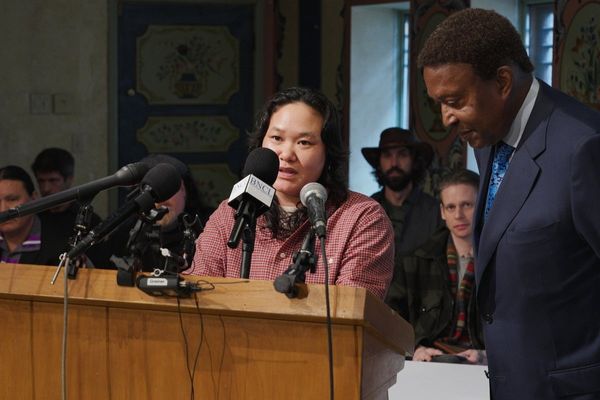





Andrew
If Labour pass this motion, and on 25th June Parliament passes a binding vote that we can't leave with No Deal, what does that mean in practice?
Does it force the government in October to revoke Art 50 if a deal hasn't been agreed with the EU and passed in Parliament by the leave date?