Party conferences are huge, sprawling events. The action ranges from set-piece speeches to packed fringe meetings and boozy parties. Media organisations gorge themselves, then spew out vast quantities of video, sound and copy. As a result policy announcements, revealing asides and even the odd gaffe can get lost – and who wants to miss a single thing? Not you, dear reader. Here are 10 conference titbits that flew beneath the radar.
Michael Gove, prison reformer
On Tuesday, the justice secretary delivered what one of my colleagues said was “the most reformist speech on prisons I have ever heard at a Tory conference”. In words that won’t have sat well with the lock-em-up-and-throw-away-the-key brigade, Gove said:
Prison should offer individuals a chance to change their lives for the better ... Yes, they’ve done some terrible things. They broke the law, they crossed the line, and no moral society can tolerate law-breaking without punishment. But we should never define individuals by their worst moments
He also pointed out that many prisoners have had difficult upbringings, adding, in another departure from standard Conservative rhetoric, that “the best criminal justice policies are good welfare, social work and child protection policies”.
Bad news on growth
You may have missed this simply because no one was talking about it. While the chancellor, George Osborne, was congratulating himself on the “solid foundations” laid down over the past five years, those foundations were starting to creak, with business activity growing at the slowest pace for more than two years, according to one economic survey.
The magic money tree
Is it possible that Tory ministers don’t read the Guardian’s opinion pages? Amber Rudd, the secretary of state for energy and climate change, justified the cutting of subsidies for wind farms, saying that “there is no magic money tree”. Had she read Zoe Williams’s latest column, she’d have known that the magic money tree is in fact in rude health. The thing is, we’re only allowed to use it to buy financial assets. Green investment? Don’t be ridiculous!
Zac on Boris
The worrying prospect of another Conservative London mayor known only by his unusual first name emerges. But what does the one who sounds like a 70s sci-fi hero make of the one who sounds like a member of the Addams family? A clue may be found in Zac’s speech.
London is the greatest city on earth. I want it to be the greenest. We are going to have to get to grips with one of the great menaces of urban life: air pollution
An innocuous comment, you may think, were it not for the fact that, for the past seven and a half years, London has been run by a fellow Conservative. One who is reported to have told a thinktank earlier this year: “The air quality in London, you can go outside and breathe in great gulfs of virtually alpine air.” Others believe that Johnson’s record on air pollution has been “truly appalling”. Could Goldsmith be among them?

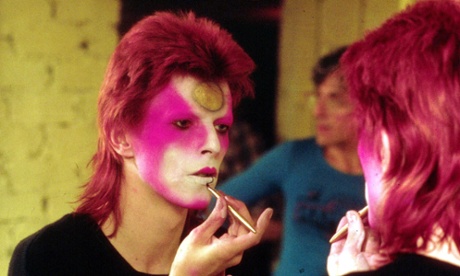
No German Beatles, no Dutch David Bowie
In case you were worried about John Whittingdale’s grasp of pop culture, don’t be. It’s pretty solid. Quoting Dominic Sandbrook, he reminded us that
There are no French Rolling Stones, no German Beatles; there is no Italian Bond, no Spanish Rowling, no Dutch David Bowie.
But hang on, it seems this isn’t quite right. It turns out there is a Dutch David Bowie, and ReCartney are making a pretty decent living as the German Beatles. Wer wusste?
Thatcher, climate warrior
Amber Rudd read out an intriguing passage from a speech by one of her political heroines, Margaret Thatcher.
The threat to our world comes not only from tyrants and their tanks ... The danger of global warming is real enough for us to make changes and sacrifices, so that we do not live at the expense of future generations.
Rudd is fond of quoting it in parliament too. It was delivered at the second World Climate Conference in 1990, and serves as a reminder that Thatcher was ahead of her time on this one. Not everyone shared the vision. Her long-time chancellor, Nigel Lawson, has long been an ultra-sceptic and is chair of the denialist Global Warming Policy Foundation.
Osborne gets lost
In an interview with the Guardian’s editor-in-chief, Kath Viner, George Osborne admitted to an unusual epiphany on getting to know the north.
Osborne: being an MP in Cheshire "opened my eyes" to the north. Instead of signs with "London 50miles" they had "Liverpool" or "Manchester"
— Michael Deacon (@MichaelPDeacon) October 6, 2015
Don’t mention Europe
Not many people did, at least in the conference speeches (the PM was obliged to cover it, of course). Europe is an issue that has bedevilled the Tories for decades, splitting the party at crucial times in its history. Another such moment is in the offing, with an in-out referendum to take place before the end of 2017. Perhaps that’s why discussion of this toxic topic was mostly confined to the fringes. At a meeting convened by the thinktank Demos, Philip Hammond said that the EU had become “too bossy, too bloated, too interefering”, a phrase repeated by David Cameron in his speech on Wednesday. Reform would be tough, and any attempt to challenge the principle of free movement is probably doomed. Still, Hammond believes it will be possible to inject “a big dose of British common sense” into the workings of the union.
His colleague, Peter Lilley, was clearly annoyed with the line the party is taking on talks over Britain’s role. “I think it’s inconceivable that in one round of negotiations we’re going to get everything we want. And I wish we were honest about that.”
Greg Clark’s dream job
Astronaut? Fireman? No, it seems there was at least one little boy who always wanted to be secretary of state for the Department for Communities and Local Government. “When the prime minister appointed me to this role, he said, ‘Greg, I think I’m going to offer you your dream job’. Well, he was right.” If only all cabinet appointments were so easy.
The business rate revolution – not what it seems
Hailed as a great devolution of power to local authorities, Osborne’s shiny new policy was widely reported – but one crucial detail was often overlooked. As the BBC’s Robert Peston put it:
Although local authorities will be able to cut business rates, they won’t be able to put them up, unless that is they are cities like London and Manchester with directly elected mayors – and even then they’ll only be able to put the rates up by 2p in the pound, to finance infrastructure, and only if businesses vote in favour in local polls
Giving councils the freedom only to cut isn’t as radical as all that, is it? But the announcement was revolutionary in another, more disturbing way. The Guardian pointed out that allowing businesses to vote was “an unprecedented extension of the franchise from human beings to companies”. 2015: the year Tesco got the vote.