As the 40th Toronto film festival comes to a close on Sunday, its directors have defended an edition that some in the industry have described as below-par. While in previous years films such as 12 Years a Slave and Slumdog Millionaire have emerged as certain winners not only of the festival’s People’s Choice award but of the Oscars the following year, in 2015, much-anticipated titles such as gay rights dramas Freeheld and Stonewall have been trashed, while others, such as Truth, Spotlight and The Martian, have won warm but not ecstatic notices.
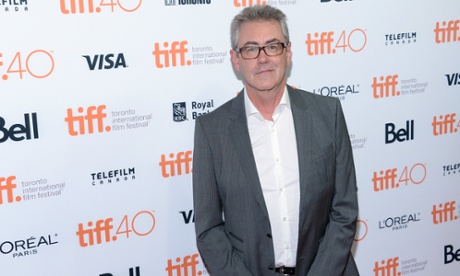
“It’s just different,” said Toronto CEO Piers Handling. “A lot of journalists and people in the industry say: ‘Where’s the buzz film? There’s no buzz film!’ So in some funny way [they see] the festival as a failure. It’s anticlimactic. They feel there’s nothing to rally round.”
Sales have been relatively sluggish, with the major deal being the $5m paid by Paramount for Charlie Kaufman’s R-rated stop-motion mid-life crisis movie Anomalisa. A couple of buzzy titles in the newly-created Platform sidebar, which was established this year to help counter media focus on awards bait, have also secured mainstream distribution.
“I don’t think anybody looks at the festival thinks it’s our fault there’s a slow market,” says Handling. “It was slow in Cannes. It’s completely product-related, totally dependent on the films. If it’s a long term trend, that’d be more distributing.”
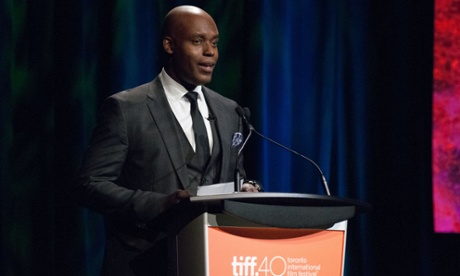
The grumbles about a lack of instant classics are, says artistic director Cameron Bailey, in part a consequence of previous years of plenty. “We’ve got used to films breaking new ground as they have also become the centre of cultural conversation. Films like Birdman or 12 Years a Slave are really unlike anything else around them. [Now] we want cinema to be innovative all the time. And that means films that are very good but not very different sometimes struggle.”
Those best-received pictures this year have also been among the most daring: Anomalisa, Michael Moore’s latest polemic, Where to Invade Next, single-shot German drama Victoria, holocaust movie Son of Saul and Room, Lenny Abrahamson’s adaptation of the Emma Donoghue bestseller, the first 45 minutes of which are confined to one small set.
Handling hopes film-makers conclude that greater risk-taking, both in terms of treatment and subject matter, is a sound approach. Cinema and wider society depend on film-makers being prepared to handle hot potatoes.
“The Camerons and the Spielbergs will at some point in time begin to feel guilt about the films they’re making and want to make [others]. I think some film-makers of that clout will use their economic independence to address those subjects.”
Such ability to greenlight one’s own projects is vital, he thinks, with a diminishing “liberal consciousness” in Hollywood resulting from studios increasingly being operated by “bean counters rather than people with strong views on society”.
“There’s a part of me that does despair of cinema’s subjects. In the 1960s we thought cinema could change the world. That time has obviously passed. Cinema can’t change the world because we’ve moved into a different space.”
Meanwhile, pundits are tipping Michael Moore’s movie as the frontrunner for Sunday’s People’s Choice award: screenings have been frequently interrupted by applause and audiences have exited galvanised.
That the director has not yet announced a distributor, despite a promise to do so by the end of last weekend, many suspect is down to his holding out for a theatrical release rather than signing with Netflix. Handling sympathises: “I don’t know if [streaming services] have the disruptive power of cinema. Theatrical is still essential to enter the mainstream debate. It gives you huge influence over the opinion-makers.”
Yet Tiff has also sought to respond to a shift amongst both audiences and directors award from film to the small screen with another new strand, Primetime, to showcase premieres of new TV shows. “Studios need to be worried,” says Handling. “Long form TV is taking narrative risks, and it’s not really built around a star system. Will that force studios further into comic book stuff or will they try to be a bit more nimble and responsive? It’s a key transitional moment.”
Says Bailey: “Audiences seek in TV shows what we’ve always sought: a long-term connection, a relationship that extends over time. You used to get that through genre. You’d go watch a western or melodrama each week and know what you were getting. You got that through the star system in the old days. But now those things have broken down and you’ve got people watching season after season of the same story. That desire audiences have for continuity will never fade.”
And yet as the window for theatrical release shrinks in response to the rise of streaming services, and the number of movies released each week continues to rise, “the economic model has to be under serious question,” says Handling. He thinks the blockbuster sphere will only grow, but movies made for the $10-30m mark will be “hollowed out”.
“It mirrors the polorisation of rich and poor that’s going on socially and economically all round us. That same middle ground so many politicians are worried about is, in cinema, being gutted.”