For fans of whippet-thin Brits of a certain age, this year’s Toronto film festival afforded some real rock star moments. One involved an actual rock star: Keith Richards, subject of a new documentary and recipient of the longest queue for a press conference. That he had nothing newsworthy to say (likes Ed Sheeran; doesn’t like rap: “I prefer Mary Had a Little Lamb without a bad drum beat”) wasn’t a problem. Just a few wheezy cackles, a flash of his lemon snakeskin blazer, and everyone was happy.
The previous evening, Jeremy Irons, who has two movies playing, was interviewed by Tina Brown at a supper in front of an audience pulsing with lust. Irons is 67. Richards 71. The other toasts of this year’s Tiff were a touch younger, more American: Michael Moore is 61, Charlie Kaufman a baby at 56. But have no doubt: 2015 was the year old white men ruled.
It was also, sadly, a year that must go down as one of the more underwhelming in Tiff’s recent history (not the festival’s fault – they programme rather than produce, and this year’s wave of deflation began in Venice a week before it crossed the Atlantic). No awards frontrunners came forward, no 12 Years a Slave or Gravity or Birdman emerged, and few arthouse masterpieces were born. Critics were stingy with superlatives, commercial trade stayed sluggish. It was Kaufman’s film, a Kickstarter-backed, R-rated, stop-motion romance called Anomalisa that was the surprise big sale of the week: it went for $5m to Paramount, though that’s less than half what they paid this time last year for Chris Rock’s comedy Top Five. A bidding war is still working itself out over Moore’s movie, Where to Invade Next, a hectoring if amusing polemic, funded from Moore’s own pocket. Likewise, another relatively big breakout hit, Rebecca Miller’s metaphysical romcom, Maggie’s Plan. Meanwhile, Idris Elba’s African civil war drama Beasts of No Nation, which went to all three autumn festivals (Venice, Telluride, Toronto) and made a splash in each, is Netflix’s first bid for Oscar success.
What this year’s Toronto proved is that the model of the studio prestige picture cannot self-perpetuate for ever. Cash is plunged into films that must be conventional in order to guarantee a certain return. But such movies suffer tepid reviews and diminishing box office. Meanwhile, those films shot with creative freedom, freed from corporate legacy and responsibility, come in and steal the booty. Bad news as the situation plays itself out, but promising for the future, as outfits increasingly twig the potential that lies not in film-making by committee but in nurturing singular talent.
In the meantime, audiences are still served the same old glut of mediocre biopics, stricken with misery and touting for Oscars. Tom Hiddleston’s Hank Williams movie, I Saw the Light, for instance, was bleak and mournful, despite its lead’s best efforts; Ethan Hawke’s Chet Baker sang a similar muted tune in Born to Be Blue. Energetic takes on the blacklisted screenwriter Dalton Trumbo (by Bryan Cranston) and Lance Armstrong (by Ben Foster) are strong enough to mean they slug it out on the Oscars’ podium next spring. But neither was so blinding to guarantee them the gong.
Fact-based films, hoping for some Argo-ish glory, dominated elsewhere. Truth and Spotlight were both newsroom dramas about the struggle to verify exposés of the rich and powerful (the former, CBS show 60 Minutes’s splash on George W Bush’s dubious military record; the latter, Boston Globe reporters who uncovered paedophilia in the Catholic church). Both movies were perfectly watchable one-note dramas, echo chambers for the converted, rather than forums for discussion. And both are frontrunners for Toronto’s big prize, the People’s Choice, announced tonight.
Probably in with less of a shot is Freeheld, one of the festival’s most touted titles, in which Ellen Page and Julianne Moore play a real-life couple who fought a 2007 discrimination case involving death duties. What should have been this year’s Still Alice was simply an embarrassment – Page and Moore looked uncomfortable throughout; Steve Carell’s flamboyant employment lawyer didn’t help.

Colonia, meanwhile, starring Emma Watson as a budding photographer who enlists in a cult to try to rescue her husband, captured by Pinochet, was well-intentioned but wrecked by panto baddies and a coshing orchestra.
In the face of all this improbability rooted in truth, the few pure fiction films on offer responded by amping up the wackiness. The opening night movie, Demolition, had Jake Gyllenhaal’s widower finding release through over-frankness with strangers, smashing up houses and dancing in the street – a good-looking grief movie with no relation to real life whatsoever. Mr Right, the closing night film, was similarly wrong-headed: a chokingly kooky romcom in which Anna Kendrick falls for compassionate hitman Sam Rockwell. Meanwhile, The Dressmaker, an Aussie romance/revenge, drama/horror hybrid in which Kate Winslet plays a vengeful seamstress, meant the actor now has a hat-trick of Toronto turkeys, following 2013’s Labor Day and last year’s A Little Chaos.
None, however, felt quite as cheap or distasteful as Atom Egoyan’s Remember, in which Christopher Plummer is a nursing-home escapee whose dementia impairs his search for the Nazi concentration camp guards who tortured him years before. The jaw-dropping final twist further queers Egoyan’s pitch as a respectable director.
Among such flops, smaller films of merit gleamed all the brighter. Couple in a Hole was the notably strange story of a Scottish couple who have decamped to live underground in France. The mundanity of their bizarre lives and the gradual unravelling of the reasons behind their downsizing made for a compelling 90 minutes. That film played as part of the City to City sidebar, which this year showcased movies from London. At a panel discussion, some of the directors with films premiering called for their peers to quit the period dramas and social realism and instead focus their attention on the middle class, in the hope of making them squirm.
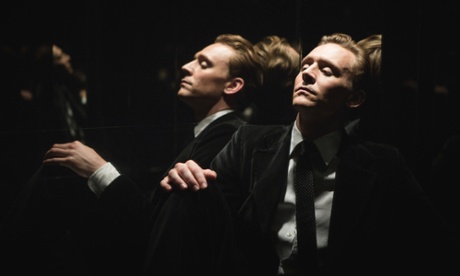
Judging by that criteria, Ben Wheatley’s adaptation of JG Ballard’s High-Rise was a slam-dunk success. Some days I feel I’m still in that cinema, watching Tom Hiddleston barbecue a dog and Luke Evans sock people in the face. This is perhaps a film to see a second time, under different circumstances. The audience at the premiere staggered out on to the street, sometime after midnight, scratchy with sleep deprivation, patchy movies and the pressure of people. They went back to their skyscraper hotels and 20th-floor rental condos.
And, in a few days, many of them will do it all over again, at the New York film festival, with its premieres of Robert Zemeckis’s The Walk, about Philippe Petit’s high-wire act between the twin towers, and Steve Jobs, Danny Boyle’s biopic, which has already won admirers at Telluride. As Toronto closes, hopes are high that these films will help define an Oscars race that currently looks a little blurry.