
When I was a child I lived in a large, old house on the edge of a village in Suffolk. It had three storeys, a cellar, winding stairs, crooked corridors – and seemed to come alive at night. That was when floorboards creaked in empty rooms and shadows shifted in the corners. It was obvious to me that we were not alone. I loved that house. It’s where my fascination with fear and scary stories was born, and has directly influenced my writing style.
I wrote my novel Fire Girl as a fast-paced adventure, punctuated with moments of horror that I hope will make the reader jump, and then laugh with relief because, hey, its only a story. Here are some of my thoughts on how to write to frighten.
The diversity of fear
We’re all different, with our own likes and dislikes. We also have our own unique fears. Some fears are universal: fear of death, fear of pain, fear of the unknown, and these have been exploited in books, television and films over and over again. But what about the types of fear that haven’t been explored so exhaustively?
There are many types of phobia. Here is a random selection: fear of insects, fear of noise, fear of dentists, fear of going to school, fear of cats, fear of being touched, fear of solitude, even fear of beards. I think there’s a story for each of them. Look around for the unusual, the strange, the unique, because it might just be your way into a really original and frightening story.
Examine your fears
There’s an old writer’s maxim that says “write what you know”, so a good starting point if you want to write to frighten is to examine your own experiences. It could be a specific incident: an accident, an ugly confrontation, or being lost and alone in a strange place.
Relive it. Recall every detail. How did you feel? What physical and mental changes did you experience? Panic? Shallow breathing? Faintness? Nausea? What did you do when the first wave of fear crashed over you? Did you freeze? Or did you act?
By using your own experiences you’ll add authenticity to your writing.
The science of fear
When fear strikes, our bodies react by releasing a cocktail of chemicals and hormones into the bloodstream. This decreases our response times and allows us to think and move faster than normal. This is called the Fight or Flight response, honed by evolution to give us an edge in dangerous situations and increase our chances of survival. Fear is useful. Fear is essential. Understanding the science of fear will enable you write about it more convincingly.

Learn from the masters of fear
Think about what makes your favourite scary stories work, and consider how you can use the same techniques in your writing. How did Victorian and Edwardian writers like Wilkie Collins and MR James create such dark and unsettling tales? What makes the The Woman in Black the second longest-running play in the West End? What has made Stephen King one of the most successful writers of all time?
And don’t just use books for inspiration. We can learn how to build atmosphere and create tension from scary films. Computer games can also be effective because the player is directly involved in the story, taking action and making decisions. Books and computer games share an immersive quality, as long as they have compelling stories and allow the player or reader to use their imagination.
Create an evocative writing space
When writing to frighten, try creating a working environment that reflects the tone of the scene. I live on a boat, so I wrote much of Fire Girl by candlelight (no electricity on a boat) and in isolated spots on the canal. The scratchy cry of a heron, the glimmer of moonlight on water, the shadow-strewn towpath, all these things helped to create a perfect environment to weave fear into my work. Write at night, listen to ominous music (film soundtracks can be a good choice), try anything that creates an inspiring ambiance to add a dash of terror to your writing.
The killer combination
This is my killer combination to create a truly frightening scene. First, a character the reader likes. If the reader likes your character, they’ll care about what happens to them. But if your character is unlikable the reader might actually want them to meet a sticky end! Second, you need peril. This perilous situation will depend on your story, but it’s your job to transport the reader right into the middle of it and make them feel it’s real. Third is an atmospheric location. Remember that haunted castles, windswept moors and graveyards have been done to death, so stretch your imagination to think of less likely locations to set your story. Find a killer combination of character, peril and location to create frightening scenes.
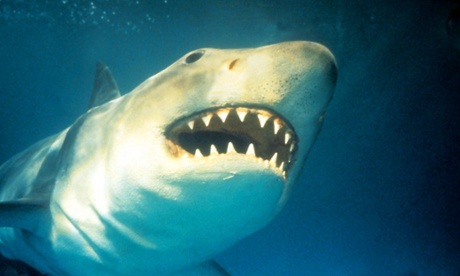
Build up tension…
In Steven Spielberg’s classic film Jaws, we don’t see the shark properly until the final act. Until then it’s just a glimpse of fin and the famous duh duh, duh duh orchestral score. The tension builds because the shark remains hidden – we know that at some point we’ll be confronted by it . . . but when? When? Tension is an essential ingredient for creating fear. Your shocks will fall flat if you don’t strain your readers’ nerves to breaking point beforehand.
…Then pay it off
This is where you have to make good on the promise your tension has made. If you’ve done a good job at building tension, the reader will be primed and ready to be blown away by whatever horrors you’ve been holding back until the perfect moment. You cannot afford to disappoint them; the tension you build must be justified.
In the opening chapter of Fire Girl I took a lot of care to create a foreboding atmosphere. Threats are hinted at, but even though their nature is not made clear, it should be obvious to the reader that something – something bad – is about to happen. And then the door to the cupboard under the stairs creaks open and…well, that would be telling, wouldn’t it?
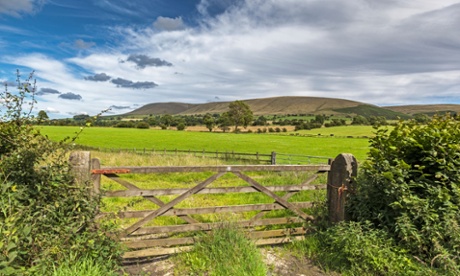
Find inspiration in history
One of my favourite books is Folklore, Myths and Legends of Britain, published by the Reader’s Digest. As a child I read it over and over, devouring the stories of vengeful ghosts, headless horsemen, witches, demons and monstrous beasts walled up in castle walls. And it was because these stories existed somewhere between fact and fiction that made them so deliciously chilling.
I recently visited Pendle in Lancashire. It’s a beautiful place, infamous for a witch trial in 1612 that ended with 10 people being executed. Pendle Hill still looms over the landscape, a silent witness to those tragic events. Learning about Britain’s ancient and spooky history helps to fuel my writing.
Let the reader do the work
The human imagination is a thing of awesome power. I’ll prove it with one word. ELEPHANT. You’ve now conjured up a vivid image of an elephant. But that’s not all: you’ve also added loads of your own detail. You’ve chosen to picture an adult or a baby elephant, you’ve put your elephant in a location, you’ve made it move, trumpet, spout water, whatever. From just one word you’ve created a whole scene in your mind.
A good writer will exploit the reader’s imagination for all its worth. Don’t give too much detail away. Judiciously withhold information from the reader and let them do the heavy imaginative lifting. Hide things in the shadows and let them find out what’s there for themselves. That way you can really scare the daylights out of them. That way you can become a master of writing to frighten.
Matt Ralphs is the author of magical adventure Fire Girl. Buy Fire Girl at the Guardian bookshop.