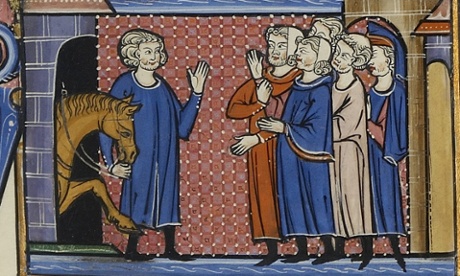
Bedbugs. Awkward conversations. Embarrassment on the dance floor. No matter what problem you’re facing, the Past has already faced it. More importantly, the Past has already written about it. Medieval scribes sat in their scriptoria and copied recipes for shampoo and techniques for practical jokes involving raw meat. Renaissance printers dedicated their revolutionary movable type to the dissemination of chat-up lines and friendly advice about armpit stench. Every century weighed in on the elusive hangover cure.
As a book historian, I’ve spent many hours examining the advice that past centuries found worthy of committing to paper, from dancing handbooks to etiquette manuals to recipe collections. I find these old books oddly uplifting: whatever your goal, they promise, you don’t need privilege, wealth, talent or long years of practice. All you need is the book and its quirky technique, and maybe some goose grease.
In fact, I thought it was time for the lip balm of 1579 and the budget fashion advice of 1280 to return to circulation, so I’ve compiled my favorite advice from yesteryear in a new book, Ask the Past. Here is a selection of tips from old books to help you achieve your dreams – provided that your dreams are oddly specific and your definition of success is somewhat flexible.
1. How to Tell if Someone Is Or Is Not Dead, c. 1380
A good starting point for most interactions:
“Moreover, if there is any doubt as to whether a person is or is not dead, apply lightly roasted onion to his nostrils, and if he be alive, he will immediately scratch his nose.”
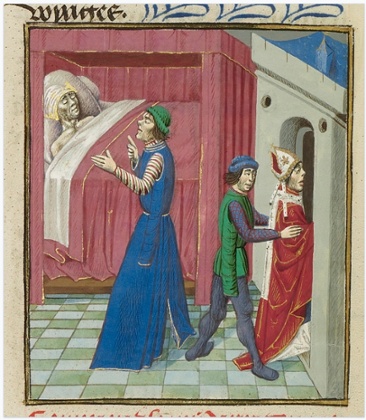
• Johannes de Mirfield, Breviarium Bartholomei
2. How to Recover from a Dance Mishap, 1538
Inspirational advice from the Past: it’s not whether you fall on your face, but how you finish the dance that matters.
“When you fall, pick yourself up quickly, and go back to finishing the dance energetically without complaining at all: pa-trim pa-tro-lo! And if you don’t get up, you will not be able to fall any further: there is nowhere to fall for one who is lying on the floor.”
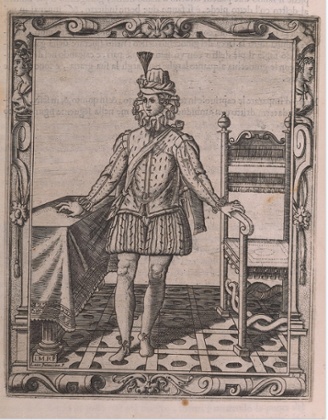
• Antonius Arena, Leges dansandi
3. How to Kill Bedbugs, 1777
Bedbugs are back from the Past, and the Past knows how to get rid of them. And your house while you’re at it:
“Spread Gun-powder, beaten small, about the crevices of your bedstead; fire it with a match, and keep the smoak in; do this for an hour or more; and keep the room close several hours.”
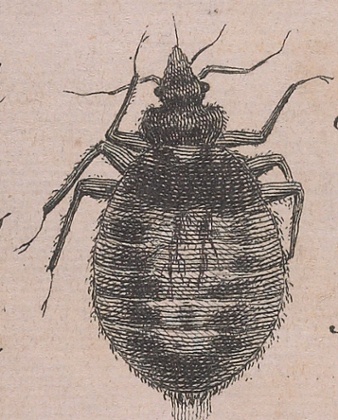
• The Complete Vermin-Killer
4. How to Avoid the Plague, 1579
Plague remedies always seem a little suspect. Luckily, this one actually instructs you to take it with a grain of salt:
“Whosoever eateth two Walnuts, two Figs, twenty leaves of Rew, and one graine of Salt, all stampt and mixte together, fasting: shall bee safe from poyson and Plague that day.”
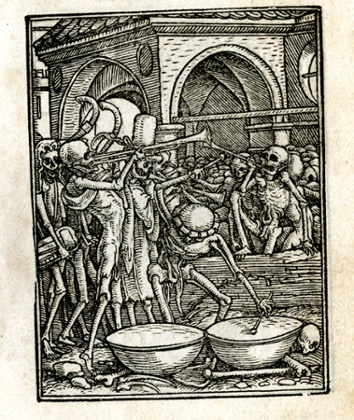
• Thomas Lupton, A Thousand Notable Things
5. How to Pack for a Journey, 1480
This is perhaps the best travel advice I’ve ever heard. Just make sure your suitcase of patience is hand luggage, because otherwise it will probably get sent to Pittsburgh by accident.
“[A traveller] should carry with him two bags: one very full of patience, the other containing two hundred Venetian ducats, or at least one hundred and fifty … Above all he should take plenty of fruit syrup, because that is what keeps a man alive in extreme heat; and also ginger syrup to settle his stomach if it is upset by too much vomiting.”
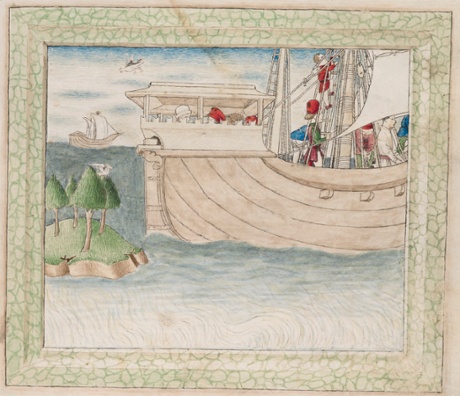
• Santo Brasca, Viaggio in Terrasanta
6. How to Leave a Party, c1200
If the host tells you to get on your horse, it’s time to leave:
“When you are about to leave, let your horse be at the door; don’t climb on him in the hall, unless the host tells you to.”
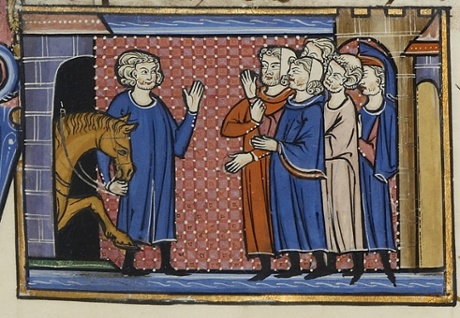
• Daniel of Beccles, Urbanus magnus
7. How to Converse, 1646
It’s all in the eye-browes:
“Neither shake thy head, feet, or legges; Rowle not thine eyes. Lift not one of thine eye-browes higher than thine other. Wry not thy mouth. Take heed that with thy spettle thou bedew not his face with whom thou speakest, and to that end approach not too nigh him.”
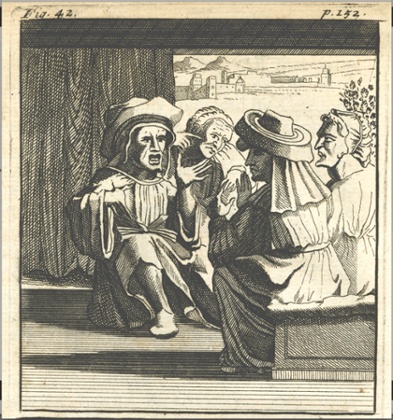
• Francis Hawkins, Youths Behaviour
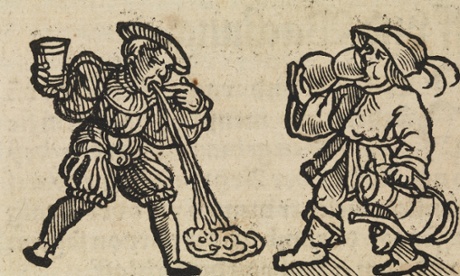
8. How to Sober Up, 1612
It’s worth noting that the Past did not have to deal with its friends taking pictures of its awkward attempts to sober up and putting them on Facebook:
“That one shall not be drunke. Drink the iuyce of Yerrow fasting, and ye shall not be drunke, for no drinke; and if you were drunke it will make you sober: or else take the marrow of porke fasting, and ye shall not be drunke; and if you be drunke annoint your privie members in vineger, and ye shall waxe sober.”
• The Booke of Pretty Conceits
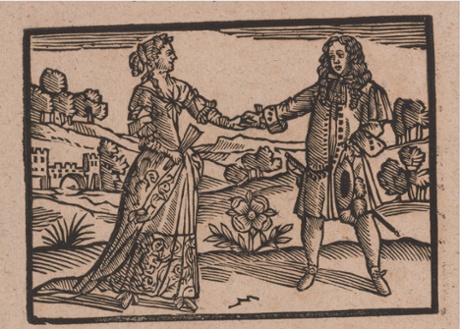
9. How to Sweet Talk Your Lady, 1656
Need to impress that super-excellent lady? Careful with the 17-century spelling: it’s her waist you want to praise.
“Instructions for Lovers: teaching them, how to demean themselves towards their Sweet-hearts. You must not accost them with a shrug, as if you were lowsie: With, ‘your Ladie’, ‘best Ladie’, or ‘most super-excellent Ladie’: neither must you let your words come rumbling forth, ushered in with a good full mouth’d, Oath, as ‘I love you’… But you must in fine gentle words, deliver your true affection: Praise your Mistress Eies, her Lip, her Chin, her Nose, her Neck, her Face, her Hand, her Feet, her Leg, her Waste, her every thing.”
• Cupids Master-piece, or, The Free-school of Witty and Delightful Compliments
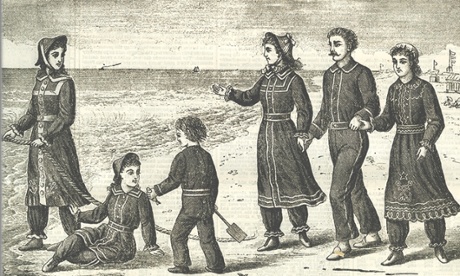
10. How to Dress for Bathing, 1881
How’s that beach body coming along? Who cares? It’s time to bring back the full-body beach swaddle:
“Flannel is the best material for a bathing costume, and gray is regarded as the most suitable color. It may be trimmed with bright worsted braid. The best form is the loose sacque, or the yoke waist, both of them to be belted in, and falling about midway between the knee and the ankle; an oilskin cap to protect the hair from the water, and merino socks to match the dress, complete the costume.”
• John H Young, Our Deportment
• Elizabeth Archibald is the author of Ask the Past: A Compendium of Useful, Rare and Curious Counsel is published by Square Peg, priced £14.99. Buy it from the Guardian bookshop for £11.99.