Total green electricity consumption: 3.1bn kWh per year
Green power percentage: 100%
Semiconductor company Intel is the largest U.S. purchaser of renewable energy certificates, supporting biogas, biomass small hydropower solar and wind projects. (Read about the three corporate strategies for getting to 100% renewables: buying renewable-energy credits, signing power purchase agreements and installing projects onsite.) The semiconductor company has also installed 18 solar projects on nine of its campuses, which collectively generate more than 10m kWh per year. The 1-megawatt solar field in this photo spans nearly six acres of land at the company's Folsom, California, campus. All together, Intel’s certificates and projects add up to 100% of its massive annual electricity use. Photograph: Intel Corp. Photograph: Intel/Guardian
Total green electricity consumption: 1.9bn kWh per year
Green power percentage: 80%
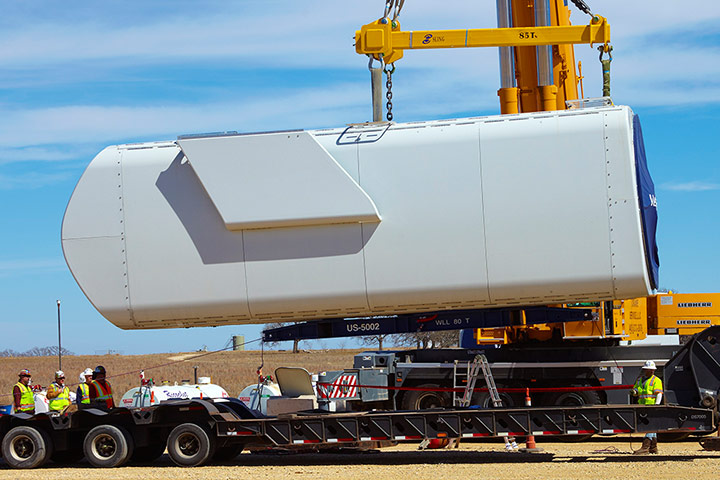
Software giant Microsoft gets 80% of its annual electricity usage from renewable sources, including biomass, small hydropower, solar and wind. This comes from direct power purchases and renewable-energy credits. The company has agreed to buy the output of the 100-megawatt Keechi wind farm under construction in Texas. This photo, taken during construction, shows part of a wind turbine that houses the gear box and other equipment. Photograph: Microsoft/Guardian
Total green electricity consumption: 1.5bn kWh per year
Green power percentage: 105%
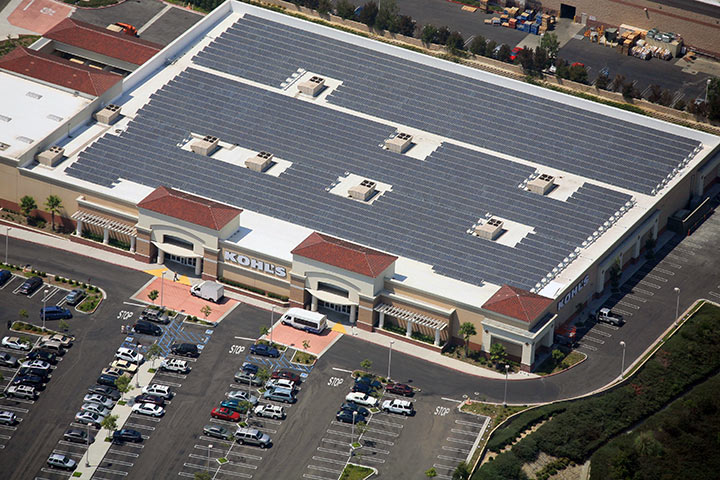
Clothing retailer Kohl's has bought solar credits and installed solar projects that together add up to 105% of the electricity it uses annually, or a whopping 1.57bn kWh each year. In 2010, the clothing retailer claimed to be the first in North America to install 100 solar-energy systems – including this 409kW rooftop system on a store in Laguna Niguel, California – at its facilities. It also began testing wind turbines in 2011. Photograph: Kohl's Corp. Photograph: Kohl's/Guardian
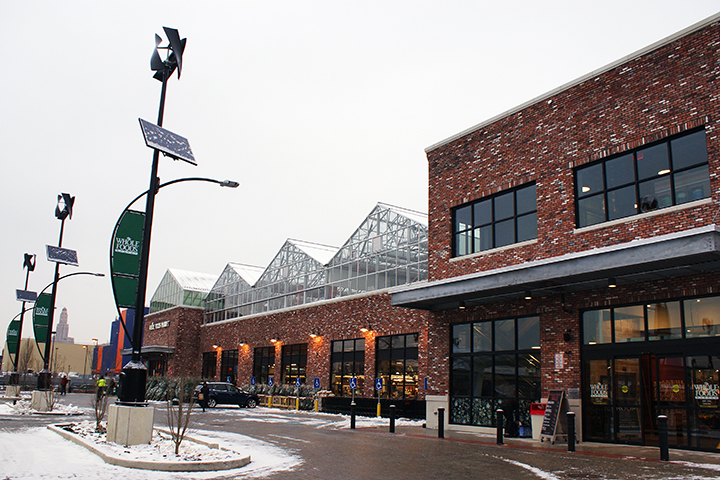
Total green electricity consumption: 800m kWh per year
Green power percentage: 107%
Grocery chain Whole Foods supports solar and wind energy generation to achieve its green power goal. The company buys renewable energy credits and also has installed projects on its stores via power purchase agreements. Its store in Brooklyn, New York, which opened in December, features solar panels and wind turbines, visible on the left, as well as a rooftop greenhouse, center, and a combined heat and power plant. Photograph: Whole Foods Market Inc Photograph: Whole Foods Market
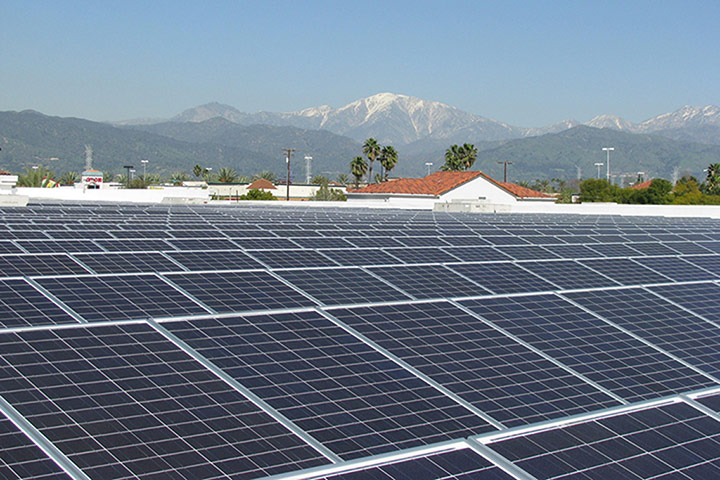
Total green electricity consumption: 741m kWh per year
Green power percentage: 4%
Walmart, which set its goal of 100% renewable energy back in 2005, gets a mere 4% of its electricity from biogas, solar and wind. The retail giant has installed solar panels at many of its stores in California and Arizona, including this one in Covina, California. Aside from installing its own renewable energy, Walmart also buys green energy to power its stores and the grid.
Photograph: Wal-Mart Stores Photograph: Wal-Mart/Guardian
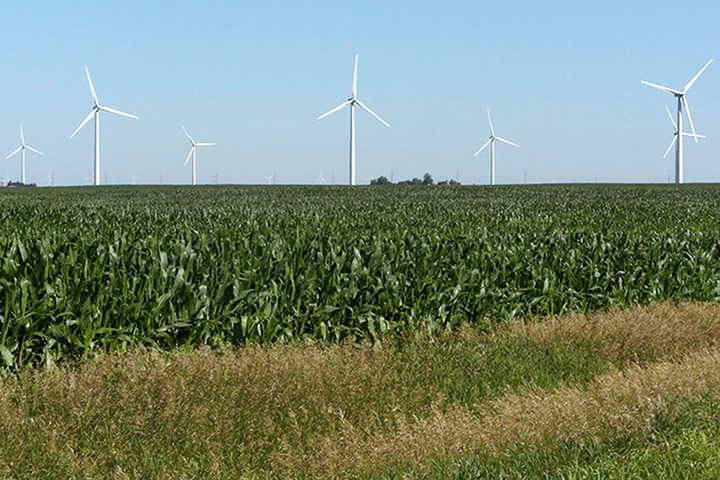
Total green electricity consumption: 737m kWh per year
Green power percentage: 32%
Search giant Google buys green energy totaling 32% of its yearly electricity consumption. Instead of simply buying renewable-energy credits, the company has signed power purchase agreements for new biogas, solar and wind projects that supply electricity to its local grid. By supporting projects – such as this 114-megawatt wind farm in Iowa – that send electricity to the utilities that power its data centers, the company ensures a cleaner electricity supply for its own operations. Photograph: Google Photograph: Google/Guardian
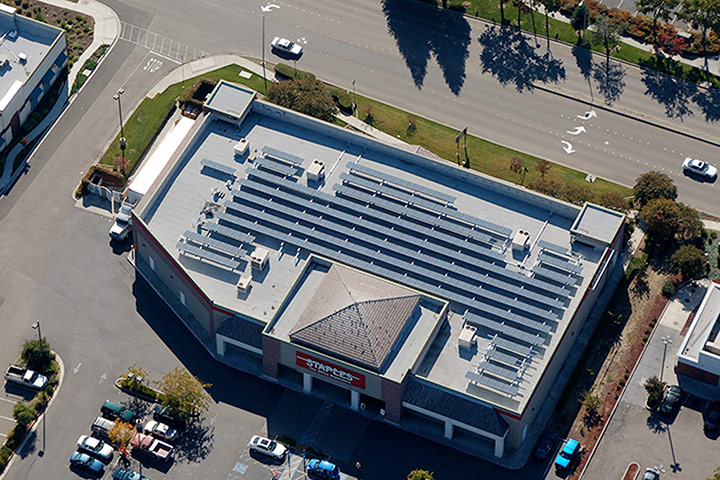
Total green electricity consumption: 636m kWh
Green power percentage: 106%
Office supply retailer Staples has already surpassed its goal, supporting biogas, solar and wind power equal to 106% of its annual electricity consumption. The company has invested in its own renewable-energy projects – such as this 76kW solar array on a store in Vacaville, California – and has also bought renewable-energy certificates. Photograph: Staples Inc Photograph: Staples/Guardian
Total green electricity consumption: 592m kWh per year
Green power percentage: 70%
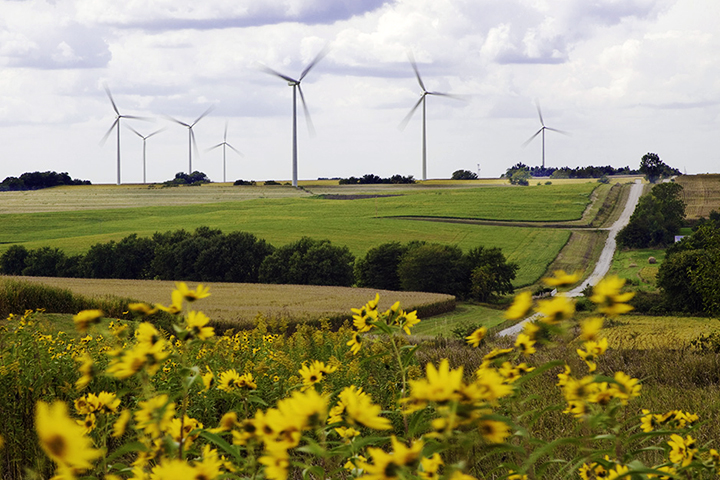
Coffee retailer Starbucks buys renewable-energy credits that amount to 70% of its electricity use annually. It buys its credits from 3Degrees, a renewable-energy and carbon-offset company in San Francisco. Wind farms, such as this 146-megawatt Iberdrola Renewables project in Missouri, generate the credits sold by 3Degrees. Photograph: Iberdrola Renewables Photograph: Iberdrola Renewables
Total green electricity consumption: 537m kWh per year
Green power percentage: 85%
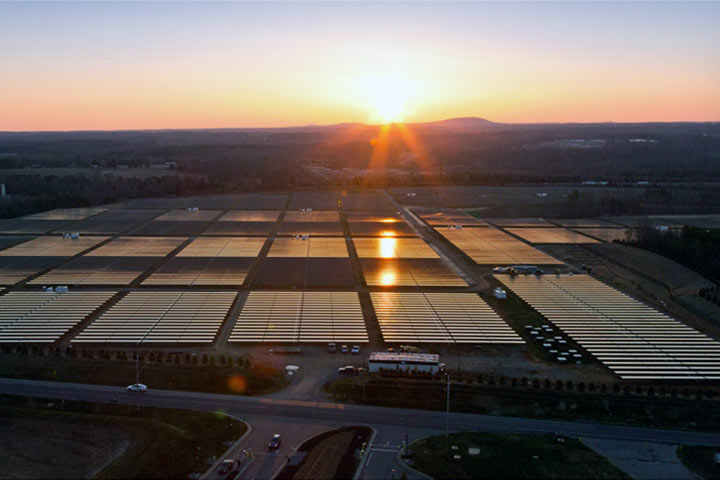
Tech giant Apple's renewable-energy investments -- in biogas, solar and wind energy -- add up to 85% of its annual electricity consumption. The company has taken a three-pronged approach: building its own renewable-energy projects, directly purchasing clean power and buying renewable-energy certificates. This is one of two solar farms, each with the capacity to produce 20 megawatts of power, that the tech giant has built in North Carolina, where it has a data center. Photograph: Apple Inc Photograph: Apple Inc./Guardian
Total green electricity consumption: 439m kWh per year
Green power percentage: 77%
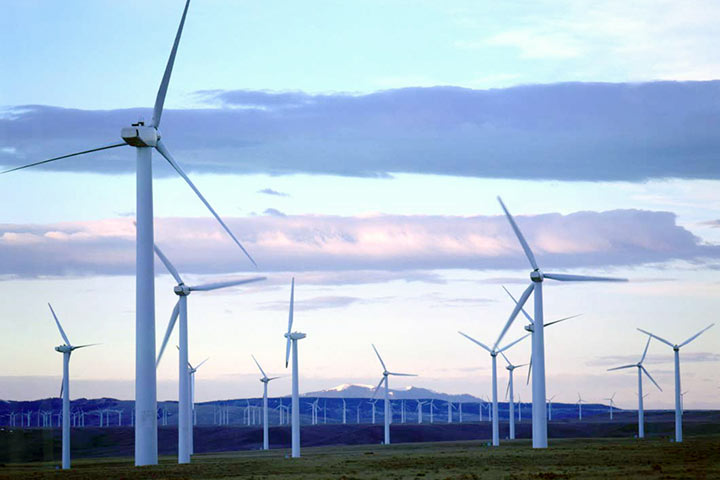
Consumer-goods company Unilever buys renewable-energy credits equal to 77% of its annual electricity use. This photo shows one of the wind farms that supplies credits to Renewable Choice Energy, which in turn sells credits to Unilever. Photograph: Renewable Choice Energy Photograph: Renewable Choice Energy/Guardian