I know people who make their own health and beauty products and they seem like some of the happiest people I know. Admittedly I only know them on the internet, so there’s a huge possibility that they smell like old vegetables and have insects living in their hair, but they do seem happy.
These people have glanced at the back of their shop-bought products. They’ve investigated the long and impenetrable jumble of consonants and numbers that pass as ingredient lists and, as a reaction to this, they’ve set about making alternatives from scratch. And, in the nicest possible way, they won’t shut up about it.
Take toothpaste, for example. While mass-produced toothpaste is probably the reason we’re not all running around with wooden dentures, it still apparently contains iffy ingredients. Glycerin, the advocates say, prevents cavities from self-healing, and sodium fluoride is little more than a rat poison off-cut thrown in for a bit of a giggle. Fortunately, if this has put you off toothpaste, the internet is full of instructions on how to make your own.
The good news is that toothpaste is a doddle to make. You warm some solid-state coconut oil (which is antibacterial, non-toxic and anti-inflammatory) and mix in an equal amount of baking soda (which whitens your teeth), add a few drops of edible essential oil (I used peppermint) and stevia to taste, and you’re done. It’s that simple.
The bad news is it tastes appalling. It also has a weird consistency – in a normal UK bathroom, even in the summer, it hardens into a block that you have to scrape out of the jar with your fingers and manually apply to your toothbrush.
It doesn’t froth. It doesn’t feel nice in your mouth. It almost certainly doesn’t freshen your breath, unless your definition of fresh breath involves smelling like you’ve just gorged on a multipack of expired Bounty bars that you found at the bottom of a skip.
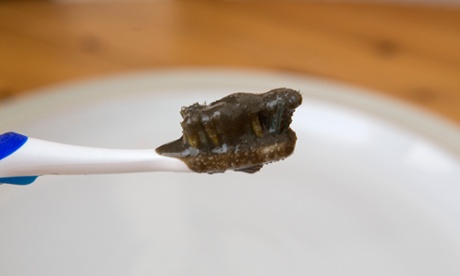
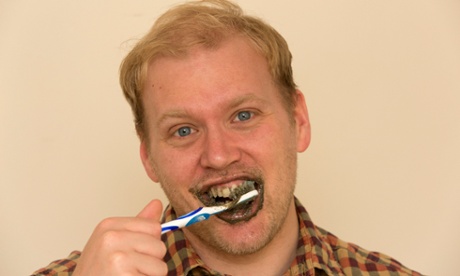
However, part of me was still convinced that homemade toothpaste was a good idea, so I tried a different recipe. This one used coconut oil and artificial sweetener, but the baking soda had been replaced with bentonite clay powder, a material used for treating eczema and cleaning out colons. It apparently contains calcium, magnesium and silica, and draws out toxins from your mouth, which sounded like homeopathic-level woo-woo, but couldn’t be any worse than the last muck I made.
Just look at the picture that accompanies this column to see how it worked. The toothpaste was a thick, grey sludge that coated my mouth and made me look as if I’d eaten a bucket of eels.
What’s more, the clay sets in your mouth, so you have to flush it out with water and then rub your teeth with a tissue to ensure it’s all gone.
To my astonishment, though, my teeth felt great afterwards. Just-back-from-the-dentist great.
I can’t promise that I’ll make my own toothpaste again, but I’m going to finish this batch off. And, since the only thing to do with the first batch I made is to kick it into outer space, that can only be a positive.





.jpg?w=600)