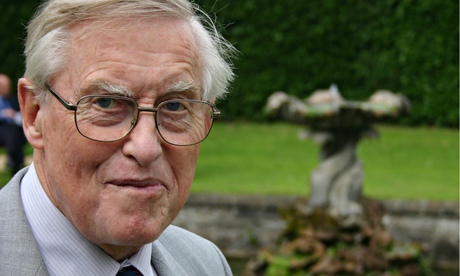
My father, Tony Hignell, who has died aged 87, was an international athlete, a first class cricketer, a doctor in the RAF and, towards the end of his career, a public health official in Wales and the west country.
He was born in Kroonstad, South Africa, to Harold, who was a central district commissioner in the colonial service in Tanganyika (now Tanzania), and Catherine (nee Hill), a doctor. When his parents returned to Britain, Tony attended Denstone college in Staffordshire where, as a talented all-round sportsman, he played rugby in the same side as the future England centre William “WPC” Davies and cricket in a public schools trial with the future England captain Peter May.
He appeared regularly for Gloucestershire’s second XI but, arriving at Cambridge University in 1946 to read medicine, he found his path to a cricket blue blocked by a fellow all-rounder, Trevor Bailey. Tony played in one first class match – in 1947 for Gloucestershire against his own university.
Athletics, however, was his strongest suit. As a javelin thrower he won two blues at Cambridge and went on to represent England at the 1950 British Empire Games in Auckland, New Zealand. He also appeared for Great Britain, including in a meet against France at White City in 1949. A member of the Achilles track and field club, he was the British national record holder for a time, but always seemed to be overshadowed by the superstars of the day; most of the newspaper cuttings he kept were headlined by his fellow medic Roger Bannister.
Having completed his medical training at Bristol University, where he met my mother, Patricia (nee Nixon), who was a ward sister at Frenchay hospital, Tony joined the RAF in 1953 as a GP looking after families on bases. He served wherever he was sent – 11 different postings, five of them overseas, over 25 years – rising eventually to be a group captain and deputy director of medical organisation for the whole service. On the way he captained the RAF and Combined Services cricket teams.
A gentle man, he abhorred violence; in Cyprus in the 1950s at the time of the Eoka struggle, he was reluctant to carry a gun, as the RAF deemed necessary. Summoned to firing practice, he loosed off bullets everywhere, hoping that those in charge would think twice about issuing firearms to a man who could not even trouble a target from five yards. He was too trusting: they gave him a pistol anyway, although he hid it in the airing cupboard.
A dedicated doctor, on a mid-70s posting to Gan in the Maldives he treated local people outside of his RAF duties. As they had no cash to pay him with, he eventually returned home with a suitcase full of rare and beautiful shells.
After leaving the RAF he worked as a specialist in community medicine, first at South Glamorgan health authority (1980-84) and then at Torbay health authority in Devon, where he became temporary director of public health until his retirement in 1994.
He is survived by Pat, and by five children, 13 grandchildren and four great-grandchildren.