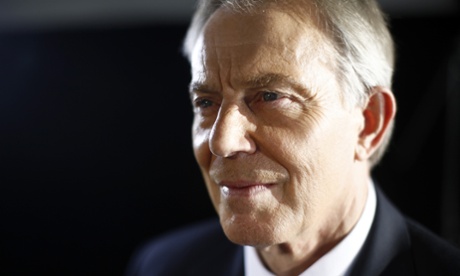
Such is the fragility of political reputations, and arguably so mismanaged has the post-premiership career of Tony Blair been, that the former Labour leader’s intervention in the general election is a matter of anxiety in Labour circles. Far from being a returning conquering hero, Tony Blair is the secret weapon that half the Labour Party would like to stay secret.
The man that won Labour three elections is seen in some quarters as akin to the embarrassing ageing relative that everyone would prefer not to invite to the family wedding, but everyone also knows it would be more remarked upon if he was not asked so he’s tucked away on the table set aside for distant relatives.
The Tory press have denounced him for avarice, and Ed Miliband has decided for good or ill almost to define himself in opposition to Blair’s premiership. In last week’s TV debate, Miliband had more to say about what was wrong with Labour’s record than was good, and faced with Cameron’s attacks, Miliband resolutely said he did not want to discuss the past.
For some strategists, Blair’s appearance is an unavoidable necessity but they fear his presence will act as a reminder to the 2010 Liberal Democrat vote, now back in the Labour fold, of why they first deserted Labour and turned to “the leftwing” Nick Clegg. Similarly, Nicola Sturgeon, the SNP leader, in her Scottish TV debate on Monday night, will doubtless find a way to point to Scottish Labour leader Jim Murphy’s support for Blairite interventionism.
Such is the palsied state of Blair-Labour relations, that Blair’s offer of £1,000 to each Labour candidate in target seats has been a mixed blessing. Catherine West, the Labour candidate for Hornsey and Wood Green, in Haringey, north London, was hardly overjoyed with the cheque. She said: “This is a donation made to the Labour Party and the party feels that we need the money in going up against millionaire Lynne Featherstone. The funding has been allocated by the central party and is for our campaign in this seat; candidate’s do not personally accept donations.”
The local Liberal Democrats call the donation blood money, and have even devoted a leaflet to attacking Blair – “a war criminal” – for it.
Blair has not always managed his relations with Labour with great aplomb, giving one too many interviews in which he has claimed his views on the party had been misreported. For instance, he warned the Economist that the 2015 general election could become one “in which a traditional leftwing party competes with a traditional rightwing party, with the traditional result”, meaning a Tory victory.
But at another level, given quite a lot of provocation, Blair has not stooped to the level of Edward Heath growling about the inadequacies of his successors or the trashing of his legacy. He has not, for instance, let it be known what he thinks of Labour’s problems developing a relationship with business.
On the whole, he has bitten his tongue, spoken in code or found the issues on which he can agree with Miliband, such as UK membership of the EU. He has reportedly worked very hard on the speech he was set to make on Monday, and knows there is a large mainly silent Labour constituency that still admire him and his forensic ability to take the argument to the enemy.
In his most considered speech on Labour politics since 2010, Blair argued in the Philip Gould lecture: “The hallmark of this progressive politics is that we should never be afraid of new ideas. We embrace them; we search for them; we scour the globe for them. Not out of an absence of principle but from an abundance of it. We should always be uncomfortable in the ‘comfort zone’, because the only comfort found there is for the already privileged ... In the end, parties can please themselves or please the people. There is a mindset that speaks to government and one that usually leaves you in opposition.”
Many cannot see past the allegations of business dealings with distasteful oligarchs and regimes. Yet Blair still has the potential to be relevant to this election. He still has a constituency in the UK beyond his immediate blinkered fan base. Among soft Tories, Blair still has an appeal, and it is among Tory switchers that this election could yet be decided.