Afternoon summary
- Boris Johnson, the foreign secretary, has dismissed an analysis from the Bank of England saying British households are more than £900 worse off following the vote to leave the European Union. At a press conference in Argentina Johnson said Philip Hammond, the chancellor, had refuted the Treasury’s figures. (See 4.58pm.) But although Hammond told MPs today that it was too early to know what the impact of leaving the EU would be, the chancellor did not challenge the Bank’s assertion that the vote to leave has already had a negative impact. (See 5.17pm.)
- Britain’s biggest civil servants’ union is to ballot 154,000 civil servants over possible strike action against the government’s controversial pay cap. As Rajeev Syal reports, the annual conference of the Public and Commercial Services union (PCS) in Brighton agreed that members should be balloted for industrial action. Possible strike action could target the Driver and Vehicle Licensing Agency in Cardiff, workers implementing universal credit and border controls and tax officials.
-
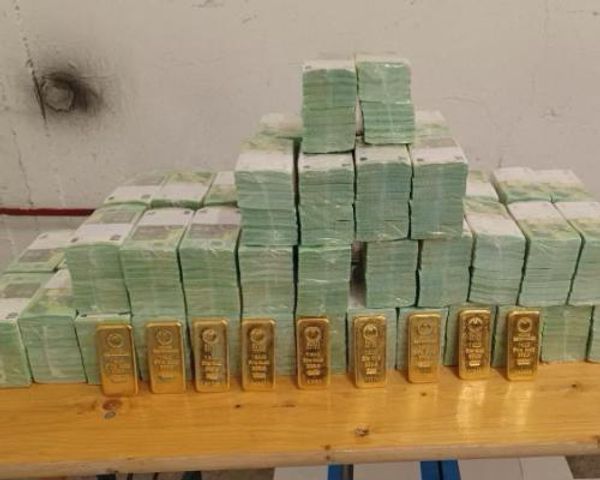
Ben Wallace, the security minister, has told MPs that the UK is “fast becoming the biggest consumer of cocaine in Europe”. Speaking in a Commons debate on serious violence, he said:
In the old days, if you wanted to import huge amounts of cocaine to this country, somebody had to go to Colombia, somebody had to meet people.
In the space of about eight years, you don’t have to do that. You can sit at home, you can deal your drugs, you can order your drugs, you can launder almost instantaneously, through Bitcoin and everything else, your money.
In the past there were plenty of middle men between local gangs and the big, serious, organised criminals running out of Colombia or Balkans gangs.
That has reduced, and now what you find is through absolute, often safe and secure, encryption, the ability for young people to order their drugs, gangs to get delivered literally to their door large packets of drugs from Albanian drug gangs, from Serbian drug gangs, or indeed from local drugs. It’s not entirely the copyright of the western Balkans, of United Kingdom citizens.
That has put a real power into a system where at the same time the United Kingdom is fast becoming the biggest consumer of cocaine in Europe, so there is a high demand by the consumer.
That’s all from me for today.
Thanks for the comments.

Updated
Immigration minister criticised after admitting not reading Good Friday agreement
The Home Office minister with responsibility for the Irish border admitted she had not read the Good Friday Agreement because she was probably giving birth when it was signed 20 years ago.
Caroline Nokes come under sustained attack from MPs over her lack of knowledge about the sensitive issues of nationality, policies of Border Force recruitment and smuggling in Northern Ireland during a select committee appearance on Tuesday afternoon.
After trying to bluff her way through the Northern Ireland Affairs committee interrogation, she admitted she had not read a string of key reports relating to current issues in the region.
The immigration minister opened her remarks by saying it was “crucially important for the British government to uphold the Belfast Agreement” but when asked by Sylvia Hermon, Independent MP for North Down, whether she had ever read the Belfast Agreement she replied: “Not in its entirety no”.
Hermon expressed astonishment, asking her if she ever read it in the 20 years since it was signed.
“No, but 20 years ago I was probably giving birth and I’ve been immigration minister for five months,” Nokes replied.
She also found herself on the ropes when quizzed about Irish nationals living in Northern Ireland who were being treated like “third country nationals” and did not have the “parity of esteem” espoused in the Good Friday Agreement.
She was told that those who may have “by accident of birth” being born on the other side of the border but who had lived all their lives in Northern Ireland were being forced go through a naturalisation process and pay £1,330 for citizenship applications in order to get a British passport, something they were entitled to under the Good Friday Agreement.
Those who identified as British nationals could, on the other hand, get an Irish passport easily with no “third country national” fees or policy by the Irish government.
Nokes eventually admitted that feelings on the committee were “strong” and she would look at what several MPs told her was a breach of the Good Friday Agreement.

Updated
What Hammond actually said about the Bank of England's Brexit analysis - contrary to what Johnson claimed
At his press conference in Argentina Boris Johnson claimed that the chancellor, Philip Hammond, had rejected the Bank of England’s assertion that the Brexit vote has damaged the economy. (See 4.58pm.)
Not for the first time, Johnson wasn’t been strictly accurate. Hammond was asked about the Bank of England analysis twice at Treasury questions today, by the Lib Dem MP Tom Brake and by the Labour MP Rushanara Ali. He said the Treasury would publish its own analysis in due course and that it was too early to know what the impact of leaving the EU would be. But he was studiously non-committal, and he did not not challenge the Bank’s claim that the vote to leave the EU has already had a negative impact.
Hammond told Brake:
On the question of future trajectory of household incomes, that will depend in part on the quality of the deal that we negotiate as we exit the European Union - and we are focused on getting the very best deal for British jobs, British prosperity and for British businesses.
And he told Ali:
We haven’t yet concluded our negotiations with the European Union and therefore it’s impossible to make any assessment of the impact of our departure from the European Union until we know what the future relationship with the European Union will be.
Boris Johnson says UK will 'prosper' under Brexit
The foreign secretary, Boris Johnson, on the latest stop on his whistle-stop tour of South America, has rejected Mark Carney’s claim that Brexit is costing households £900 a year.
Speaking at a joint press conference with the Argentine foreign minister Jorge Faurie, Johnson said:
I believe that the chancellor of the exchequer has given a definitive answer on this matter, which is that it is not the case that Brexit has damaged the interests of this country.
On the contrary, as you know, and as I’ve said repeatedly, when it comes to it I think that both the UK and Argentina will prosper, as a result of our ability to do unhindered and unfettered trade deals, as a result of our joint prospectus. That’s what we’re both engaged on – we both want to be more outward-looking, and Brexit gives us that opportunity.
Johnson also highlighted the prospects for a trade deal with Mercosur, the trading bloc of which Argentina is a part - and which has been trying to strike a deal with the EU for two decades.
“We are already, the British people, thanks to their prodigious appetite are already the second biggest consumers of Argentine wine. And that is before we have done the free trade deal that we hope to achieve,” he said - echoing remarks in the past about Italian prosecco.
Faurie said Argentina wanted to be “present in the British market” after Brexit, but would wait and see the details of Britain’s future relationship with other countries.
The splash headline on today’s first edition of the Evening Standard may have given readers the impression that the Labour Ian McKenzie story is a bit more lurid than is actually the case.
Today’s @EveningStandard: Labour’s Lewisham chief suspended over ‘misogynistic’ tweets about Emily Thornberry & Victoria Beckham speaks to us about that wedding & Harry Kane named captain of England + all the latest from the Chelsea Flower Show pic.twitter.com/ASrCtUhREo
— George Osborne (@George_Osborne) May 22, 2018
McDonnell says 'Tory negotiations' to blame for Bank of England claims about Brexit damaging economy
And John McDonnell, the shadow chancellor, has also been commenting on the Bank of England’s comments about Brexit costing households about £900 a year. McDonnell said this was because the Tories were mishandling Brexit. Speaking at the PCS annual conference in Brighton he said:
It is a worrying estimate. I know that Mark Carney is doing his best, and to be as exact as he possibly can. But this does demonstrate that this is an estimate based upon Tory negotiations. If we were doing these negotiations now we would be doing everything we could to protect the economy and protect jobs. I think his calculations are an estimate taking into account where we are in negotiations.
Asked about Labour’s own splits over whether or not the UK should stay in the single maket, McDonnell said:
I don’t think there is a split [in Labour]. I think there is a proper debate and discussion going on and so we are keeping all our options open. We are quite clear where are on transition and a customs union. We want the benefits of a single market and thats what we are moving towards.I don’t think it is a split.
Updated
Boris Johnson rejects Bank of England governor's claim Brexit has already damaged UK economy
Boris Johnson, the foreign secretary, has used his press conference in Argentina to reject the Bank of England governor’s assertion that Brexit has already damaged the economy. These are from my colleague Heather Stewart and from the Sun’s Matt Dathan.
I asked BJ about Mark Carney's claim Brexit has cost £900 per household. He says chancellor's verdict is definitive one, and shows Brexit hasn't damaged the economy. Hmmm.
— Heather Stewart (@GuardianHeather) May 22, 2018
Boris Johnson hits back at Carney - saying it's "absolutely not the case that Brexit has damaged the interests of this country". Speaking alongside Argentine Foreign Minister Jorge Faurie pic.twitter.com/PpXZN3mcos
— Matt Dathan (@matt_dathan) May 22, 2018

Gavin Williamson, the defence secretary, has been giving evidence to the Common defence committee. Here are some of the lines that have come out. The tweets are from the BBC’s Jonathan Beale and the Times’ Deborah Haynes (both defence specialists).
- Williamson said that by the end of this year eight Nato countries would be spending at least 2% of their GDP on defence (the Nato target). According to these figures from DefenseNews, in 2017 four countries were spending more than 2% (the US, the UK, Greece and Estonia) and another two were at the 2% level (Poland and Romania).
GW says everything US done under #Trump underlines its commitment to #NATO but adds European members need to do more. He says Trump v keen others do more
— Jonathan Beale (@bealejonathan) May 22, 2018
GW says he believes 8 #NATO members will be spending 2% of GDP on defence by end of year before adding it’s a floor not a ceiling
— Jonathan Beale (@bealejonathan) May 22, 2018
Has election of @realDonaldTrump as US president "materially upset or weakened smooth working of @NATO?" asks @CommonsDefence chair.
— Deborah Haynes (@haynesdeborah) May 22, 2018
No, says GW
Hmmmmm - really?! I think others might beg to differ. No smooth running for Nato until all allies pay at least 2% of GDP on defence
- Williamson refused to confirm that he has written to the prime minister proposing to send more troops to Afghanistan for training purposes.
GW asked about increase of UK troops to #Afghanistan . GW says deployment is kept under review. But says he can’t comment further
— Jonathan Beale (@bealejonathan) May 22, 2018
GW says UK forces key in providing security in #Kabul. Mark Francois asks if going back to combat? GW says will inform MPs of any change . (But truth is no political appetite for return to combat )
— Jonathan Beale (@bealejonathan) May 22, 2018
GW still trying to fend off questions about UK troop increase in #Afghanistan . Won’t even confirm he’s written to PM
— Jonathan Beale (@bealejonathan) May 22, 2018
UK should be doing more in @NATO, GW says - possibly setting scene for announcement of increase in UK troops to Afghanistan
— Deborah Haynes (@haynesdeborah) May 22, 2018
. @DefenceHQ will give oral statement to @HouseofCommons if UK decides to increase troop numbers to Afghanistan, GW says.
— Deborah Haynes (@haynesdeborah) May 22, 2018
He declines to confirm whether he has requested an uplift of around 400 troops but says deployment size is kept under constant review
- Williamson spoke about the need to make peace with the Taliban.
UK supports long term solution to challenges in Afghanistan involving peace process with Taliban even though such a prospect will be a "painful thing" for many people following years of war, GW signals
— Deborah Haynes (@haynesdeborah) May 22, 2018
- He floated the prospect of retaining older warships instead of disposing of them.
Interesting - GW says an idea put to him by Mark Francois to keep older warships in reserve rather than flogging them to other countries is "really very important" and is something that @DefenceHQ will look into. He says UK has sometimes "disposed of assets" too soon in past
— Deborah Haynes (@haynesdeborah) May 22, 2018

Boris Johnson, the foreign secretary, is holding a press conference in Buenos Aires, my colleague Heather Stewart (who is with the press pack accompanying him) reports.
I’m here in the Ministry of Foreign Affairs in Buenos Aires, where we’re awaiting Boris Johnson and his Argentine counterpart Jorge Faurie, who are expected to signal a new era of warmer bilateral relations. pic.twitter.com/uwfCi2qgTi
— Heather Stewart (@GuardianHeather) May 22, 2018


TUC boss says staying in single market and customs union 'best choice' for Brexit
Frances O’Grady has revealed she has only met Theresa May once – notably less often then she has seen Angela Merkel – something the TUC general secretary said was indicative of the low priority placed on unions and workers’ rights by the government.
Speaking to a press gallery lunch in parliament, O’Grady also warned that working people would be unwilling to bear the economic cost of a hard Brexit, and said she felt that this message was finally being heard in Downing Street.
As is traditional at such lunches, O’Grady also included a few jokes, such as saying that rather than describing the UK economy as “menopausal”, the Bank of England could instead say it was suffering from “erectile dysfunction”.
Asked after her speech how often she saw May, O’Grady said she had had a single meeting with the PM almost two years ago, shortly after she entered No 10:
I’ve her met once. I have had in the past sometimes reflected on the fact that I’ve met Angela Merkel, the president of Ireland and various other many more times than our own prime minister. This isn’t, for me, a left-right issue. There are countries where it’s recognised that it’s important not just to listen to business but to listen to working people, too.
On Brexit, O’Grady said people “just can’t afford a hard Brexit”, warning also about the potential impact on the Irish border.
Ordinary working people in this country felt that they paid a very, very high price for the financial crash, and I don’t think we can see them paying the bill for Brexit ...
My own instinct is that for the first time the penny is beginning to drop in No 10, that this isn’t just people making it up, or using it as an agenda. This is real – this is about people’s lives and their jobs and it’s about that delicate peace that has held us in good stead for 30 years. Nobody wants to be alarmist, but neither should anybody gamble with the Good Friday agreement.
The TUC, as is well known, has a considerably softer Brexit position than the Labour leadership, supporting continued membership of both the single market and customs union. O’Grady said Labour’s eventual embrace of some form of customs union membership was “a significant step forwards”, and that she hoped for more.
When it comes to looking at how do we avoid that hard border, the TUC has looked at all the options very carefully, and the best choice we can see is belonging to the customs union and the single market. We always say: if someone’s got a better idea, then let’s hear it. But it had better be a realistic, feasible, practical idea.

Caroline Nokes, the immigration minister, is giving evidence to the Commons Northern Ireland committee. As my colleague Lisa O’Carroll reports, it’s not going well. Nokes has been criticised for not having read the whole of the Good Friday agremeent.
Immigration minister Caroline Nokes being quizzed about Irish citizens in Northern Ireland getting Irish passport easily from Dublin but those who have lived their all their lives but born in republic must pay £1,330 for British passport 1/
— lisa o'carroll (@lisaocarroll) May 22, 2018
Caroline Nokes told at Northern Ireland affairs committee that persons holding Irish citizenship in Northern Ireland born in republic "are treated as second class citizens" /2 Told this contravenes Good Friday Agreement
— lisa o'carroll (@lisaocarroll) May 22, 2018
Andrew Murrison of Northern Ireland Affairs committee tells Caroline Nokes that British citizens in Northern Ireland who find getting an Irish passport expedient can get one easily. Nokes insists she can't change rules for Irish citizens looking for British passports
— lisa o'carroll (@lisaocarroll) May 22, 2018
Caroline Nokes flounders when asked by Kate Hoey why British and Irish citizens in NI are treated differently when it comes to seeking both passports. She says she thinks the wording in GFA meant citizens "on that date" in NI 20 years ago.
— lisa o'carroll (@lisaocarroll) May 22, 2018
Kate Hoey tells Caroline Nokes that treatment of irish citizens and british citizens in Northern Ireland in relation to acquisition of both passports is "contrary to the Good Friday Agreement". Nokes denies this.
— lisa o'carroll (@lisaocarroll) May 22, 2018
Kate Hoey: "Have you ever read any Irish history. I'm amazed at that response" when Nokes tells her that Irish are third country nationals in Northern Ireland
— lisa o'carroll (@lisaocarroll) May 22, 2018
Nokes asked if she had ever read any Irish history: "Not for a long time"
— lisa o'carroll (@lisaocarroll) May 22, 2018
Sylvia Hermon: Have you read the Belfast Agreement?
— lisa o'carroll (@lisaocarroll) May 22, 2018
Caroline Nokes: Not in its entirety no"
Hermon: Have you ever read the Belfast Agreement
Nokes: No
Hermon puts it to Nokes that as the immigration minister who has to uphold the Belfast Agreement that it might have been a priority to read the Belfast Agreement . Here's a copy of it... https://t.co/4CGhocSWRN
— lisa o'carroll (@lisaocarroll) May 22, 2018
Caroline Nokes says she was "probably giving birth" when the Belfast Agreement was struck. And she hasn't read it since, even when appointed immigration minister with responsibility for borders in N Ireland
— lisa o'carroll (@lisaocarroll) May 22, 2018
TUC boss Frances O'Grady says she's had more meetings with Merkel than May
Frances O’Grady, the TUC general secretary, has been speaking at a press gallery lunch at Westminster. As the BBC’s Carolyn Quinn reports, O’Grady told her journalist audience that she had had more meetings with Angela Merkel than with Theresa May.
TUC head Frances O’Grady tells Westminster journalists she has only ever had one face to face meeting with Theresa May—just after she became PM.
— carolyn quinn (@carolynquinncq) May 22, 2018
Says she’s met Merkel many more times .Hammond &DD on “semi-regular basis”. Meets Jeremy Corbyn on regular basis.
O’Grady also had a good response to the Bank of England deputy governor who said the economy was menopausal. This is from Sky’s Jon Craig.
Great gag from TUC chief Frances O’Grady at Press Gallery lunch re BoE boss calling economy “menopausal”: “Perhaps next time BoE will say economy is in erectile dysfunction.”
— Jon Craig (@joncraig) May 22, 2018
Labour’s national executive committee has been meeting today. As LabourList’s Sienna Rodgers reports, Unison’s Wendy Nichols was elected vice chair, beating the candidate backed by Jeremy Corbyn by 18 votes to 17. Here is the BBC’s Iain Watson on the result.
I am told GMB (& Scottish Labour leader Richard Leonard who is a member)backed Wendy Nichols as #labour #NEC vice chair - against leadership’s preferred candidate Andi Fox. Some see it as an attempt by the GMB to clip Unite’s wings -who backed Fox and have provided the Gen Sec
— iain watson (@iainjwatson) May 22, 2018
The Brexit department has now published the analysis mentioned earlier about how the House of Commons Evel (English votes for English laws) rules apply to the amendments to the EU withdrawal bill passed in the Lords. As expected (see 10.56am), it confirms there are no Evel implications. This is from the BBC’s Daniel Kraemer.
Full statement has been published. Basically says "Nothing. Has. Changed."
— Daniel Kraemer (@dcakraemer) May 22, 2018
...but comes with a nice table of Lords amendments to put on your walls
(cc: @labourwhips ) pic.twitter.com/kvaE8GZrNa
Lunchtime summary
- John Bercow, the Commons speaker, has been reported to the parliamentary commissioner for standards by a Conservative MP over reports he called Andrea Leadsom, the leader of the Commons, a “stupid woman”. (See 12.24pm.)
- Tony Blair has refused to personally apologise to the Libyan dissident Abdel Hakim Belhaj, who was tortured in a jail in Libya following a rendition operation mounted with the help of MI6, saying he knew nothing about the case until after he left office. As Peter Walker and Ian Cobain report, Blair, speaking about the case for the first time since Theresa May’s government apologised to Belhaj and his wife, Fatima Boudchar, said he was “content to go along with” that apology, but did not express any personal remorse.
- Blair has accused both main parties of misleading voters about the impact of Brexit. In an article posted on the website of his thinktank, he said:
What is also now clear is that the leadership of both main political parties are engaged in the same sleight of hand, namely pretending that we can have frictionless trade while leaving the single market.
As our report shows, this is simply wrong. The single market is a unique trading area where not only is trade tariff free, but it is also free of non-tariff barriers, through regulatory alignment. It therefore allows complete freedom of trade for goods and a substantial amount of free trade in services where Europe has adopted common sets of rules.
Membership of the customs union alone does not solve the problem of friction, because if Britain wants freedom to diverge on product regulation then there will still need to be checks. And, of course, if Britain is part of a customs union then it cannot make its own trade deals.
Claiming in the article that the Labour party would “pay a heavy price for the leadership’s closet Euroscepticism”. Blair also said Labour should propose staying in the single market and the customs union and giving people a say on the final deal in a referendum.
- Ian McKenzie, the chair of Labour’s Lewisham East constituency party, has been suspended ahead of next month’s byelection over allegedly misogynistic tweets. In a statement, published in full here on HuffPost, McKenzie apologised for causing offence but said that his tweets had been taken out of context and that they were not misogynist.
Treasury questions was relatively uneventful. Politico Europe’s Charlie Cooper has tweeted a couple of lines from it.
Hammond at Treasury questions just now on customs union: "I have consistently sought arrangements that will protect our existing trade with the EU," wants "minimum possible friction at border" ... "We don't believe it necessary to be in a customs union to achieve that."
— Charlie Cooper (@CharlieCooper8) May 22, 2018
Hammond asked about Carney's comments on Brexit and household incomes. Chancellor repeats pledge that MPs will have government economic analysis when they vote on Brexit deal, and that future trajectory of household incomes "will depend in part" on how good that deal is
— Charlie Cooper (@CharlieCooper8) May 22, 2018
Tory MP reports Bercow to Commons standards commissioner over 'stupid woman' Leadsom jibe
According to the Telegraph (paywall), the Conservative MP James Duddridge has submitted a formal complaint to Kathryn Stone, the parliamentary commissioner for standards about the reports that John Bercow, the Commons speaker, called Andrea Leadsom, the leader of the Commons, a “stupid woman”.
In his letter to Stone, seen by the Telegraph, Duddridge said:
I am writing in order to make a formal complaint concerning the behaviour of the speaker, the Rt Hon John Bercow MP, on Wednesday 16th May 2018, and his comments concerning the Leader of the House, the Rt Hon Andrea Leadsom MP.
He is alleged to have called her a “fucking stupid woman” and a “liar”. He has not denied these allegations.
I would ask that primary video and audio footage is examined. I would also ask that this footage is secured immediately as it may be routinely destroyed.
Bercow made a statement about this in the chamber yesterday. He did not deny the allegation, and he did not apologise. He did claim that he was making a comment about the government’s conduct, not about Leadsom’s intelligence. But, overall, he suggested he deserved credit for his outburst because he was standing up for MPs against an abuse of procedure by the executive.
Updated
John Healey, a former shadow health secretary, has welcomed the BBC report saying the government is considering repealing elements of 2012 Health and Social Care Act.
When I led Labour's fight against the Health and Social Care Bill in 2011, I said it would mean fragmentation and privatisation, and was the wrong prescription for the NHS. Seven years later, it seems Tory Ministers now agreehttps://t.co/p7Vqlf5I4e
— John Healey MP (@JohnHealey_MP) May 22, 2018
Save the Children failed to inform Unicef that its former chief executive had been investigated over alleged sexual misconduct before moving to the UN agency, the charity’s former chairman has told MPs. As the Press Association reports, Sir Alan Parker said Unicef was not told about the investigation into Justin Forsyth, conducted by an independent law firm, because it was not a “formal disciplinary process”.
Parker, who stepped down from Save the Children earlier this year after the aid sector sex abuse scandal broke, also said he and other directors vetoed a £20,000 bonus awarded to Forsyth while the investigation was under way. Forsyth quit his role as deputy executive director of Unicef in April after allegations of inappropriate behaviour towards female members of staff emerged during his time at Save the Children, where he was chief executive between 2010 and 2016.
Parker told MPs in the international development committee that the charity had spoken with a third-party headhunter about Forsyth but that it was its policy “not to mention things if they have not been the subject of formal disciplinary process”.
Asked whether the investigation should have been flagged up, he said:
When I look back, there are a number of things we would have done differently. I think we would have done it in a way that would have settled it at each time more appropriately and I think very clearly there were quite specific HR failings in this, which I have to take on board as I was chairman at the time.
And here is some response to the Bank of England’s claim that households are £900 worse off because of Brexit. (See 11.32am.)
From Sir Vince Cable, the Lib Dem leader
At the time of the Brexit vote the fact that the economy didn’t immediately collapse was argued as proof that leaving the EU was painless. We now know that it wan’t painless, to the extent that households are already £900 a year worse off, and Brexit has not even happened as yet.
Inflation caused by a weak pound and stuttering economic growth are cutting into people’s everyday lives. But we can stop this, because Brexit is not inevitable - people must be allowed a say on the final deal.
From the Labour MP Wes Streeting, a supporter of the People’s Vote campaign (which released Streeting’s statement)
Brexit is already costing every person in this country hundreds of pounds in lower income, and we haven’t even left yet.
The governor of the Bank of England is quite clear that the Brexit vote has left us all poorer and worse-off, and the government’s botched Brexit negotiations threaten to make the situation even worse for generations to come.
Evidence like this demonstrates exactly why we need a People’s Vote on the final Brexit deal.
Bank of England says households are £900 worse off because of Brexit
At the Commons Treasury committee Mark Carney, governor of the Bank of England, and his deputy, Dave Ramsden, told MPs that real household incomes are £900 lower today than forecast in May 2016 because of Brexit.
My colleague Graeme Wearden has more on his business live blog.
False alarm. According to a DExEU source, the David Davis written statement on standing order 83o (see 10.48am) is a routine formality and it is going to say that there are no Evel implications for the EU withdrawal bill. The SNP will be voting on the Lords amendments after all.
As Labour Whips point out, David Davis, the Brexit secretary, is due to make a potentially interesting written statement later today.
David Davis making a WMS on the Withdrawal Bill with reference to the application of SO 83O - potentially significant announcement on Govt’s strategy for the Bill H/t @danbloom1 pic.twitter.com/CrvX6eVFuB
— Labour Whips (@labourwhips) May 22, 2018
Full link to Standing Orders is here https://t.co/VktqeKHzRv
— Labour Whips (@labourwhips) May 22, 2018
Standing order 83o relates to the Evel (English votes for English laws) provisions brought in after 2015.
It looks like this could be a move to stop the SNP voting on some of the Lords amendments to the EU withdrawal bill, although, as SO 83o says, the final decision would be up to the speaker.
UPDATE: False alarm. According to a DExEU source, the David Davis written statement on standing order 83o (see 10.48am) is a routine formality and it is going to say that there are no Evel implications for the EU withdrawal bill. The SNP will be voting on the Lords amendments after all.
Updated
Gove says proposed Brexit backstop should only apply for 'short period of time'
Michael Gove, the Brexiter environment secretary, told the Today programme this morning that any Brexit “backstop” that keeps the UK in the EU’s common external tariff should only apply for a “short time”.
The government has agreed to have a “backstop” to avoid the imposition of a hard border in Ireland after Brexit in case its preferred means of avoiding a hard border - a good trade deal, or new customs technology - don’t work.
Last week it emerged that ministers have agreed that the backstop would involve the UK remaining bound by the EU’s common external tariff for a period after December 2020, when the transition ends. Brexiters are unhappy about this, because it would be akin to keeping the UK in the customs union after the transition, although No 10 argues that technically the UK would have left. But Gove and other cabinet Brexiters agreed to the plan as a last resort option.
In his Today interview Gove said that what was envisaged was just “a temporary infill”. Asked what temporary meant, he said:
It means what it says on the tin. That temporary means not permanent. It means for a short period of time. I’m not going to pre-empt the eventual position that we take after we have negotiated with the European Union and with Ireland ...
The very nature of a backstop, everyone agrees, is that it should be a temporary infill to bridge the position. In the same way as when you move house, a bridging loan is meant to be temporary, but, whether that’s weeks or months, we don’t know precisely.
Iain Duncan Smith, the former work and pensions secretary and another Tory Brexiter, said last week the proposed backstop should not apply for more than two months. Theresa May said yesterday it would apply only “in a very limited set of circumstances for a limited time”.

Peers abandon bid to legislate for new Leveson-style press inquiry
Peers yesterday abandoned their attempt to force a new public inquiry into the media industry, following weeks of parliamentary ping-ping between the two houses of parliament.
Opposition politicians forced the government to make a number of concessions, while the Conservatives only won several close votes thanks to the support of Northern Ireland’s Democratic Unionist party.
However, press regulation supporters are now pinning their hopes on one final tactic: a judicial review of culture secretary Matt Hancock’s decision to cancel the second part of the original Leveson inquiry.
Press regulation campaigners argue his decision to cancel an already-announced public inquiry was irrational, unfair, and that the open consultation on dropping the second part of Leveson was undermined by the Conservatives’ election manifesto commitment to do exactly that.
Blair says Labour could back second referendum on Brexit without alienating leave supporters
I covered what Tony Blair said in his Today interview about the Abdel Hakim Belhaj case earlier. (See 9.12am.) This is what he said about Brexit.
- Blair criticised Labour’s Brexit policy, saying it would not please leavers or remainers. Asked if the party would really pay “a heavy price” for this in a future election, as Blair claims in his article on his thinktank’s website today, he said it could. He explained:
At the moment we’re in a halfway house. We are in favour, apparently, of staying in a customs union, which will disappoint the most ardent leavers, but we’re not actually in favour of staying in Europe’s economic areas, which is necessary if you want frictionless trade. And so many people who voted remain will then feel less than enthusiastic about Labour ...
My sense is that we are in the position now of neither pleasing the remainers nor the leavers.
- He said Labour should propose staying in the single market and the customs union and giving people a say on the final deal in a referendum. At that point it would be possible to argue that there was no point leaving, he suggested.
Essentially both parties have got the same problem, which is the central dilemma at the heart of the negotiation is this. You stay close to Europe to minimise economic damage, in which case you abide by Europe’s rules, in which case people say what’s the point. Or you break free from Europe altogether, a clean break, in which case the economic damage is considerable and people say what’s the price. There is no resolution to that dilemma. At some point the government will have to come forward with a proposition. And I think the sensible thing for the Labour party to do is to say, look, if we say we want a jobs first Brexit, that means we stay close to Europe’s economic area. And if people then say what’s the point of leaving, you say the final decision should be taken by the British people if they want to proceed on that basis.
- He accepted that Labour’s more equivocal Brexit stance probably helped it during the general election, but he claimed that that approach would not work now. When it was put to him that Labour seemed to do well during the general election by avoiding the anti-Brexit stance Blair advocated, he replied:
Whereas I think that ambiguity probably did serve Labour well at the last election - even though I didn’t agree with it, it may have in the short term served us well - I don’t think it works any more today.
Asked what had changed, he said things had “moved on” since last year. He also said:
What is different is the quality of our understanding of what the central choice at the heart of this negotiation is.
- He rejected the claim that Labour would alienate leave supporters if it backed a second referendum. He explained:
If the Labour party were to say to the country, ‘Look, we’ve looked at this, we’ve had this negotiation, what everyone now understands is that it’s much more complicated than we ever thought, there is this dilemma at the heart of of it, we think the only way to minimise economic damage, as business and industry and many others are saying, is to keep close to Europe, we agree then it poses a great dilemma’ ... But the way of resolving that is the Labour party then to say, ‘That’s why, therefore, parliament should make its decision but finally the decision should be taken by the people, who originally voted for Brexit and mandated this negotiation’.
I think that would be a winning position for two reasons. First of all, you would actually mobilise that remain vote. But, secondly, you would be saying to the leave people, ‘Look, ultimately you can take the decision’ ...
You could build a coalition between those people who voted remain and those people who voted leave but would understand that they are ultimately going to get the choice as to what happens.
- He claimed Labour should now be doing better in the polls.
It’s a pretty extraordinary situation. You’ve got a government that’s in a state of considerable disarray, huge problems with the health service, problems on law and order, problems across the spectrum, and we’re not even ahead of the Conservatives in the opinion polls.
- He mocked Boris Johnson’s claim that trade deals with countries like those in South America would compensate for the economic damage caused by the UK leaving the single market. He said:
Look, you’ve got Boris Johnson going round Argentina, Peru and Chile saying, ‘Look, we’re going to get out of Europe and do these free trade deals with these types of country.’ The entirety of our exports to Argentina, Peru and Chile put together is less than 6% of those to Ireland. When we talk about the Commonwealth, we export more to the Netherlands than we do to Australia, New Zealand, India and Canada put together.
Updated
Tony Blair was on the Today programme talking about a report that his thinktank, the Tony Blair Institute for Global Change, has published today about Brexit and customs.
Here is the report. And here is a commentary on it by Blair himself.
Tony Blair says he did not know about Belhaj Libyan rendition case until after he left office
Tony Blair was on the Today programme this morning. He was mostly talking about Brexit - more of that later - but towards the end Mishal Husain pointed out that it was his first interview since the government apologised to the Libyan dissident to Abdel Hakim Belhaj and his wife, Fatima Boudchar, for the role the UK played in their rendition in 2004. Belhaj was tortured and Boudchar, who was pregnant when kidnapped and mistreated, was paid £500,000 by the UK government in compensation. Husain asked Blair would he would like to say about the case. The exchange did not last long, but it was edgy and Blair’s answers were surprising - not least because they beg more questions than they answer.
Here are the main points.
- Blair said he did not know about the abduction case until after he left office. “I did not actually know myself about this case until after I left office,” he said in his first reply. When pressed on this, he said:
No. This case wasn’t brought to my attention. There are a lot of things in this case, some of which have been out in the media, some of which have not. There’s been a settlement of the case. I’m content to go along with the government’s apology in relation to it. It’s not something I dealt with myself when I was in government. I think that’s all I can say.
- He implied that key facts about the Belhaj case were not in the public domain. (See the quote above.)
- He said he was “content” to go along with the government’s apology. This is what he said when first asked what he would like to say about the case.
This has been subject to a long legal process. I have gone along with what the government has done, which was issue the apology. I did not actually know myself about this case until after I left office. So I’m content to go along with that apology. And that’s all that’s frankly sensible for me to say.
- He said he was “sorry” about what happened to Belhaj. When Husain put it to him that saying he was “content” to go along with the government’s apology was a strange choice of words, and asked if he was able to say sorry himself, Blair replied:
Of course I’m sorry for any mistreatment that’s been given to people. How on earth would you ever justify that.
- He insisted that he had always been opposed to torture, in public and in private. He said:
And, by the way, let me make one thing clear, because sometimes people say I was ambivalent on the use of torture. I have always been wholly and 100%, in all circumstances, opposed to the use of torture and I made that clear publicly, privately, in any conversation I’ve ever had within government.
By contrast Jack Straw, who was foreign secretary at the time, admitted he did know about the case, or at least about some aspects of it. Here is the statement he issued on the day of the government’s apology.
Here is the agenda for the day.
8am: Theresa May chairs a political cabinet, followed by a normal cabinet meeting at 9.30am.
10am: Mark Carney, governor of the Bank of England, gives evidence to the Commons Treasury committee. My colleague Graeme Wearden is covering this on his business live blog.
10am: Nick Gibb, the school standards minister, gives evidence to the Commons education committee.
11.30am: Philip Hammond, the chancellor, takes questions in the Commons.
2.30pm: Gavin Williamson, the defence secretary, gives evidence to the Commons defence committee.
2.30pm: Hilary Benn, the chair of the Brexit committee, gives a speech to a UK in a Changing Europe conference on Brexit and Northern Ireland
As usual, I will be covering breaking political news as it happens, as well as bringing you the best reaction, comment and analysis from the web. I plan to post a summary at lunchtime and another in the afternoon.
You can read all today’s Guardian politics stories here.
Here is the Politico Europe round-up of this morning’s political news from Jack Blanchard. And here is the PoliticsHome list of today’ top 10 must reads.
If you want to follow me or contact me on Twitter, I’m on @AndrewSparrow.
I try to monitor the comments BTL but normally I find it impossible to read them all. If you have a direct question, do include “Andrew” in it somewhere and I’m more likely to find it. I do try to answer direct questions, although sometimes I miss them or don’t have time.
If you want to attract my attention quickly, it is probably better to use Twitter.
Updated