The high court may yet rule the postal survey on same-sex marriage is unconstitutional. One hopes that both the government and the equality movement have a plan B to deal with this contingency.
The prime minister could say he has exhausted all means of meeting the pledge to consult the people, and persuade his party room to allow a free vote in parliament. He could, of course, resubmit the proposal for a referendum to the Senate and, were it rejected a third time, ask the governor general for a double dissolution of parliament. An election may yet be forced upon the government were the court also to start ruling its members ineligible to sit because of section 44 of the constitution.
An early election would be disastrous for the government, and it’s unlikely Turnbull would seek one. But assuming the postal survey proceeds, the marriage debate will dominate the next few months of federal politics.
This is unfortunate for two reasons. The so-called “respectful discussion” that Turnbull called for is clearly not happening. And there are issues that do require a popular vote to amend the constitution, above all Indigenous recognition, which are being delayed by this unnecessary process.
Tony Abbott is right: this is a vote about much more than same-sex marriage. But this is self-fulfilling rhetoric. The right have consistently used the issue as part of a larger cultural war, and marriage equality has become totemic of everything they dislike.
Both sides in the debate may well be guilty of hyperbole. But while the yes campaign is calling for inclusion, the nos are talking the language of exclusion and discrimination.
Indeed, as non-discrimination on grounds of sexuality has been legislated across Australia, same-sex marriage seems a natural progression, and one that a sensible government would have resolved some time ago. The right is using the issue to mount a backlash against a number of changes that have already occurred in Australia around adoption and parenting rights, which would not be affected by recognition of marriage.
Abbott is the Stuart king of Liberal politics, forgetting nothing and learning nothing. He locked horns with Turnbull 18 years ago over the republic referendum, which he won, and clearly hopes to do so again. Liberals in marginal city seats, including Christopher Pyne and Kelly O’Dwyer, may find themselves collateral damage in his crusade.
We assume there is unanimous support for the marriage equality case from people who see themselves as progressive. But over the past week, several people – old lefties and young queers – have talked to me about boycotting the forthcoming poll. They are worried about both the inadequacies of the process and the heteronormative nature of marriage.
I share both criticisms, but I believe a strong yes vote is essential. It’s true that a yes result only allows parliamentarians to do their job: and a few politicians, like Jacqui Lambie, are already suggesting they will not feel bound by the overall vote, but will follow local results.
It’s paradoxical that the Liberals, who consistently attack Labor for forcing their members to follow the party line, have prevented the parliamentary vote requested by some of their own. The plebiscite is essentially a device to get them off a hook of their own making, and one that flouts their alleged respect for the Westminster system of government.
It’s likely that if the poll shows support for change, legislation will be quickly introduced and passed. A group of anti-marriage MPs have indicated they would abstain on a parliamentary vote. Bill Shorten has said that irrespective of the vote, changing the Marriage Act would be a top priority for a Labor government.
A no victory would be seen as a resounding rejection of equality and diversity with implications far beyond the specific question of marriage. The pain this would cause thousands of young people coming to terms with their sexuality is palpable. I’m not convinced that suicide and depression would drop were marriage legalised, but I am sure they would increase should the poll be lost.
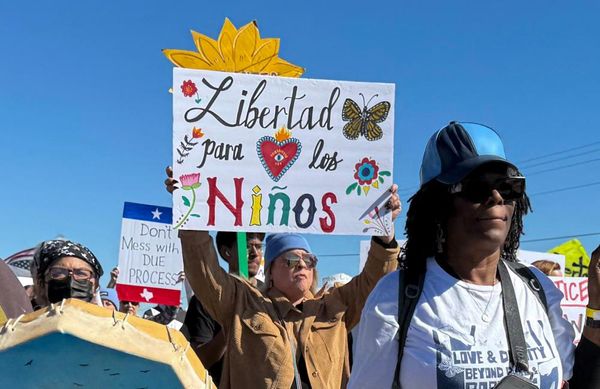
The most positive outcome from the Claytons plebiscite is that it has mobilised thousands of people, obvious from the size of demonstrations and the increased voter registration in the period leading up to the close of polls. Many young people have discovered protest politics through the large rallies called by the marriage equality movement.

The original gay liberation movement understood that the rights of a minority are only guaranteed when all minorities are protected. We distrusted single-issue politics and the assumption that without shared values identity alone is sufficient to build a movement.
In a generally dispiriting global environment, there are crucial issues of human rights that confront us locally. The treatment of asylum seekers and the structural inequality of Indigenous Australians are more fundamental questions of human rights than the achievement of same-sex marriage.
If the poll is overruled by the court, the energies of people who’ve been mobilised by this issue will not suddenly disappear. The challenge for Labor and the Greens, both of whom are campaigning hard on the marriage issue, and for activist groups like GetUp, is to tap the energies unleashed by the campaign. “Equality” is a powerful message around which to organise.