Get all your news in one place.
100’s of premium titles.
One app.
Start reading
Reuters
Reuters
Business
Flavio Lo Scalzo

Tommy the robot nurse helps keep Italy doctors safe from coronavirus

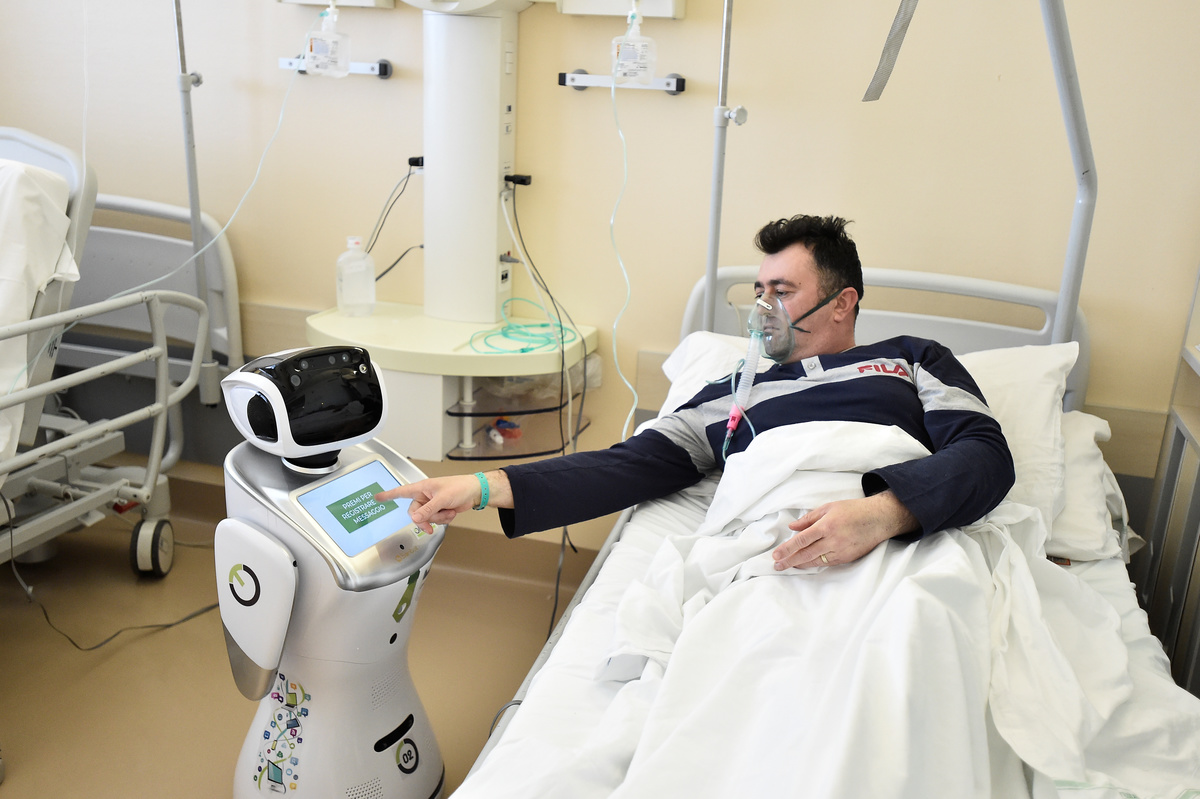
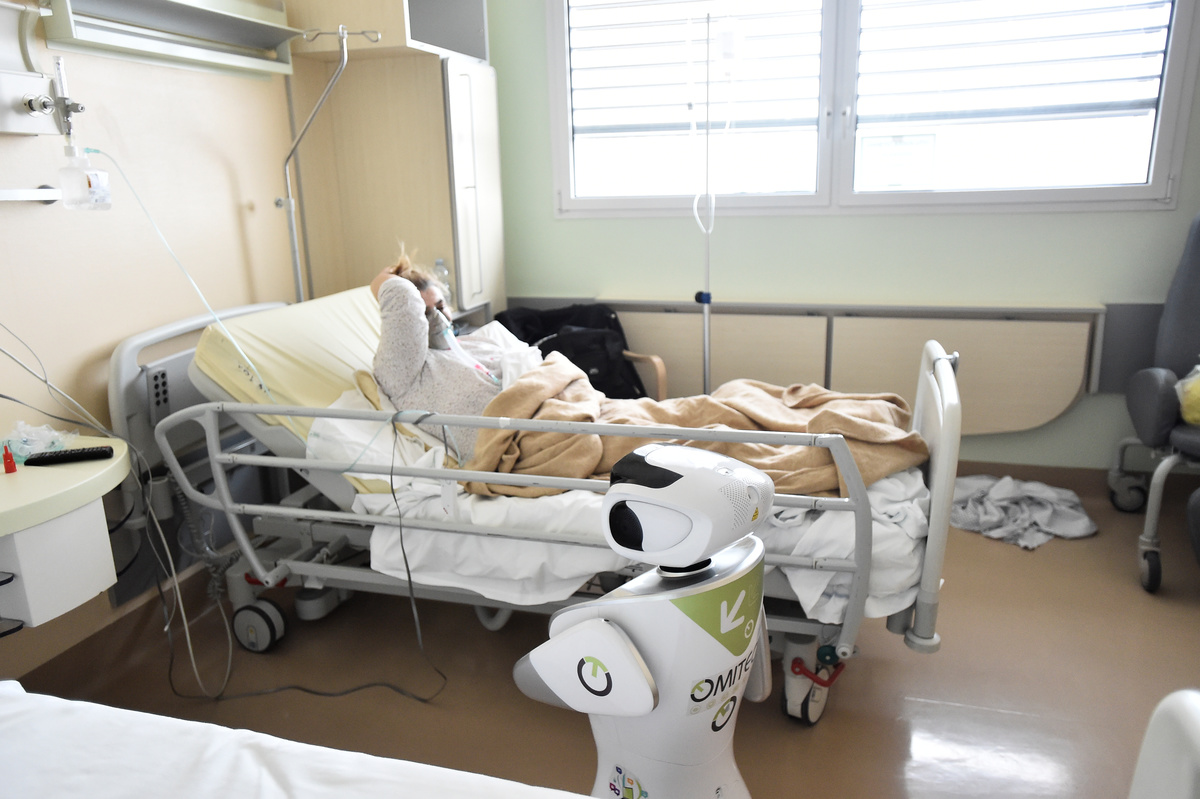
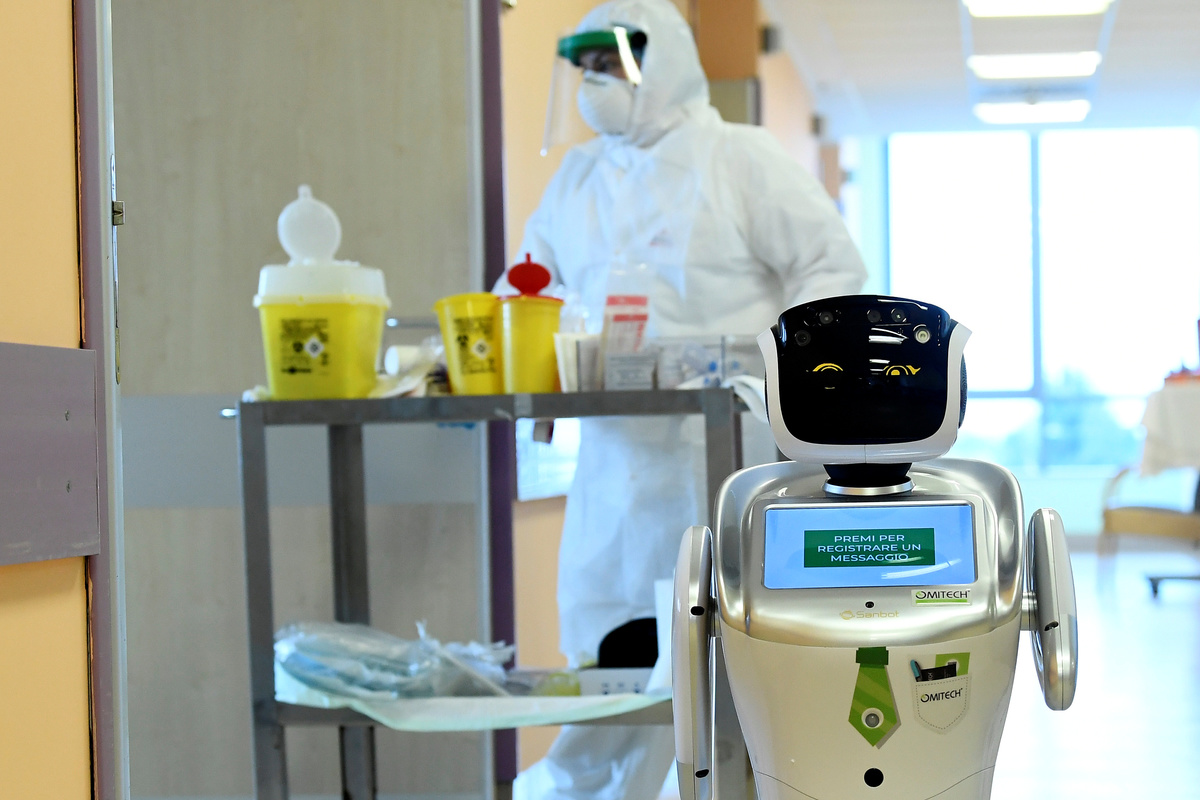
A robot helping medical teams treat patients suffering from the coronavirus disease (COVID-19) is pictured at a patient's room, in the Circolo hospital, in Varese, Italy April 1, 2020. REUTERS/Flavio Lo Scalzo

He doesn't wear a mask but he is helping save lives from coronavirus just the same. Meet Tommy, the robot nurse.

Tommy is one of six new robots helping flesh-and-blood doctors and nurses care for coronavirus patients at the Circolo Hospital in Varese, a city in the northern Lombardy region that is the epicenter of the outbreak in Italy.
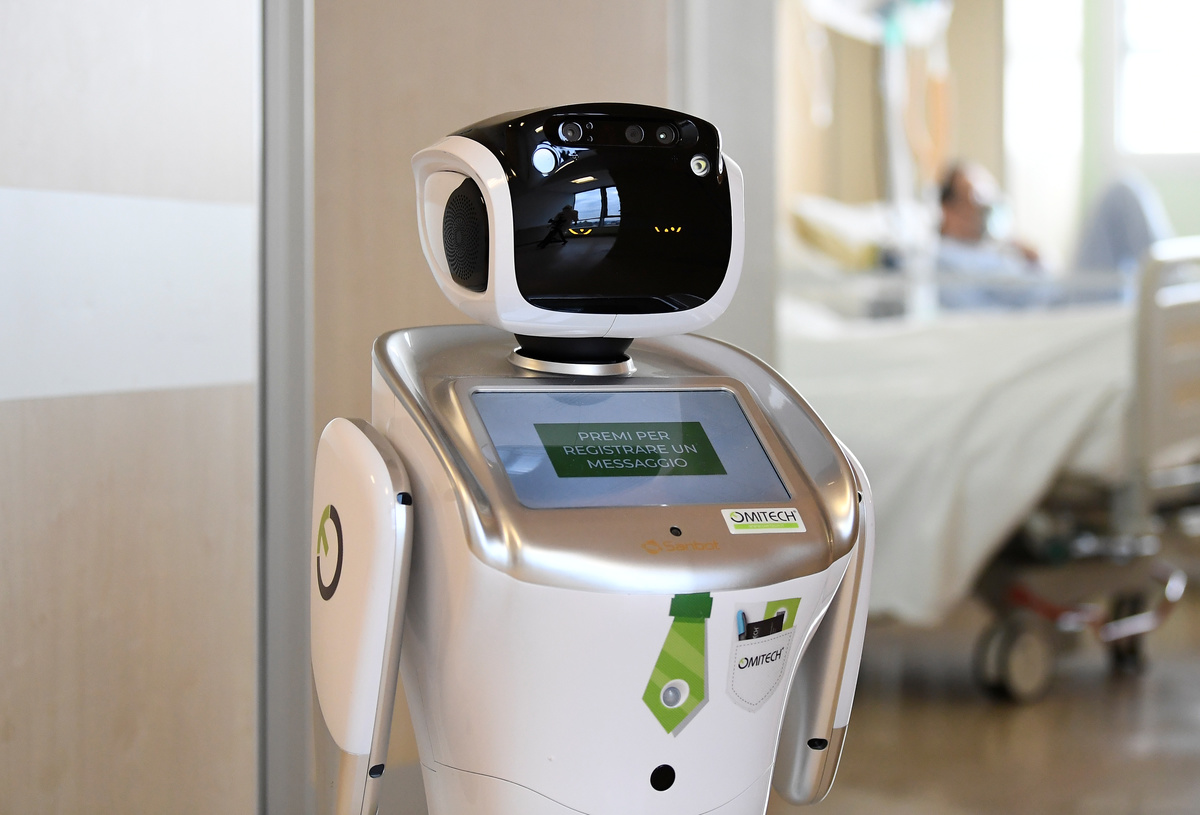
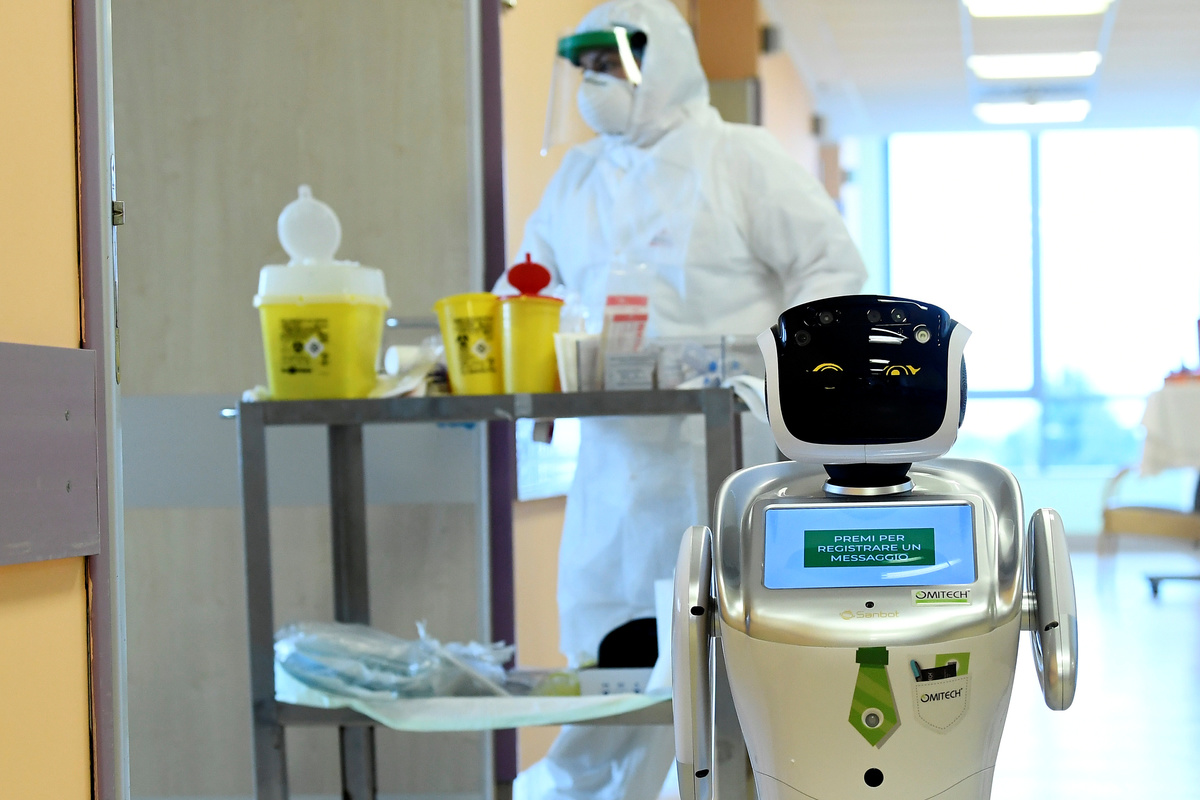
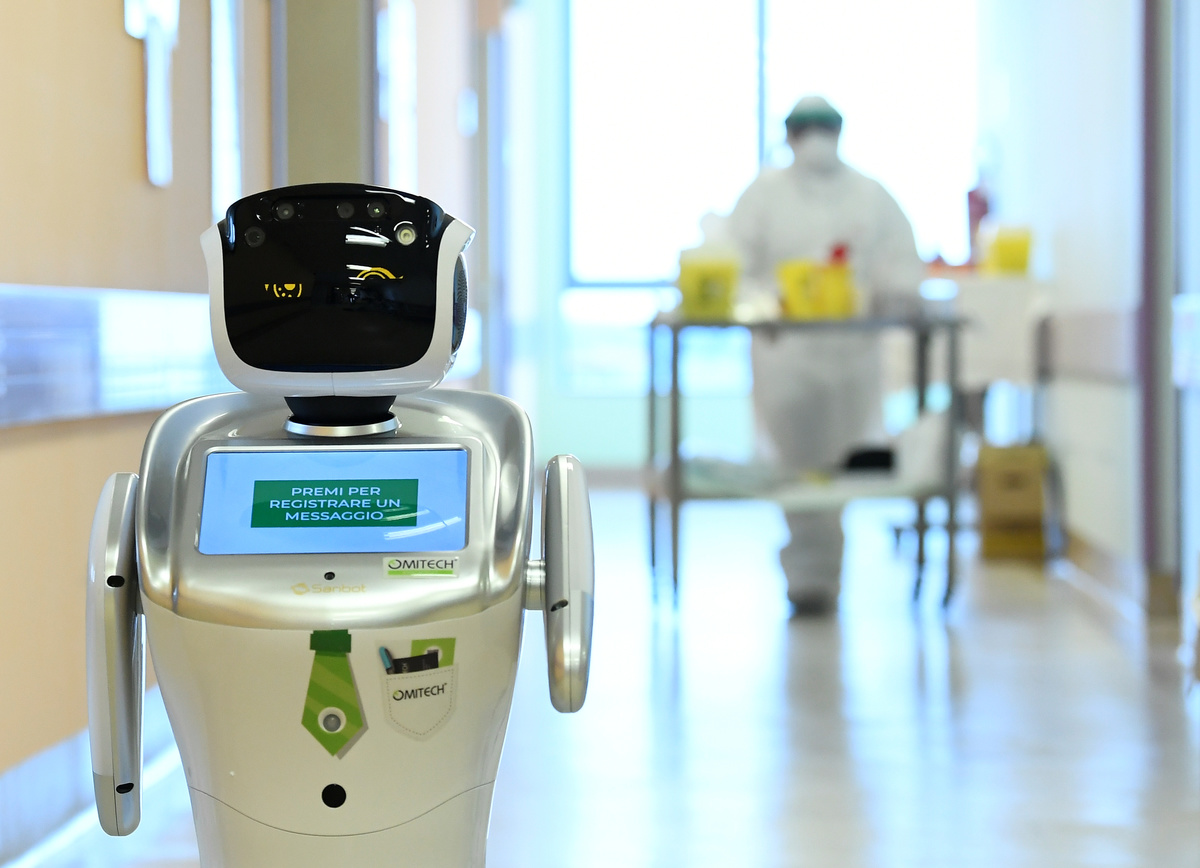
A robot helping medical teams treat patients suffering from the coronavirus disease (COVID-19) is pictured at the corridor, in the Circolo hospital, in Varese, Italy April 1, 2020. REUTERS/Flavio Lo Scalzo

"It's like having another nurse without problems related to infection," said Doctor Francesco Dentali, director of intensive care at the hospital.

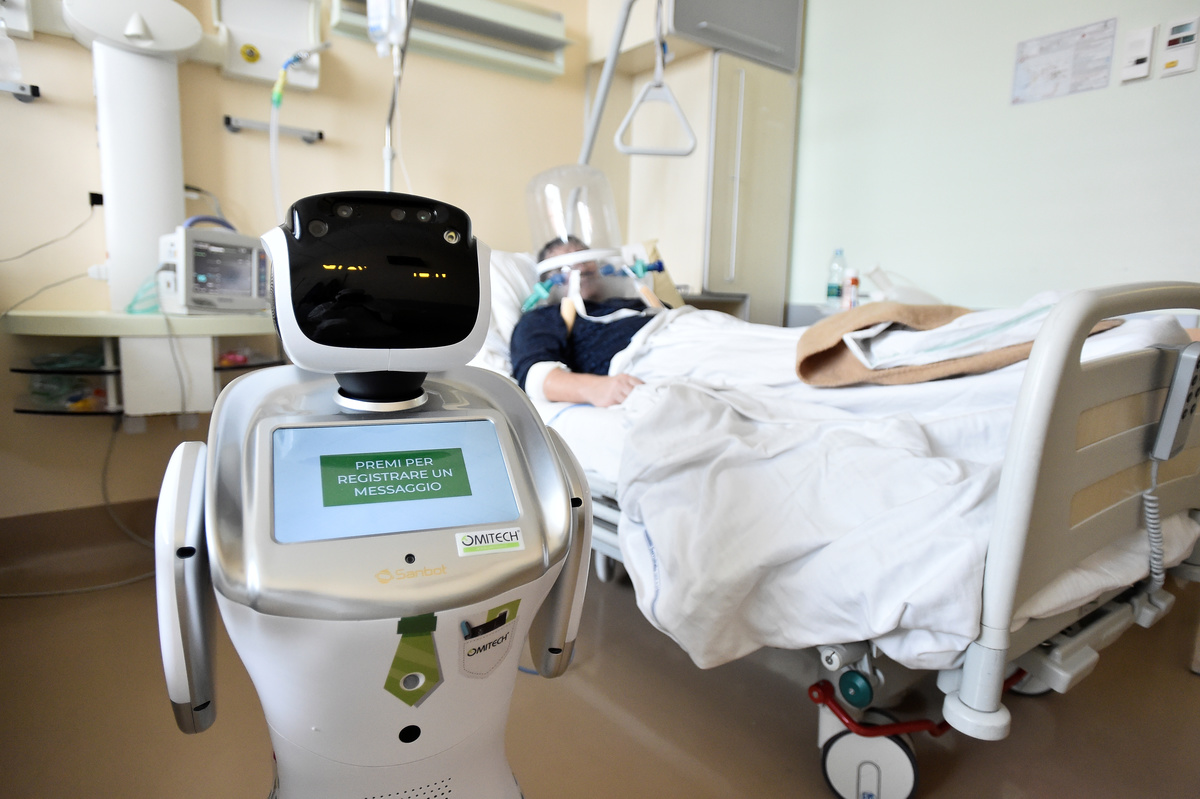
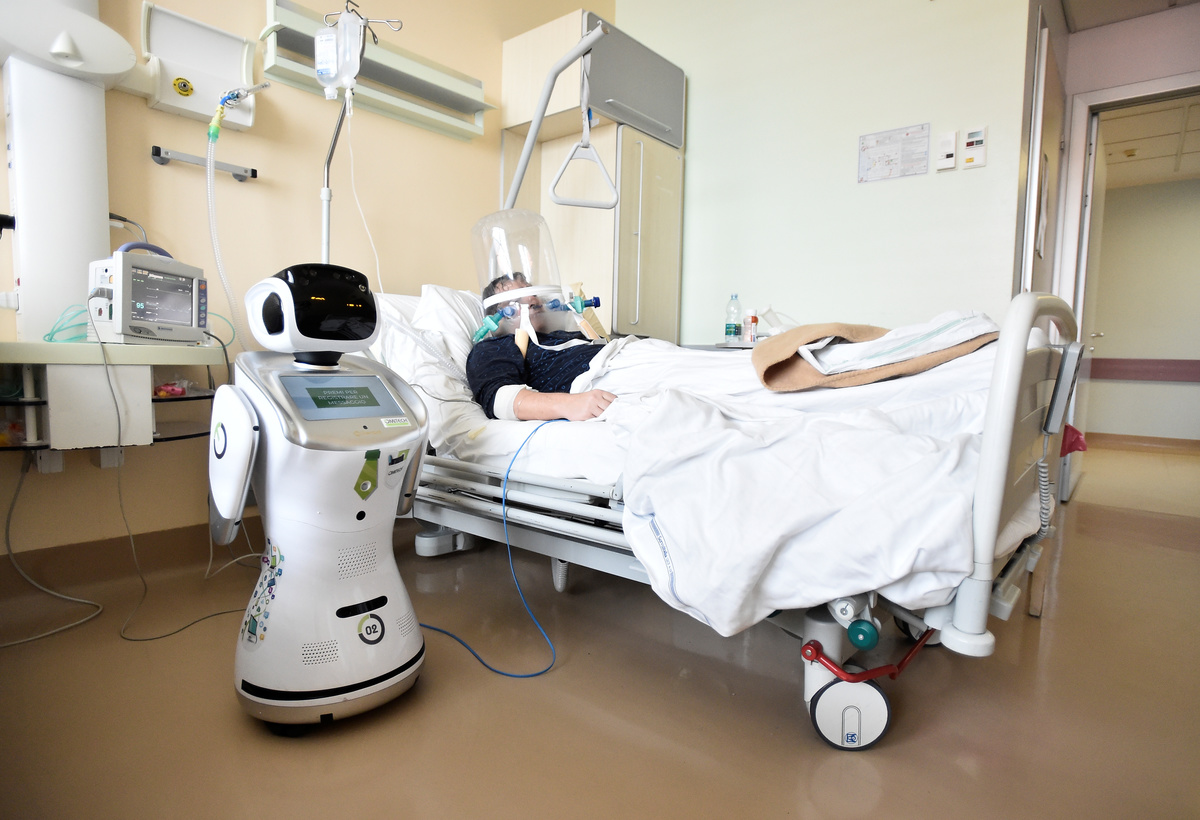
The child-size robots with large blinking eyes are wheeled into rooms and left by a patient's bedside so doctors can look after others who are in more serious conditions.

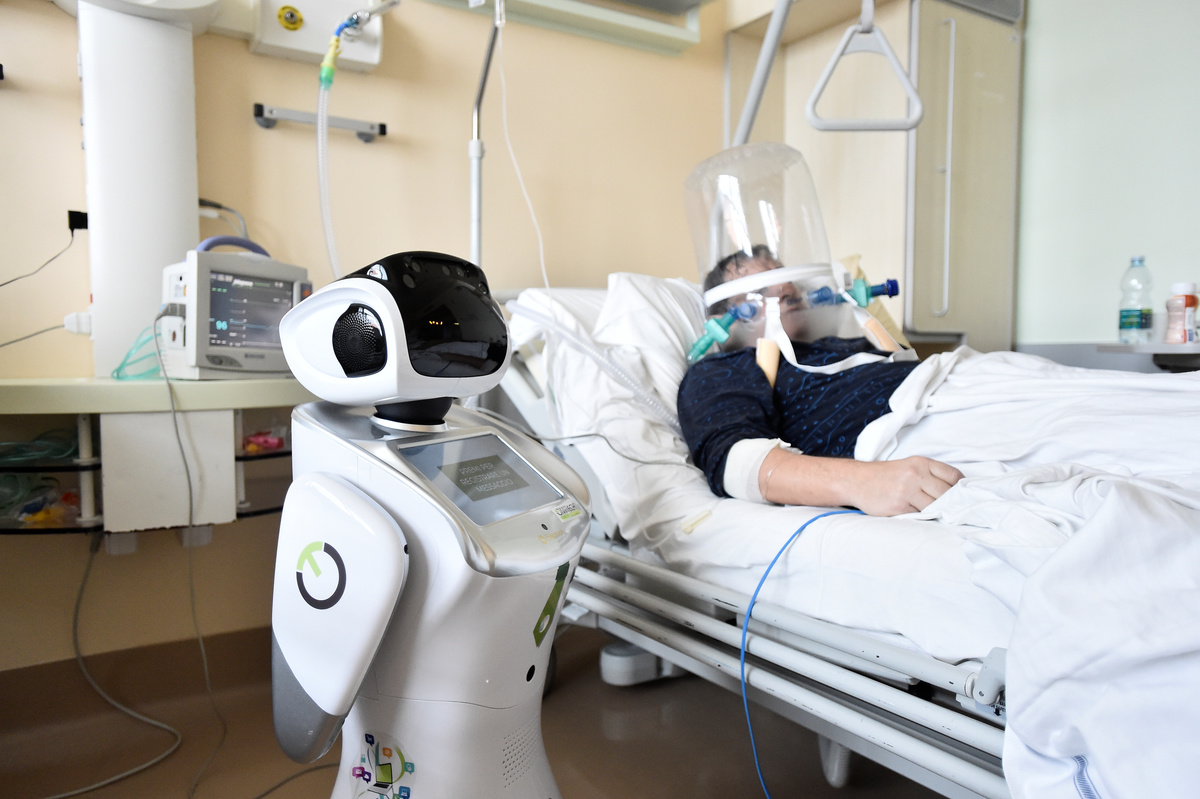
They monitor parameters from equipment in the room, relaying them to hospital staff. The robots have touch-screen faces that allow patients to record messages and send them to doctors.
A robot helping medical teams treat patients suffering from the coronavirus disease (COVID-19) is pictured at a patient's room, in the Circolo hospital, in Varese, Italy April 1, 2020. REUTERS/Flavio Lo Scalzo

Most importantly, Tommy and his high-tech teammates allow the hospital to limit the amount of direct contact doctors and nurses have with patients, thus reducing the risk of infection.

More than 4,000 Italian health workers have contracted the virus treating victims in Italy and 66 doctors have died.

The death toll in Italy, the world's hardest hit country in terms of deaths, topped 13,000 on Wednesday, more than a third of all global fatalities.
A robot helping medical teams treat patients suffering from the coronavirus disease (COVID-19) is pictured at the corridor, in the Circolo hospital, in Varese, Italy April 1, 2020. REUTERS/Flavio Lo Scalzo

"Using my abilities, medical staff can be in touch with the patients without direct contact," Tommy the robot, who was named after a son of one of the doctors, explained to a visiting reporter on Wednesday.

It takes a while for patients to realize that, given the enormity of the task of combating coronavirus and the toll it is taking on overworked medical staff, robots may be just what the doctor ordered.

"You have to explain to the patient the aim and function of the robot," Dentali said.
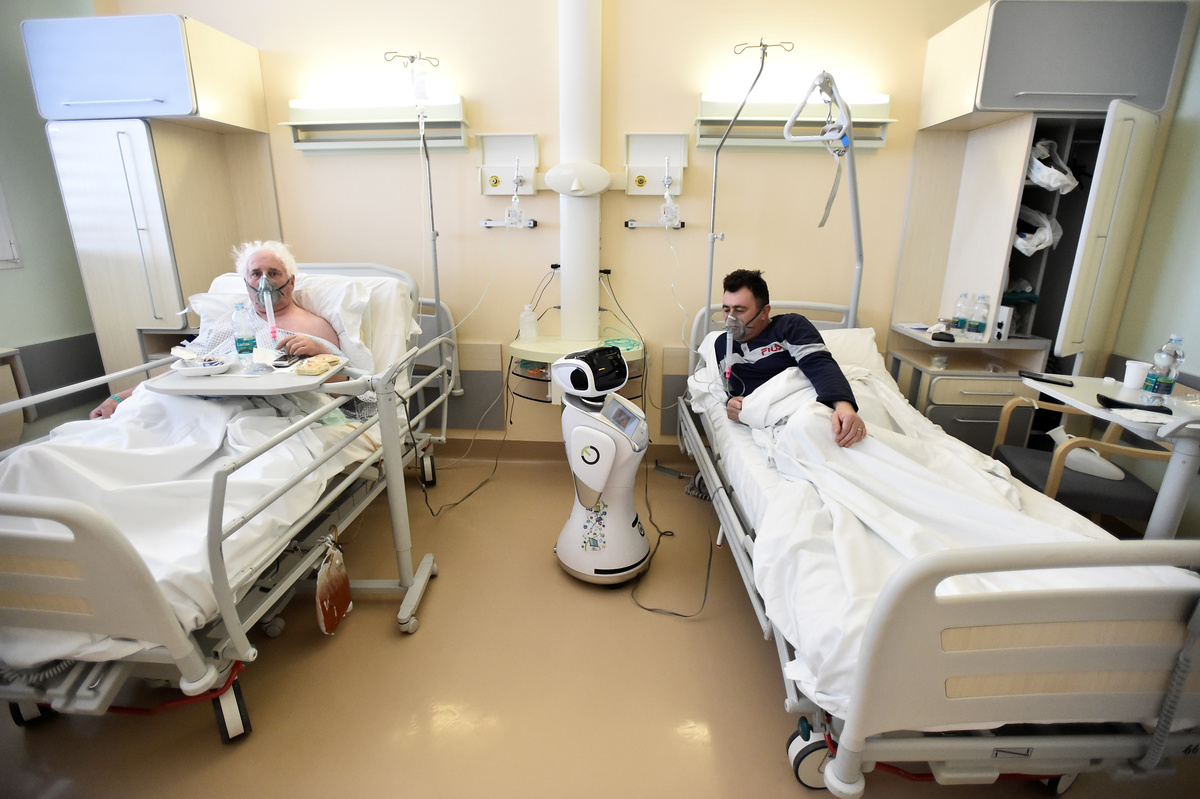
A robot helping medical teams treat patients suffering from the coronavirus disease (COVID-19) is pictured at a patients' room, in the Circolo hospital, in Varese, Italy April 1, 2020. REUTERS/Flavio Lo Scalzo

"The first reaction is not positive, especially for old patients. But if you explain your aim, the patient is happy because he or she can speak with the doctor," he said.

The robots also help the hospital limit the number of protective masks and gowns staff have to use.

"These days, they are a scarce resource," said Doctor Gianni Bonelli, the hospital's director.
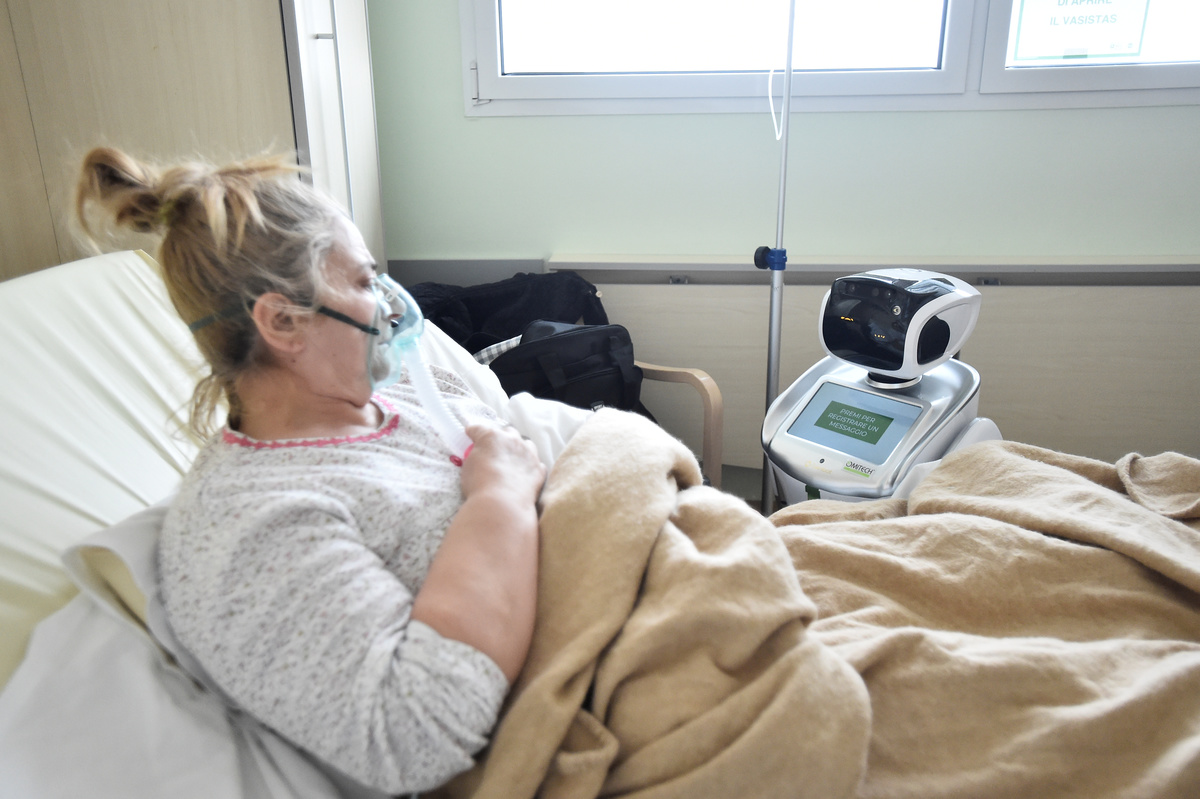
A robot helping medical teams treat patients suffering from the coronavirus disease (COVID-19) is pictured at a patient's room, in the Circolo hospital, in Varese, Italy April 1, 2020. REUTERS/Flavio Lo Scalzo

The shortage of masks has been one of the biggest problems dogging the national health system since the contagion surfaced at the end of February.

The national commissioner for the emergency has said it will take Italy at least two months to become self-sufficient in producing protective masks.

Tommy and his fellow robot nurses have one more advantage - they are not subject to exhaustion. A quick charge of batteries and they are back at work in the ward.
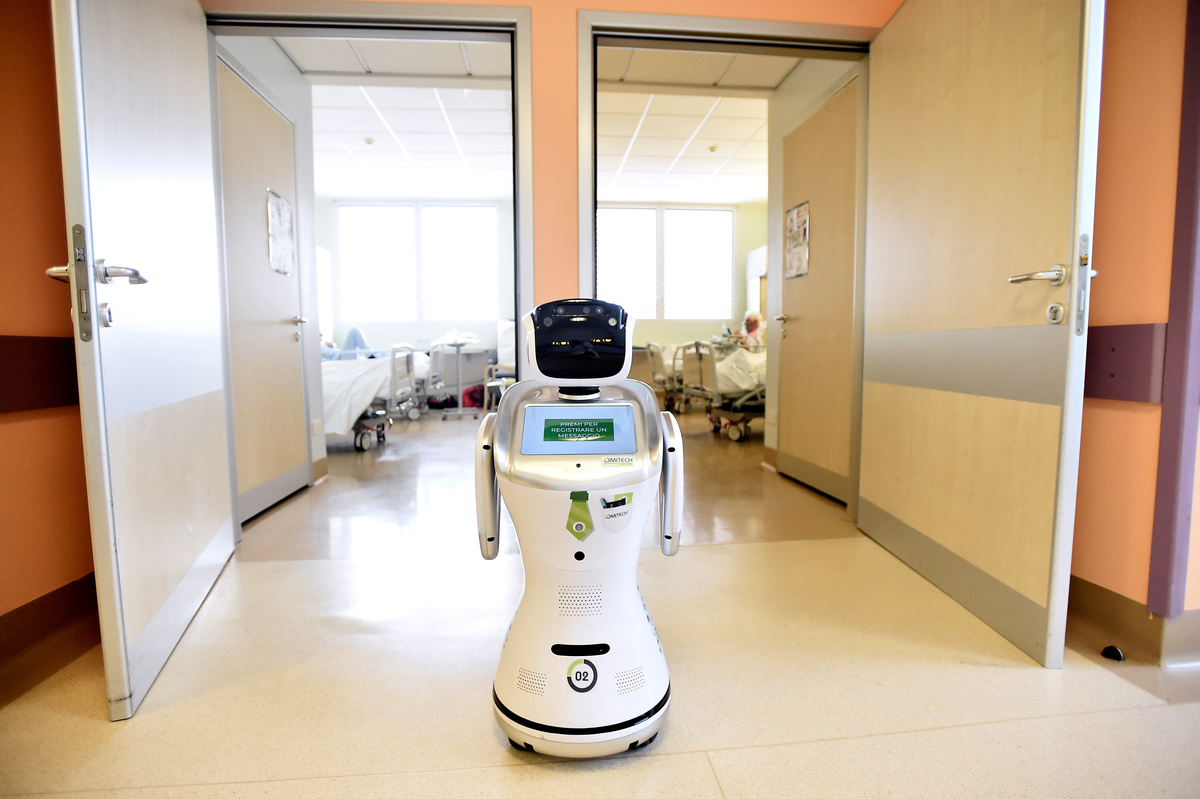
A robot helping medical teams treat patients suffering from the coronavirus disease (COVID-19) is pictured at the corridor, in the Circolo hospital, in Varese, Italy April 1, 2020. REUTERS/Flavio Lo Scalzo

(Writing by Philip Pullella; Editing by Alexandra Hudson)
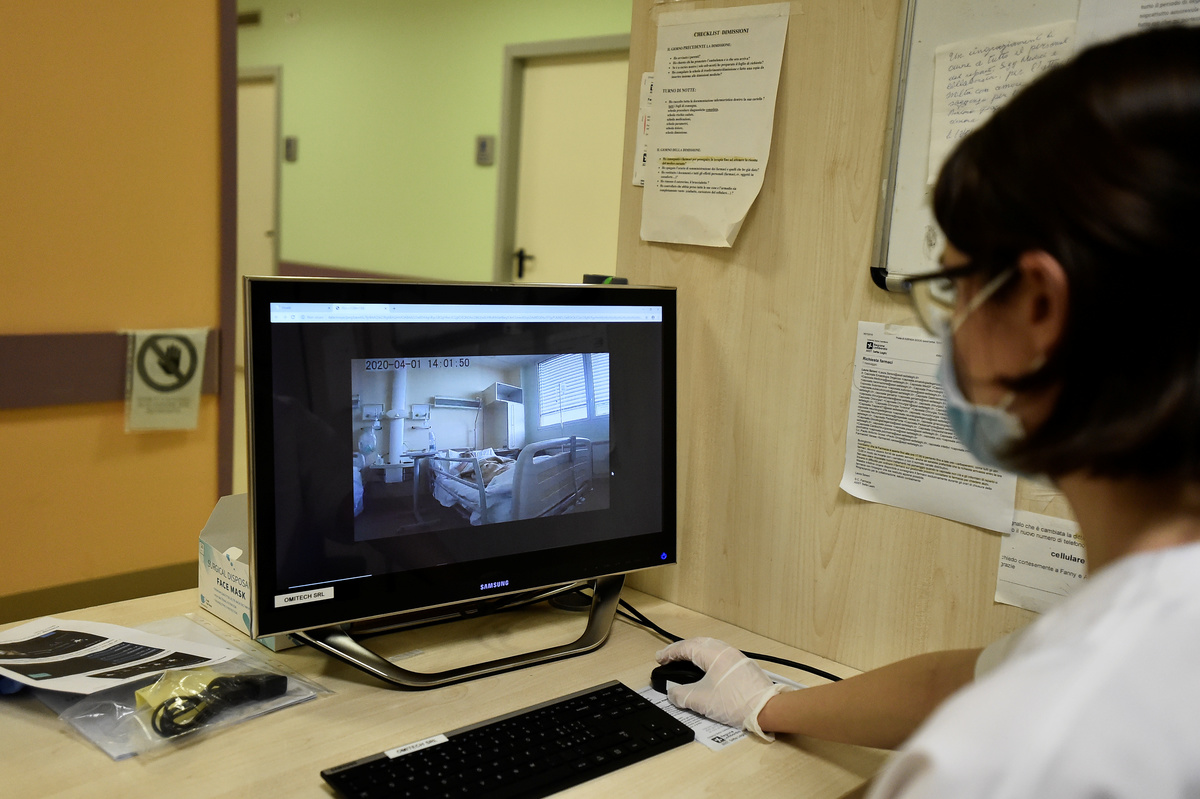
A health worker looks at the screen showing images taken by a robot helping medical teams treat patients suffering from the coronavirus disease (COVID-19), in the Circolo hospital, in Varese, Italy April 1, 2020. REUTERS/Flavio Lo Scalzo
A robot helping medical teams treat patients suffering from the coronavirus disease (COVID-19) is pictured at the corridor, in the Circolo hospital, in Varese, Italy April 1, 2020. REUTERS/Flavio Lo Scalzo
A robot helping medical teams treat patients suffering from the coronavirus disease (COVID-19) is pictured at a patient's room, in the Circolo hospital, in Varese, Italy April 1, 2020. REUTERS/Flavio Lo Scalzo
Sign up to read this article
Read news from 100’s of titles, curated specifically for you.
Already a member? Sign in here
Related Stories
Top stories on inkl right now
One subscription that gives you access to news from hundreds of sites
Already a member? Sign in here
Our Picks
Fourteen days free
Download the app
One app. One membership.
100+ trusted global sources.