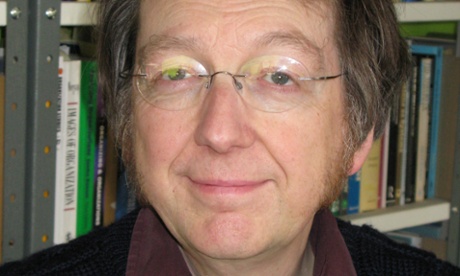
Our research colleague Tom Horlick-Jones, who has died of cancer aged 58, was an influential and challenging figure in the study of risk and human behaviour. As an adviser, rapporteur and expert witness, he contributed to various important projects, including the Ladbroke Grove rail inquiry, a strategic review of the Notting Hill carnival, and an evaluation of the national debate on the cultivation and sale of genetically modified foods.
Born and brought up in Cheltenham, where his father, Howard, was a tinsmith in the local gas works and his mother, Barbara, (nee Horlick) was a shop assistant, Tom went to a technical school in Cheltenham. He then gained a degree and a master’s in mathematics from the University of Wales, where in 1983 he met his future wife, Miranda Green, a violin maker and repairer, at a CND rally in Cardiff.
At that point he had a particular interest in how people could be protected in the event of nuclear war – and his first job was working on that topic for the Greater London council’s emergency planning committee. In 1986 he went to the London Emergency Planning Information Centre, latterly as director.
From there he gravitated to the department of geography at the London School of Economics, where he was a senior research fellow, to the Centre for Environmental Strategy at the University of Surrey, and then to Cardiff University, where in 2008 he was appointed chair of social sciences. He gained his PhD in 2006 and became a professor at Cardiff.
Parallel to his academic research on risk management, Tom appeared as an expert witness at inquiries or as an adviser to reviews. After the murder of two people at the 2000 Notting Hill carnival, he was called in by the then London mayor, Ken Livingstone, to provide advice to a carnival review group, whose deliberations led to route changes and an expansion of policing and stewarding. In 2000 he gave evidence on the 1999 Ladbroke Grove rail crash at the Cullen inquiry, which led to the creation in 2003 of the Rail Safety and Standards Board. And in 2002-03 he led a government-sponsored team evaluating the arguments for and against genetically modified crops, subsequently providing evidence to the House of Commons science and technology select committee.
Outside work Tom was a voracious reader across an eclectic range. He kept up a tremendous academic output almost to the end, and still had plans for future projects. His last major work, sponsored by the European Union, focused on how policymakers can try to bring about sustainable consumption. In all his activity he had the gift of being able to ask the question that needed to be asked, and so to provoke curiosity and reflection. He was an admired, respected and much-loved intellectual leader.
Tom is survived by Miranda, whom he married in 1994.