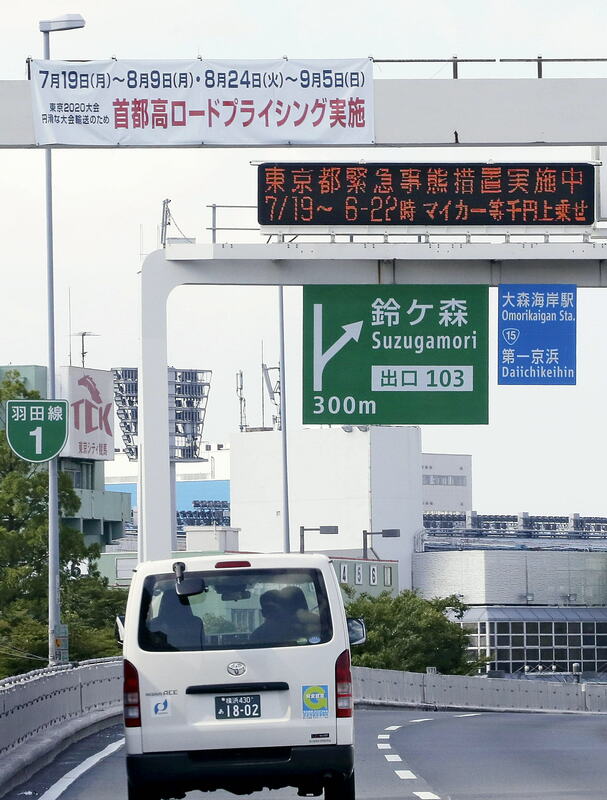
So-called road pricing began on the Metropolitan Expressway on Monday, with tolls varying by the time of day in a bid to ease congestion and ensure the smooth progress of vehicles carrying athletes and officials of the Tokyo Games.
From 6:00 a.m. to 10:00 p.m. until Aug. 9, a flat rate of 1,000 yen will be added to the toll for mini-vehicles, motorcycles and ordinary motor vehicles on a section of the Metropolitan Expressway in Tokyo.
From midnight to 4:00 a.m., all vehicles except those paying cash will be charged half price.
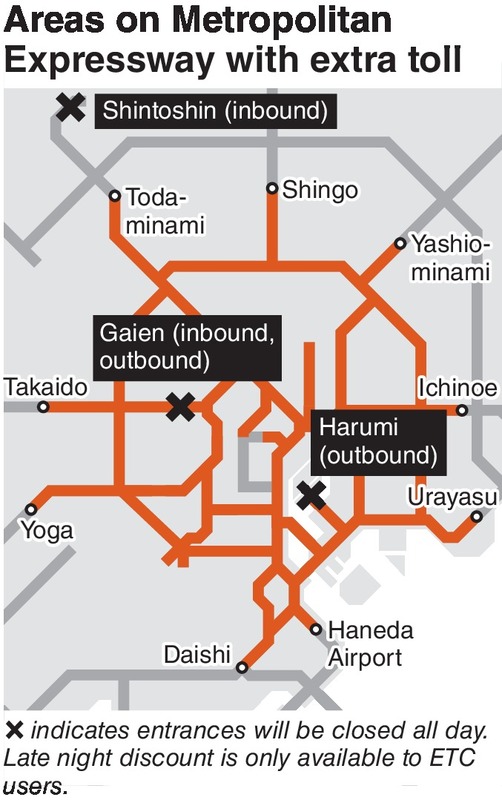
Setting higher prices during the daytime, when traffic is heavy, is meant to encourage drivers to travel at night when tolls are discounted.
The organizing committee of the Games, the Tokyo metropolitan government and others are aiming to reduce overall traffic volume by 30%. Taxis and delivery trucks will not be charged extra, in consideration of the impact on economic activity and daily life.
Road pricing will also be implemented during the Paralympic Games from Aug. 24 to Sept. 5.
Major stations for Shinkansen trains, regular JR lines and subways, as well as the stations closest to Games venues, have been stepping up security measures since Monday.
East Japan Railway Co. (JR East) has brought in sniffer dogs that can detect gunpowder. At some JR stations in Tokyo on Monday, dogs patrolled the areas near Shinkansen ticket gates together with security guards.
JR East will also use artificial intelligence to detect suspicious people in security camera footage, and guards with small cameras attached to their chests will patrol the trains. If someone is considered suspicious, guards will check their baggage at an inspection point on the premises.
If a person refuses to have their bags checked, they will be asked to leave the station in accordance with a Land, Infrastructure, Transport and Tourism Ministry ordinance. In cases where station staff cannot handle the situation alone, they are expected to hand such persons over to the police.
A JR East official said, "We'll work with the police and security companies to create an environment in which people can use the trains with peace of mind."
Tokyo Metro Co., Central Japan Railway Co. (JR Tokai), and other companies will also use sniffer dogs for security and baggage inspection.
Read more from The Japan News at https://japannews.yomiuri.co.jp/