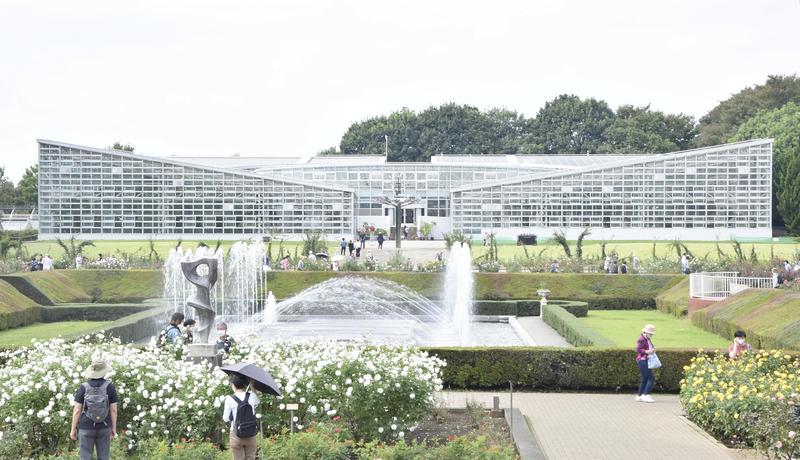
A metropolitan park retaining the nostalgia of Musashino, an old name for midwestern Tokyo, is located just a stone's throw away from Jindaiji temple in Chofu, Tokyo.
Jindai Botanical Gardens is a sprawling 490,000-square-meter park and features 30 garden blocks, with each block dedicated to one plant species such as the rose, the azalea, the plum, or the bush clover. Visitors are able to appreciate nature year-round among the 4,800 species of 100,000 trees planted throughout the premises.
While the park provides plenty of picturesque scenes from every single season, the number one, must-see spot throughout the year is the Large Greenhouse, which houses 150 types of orchids, of which many have Western origins.
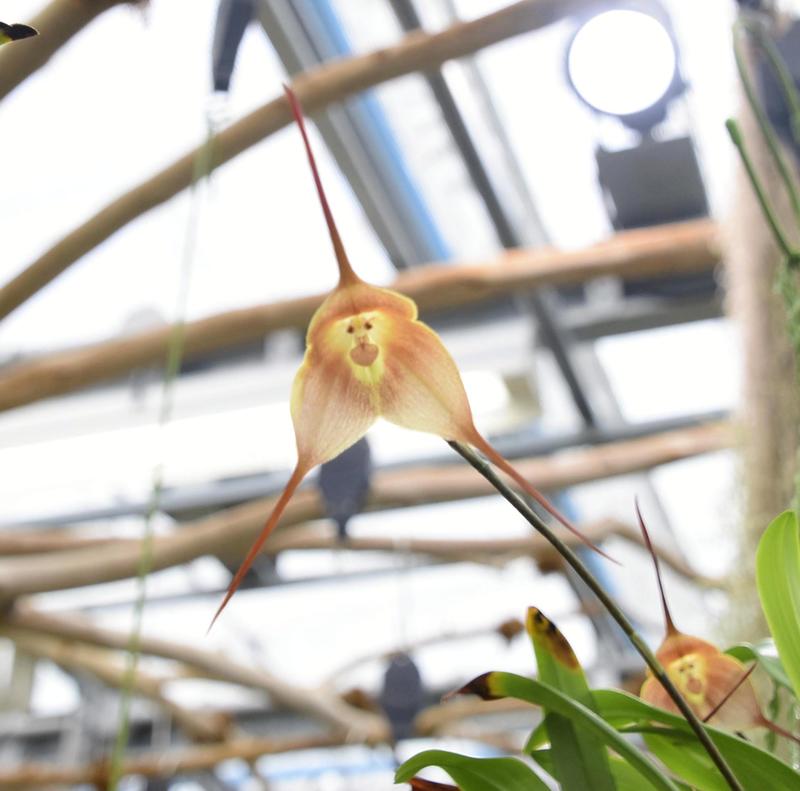
"This flower might be a little bit interesting," Yoshihiro Iimura whispered to me. He works for the Tokyo Metropolitan Park Association, which operates the botanical gardens.
The orchid flower he told me to have a look at is called the Dracula gigas. I got up close to the flower and peered in. A monkey's face seemed to stare back at me from the center of the flower and its surrounding needle-like petals.
"It is also called monkey orchid," Iimura, 65, said.
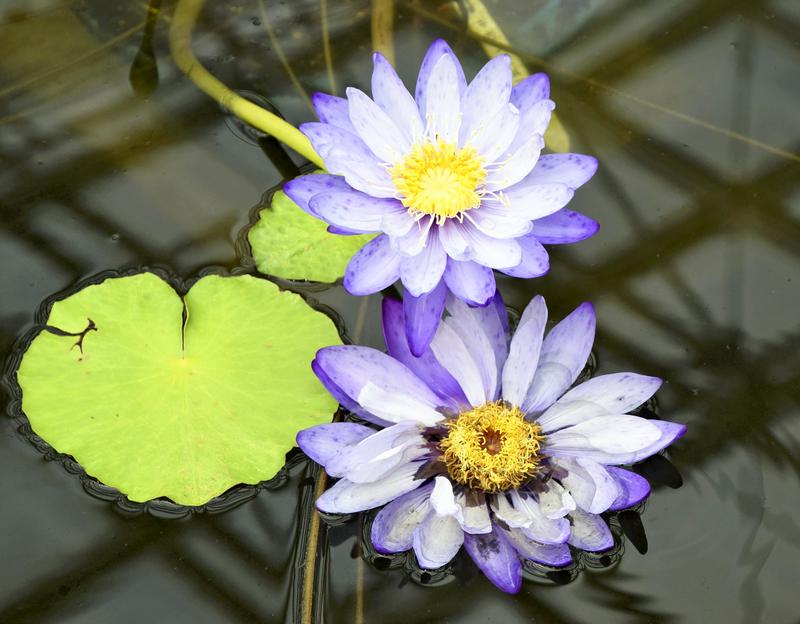
Blooming flowers bursting with color were brightening up the tropical water lily room. Among them was the shokudai-o-konnyaku, or the amorphophallus titanum, which is not a water lily, obviously. Also called the corpse flower, the Sumatra-native plant bears one of the world's largest flowers only once every few years. As the Jindai Botanical Gardens' corpse flowers had bloomed in July last year, the plant was in the process of storing up nutrition in one leaf over the next several years to blossom once again.
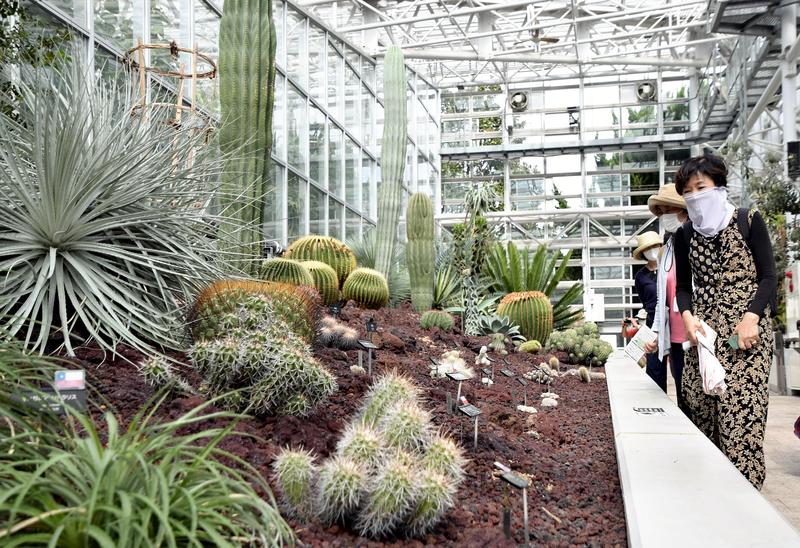
Also worth visiting in the greenhouse is the dryland plant room, where Chilean aurata cacti with thorns aplenty can be found. It is among the plants donated by Chile's national botanical gardens that signed a technical agreement with the Tokyo metropolitan government.
Another cactus plant called kokushikan, which is noted for its long thorns and splendid flowers, can also be found in the dryland plant room.
The botanical gardens' Center for Plant Diversity is located across the road from the gardens' main premises. The natural environment of western Tokyo's Okutama district, the Izu islands and elsewhere have been recreated in the center's Learning Garden, where visitors can experience looking at endangered flora. The center is also working on the conservation and propagation of plants to pass them on to future generations.
Tucked away in an enclave just a bit away from the gardens is the not-to-be-missed Aquatic Plants Garden. Featuring wooden walkways constructed over a marsh, visitors never fail to pack the promenades when the Japanese irises are in full bloom in June.
"There are always flowers blossoming and trees bearing nuts in the gardens," Iimura said. "Please come and find your favorite plants."
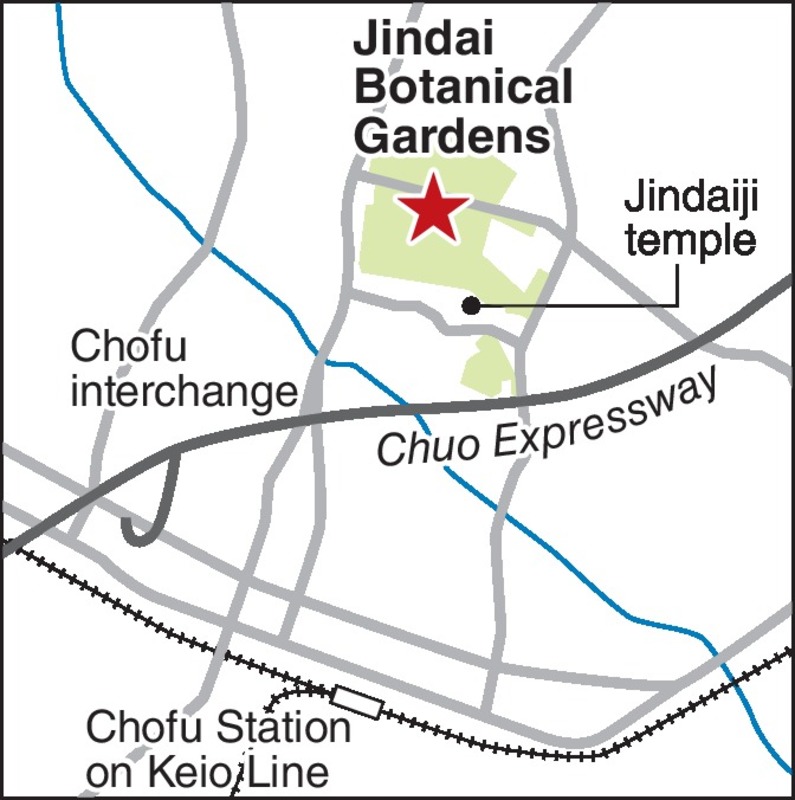
Jindai Botanical Gardens: 5-31-10 Jindaiji Motomachi. Chofu, Tokyo
Read more from The Japan News at https://japannews.yomiuri.co.jp/