Many Japanese literary legends, including Masuji Ibuse, Osamu Dazai and Akiko Yosano, lived in an area along the JR Chuo Line in Suginami Ward, Tokyo. What led them, these novelists and poets who made their mark on the history of Japanese literature, to gather here?
Yosano wrote the lyrics for the school song of the ward-run Momoi Daini Elementary School. They include a phrase meaning, "How rich the natural environment is."
The elementary school is located south of Ogikubo Station, and Yosano lived nearby. The Zenpukuji River flows in the area, while Yosano Koen park, built on the former site of Yosano's house, has a calm atmosphere and an abundance of plants.
According to the Suginami Historical Museum and other sources, the Chuo Line became a four-track line and the operation of express trains began in the wake of the 1923 Great Kanto Earthquake. As a result, an increasing number of people moved into the ward, and many novelists and poets came to live there.
Katsuyo Imada, a member of the museum's staff, said, "They may have liked the rich natural environment in Suginami."
Ibuse began living in the Ogikubo district in 1927, and his presence was like a magnet to other writers. Dazai and many other young writers who admired Ibuse moved there.
Ibuse enjoyed shogi and drinking with Dazai, novelist Shigeru Tonomura, French literature scholar Mizuho Aoyagi and others at Pinochio, a Chinese restaurant in front of Asagaya Station. These cultural interactions continued after the end of World War II. Later, the area was nicknamed Asagaya Bunshi Mura (Village of authors of literature in Asagaya).
In his essay "Ogikubo Fudoki," Ibuse wrote about the mood of Suginami in those years. "One person told me that neighbors don't talk behind each other's backs even if you walk around wearing dotera [a casual outer coat-style kimono] in the daytime," he wrote.
The free spirit amid which residents held chats and discussions still remains in the area.
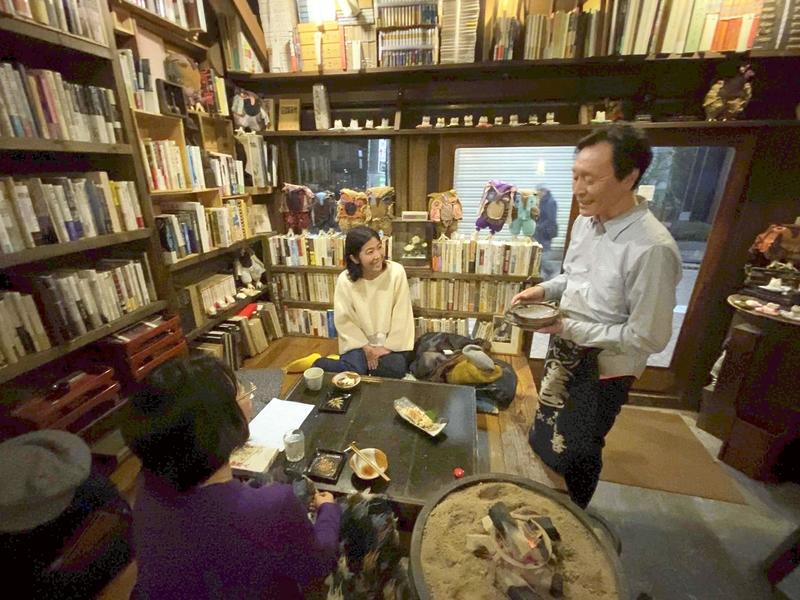
On Jan. 14 at the Cocktail Books secondhand book store and dining bar near Koenji Station, book lovers and aspiring novelists gathered and enjoyed talking about literature and other topics.
Tetsuro Sekizawa, 38, is a frequent customer of the "cocktail bookstore bar." He said he wanted to be a novelist when he was in his 20s and even entered novelist competitions designed to recruit new faces.
But because it was difficult for him to balance both his writing and his job, he temporarily gave up on the dream.
After getting married, he began to live in the ward, where he has talked with musicians, painters and aspiring actors about their dreams. Invigorated by his talks with them, Sekizawa resumed writing.
In November 2019, Sekizawa published a first novel fanzine named "Hamukyabetsu." He said, "Individuality is respected in this area, so I was able to relax."
Cocktail Books owner Suguru Karino, 48, said: "For literature writers in the past, this area was a frontier [an unexploited place] and they were eager to create a new era. Even now that spirit lives on."
However, there may have been a more practical reason for the high concentration of literary legends and their followers.
According to real estate information websites, the current average rent for a single-room apartment in the ward is 68,000, yen lower than those in nearby wards such as Nakano and Setagaya. As a result, Suginami Ward is known as a place where it is easier for university students from provincial regions to live. The rent for houses in the ward is also said to have been low when Ibuse and Dazai were active as writers.
"In those days, all of them were poor. Landlords weren't so strict and it seems they were able to get out of paying the rent more easily there," said Izumiko Aoyagi, 69, a granddaughter of Mizuho Aoyagi.
A pianist and essay writer, Aoyagi was raised in the Asagaya district.
"I heard that some of the writers' wives sold their nice kimono at pawn shops and walked the streets clad in nemaki [kimono for sleeping]," she said.
Aoyagi said her father's hobby was collecting antiques, which cost a lot of money, so her grandmother would sell her kimono at pawn shops when their money ran out.
Read more from The Japan News at https://japannews.yomiuri.co.jp/