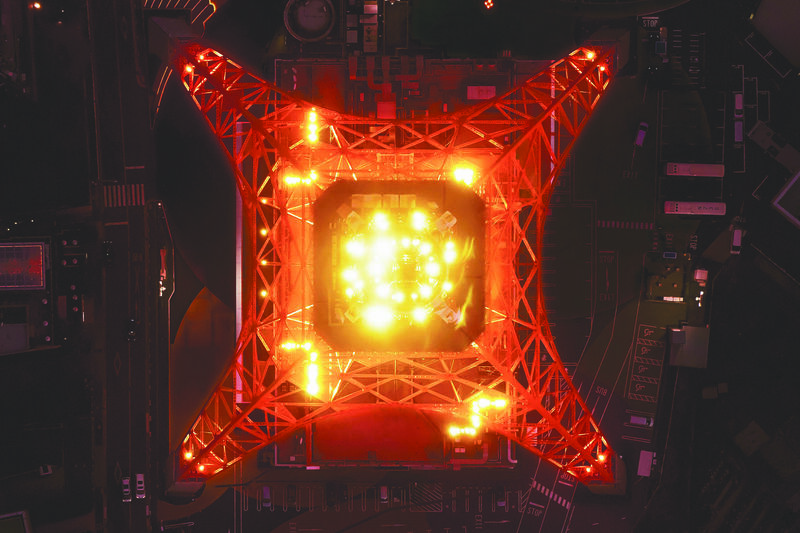
If you view Tokyo Tower directly from above at night, you will see a bright orange X that sparkles in the darkness with what looks like a fireball in the middle emitting sparks in four directions. This stunning sight is thanks to the tower's 180 lights, which are lit from sunset and make the famous landmark appear as if it is floating in the night sky.
Built in 1958 during an economic boom, the 333-meter structure was a symbol of hope and dreams for people who came to Tokyo from the countryside with aspirations. I was one of them. Now I am old, looking up at the dazzlingly bright tower.
Akutagawa Prize winner Keizo Hino, who was my senior colleague at The Yomiuri Shimbun, wrote about the tower as seen from his hospital bed when he was severely ill in the early Heisei era (1989-2019). He wrote that the illuminated tower had anchored him to the real world when he began hallucinating due to drugs he was given for an operation.
Since its construction, Tokyo Tower remained relatively unfazed until March 2011, when the Great East Japan Earthquake struck and the tip of the top antenna was slightly bent -- an indication of how big the quake was.
Shortly after the earthquake, Tokyo Skytree, which was under construction, reached its 634-meter peak. For me, a member of the "Tokyo Tower generation," witnessing this was like staring up at a tall, stylish person from the next generation, someone who looks so promising and unknowingly incites jealousy.
But, Tokyo Tower eventually straightened its back, or antenna, and now it keeps shining on.
Thinking about the two towers and what they represent makes me realize that I can still keep up with the younger generations, and it renews in me vigor to overcome hardships together with young people.
From bulbs to LEDs
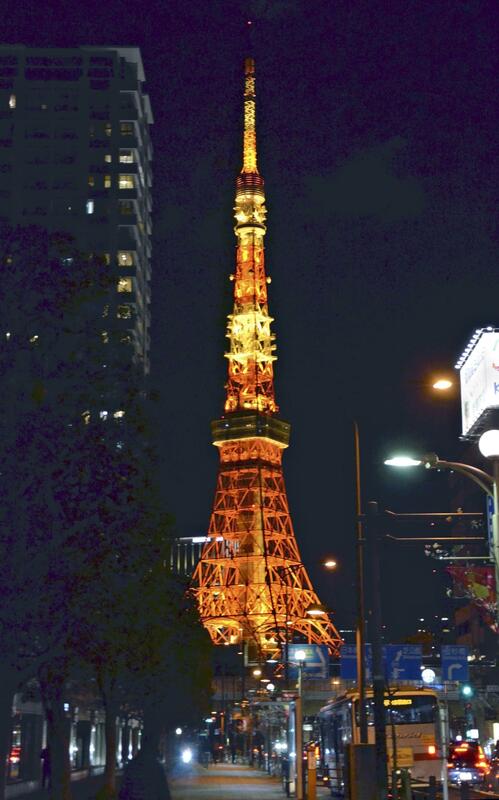
Tokyo Tower had its first decorative illumination on Jan. 1, 1989, the year when the era changed from Showa (1926-1989) to Heisei. That was when the tower's standard illumination called the Landmark Light was introduced. Back then, light bulbs were used to outline and illuminate the structure. Lighting designer Motoko Ishii is currently in charge of the illumination. The photo shows the Landmark Light.
The colorful Diamond Veil, which is referred to as the "New Light-Up for the Reiwa Era," uses 268 LED lights. The lights are normally on until midnight, but amid the pandemic, illuminations end at 8 p.m.
Read more from The Japan News at https://japannews.yomiuri.co.jp/