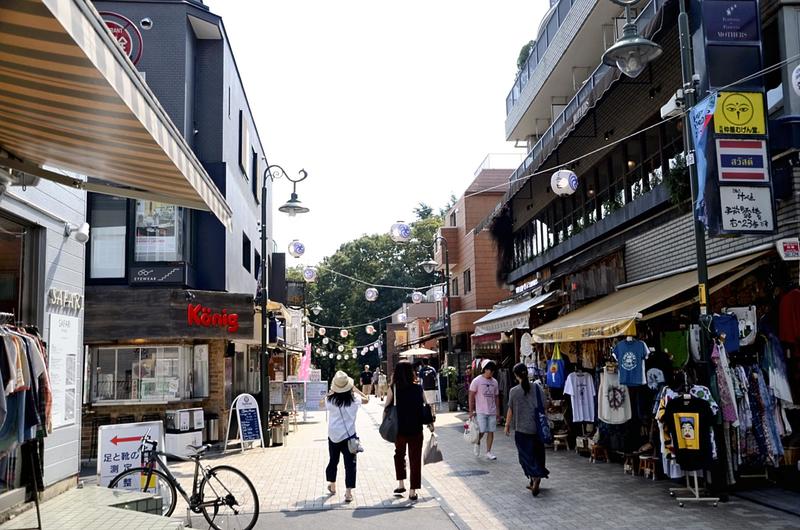
The Kichijoji district of Musashino, Tokyo, is a residential area popular among people of all ages. Kichijoji means "Kichijo-ji temple" in English, but there is no temple of that name in the city. So why did the district come to be called that?
Getting off a train at the JR Chuo Line's Kichijoji Station, I saw many shops lined up in a shopping arcade. There are also large commercial facilities such as Tokyu and Loft department stores, and the entire area was crowded with shoppers.
There were many young female customers in fashionable cafes and stores in a small alley. At Inokashira Park, which is known for its beautiful cherry trees, elderly people and others took leisurely walks around Inokashira Pond.
It is easy to get to central Tokyo from Kichijoji Station -- it takes 15 minutes by the Chuo Line to Shinjuku Station and 18 minutes by the Keio Inokashira Line to Shibuya Station. Unsurprisingly, Kichijoji always places high in a ranking of the most popular places to live that is released annually by the operator of a housing information website.
And though I saw some shrines and temples in the area, ultimately I did not find a Kichijo-ji temple.
Golden seal
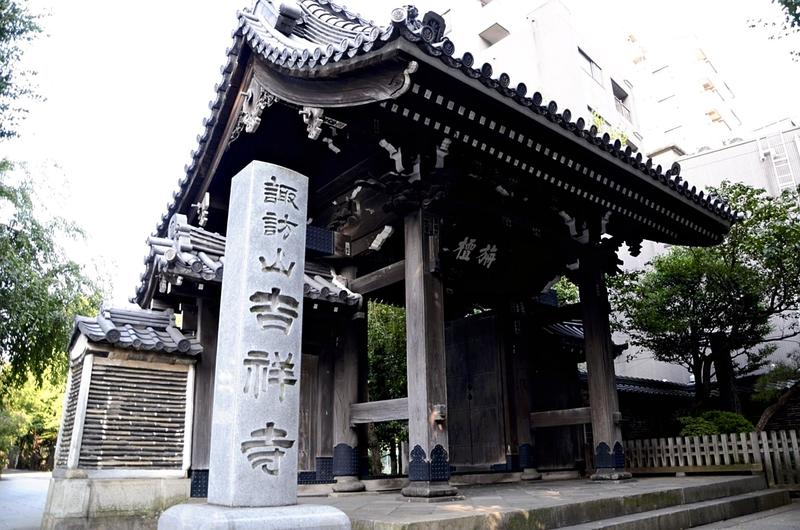
Does a temple called Kichijo-ji exist? Research led me to Suwazan Kichijo-ji temple, an about 560-year-old temple of the Soto sect of Buddhism located in the Honkomagome district of Bunkyo Ward, Tokyo, about 18 kilometers east of Kichijoji Station.
In the Edo period (1603-1867), the Sendanrin seminary -- the predecessor of Komazawa University -- was located on the premises of the temple, and more than 1,000 monks studied there. The temple has an old and honorable history.
According to chief steward Shosen Nomura, 28, the name of the temple came from a golden seal found in a well when Ota Dokan, a military commander in the Muromachi period (1336-1573), built Edo Castle. The letters "Kichijo" were reportedly engraved on the seal.
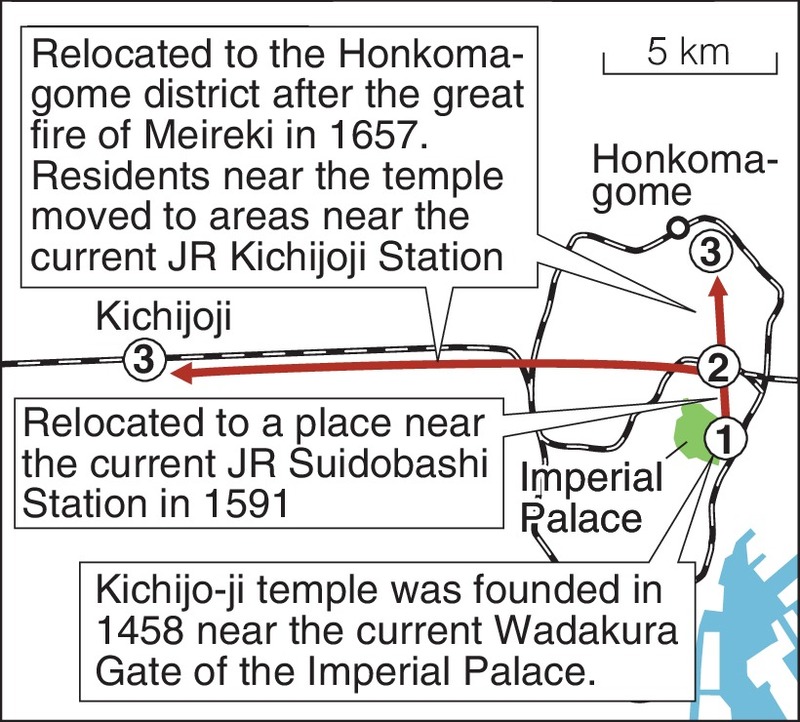
Originally, the temple was located near the current Wadakura Gate of the Imperial Palace. However, when Tokugawa Ieyasu entered Edo, the temple was relocated to a place near the current site of JR Suidobashi Station. The temple later burned in the great fire of Meireki in 1657, and it was again relocated to the Honkomagome district.
Many ordinary people living near the temple lost their houses in the fire. "People who were burnt out of their houses moved to land owned by the temple around the current Kichijoji Station," Nomura said, explaining the connection between the temple and Kichijoji.
Wilderness reclaimed
Those migrants are believed to have named the area "Kichijoji."
According to Kiyomi Yonezaki, 60, a staffer at the Musashino Historical Museum in Musashino, the characters for "Kichijoji village" first appeared in a cadastral register created seven years after the great fire.
"Migrants are said to have reclaimed wilderness areas and created the village of Kichijoji," Yonezaki said.
The east side of Kichijoji village is believed to have bordered the current Suginami and Nerima wards, and the west side spread to the current Mitaka-dori street running north to south from JR Mitaka Station. A pictorial diagram of Kichijoji village created in 1869 depicts Inokashira Pond and the Itsukaichi-Kaido road. Barley and wheat are said to have been actively grown in the area at that time.
In 1889, Kobu Railway connecting Shinjuku and Tachikawa (the current JR Chuo Line) opened, and Kichijoji Station opened 10 years after that.
As a result of the 1923 Great Kanto Earthquake, people working in central Tokyo moved to the suburbs. Subsequently, the areas around Kichijoji Station were developed as a residential area and the town's population rapidly increased.
'Kichijoji brand'
Due to the postwar high-growth period, shopping malls expanded and a number of department stores opened in Kichijoji. As a result, Kichijoji developed into a major commercial district.
At the same time, the distinctive "Kichijoji brand" had also been established, with guidebooks often featuring its old stores with lines of customers, including a minced meat cutlet shop.
Yutaka Wakutsu, 60, is the chairman of the council on the vitalization of Kichijoji. He is the second-generation operator of a clock store in the Kichijoji Daiya-gai shopping street.
When asked about the appeal of the town, Wakutsu said: "Kichijoji is convenient for buying daily necessities and has unique shops only found in this town. This is probably what makes Kichijoji more attractive."
In Kichijoji, events such as Halloween and the Aloha Festival are managed by exchanging opinions and ideas among the owners of stores in the shopping street, those moving to Kichijoji for work and young mothers. The culture of new and old residents cooperating together to develop the town seems to be the strength of Kichijoji.
Read more from The Japan News at https://japannews.yomiuri.co.jp/