In my school days, I went to a sento public bath with friends after playing sandlot baseball and we took turns washing each other's backs. In recent years, though, sento are disappearing from urban streets.
Of the 23 wards in Tokyo, Taito Ward is said to have the highest number of sento per 10,000 people. To find out why, I walked around a shitamachi old town area of Taito Ward that's lined with chimneys.
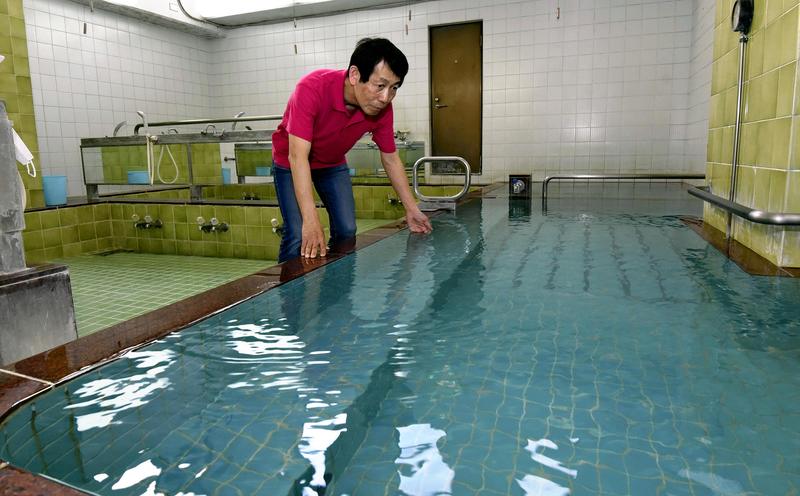
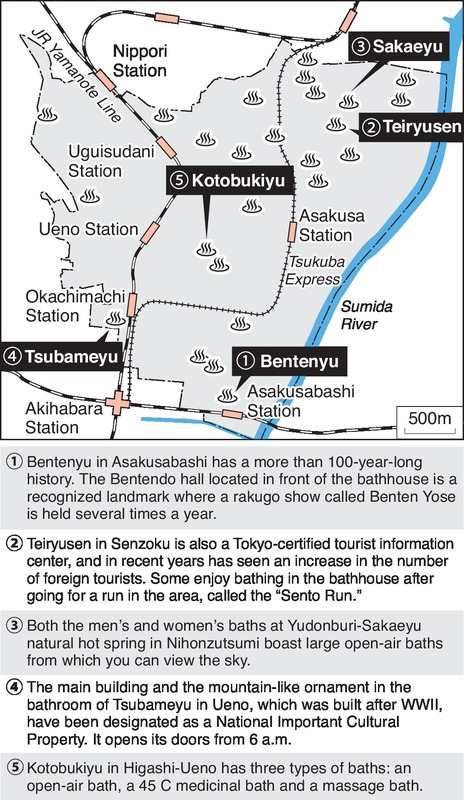
Bentenyu, a long-standing sento founded in the Meiji era (1868-1912), is on the first floor of a condo building two minutes away from JR Asakusabashi Station. A small shrine of Bentensama, the goddess of wealth and water, is installed at the entrance. As I walked through a noren cloth curtain, I came across Hiroaki Mizutani, 62, who had just finished taking a bath.
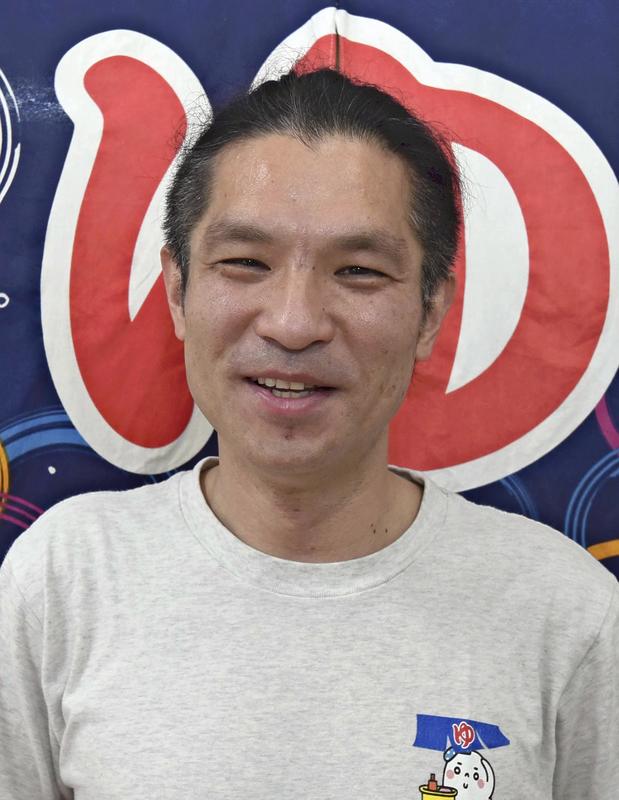
Mizutani has been visiting Bentenyu almost every day since he opened a restaurant nearby about 40 years ago. He still has no bath at his home and walks to a different sento about 300 meters away when Bentenyu is closed.
"My skin is used to Bentenyu's soothing hot water, so I can feel the difference with the hot water at other sento," he said.
During the summer festivals of a local shrine, Mizutani goes to Bentenyu with others from the area to soak after carrying a mikoshi portable shrine.
"There used to be one sento in each local community, but the number has decreased remarkably these days," Mizutani said sadly. But he added proudly: "Fraternal feelings can be generated through bathing naked in sento together. Sento really represents the essence of shitamachi culture."
According to the Tokyo sento association, there were 511 bathhouses as of the end of April, including those whose operations had been suspended. Of this number, 25 are located in Taito Ward. The ward's population is about 203,000, so there are 1.23 bathhouses per 10,000 residents. This is more than double the density of Ota Ward, which has the most sento in Tokyo's 23 wards.
Koichi Kitajima, 62, chairman of the Taito Ward sento associations, said the area around Sensoji temple bustled with people in prewar days, as craftsmen and wholesale stores were concentrated there. Also, due to the inflow of people from regional areas after World War II, the ward's population rose from about 262,000 in 1950 to its peak of about 320,000 a decade later.
In those days many people lived in row houses and there were few baths available at home. Against this backdrop, sento blossomed as a key part of public health. A surviving list of sento operators shows there were as many as 106 bathhouses in 1968.
Kitajima helped his family business in his youth by cleaning bathrooms and occasionally working at the reception desk. From evening to midnight, his family's sento is said to have been busy with such customers as merchants on their way back home, live-in carpenter's apprentices and geisha girls who had finished their work at a nearby entertainment district.
However, due to a decline in population and the fact that houses with private baths started to become common, sento in Taito Ward began to disappear one after another.
Despite the continued decline in terms of number, sento in Taito Ward have tenaciously survived.
"There are unique sento in Taito Ward," said Shinobu Machida, 70, a board member of the Japan sento culture association, who claims to have bathed in about 3,600 bathhouses across the country.
There are still sento in Taito Ward that set the bath temperature as high as 46 C or are open from early in the morning. These are said to be remnants of past times when craftsmen preferred hot water baths to heal their muscle pains and workers would drop in around dawn on their way back home after finishing their jobs at a nearby market.
"The uniqueness [of sento in Taito Ward] comes from its consideration of the needs of regular customers," Machida said.
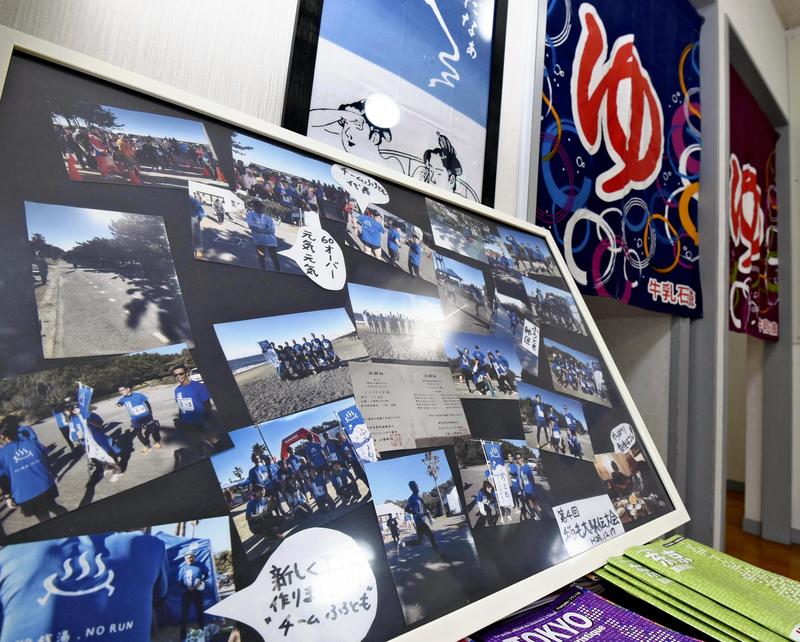
The Teiryusen sento operated by Shigenari Umezawa, 47, is famous for its "Sento Run" event in which participants bathe at Teiryusen after running. The running event was started by Umezawa with Teiryusen customers about a decade ago. Participants sign up via social media, and the event starts and finishes at Teiryusen -- with Umezawa and the runners going past famous spots, including Asakusa and Tokyo Skytree.
Participants include people from other areas, including Nerima Ward and Fuchu City, both in Tokyo. "Many patrons [of Teiryusen] have so far been regular customers from the local community," Umezawa said, adding fervently that he wants "to increase the number of sento enthusiasts with connections made through the hobby [of running]."
How do sento operators attract new customers while cherishing their established ones? Ceaselessly trying to answer that question is what keeps the sento's light burning in Taito Ward.
Read more from The Japan News at https://japannews.yomiuri.co.jp/