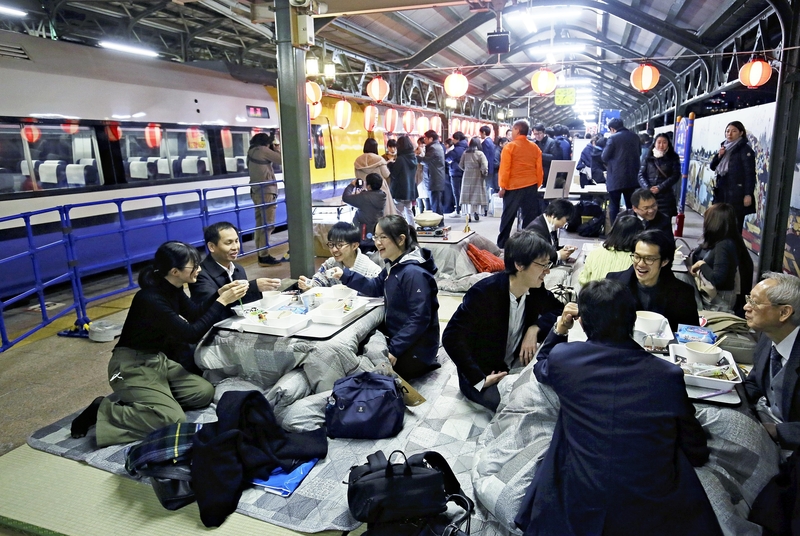
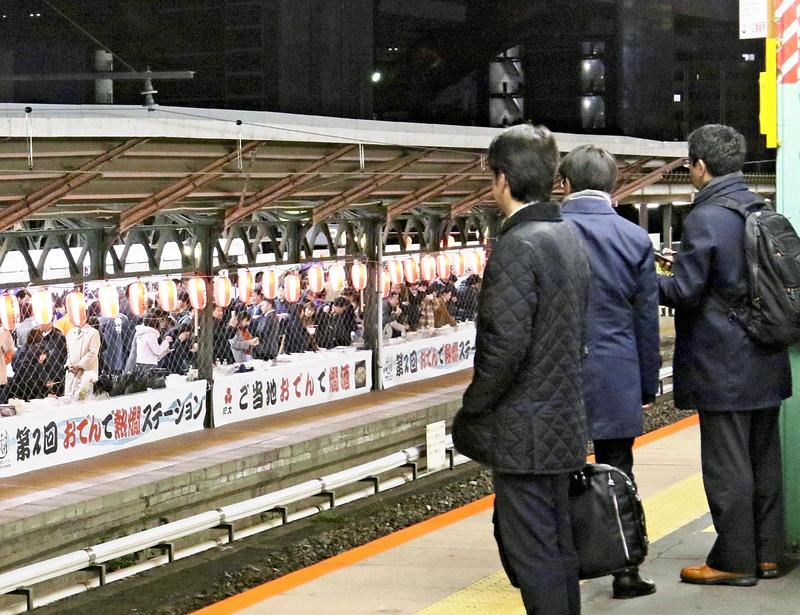
The crowds packed on Platform No. 3 at JR Ryogoku Station in Sumida Ward, Tokyo, seemed in no hurry to go anywhere on a cold evening in January. The many red chochin lanterns illuminating the platform were another sign something was amiss.
In fact, the people were not commuters eager to get home in the evening, and no trains were likely to be leaving from the platform. The crowds were there for a winter event arranged by the organizing committee of a national sake contest to promote atsukan warm sake.
Sake breweries that had won prizes in the contest served drinks on the platform, enabling atsukan fans to taste their brews warmed to optimum temperatures.
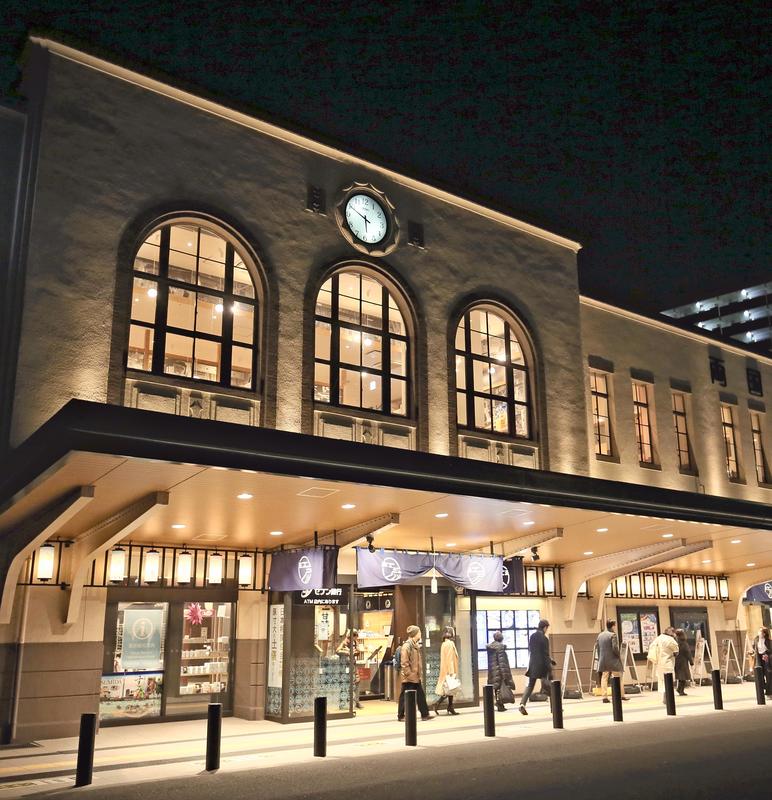
Ryogokubashi Station opened at the current site of Ryogoku Station in 1904, and in around the late 1920s, it was one of the four major train terminals in Tokyo, along with Tokyo and Ueno stations.
The station had as many as six platforms for passenger trains, and some of its freight lines ran through an area that is currently occupied by the Ryogoku Kokugikan arena.
"There were about 320 employees in around 1950, but now there are only about 20 because the station is no longer a terminal and it doesn't handle freight anymore," station master Kazuhiro Nishiyama said.
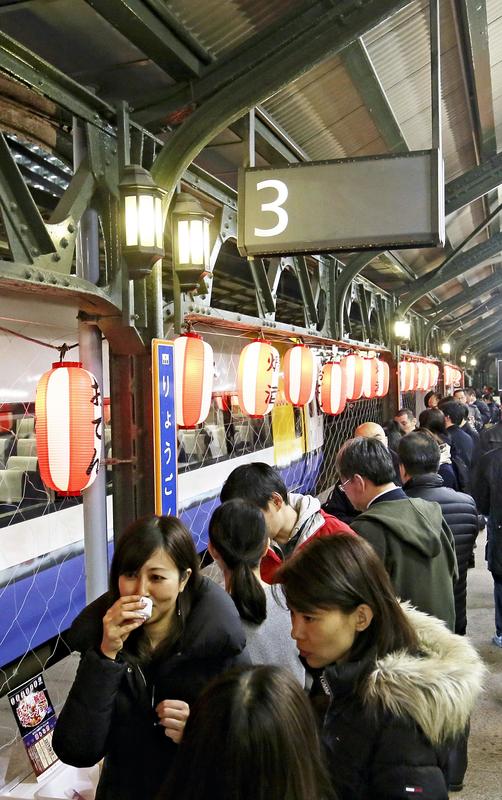
The station's Platform No. 3 is largely unused, with only out-of-service or special trains arriving at the platform.
"We hope this historic platform, which is said to have been completed in around 1929, will attract many more people and help to boost the local community," Nishiyama said.
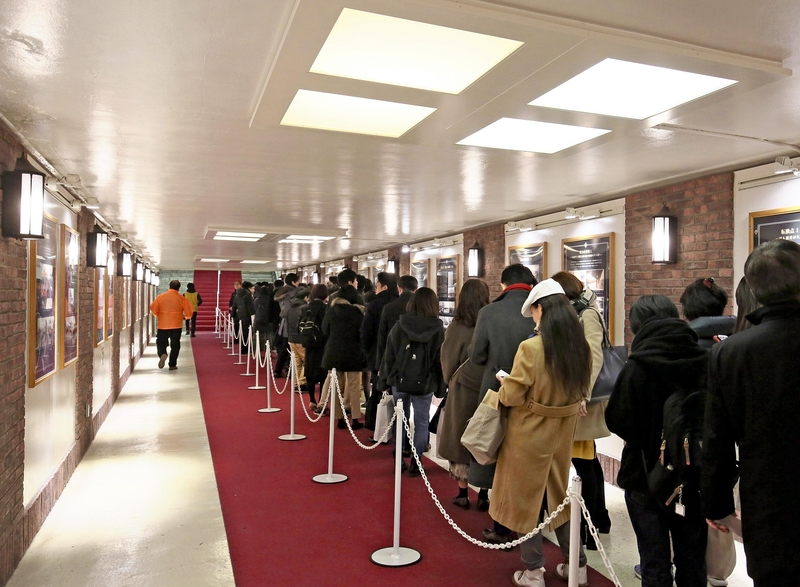
Advance tickets for the latest event cost from 2,500 yen and included 10 tastings of sake, a guinomi sake cup and oden, a traditional winter dish comprising various ingredients simmered in a light-soy-sauce-flavored broth.
For 12,000, yen groups of four could also enjoy their meals around a kotatsu low table with heating. The group tickets proved to be so popular they had sold out 20 days before the event.
Ticketholders had 50 minutes to enjoy the drinks, food and atmosphere, before being ushered out to allow the next throng of revelers onto the platform.
"I booked a ticket as soon as they were released in December," said Naoko Akatsuka, a civil servant from Edogawa Ward, Tokyo.
"Drinking while sitting at a kotatsu table on a platform with traces of the Showa Era [1926-1989] was special."
Other events on the station's Platform No. 3 have included a pop-up gyoza dumpling restaurant.
"We'd like to continue thinking of effective ways to use [the platform]," an East Japan Railway Co. official said.
Read more from The Japan News at https://japannews.yomiuri.co.jp/