The Tokyo Paralympics will feature coronavirus controls exclusive to that event, due to the involvement of many athletes with underlying conditions who are at high risk of becoming seriously ill if they are infected.
Drawing on the lessons learned from the Olympics, the organizing committee of the Tokyo Games is taking such steps as conducting PCR tests more often during the Paralympics and thoroughly disinfecting equipment.
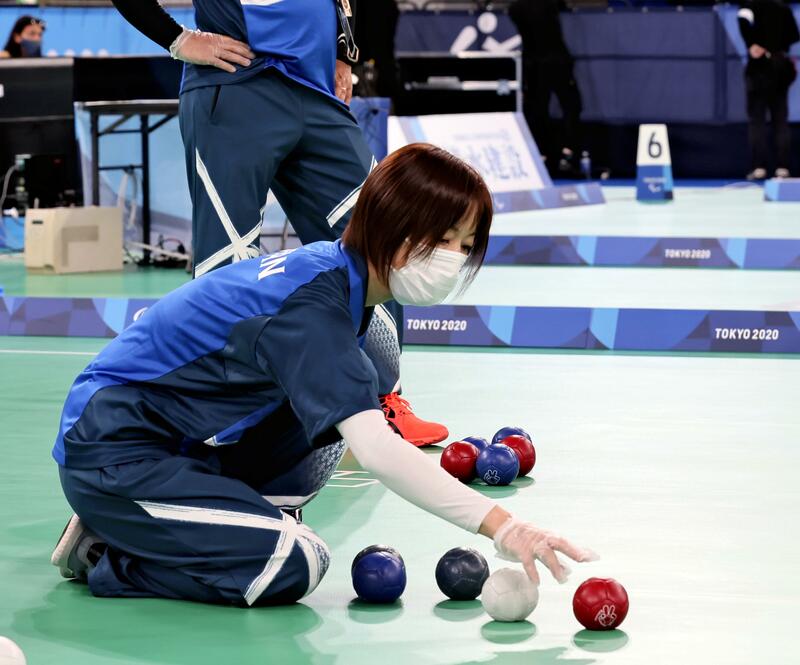
Japan's national boccia team was among those practicing Monday at the sport's Paralympic venue, the Ariake Gymnastics Centre in Koto Ward, Tokyo. Staff wearing disposable plastic gloves picked up balls thrown by players in wheelchairs.
Whenever a new team was to practice, staff came out to carefully mop the floor.
"We're disinfecting thoroughly, so we'll be ready for a safe Games," a 64 year-old staff member said.
According to the Tokyo Organizing Committee of the Olympics and Paralympics, 88% of the athletes and sports officials involved in the Paralympics have been vaccinated. However, many Paralympians have respiratory and other health conditions, and are at high risk of becoming seriously ill if they get infected with the coronavirus.
The basic prevention measures are the same as at the Olympics, such as maintaining social distance of at least 2 meters and wearing masks. Some athletes have difficulty carrying out disinfection by themselves because of upper limb deficiencies, while others use special equipment in their sports.
The committee will provide support tailored to participants' disabilities, such as thoroughly cleaning wheelchairs.
Like the Olympics, a bubble will be implemented during the Paralympics to separate participants from others. However, about 300 people at the Olympics who engaged in transportation and security services at the athletes village and at competition venues tested positive.
The number has already reached 90 among people connected to the Paralympics.
As a result of the assistance they receive, Paralympians are likely to have more close contact with people outside the bubble than Olympians.
Amid the increasingly serious infection situation, the organizing committee will conduct PCR tests on members of the Paralympic workforce -- contractors and volunteers -- every day. These tests were conducted every four days during the Olympics.
Whether medical care for the Paralympics can be maintained is another problem.
The committee said it has enlisted the help of 29 medical institutions in case athletes are injured or become seriously ill from the coronavirus. However, the growing shortage of hospital beds in the Tokyo metropolitan area has led to concern whether the hospitals will actually be able to help.
"The Olympics had such problems as a shortage of testing kits," said Tetsuya Matsumoto, a professor of infectious diseases at the International University of Health and Welfare. "It's important not only to increase the testing of members of the workforce, but also to check whether the tests are being conducted properly."
Read more from The Japan News at https://japannews.yomiuri.co.jp/