
The Tokyo Paralympics offered many glimpses of what a more inclusive society might look like.
Over its 13 days, a record 4,400 athletes presented infinite possibilities through their competition after overcoming disabilities, difficulties and even discrimination.
-- Beat Olympics
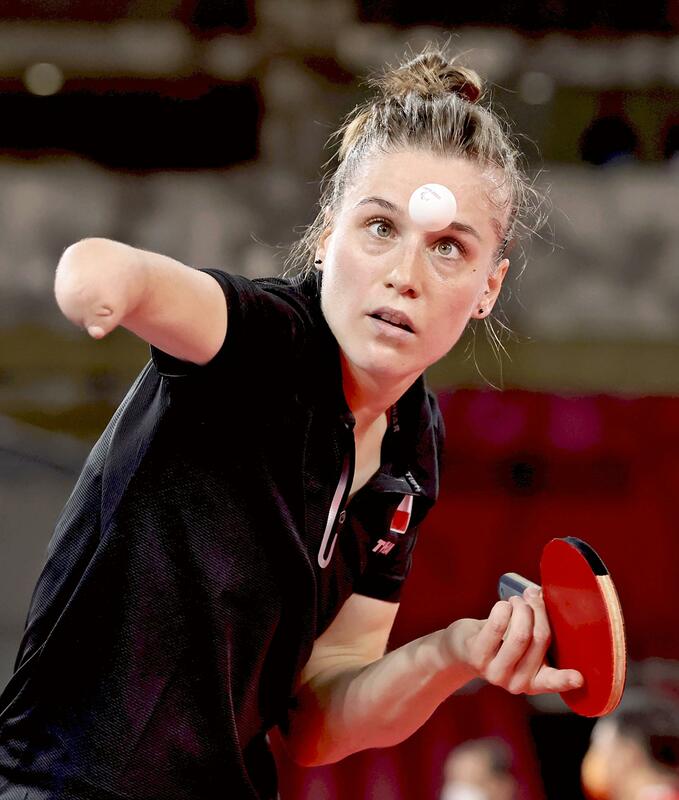
Polish table tennis player Natalia Partyka, 32, born with no arm below her right elbow, fought not only in the Tokyo Paralympics but also in the Olympics. She won one Olympic women's singles match and then went on to the Paralympics, where she bagged the bronze in the singles and the gold in the Classes 9-10 women's team.
Meanwhile, German blade jumper Markus Rehm, who won the gold in the men's T64 long jump, aims to bring the Olympics and the Paralympics closer together. Earlier this year, the 33-year-old set a world record of 8.62 meters at the European Championships.
"It's still a fight for inclusion in sports," Rehm said. "The goal is to bring Olympic and Paralympic sports closer together."
Before the Paralympics, he was trying to surpass the winning jump from this year's Olympics, which was 8.41 meters. Although his actual record in the Paralympics this time was 8.18 meters, slightly short of this mark, Rehm still won his third consecutive Paralympic gold medal.
"I still feel I can go even further," Rehm said after the Games.
-- Women's participation
A record 42% of Paralympians were women, some of whom also have been active outside the world of sports.
For example, two-time gold-medal swimmer Yip Pin Xiu from Singapore was a member of Parliament until last year. Yip, 29, who was born with muscular dystrophy, has called for improvement of para-sports with the aim of making Singapore a country where everyone can live healthily.
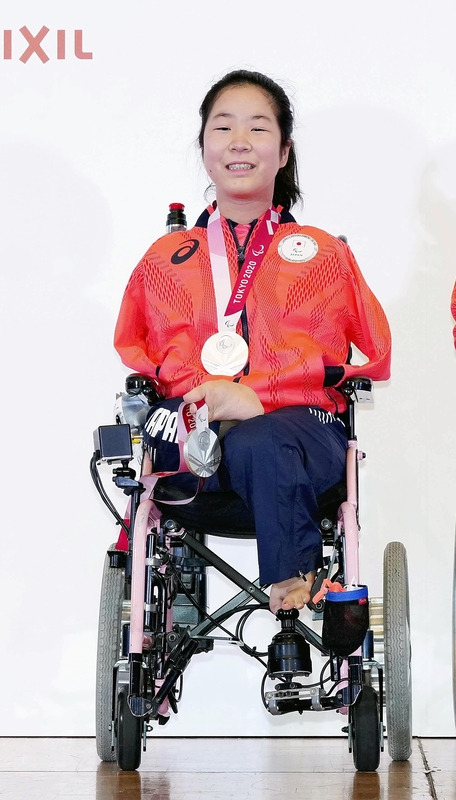
Yip's rival, Miyuki Yamada, 14, who won two silvers in the Tokyo Games, is good at English and said, "My dream is to become a diplomat."
Spain's Susana Rodriguez, 33, who won the gold in the women's triathlon for those with visual impairment, is a doctor. Up until the Games, she was busy treating COVID-19 patients.
-- Against discrimination
"Most parents who give birth to children with disabilities just abandon them," said 14-year-old swimmer Husnah Kukundakwe, who represents Uganda, about the situation in her country.
She was born without a right forearm. "Maybe if and when they are watching the Paralympics they will realize the choice they made was really bad," she said.
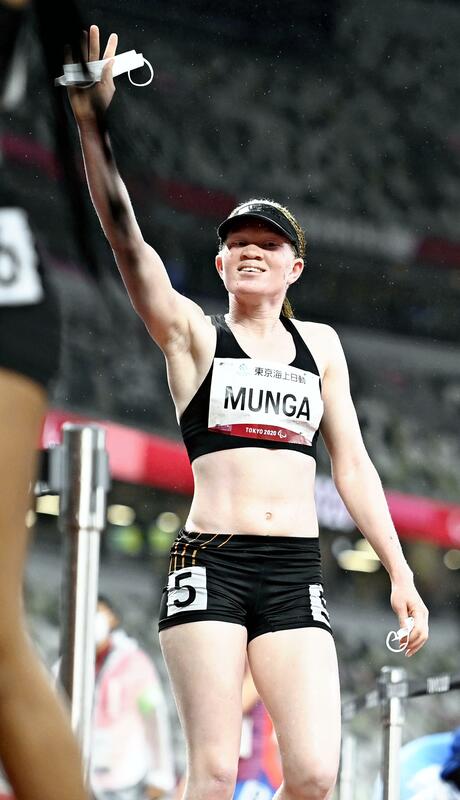
Monica Munga of Zambia's athletics team has albinism, a condition that is commonly a target of discrimination in Africa. The 22-year-old said she was physically abused by her father and neglected by others.
Munga said she lost a friend to "albino hunting." Munga decided to compete in the Paralympics in the hope of eliminating discrimination by showing her running. She encouraged those in similar situations to believe in themselves and move ahead.
-- Toes on target
A total of 162 countries and regions as well as the Refugee Paralympic Team participated in the Paralympics. While the types and degrees of their disabilities are all different, the athletes competed to their fullest potential.
American archer Matt Stutzman, 38, has no arms. He holds a bow with his foot and shoots with his chin. He won the silver medal at the 2012 London Games and represented his country at a competition against nondisabled competitors last year.
Egyptian table tennis player Ibrahim Hamadtou, 48, holds his racket with his mouth. He lost both arms in a train accident. He grabs the ball with his toes, throws it up and swings his head to serve. "Nothing is impossible," he said.
Read more from The Japan News at https://japannews.yomiuri.co.jp/












