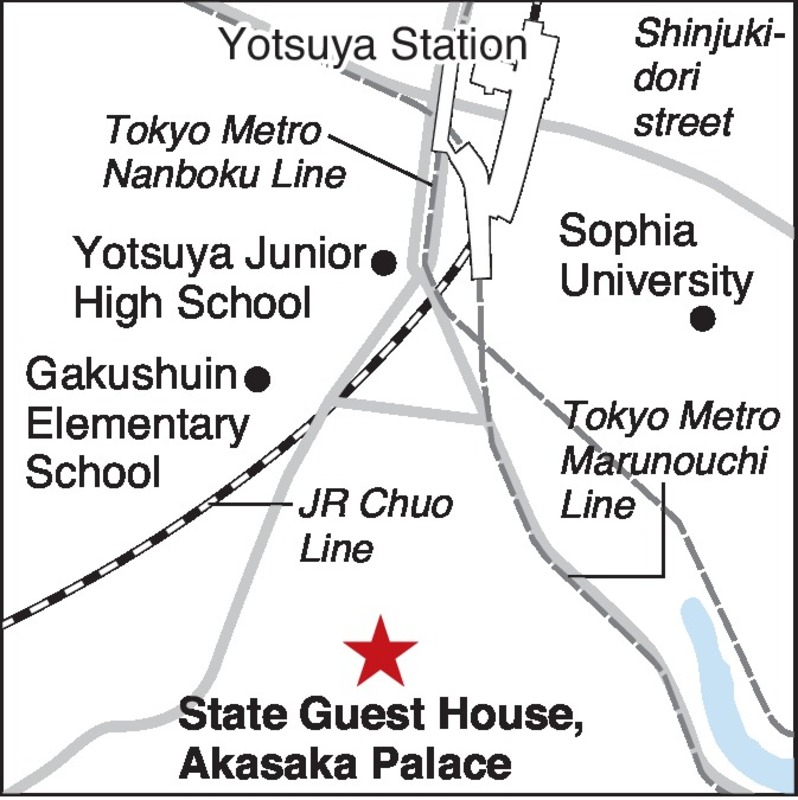
The State Guest House, known as the Akasaka Palace, in Minato Ward, Tokyo, is a Western-style palace that was initially built as the crown prince's residence by gathering all the available skills of architects and craftsmen of artistic handicrafts in the Meiji era (1868-1912).
Since the end of World War II, the building has been making new history as a stage for Japan's diplomacy.
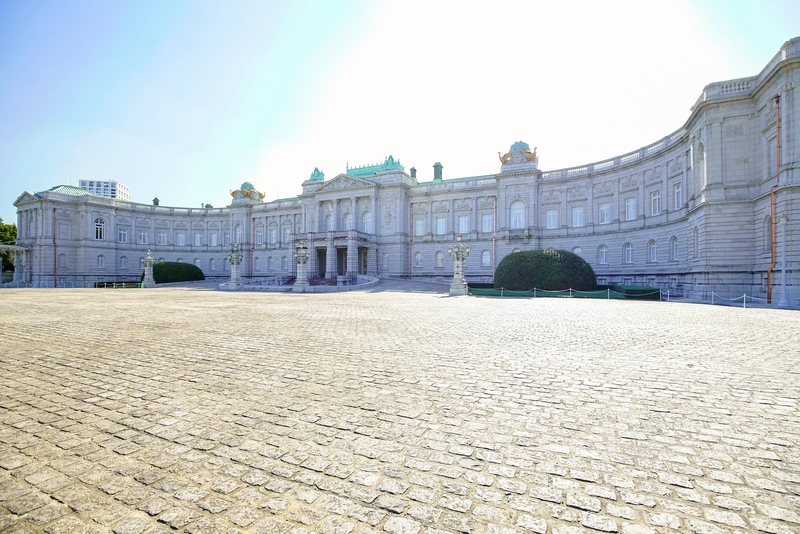
Looking at the Akasaka Palace from the front yard, visitors may feel as if they have come to a European palace.
The main building, made of granite, is symmetrically designed. Both wings of the structure are extended forward as if gently embracing people who visit there.
The contrast between the chalky exterior walls and emerald-green patina of the roof is eye-catching.
At the right and left sides on the central roof stand statues of samurai warriors clad in full armor. The statues remind visitors of the fact that the palace is in Japan.
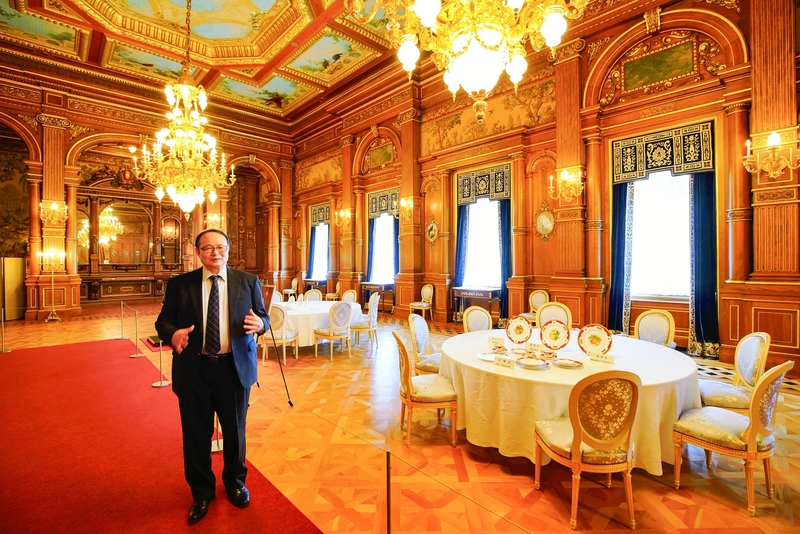
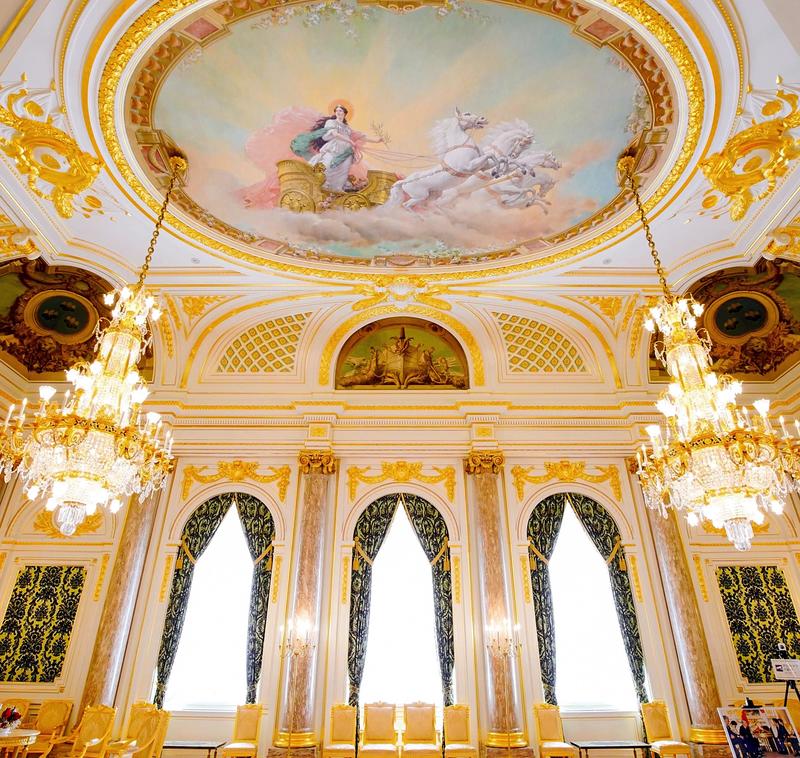
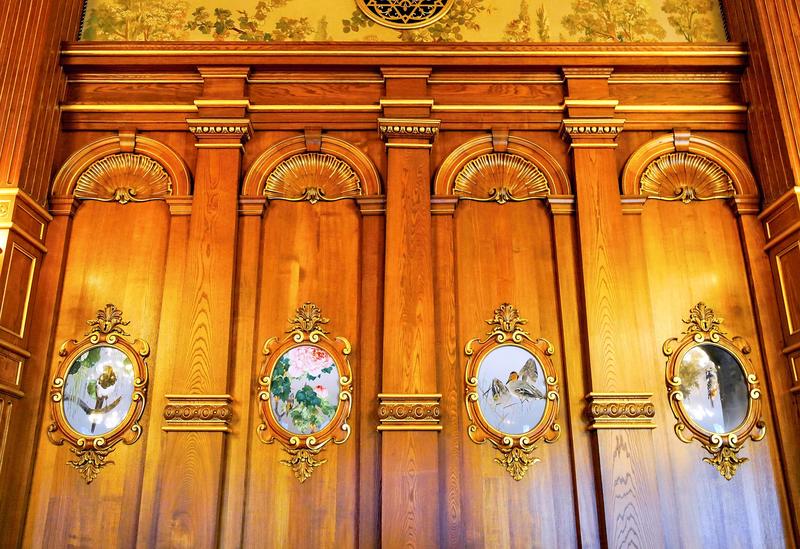
Inside the building, a glorious space spreads: Kacho no Ma (Hall of Flowers and Birds), where formal banquets are held.
On the walls boarded with wood produced in the Kiso region, 30 oval cloisonne medallions are decorated with birds enjoying the four seasons' grasses and flowers.
Seitei Watanabe, a Japanese painter, drew the sketches, while Sosuke Namikawa, a cloisonne master, calcined the medallions based on the sketches using various techniques, including one called musen shippo, in which metal wires are not used to separate glazes.
On the ceiling, 24 oil paintings by a French artist, which depict birds and flowers, are installed. Such contrasts between Japanese and Western artistic decorations are seen in many places around the palace.
Although it is difficult to imagine from its present appearance, the palace once experienced hard times.
During WWII, the palace's exterior walls were painted in camouflage colors. After the war, the ownership was transferred from the Imperial family to the national government. But management of the palace was inadequate in the postwar chaos, so the interior decorations deteriorated and the gardens became run-down.
Later, the palace building was partially refurbished and used as the National Diet Library and then a judges' court of impeachment.
Shinri Horikane, director of the State Guest House's General Affairs Division, said that sometimes elderly people who used to often come to the Kacho no Ma hall when it was used as a library visit to see the hall and remember those years.
With international relations deepening, architect Togo Murano redesigned the building and a large-scale refurbishment was made. In 1974, the building was converted into the current State Guest House. Kings, presidents and other foreign country dignitaries have stayed at the building, and welcoming ceremonies, summit meetings and international conferences are held there.
In the course of the palace's history, the building was racked by tumult, at each time protected by people's wisdom and skills and given a new lease on life.
Thinking about its history, the beautiful palace building looked even more distinctive.
-- State Guest House
The building in the Neo-Baroque architectural style is a Western-style palace completed in 1909. Architect Tokuma Katayama took command of the construction. In 2009, the main building and some other parts of the palace were designated as national treasures. Since 2016, the palace accepts general public visitors throughout the year.
Address: 2-1-1 Moto-Akasaka, Minato Ward, Tokyo
Open: 10 a.m. to 5 p.m. Closed on Wednesdays. (Check website for days when it is not opened to the public.)
Admission: To visit the main building and the garden, 1,500 yen for adults, 1,000 yen for university students, 500 yen for junior high and high school students, free for elementary school students or younger
Information: (03) 5728-7788
Read more from The Japan News at https://japannews.yomiuri.co.jp/