"The greatest legacy is that we were able to communicate the power of sports to the world even in such a difficult situation," a senior official of the Tokyo metropolitan government said.
The legacy of the Games will be discussed in many ways, positive and negative, tangible and intangible.
For these Games, 545 municipalities had planned to interact with overseas athletes, but due to the COVID-19 disaster, 183 municipalities, or about one-third of them, canceled their plans.
However, some legacies remain.
Junior high school students in Ota, Gunma Prefecture, the host town for the nation of Malawi in southeastern Africa, communicated with the athletes through online screens even though they could no longer meet them in person.
The city of Kamo, Niigata Prefecture, which has gymnastics equipment that meets Olympic specifications, will continue to host training camps for gymnasts from Japan and abroad, and is also working to develop local athletes.
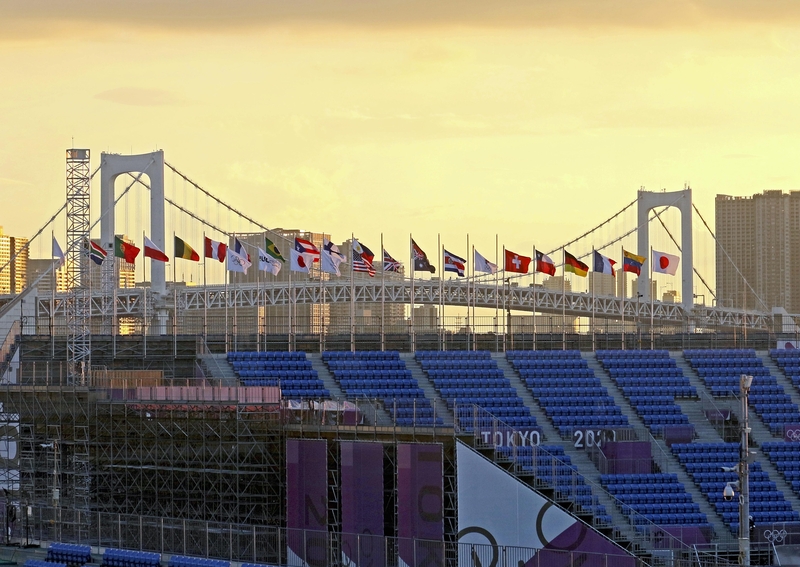
The stadiums that were built as permanent facilities for this year's Games face the challenge of making ends meet after the Games. The Tokyo metropolitan government has built six new facilities, but five of them are expected to be in the red, with their total annual deficits approaching 1 billion yen. It will try to improve profitability through advertising revenue, the sale of facility naming rights, and holding events, but it will not be easy to make a profit.
There was also at least one fortuitous outcome. The Ariake Urban Sports Park in Koto Ward, Tokyo, where skateboarding and other events were held, is likely to remain at its current location as a permanent skateboarding competition venue. Part of the facility was initially planned to be relocated and incorporated into an urban sports hub, but the Tokyo metropolitan and Koto Ward governments are making adjustments to modify the plan following the gold-medal success of Japan's skateboarders in both the men's and women's competitions.
The change in policy may reflect the athletes' having won the hearts of the people.
Skateboarding is a new sport that debuted at this year's Games, and it is a sport to be nurtured in the future. The same may be said for the Games' overall legacy. Regardless of whether it is tangible or intangible, it is important to think once again about how to apply wisdom, ingenuity, and passion to make use of the legacy for the benefit of future generations.
Read more from The Japan News at https://japannews.yomiuri.co.jp/