The Basho Memorial Museum is located in the Fukagawa area of Tokyo where haiku poet Matsuo Basho (1644-1694) lived in the Edo period (1603-1867). Visitors to the museum can learn about the achievements, life and personality of Basho, who is known as a haiku master.
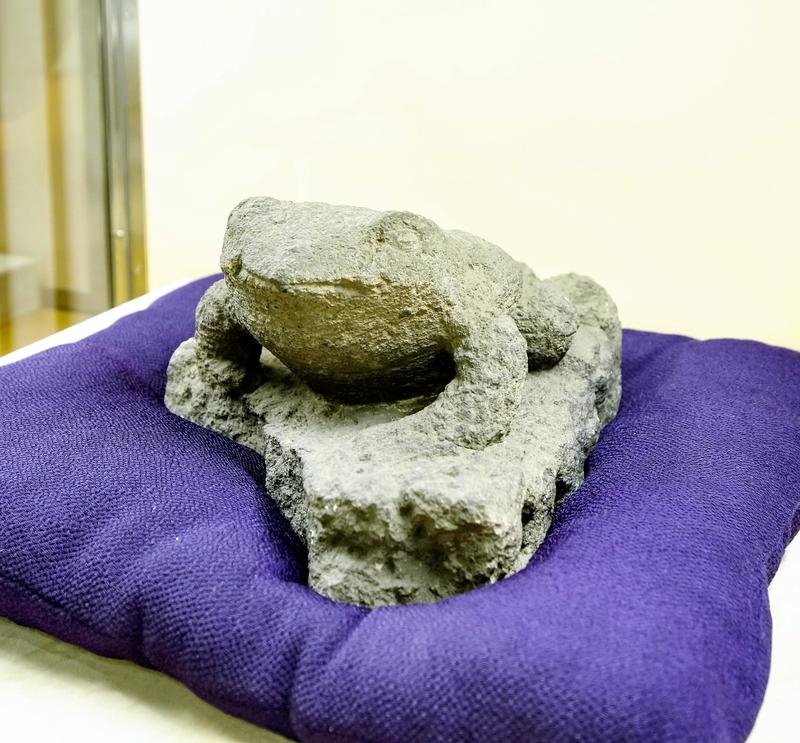
In the exhibition room, a stone frog draws the eye. It was unearthed in the area after a tidal wave caused by a typhoon in 1917. It was then enshrined at an inari shrine dedicated to the poet. The Tokyo metropolitan government later designated the location as the site of the old pond featured in Basho's famous haiku: "Furuike ya / kawazu tobikomu / mizu no oto ("An old pond / a frog jumps in / the sound of water)."
Basho is so famous that he has fans overseas, but his specific achievements are generally not well-known.
"Haiku poetry before Basho's time was as satirical and humorous as today's senryu poems," said Tatsuya Noro, deputy director of the museum. "Basho was an innovator who elevated haiku poetry to the realm of art."
Poets who looked up to Basho as their mentor were called "Shomon." The items exhibited at the museum include the genealogy of Shomon and their disciples, who were in Edo (present-day Tokyo), Mino (now Gifu Prefecture), Ise (now Mie Prefecture) and elsewhere. Many portraits of Basho are said to have been drawn even after his death, indicating how respected he was.
As Basho left many travel journals, such as "Sarashina Kiko," there are many exhibits about travel at the museum. Take his famous travelogue "Oku no Hosomichi" (The Narrow Road to the Deep North) as an example. A map shows his path of about 2,400 kilometers after leaving Edo on March 27, 1689, on the lunar calendar, until before he departed Ogaki in Mino Province in August.
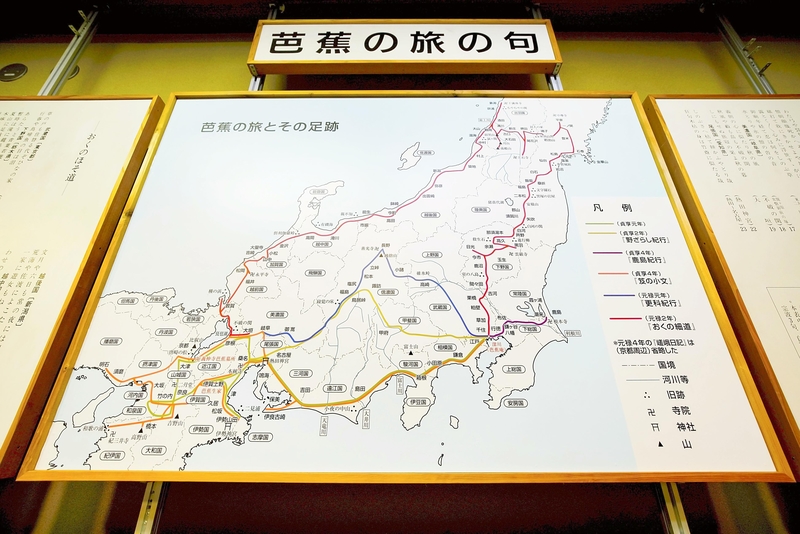
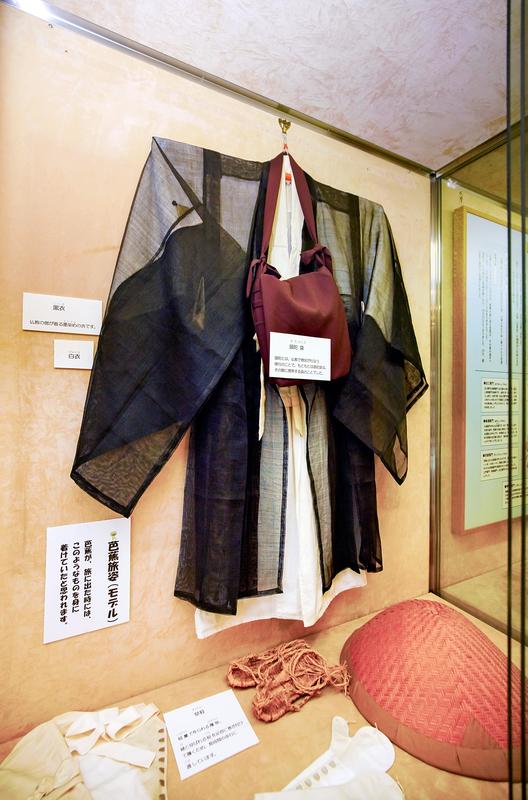
The map reveals the interesting point Basho rather unusually went all the way to Kisakata in the north after leaving Sakata on the Sea of Japan side of the country. A replica of a monk's ink-dyed robe, called kokue, which Basho is said to have worn to avoid looking suspicious, is also displayed, demonstrating how tough such a journey was at that time.
For about 14 years, during which time he lived in Fukagawa, Basho is said to have moved twice, when his residence burned down and when he was setting out on a trip. The Bashoan Historical Site Observation Garden, an annex that is a two-minute walk from the museum, is a place where the poet is said to have built himself a hermitage.
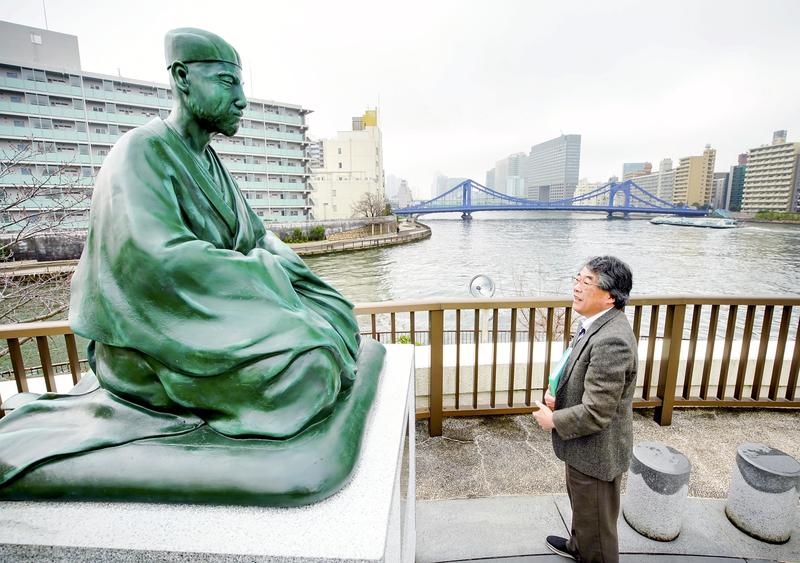
While looking at a statue of the haiku master, which is placed as if overlooking Sumida River shining in the sunlight, I had an urge to read "Oku no Hosomichi" once again.
The Koto Ward government opened the museum in 1981. The museum has about 3,000 items, including paper strips on which haiku poems are written, scrolls and letters.
The museum was closed due to the spread of the new coronavirus, but reopened Monday. Information about its operations can be found at the museum's website (https://www.kcf.or.jp/basho/).
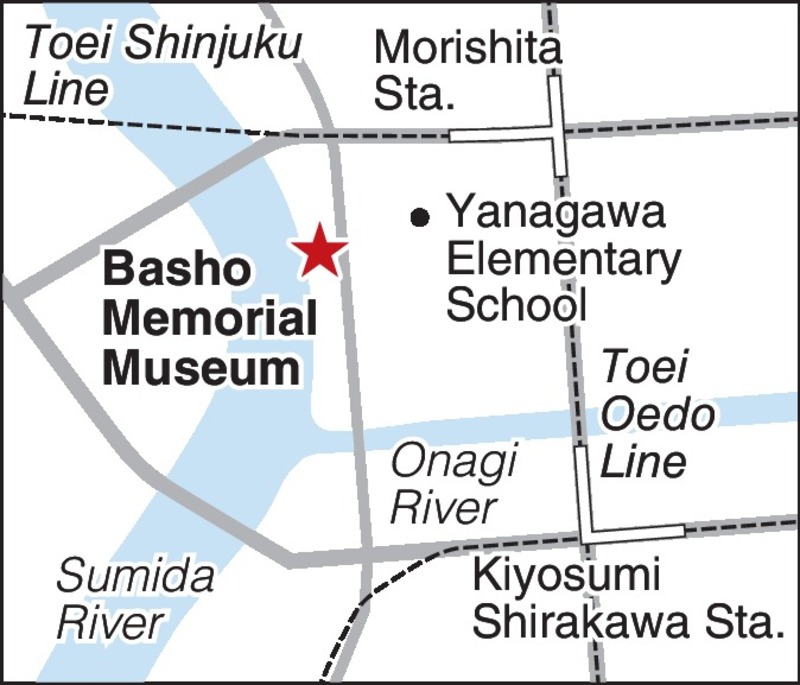
Basho Memorial Museum:1-6-3, Tokiwa, Koto Ward, Tokyo
Read more from The Japan News at https://japannews.yomiuri.co.jp/