
The Ara River, which flows through Saitama Prefecture and Tokyo, was once known as a "rough river" due to its frequent floods, but it plays a crucial role in the lives of millions of people.
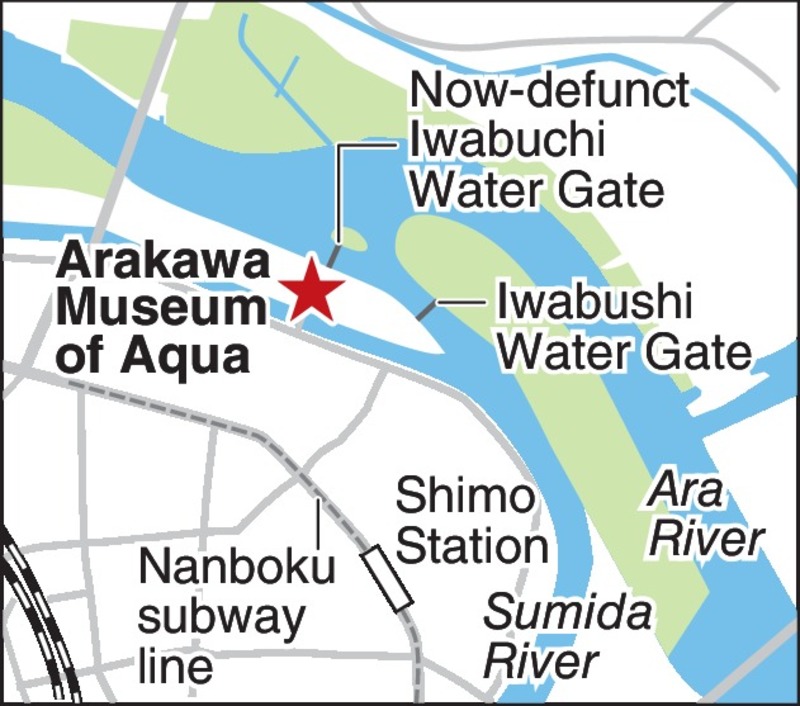
The Arakawa Museum of Aqua (AMOA) in Kita Ward, Tokyo, is located near the Iwabuchi Water Gate on the river, which protects Tokyo's shitamachi -- old residential and commercial areas -- from floods. The museum introduces the Ara River's history of river control and flood risk.
Amid a spate of floods triggered by big typhoons and heavy rains that hit Japan in recent years, AMOA has garnered attention as an institution that educates about flood control.
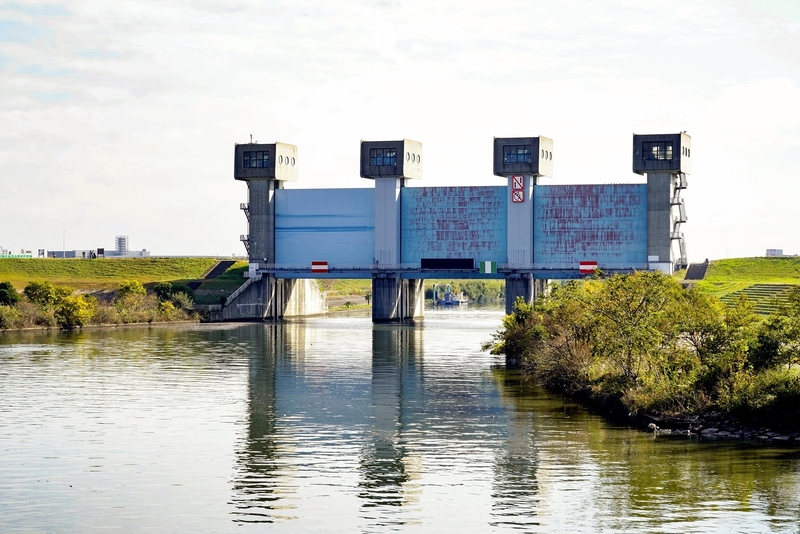
The Iwabuchi gate closes during floods in order to prevent massive amounts of water from flowing from the Ara River into the Sumida River. The Ara River's downstream section, which begins slightly upstream of the Iwabuchi gate and runs to Tokyo Bay, is a man-made river that was once called "the Arakawa floodway."
In response to a massive flood in 1910, a 500-meter-wide waterway about 22 kilometers long was dug over a period of about 20 years beginning in 1911. Later, the floodway became the Ara River's main stream, and the older channel was renamed the Sumida River.
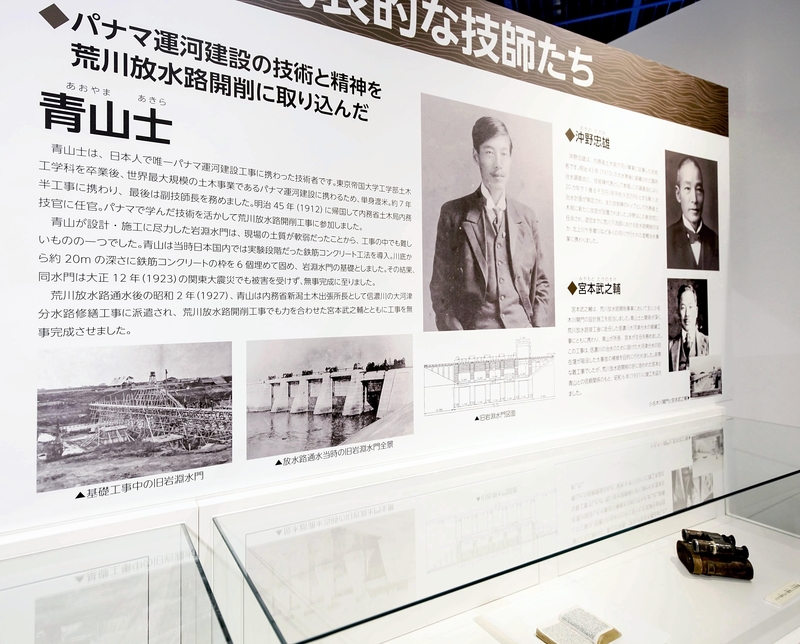
AMOA introduces the history of the Ara River and the achievements of civil engineer Akira Aoyama, who directed the construction of the floodway. It was a large-scale project that required excavating a huge amount of sand and soil, equivalent to the volume of 18 Tokyo Domes. The Iwabuchi gate was rebuilt near the museum in 1982, and the old gate remains as a piece of historic architecture.
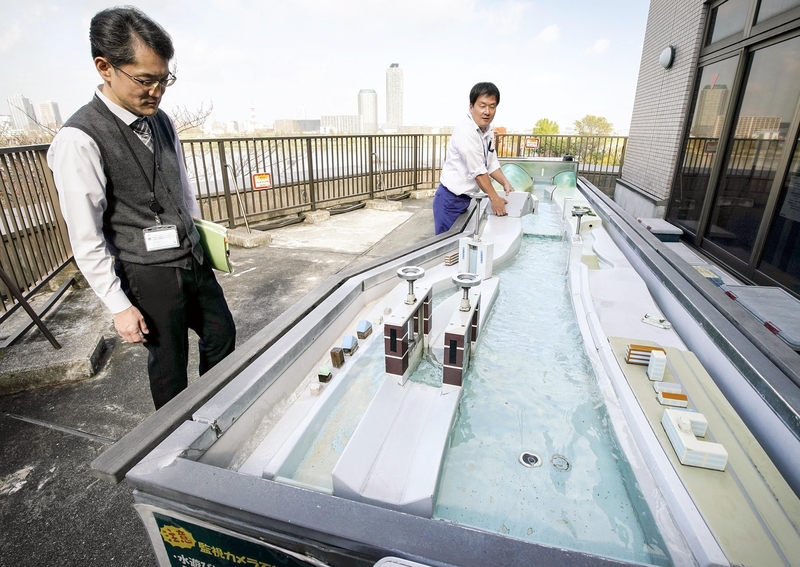
A particular point of interest is the model of the Ara River on the terrace at the museum. Visitors can control the flow of the model river to learn how the Iwabuchi gate works.
Since the completion of the floodway, the embankments along the Ara River's downstream section have never failed. In October 2019, the Iwabuchi gate was closed for the first time in 12 years in preparation for Typhoon No. 19 in order to protect the downstream area.
"The flood control system that was conceived more than 100 years ago is still functioning," said Kenji Fujiwara, a specialty officer at the Arakawa Karyu River Office of the Land, Infrastructure, Transport and Tourism Ministry.

The museum offers cutting-edge flood control education, such as showcasing a model of a wide, high-standard embankment, while trying to make visitors more aware of disaster prevention. The flood simulation section, for example, uses computer graphics to show how the surrounding towns would be flooded if the largest anticipated rainfall caused the Ara River to overflow.
"Every possible measure has been taken to control the Ara River, but there still is the possibility of flooding at any time. We want visitors to realize the risks through our exhibition and prepare for them," Fujiwara said.
-- Arakawa Museum of Aqua
Better known as AMOA, the museum opened in 1998 and is run jointly by the Land, Infrastructure, Transport and Tourism Ministry's Arakawa-Karyu River Office and the Kita Ward government. On top of exhibits relating to river control, the museum also introduces creatures living in the Ara River area. It is about a 15-minute walk from either Shimo Station or Akabane-Iwabuchi Station on the Nanboku subway line.
Address: 5-41-1 Shimo, Kita Ward, Tokyo
Open: 9:30 a.m. (10 a.m. on Saturdays, Sundays and national holidays) to 5 p.m. Closed on Mondays (when Monday falls on a national holiday, it is closed the following day) as well as the Bon summer holidays and around the year-end and New Year's period.
Admission: Free
Information: (03) 3902-2271
Read more from The Japan News at https://japannews.yomiuri.co.jp/













