The Kanda district in Chiyoda Ward, Tokyo, most famous for its many used bookstores, is also well-known for something a little more flavorful.
Akihiko Ito, 46, a lawyer who works in the district, enjoyed eating Indian curry on the evening of Oct. 13.
"I'm really happy," Ito said. "I never get tired of eating good curry."
Ito is a curry enthusiast, to the point where he eats curry at least once a day. He has won a Grand Meister title, which is only given to those who complete the Kanda Curry Grand Prix stamp rally, for six consecutive years. The event is held every autumn, and a person must eat at all participating restaurants within 100 days.
In recent years, Kanda has become known as "Curry Town," where various types of curry can be found.
It is thought that the reason curry restaurants started to pop up in Kanda is that there are many universities in the area, and curry allows a student to eat with one hand and hold a book in the other.
After the end of World War II, many curry restaurants started opening up, including Bondy, which serves European-style curry with an upscale touch. Even before the war, Kyoeido, which is famous for its Sumatran curry, opened in 1924. As a result of these restaurants and others, Kanda became well-known among curry connoisseurs.
"It's a shame that Kanda is only known among curry lovers," said Takuya Nakamata, 50, the vice president of local commerce and industry association.
Nakamata held a food festival called Farm Village B-Grade Gourmets vs Curry in Kanda, as part of a sports event in Chiyoda Ward 10 years ago. It resulted in many people flocking to curry booths. Delighted by the positive response, Nakamata started the Kanda Curry Grand Prix with his friends the following year.
The event also featured a Grand Prix Championship in which participants voted for their favorite curry restaurant. In its fourth year, the event added a stamp rally, which would require curry fans to go eat at various participating restaurants to collect their stamps.
To increase the number of participating restaurants, Nakamata visited the owners to convince them to join the event, and every year, the number has been increasing. The 20 booths selected for the event last year by voters attracted about 46,000 visitors -- including repeat customers -- during the two-day event. They served about 37,000 plates of curry.
Unfortunately, the Grand Prix Championship was canceled this year because of the novel coronavirus pandemic. However, the stamp rally began as usual with about 100 restaurants participating in the event.
There are 772 Grand Meisters, which is the title for those who have eaten at all of the restaurants participating in the stamp rally, like Ito. Some Grand Meisters formed the Kanda Curry Fan Club and exchange curry-related information with each other. The club also used to hold dining parties before the outbreak. The club currently has about 1,900 members, and two members got married after meeting each other through visiting curry restaurants.
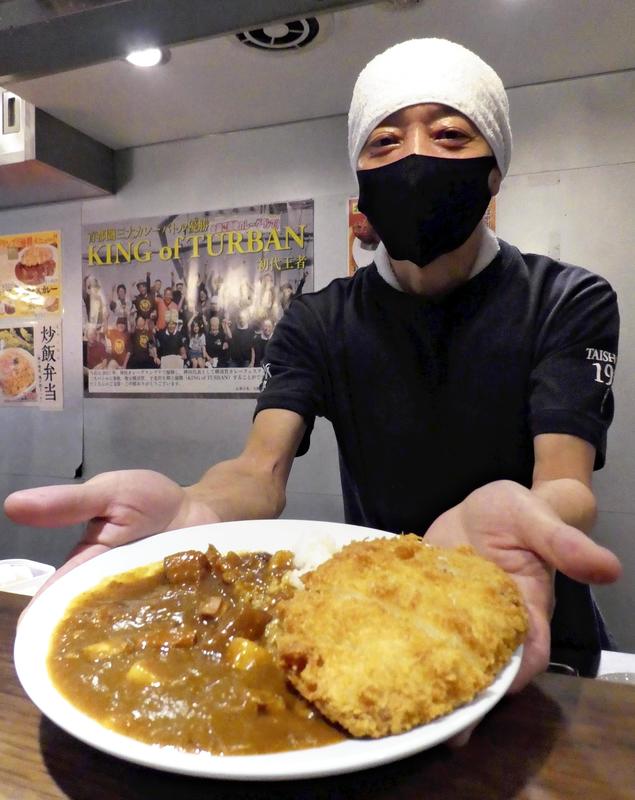
Ochanomizu Taisho-ken was better known for its tsukemen noodles, but the restaurant brought back a curry dish that disappeared from its menu 40 years ago and ended up winning the 2017 championship. The curry sauce is slow-cooked with ramen broth and is a specialty of the restaurant, so many customers come to try the curry.
"I enjoy talking about curry with the customers when they come for the stamp rally," said manager Tetsuro Kogumi, 55. "After an enjoyable meal, some of them end up becoming regulars."
Katsuhiro Someya, 51, of 100 Hours Curry, a two-time winner of the championship, proudly said, "We didn't close our Kanda shop, except during the state of emergency [that was declared to help prevent the spread of the coronavirus], so people who came to Kanda could still eat curry."
Every year, the number of restaurants serving curry has increased in Kanda, which now has about 400 shops. Although several curry restaurants were forced to close down because of the pandemic, many have managed to continue to operate by offering take-out and other services.
"I wanted to keep our curry town alive, even during these difficult times," Nakamata said.
80 servings per person per year
Curry is originally from India and was introduced to Britain due to that country's colonial rule of India, according to S&B Foods Inc., a company in Chuo Ward, Tokyo, that sells curry powder. Curry powder with a European twist was imported to Japan in the early Meiji era (1868-1912).
After it was introduced to Japan, curry began to be served in the dormitory cafeteria of Sapporo Agriculture College, currently Hokkaido University, with the approval of William Smith Clark, the first vice-principal of the college. Although Clark promoted a diet of mostly bread, as he was concerned about students' poor physiques, it is said that he made an exception to include curry on the cafeteria menu.
In 1968, Otsuka Foods Co. launched the world's first retort curry.
S&B estimates that about 10 billion servings of curry are eaten in Japan each year, which equates to about 80 plates per person.
Read more from The Japan News at https://japannews.yomiuri.co.jp/