The Tokyo Games organizing committee plans to create new organization to support the running of a command center for dealing with the novel coronavirus during the event, according to sources related to the Olympics.
The organization will work with an envisioned outpatient fever facility in the athletes' village and a "hygiene station" responsible for contact tracing to prevent infection clusters.
The organizing committee plans to begin discussing this plan with the central and metropolitan governments at a meeting of its coronavirus task force on Tuesday.
The organizing committee wants to establish what is being provisionally called an "infectious disease control center," according to a source. In addition to aggregating test results of foreign athletes after entering Japan, the center would monitor the health status of participants via representatives of each country's and region's Olympic and Paralympic committees.
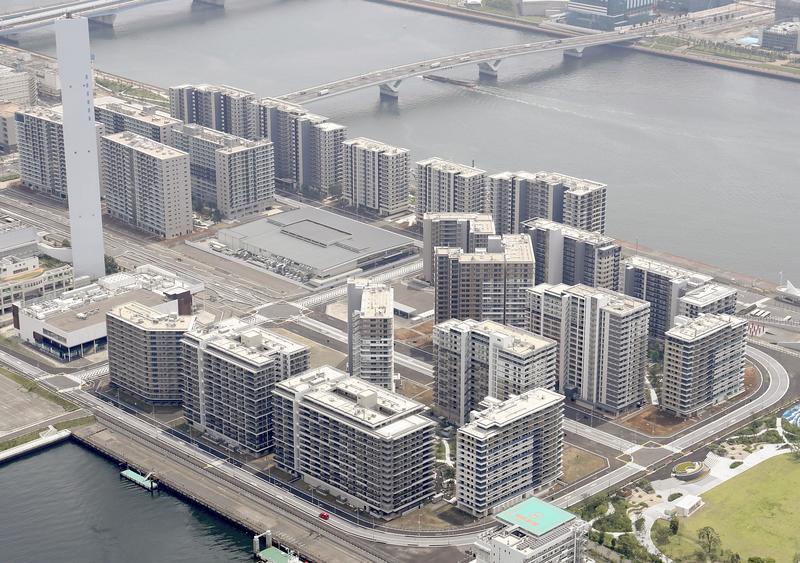
At its peak, about 30,000 athletes and coaches are expected to gather in the athletes' village in the Harumi district of Chuo Ward, Tokyo.
Before the Games were postponed, the plan was to build a general clinic to treat injuries and illnesses. The organizing committee now wants to build an outpatient fever facility inside this clinic to deal with athletes and others who may be infected, such as those with high fever or cough.
To avoid congestion at the clinic and prevent infections from spreading to others, examinations will be by appointment only.
Even if athletes do not feel unwell, they will be encouraged to visit the facility if their body temperature is higher than normal in one of their regular health checks. Equipment to test for infections will be installed in the athletes' village.
A hygiene center with similar functions to a public health center would also be created. Infected athletes would be taken to accommodations arranged beforehand or designated hospitals to isolate and prevent clusters from forming. Smartphones to be given to athletes would be installed with the central government's contact tracing app COCOA to help identify people with whom they have been in close contact.
These tasks are normally performed by local health centers, but because of the existing burdens of the pandemic, it was decided to create a hygiene center with similar functions.
Discussions over who will operate these facilities will involve the Tokyo metropolitan government, Chuo Ward and others.
The government plans to exempt Olympic athletes from quarantine, but in principle will only allow them to go to places such as practice venues, not entertainment districts. They will also be asked to refrain from using public transportation as much as possible.
Masks will be required in the athletes' village, and the cafeteria will have dispersed use times and acrylic sheets to prevent droplets from spreading. As it is likely there will be multiple athletes to a room, they will be asked to frequently ventilate the space, disinfect their hands and take other actions.
The central government, organizing committee and metropolitan government have been studying coronavirus countermeasures since September and intend to release an interim report by the end of the year.
"In addition to thorough infection control measures, everyone will have to work together to quickly identify and isolate infected people," a senior organizing committee member said. "If a cluster breaks out in the athletes' village, it could put the event itself in jeopardy."
-- Health-care workers needed
Finding enough health-care workers is essential to the novel coronavirus countermeasures at the Tokyo Games.
Before the Games were postponed, the organizing committee and Tokyo metropolitan government planned to hire at least 10,000 doctors, nurses and other staff to deal with accidents or cases of heatstroke that occurred in and around the athletes' village, competition venues and stadiums. Medical institutions had selected candidates and training began at each venue in autumn last year.
However, at many hospitals, doctors and nurses are exhausted from the pandemic and their business situations have deteriorated.
A doctor in his 50s who works at a hospital in Tokyo said, "It's difficult to cooperate in the same way as before the postponement when you consider the resurgence of infections and the management of the hospital."
Starting in October, family doctors have been in charge of consultations and examinations for people with fever and other symptoms, which could make it difficult to hire doctors who have private practices.
"Next summer's Olympics will require more doctors than before the postponement to deal with the coronavirus, so the situation is difficult," an Olympic official said.
Read more from The Japan News at https://japannews.yomiuri.co.jp/