Juntendo University's Japan Medical Education History Museum is a facility that passes down the nation's history of medical science since the Edo period (1603-1867), when modern medicine was introduced to Japan by Western countries.
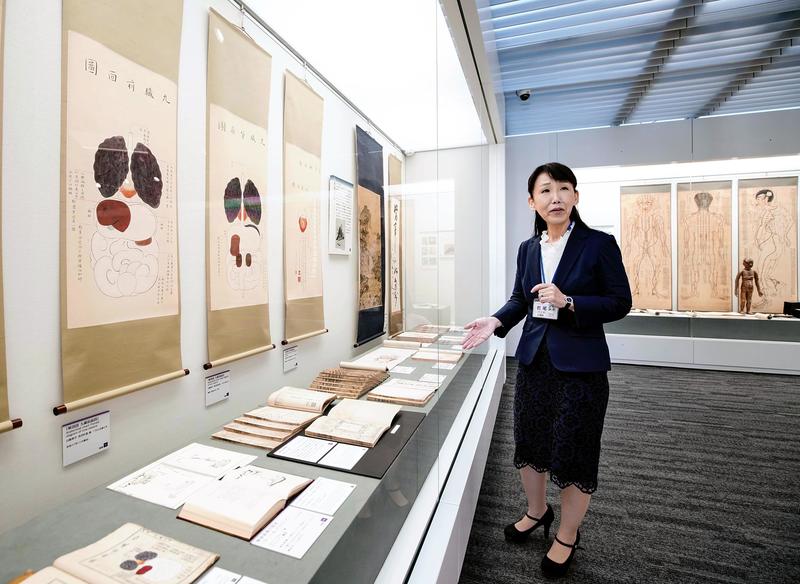
Displayed in arrays are exhibits that will bring to life the efforts and passion of a number of people who helped develop the country's medical system and practices, having survived the passage of time, war damage and waves of rapid institutional reforms.
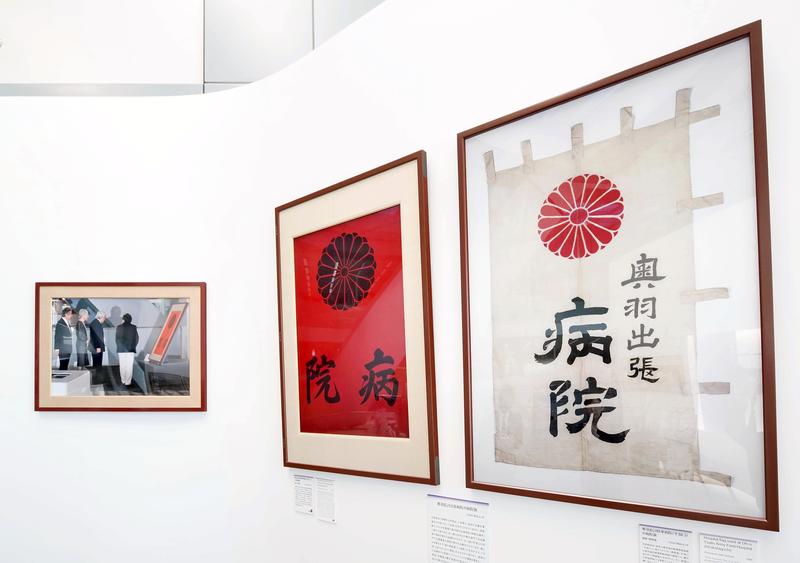
The first items that will attract visitors' attention are two flags, one red, one white, with the word "byoin" (hospital) in kanji depicted, together with the Imperial chrysanthemum crest. These flags were used by the new Meiji government military at its field medical facilities during the Boshin War (1868-1869). It is believed that this was the first time "byoin" was officially used.
A chronological table displaying the history of medical education is on the wall opposite to the flags. It traces forward from the time about one century earlier than the Boshin civil war, starting with the country's first dissection of a human body conducted in 1754 by Yamawaki Toyo (1705-1762).
Realistic anatomical charts that were brought from the West, which differed from those depicting the "gozo-roppu" (the internal organs and the bowels) passed down since ancient times, had a great impact on Japan.
Yamawaki verified the fidelity of these Western anatomical charts by dissecting a publicly executed man, while Sugita Genpaku (1733-1817) and others translated a Western medical text -- a Dutch-language translation of a book authored by a German -- into what they later entitled "Kaitai Shinsho" (New text of anatomy). These efforts have helped Western medicine gradually permeate into Japan.
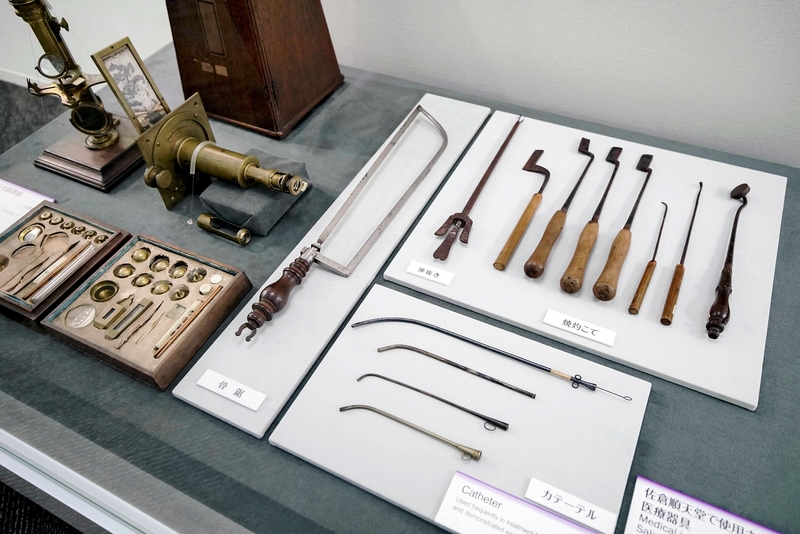
The origin of Juntendo University is the "Wada Juku," a medical school that Sato Taizen (1804-1872) established in Edo -- present-day Tokyo -- in 1838.
In 1843, Wada Juku moved to the Sakura domain -- present-day Chiba Prefecture -- and renamed it "Juntendo." On display at the museum are a British-style microscope and medical instruments such as catheters used at Sakura Juntendo.
Also interesting is the table of medical fees used by Juntendo in the closing years of the Edo shogunate. It covers those services that were common at the time, for instance, surgeries for sword wounds, restoring noses that fell off due to syphilis, as well as some treatments that still hold today, such as for cataracts and breast cancer.
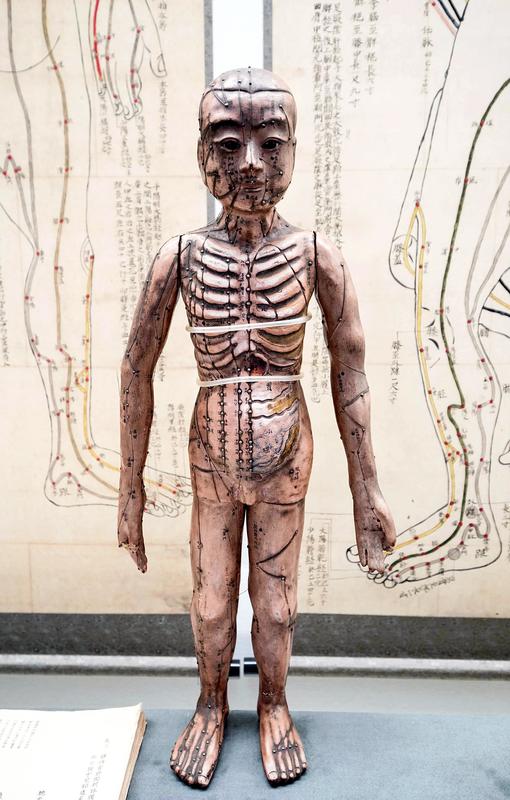
The Meiji government promoted the introduction and propagation of Western medicine. Medical schools were established across the country that were later developed into medical colleges and medical departments of universities.
Also on display are anatomical charts that became more and more accurate, volumes of thick notebooks of students and an ultrasonic diagnostic device, the research for which Japanese experts have taken the lead on since the end of World War II.
"This shows the history of enthusiasm among those who studied medicine and those who taught them to save people's lives," explained Miki Wakao, a museum staffer and a chief at the research office of the history of medicine.
If I responded to her explanation by saying that "I'd like to 'engrave on my guts'" the importance of learning, which would hold true even for those who are not engaged in medical care, she would scold me saying that the term is inaccurate for referring to the internal organs.
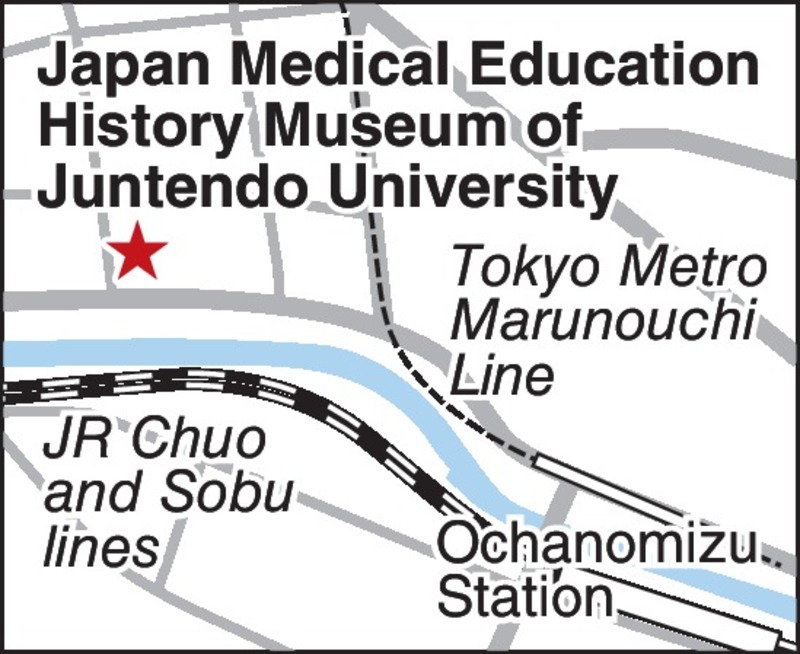
Japan Medical Education History Museum of Juntendo University: 17th floor, Century Tower, 2-1-1, Hongo, Bunkyo Ward, Tokyo
Read more from The Japan News at https://japannews.yomiuri.co.jp/