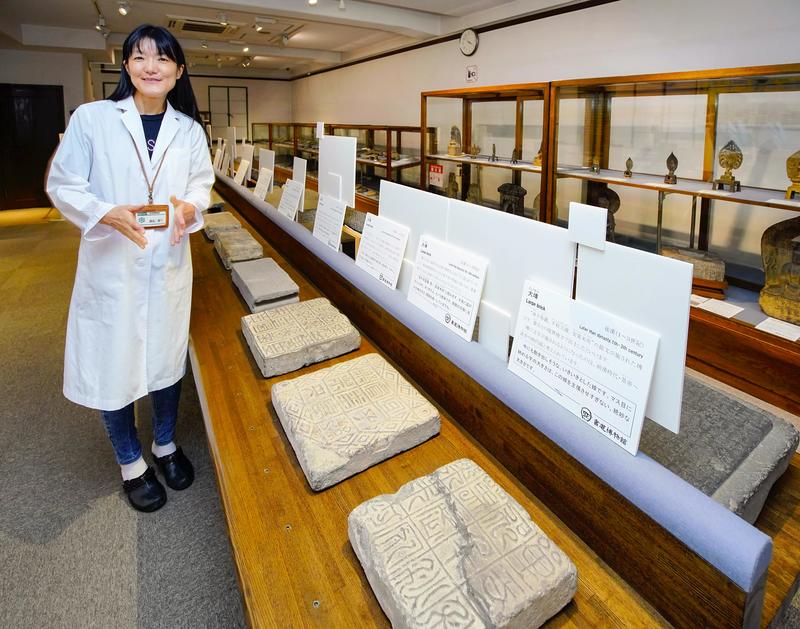
Materials inscribed with an array of Chinese scripts at a museum in Tokyo's Taito Ward offers visitors a unique chance to learn the history and origins of kanji.
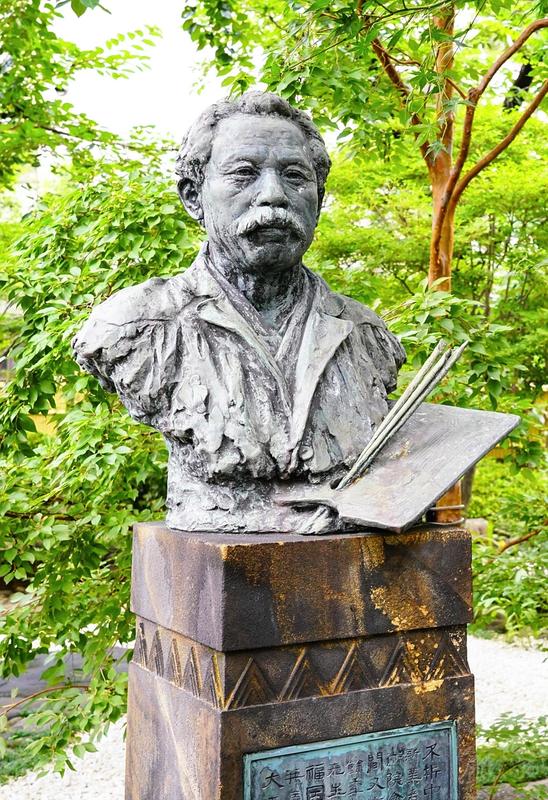
The Taito City Calligraphy Museum exhibits materials related to the calligraphy collected by Fusetsu Nakamura (1866-1943), a painter and calligrapher whose career spanned from the Meiji era (1868-1912) to the Showa era (1926-1989). Nakamura is known for his illustrations for such books as Soseki Natsume's novel "Wagahai wa Neko de Aru" (I Am a Cat).
In 1895, Nakamura went to China with Shiki Masaoka as a war correspondent during the Sino-Japanese War, which would end soon afterward.
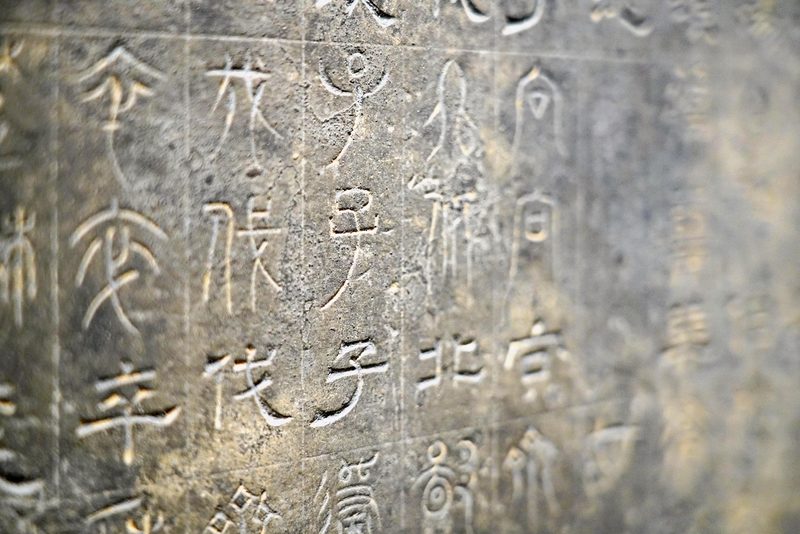
Impressed by the culture and history of Chinese characters there, Nakamura continued traveling for about half a year throughout China and other parts of the world, and after coming into contact with more and more materials inscribed with Chinese characters, he became a dedicated collector.
To add prized materials to his collection as well as to finance the construction of the original calligraphy museum that opened in 1936, Nakamura used funds garnered from the sale of his own works.
While the museum is called the Calligraphy Museum, cursive writing is not the only thing on display. The collection of about 20,000 items also consists of bronze ware, carapaces, stone monuments and construction materials among other items, and all are inscribed with Chinese characters telling the magnificent history of kanji.
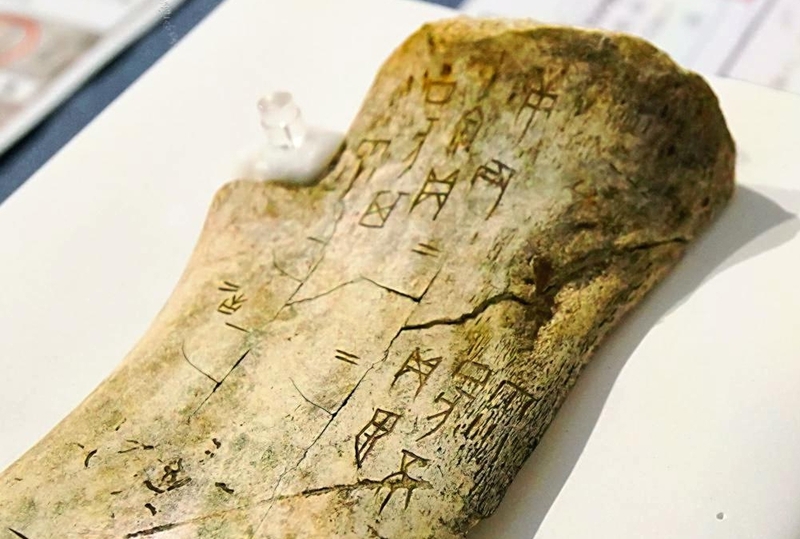
Among the oldest existing materials inscribed with Chinese characters are the animal bones and tortoise carapaces excavated from China's ancient city of Yinxu, or Yin Ruins, from the Late Yin dynasty period (13th century B.C. to 11th century B.C.).
The characters engraved on the turtle shells and cow bones look like pictographs at first glance, but upon closer examination readable characters such as "O" in kanji, meaning "king," can be identified.
"Of the writing systems invented by the four great ancient civilizations of the world, only kanji from the Chinese civilization has survived to this day. It is also interesting that we Japanese can read them," said the museum's senior researcher, Toko Nabeshima.
Displays at the museum tell how the style of characters have changed over the eons. There are characters written on bronze ware from the Zhou dynasty; the small-seal script, which was adopted by the first Qin emperor to unify the Chinese characters in writing; and chancery script that was mainly used in the Han dynasty.
The inscriptions on the epitaphs in block form completed in the Tang dynasty are very similar to today's kanji.
The "Three-Type Stone Classics," a stone monument from Wei in the Three Kingdoms period, clearly indicates the changes in the appearance of Chinese scripts.
Each character on the monument is engraved with the teachings of Confucianism in three typefaces -- ancient script, seal-script, and chancery script -- that were used in the eastern part of China during the Spring and Autumn period and the Warring States period. In this sense, the monument is a mirror version of the Rosetta Stone.
"I want visitors to appreciate the origins of the kanji we use every day," Nabeshima said.
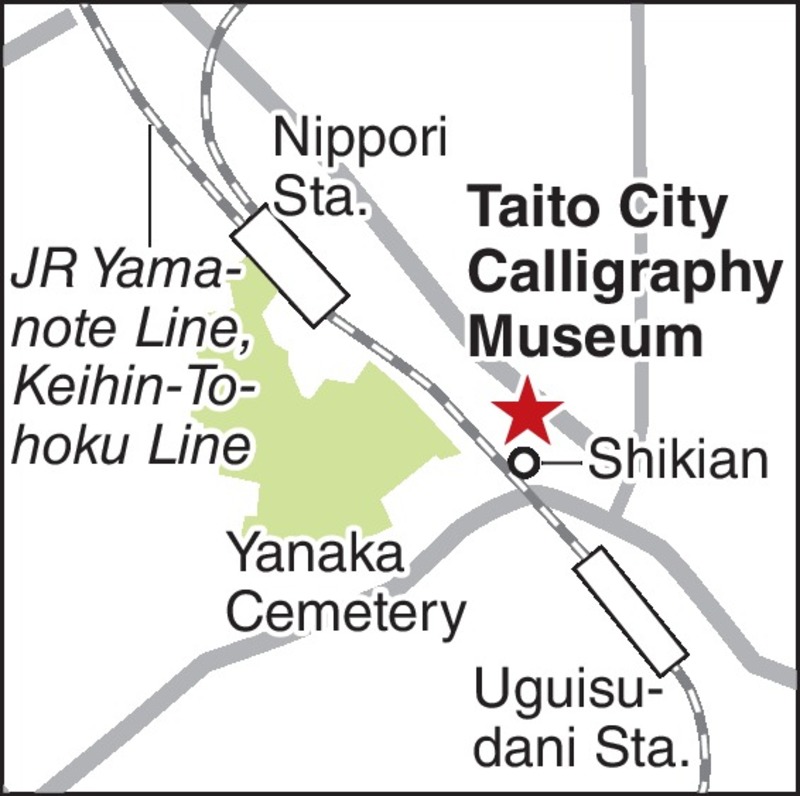
Taito City Calligraphy Museum: 2-10-4 Negishi, Taito Ward, Tokyo
Read more from The Japan News at https://japannews.yomiuri.co.jp/