With the Beijing Winter Olympics less than 100 days away, a group of workers at small factories in Tokyo are gearing up for their own bid to support bobsleigh athletes, with a world-class sled made in the backstreets of Ota Ward.
The craftsmen are part of the Shitamachi Bobsleigh Network Project, launched in 2011 to showcase the machining skill of the blue-collar district that has been hard hit by recession and a lack of successors for its small businesses.
After attempts to have their bobsleigh used by teams at the Sochi and PyeongChang Winter Games, the team has continued to refine their design, finally succeeding in having the Italian national team agree to use it in the World Cup in Europe next month. They hope this will be a stepping stone toward their sled finally appearing in the Olympics next year in Beijing.
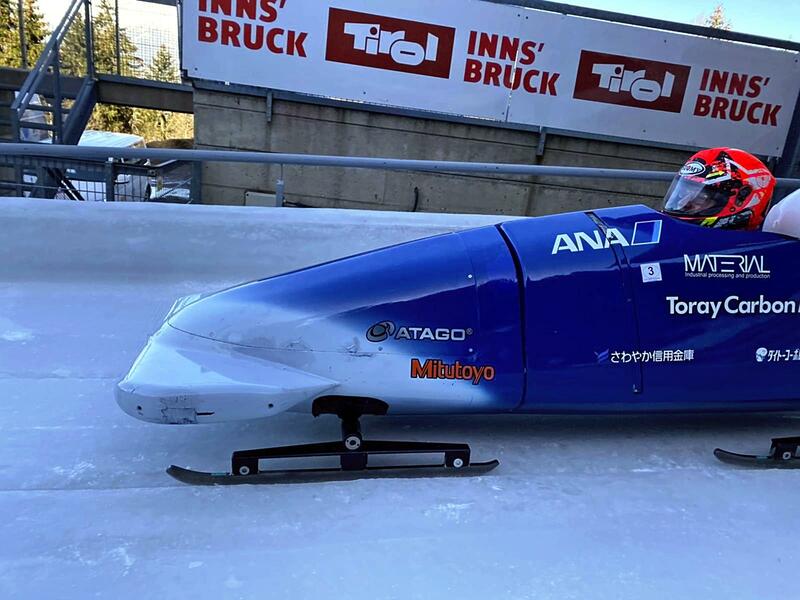
In bobsleigh events, athletes steer a steel sled down a curving ice track, competing to finish the route in the fastest time. Reaching speeds of over 100 kph, the high-adrenaline sport has been dubbed "Formula 1 on ice." As with racecars, aerodynamics and fine-tuned engineering are key to bobsleigh design, leading many national bobsled teams to enlist the help of prominent automakers when developing their sleds.
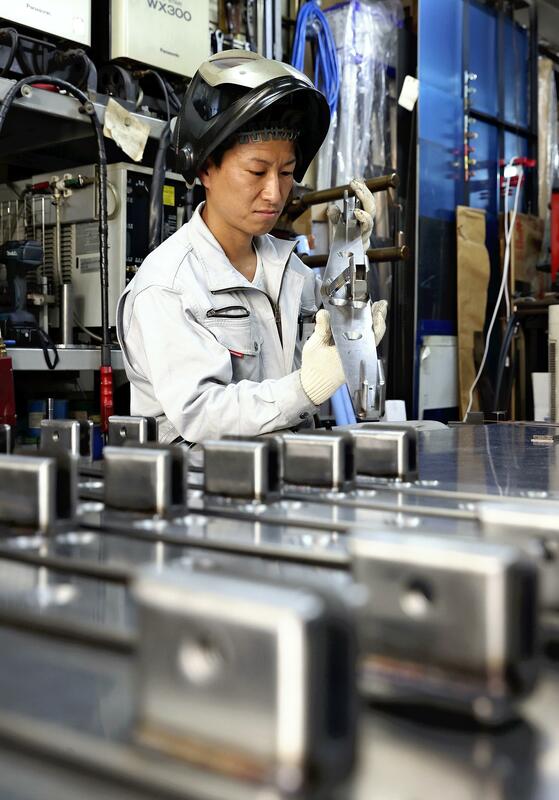
"Even the slightest strain [on the sled] can cost time and cause all sorts of other trouble," said Tomoyuki Goto, 37, who sent showers of sparks flying as he attached parts for the bottom of a sled at the Gojo welding workshop in the Nishi-Rokugo district of Ota Ward.
Goto took over the factory from his father at the age of 25 and runs the business by himself. He spends his days singlehandedly filling orders for items such as furniture, automobile components and train seats. He carves out time between these projects to work on the Shitamachi Bobsleigh Project.
Ota Ward boasted about 9,000 factories like Goto's at its peak in 1983. Although most were small operations with only a few employees, the ward's factories played a vital role in supporting the nation's reputation for manufacturing, contributing parts used in everything from cars to TVs and even rockets.
Due to the collapse of the bubble economy and a lack of successors, the number of factories in the ward decreased to 4,362 in 2008.
The Ota City Industrial Promotion Organization came up with the idea of developing a bobsleigh to show the world the high-level skills of these local small businesses.
About 100 independent manufacturers in Ota Ward have participated in the project. They work pro bono, motivated by pride and a desire to prove their mettle by creating sleds capable of outpacing even those made by major overseas manufacturers.
Pooling their expertise in skills such as cutting and polishing, they together produce the nearly 200 components that go into a sled. The parts are assembled into prototype sleds, which are then tested by top athletes to analyze the sled's performance, in a long process of trial and error.
The first two sleds were scouted out by the Japanese national team. But at that early stage, the machinists were unable to adjust their design to accommodate all the athletes' requests in time for the start of the 2014 Sochi Games.
The Shitamachi Bobsleigh seemed on track to make its Olympic debut at the PyeongChang Games in 2018, this time with the Jamaican national team, famous as the inspiration for the movie "Cool Runnings." But just before the Games, the team scrapped the contract, opting for another sled that they said performed better.
The project lost momentum in recent years, as a result of such setbacks along with a tough business climate amid the novel coronavirus pandemic. Most of the original firms had to pull out of the project, and now only 23 remain. The number of corporate sponsors has also halved to 10.
Despite the drastic reduction in the number of participants, the remaining Shitamachi craftsmen have continued to hone their skills, drawing on their experience producing more than a dozen sleds and amassing a growing wealth of knowledge about the sport.
Joining forces with Peter Hinz, a 54-year-old German engineer who formerly coached the Japanese national team, the craftsmen have developed a new bobsleigh, which they supplied to the Italian national team last year.
They are currently working with the Italians to further improve the sled, fine-tuning the shape of detailed components, and tinkering with the thickness of the blade that comes into contact with the ice.
Hinz, who communicates with the Italian national team, said he felt confident about the progress being made on the new sled, citing the high quality of each individual part.
When the sled sees action at the World Cup in Europe next month, it will be competing against an Austrian sled also under consideration by the Italian team. If the Shitamachi sled performs well, there's a good chance it might ride all the way to Beijing.
"This time around, I'd really like to see our sled used in the Olympics," said Kotaro Kurosaka, 52, chairman of the Shitamachi Bobsleigh project and president of a metal processing company. "We are determined to show the world all the skill that can be found here in Shitamachi."
Read more from The Japan News at https://japannews.yomiuri.co.jp/