The Tokyo Metropolitan Government compiled on Friday a road map for lifting the business suspension requests it has made to fight the coronavirus pandemic. The requests will be completely lifted after three stages of easing. In the first phase, restaurants will be allowed to stay open until 10 p.m. and events with up to 50 people will be allowed to be held. Tokyo metropolitan schools will increase their number of school days in a phased manner. In preparation for an anticipated second wave of infections, the metropolitan government will also strengthen its medical system by increasing the number of polymerase chain reaction (PCR) tests for coronavirus infection to 10,000 per day.
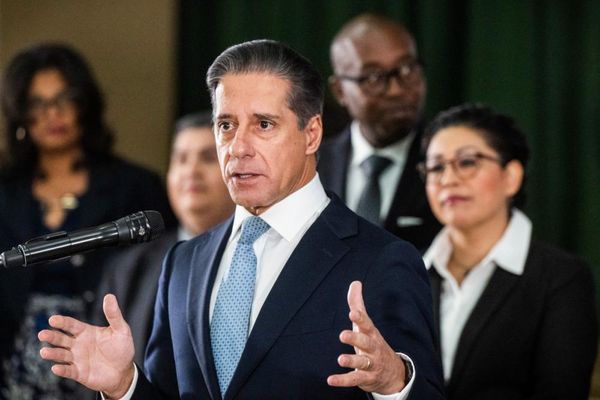
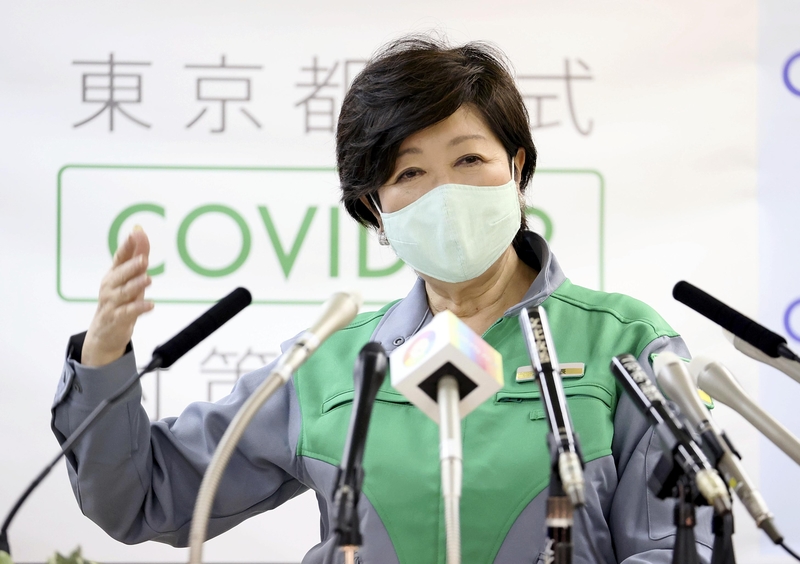
The central government will decide as early as May 25 whether to lift the declaration of a state of emergency, and the metropolitan government plans to begin easing the situation as soon as the declaration is lifted. Tokyo Gov. Yuriko Koike held a press conference on Friday afternoon to announce the details.
The lifting of requests for business suspension will begin on the condition that the seven indicators set by the metropolitan government, such as "an average of fewer than 20 new cases of infection per day for a week," are met. The lifting will be divided into three stages, with schools and libraries in the first stage, movie theaters and commercial facilities in the second stage, and Internet cafes and pachinko parlors in the third stage.
In the first stage, it will be possible to play matches without spectators at indoor sports facilities and to organize practice activities for the Tokyo Olympics.
For restaurants, which are currently open until 8 p.m., the guideline for closing time will be extended: until 10 p.m. in the first and second stages, and until midnight in the third stage. The scale of events that can be held will also expanded to up to 50 people, up to 100 people, and up to 1,000 people over the three stages. Tokyo Metropolitan schools are planning to gradually increase the number of school days while also using online classes.
In order to prepare for a situation in which infections are likely to spread again, the metropolitan government will strengthen its inspection and medical systems.
The number of new coronavirus outpatient clinics and PCR centers in Tokyo, which stood at 96 as of the end of April, will be increased to 138, with the aim of bringing PCR testing capacity to about 10,000 tests per day from its current level of 3,000. The metropolitan government will also introduce an antigen test kit that can quickly determine the presence or absence of infection, as well as a test uses saliva and poses a lower risk of infection for doctors administering it.
Read more from The Japan News at https://japannews.yomiuri.co.jp/