The Tokyo Hydrogen Museum in Koto Ward, Tokyo, is a facility where visitors can learn about a next-generation energy source that has been receiving widespread attention: hydrogen.
The most abundant element on Earth, hydrogen is considered a key resource for tackling global warming because it is an energy source that emits no carbon dioxide.
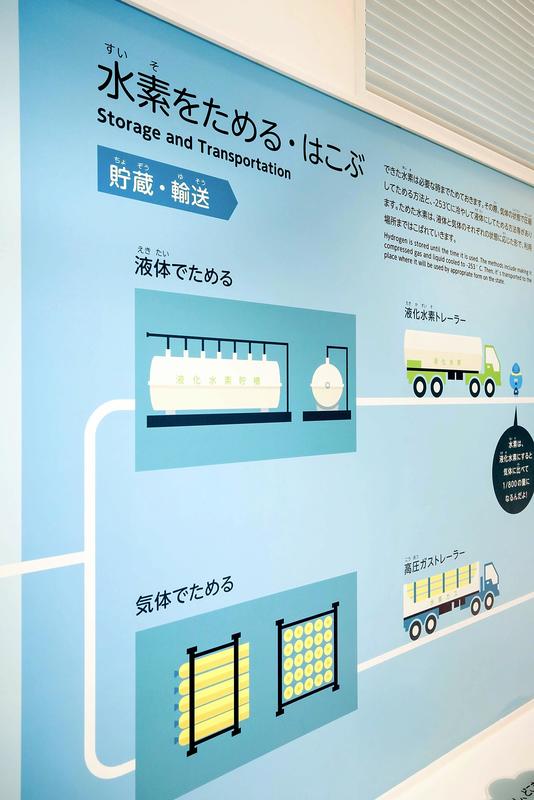
Hydrogen can be stored and transported as a gas or liquid, and it can be used in fuel cells, which convert chemical energy into electrical energy.
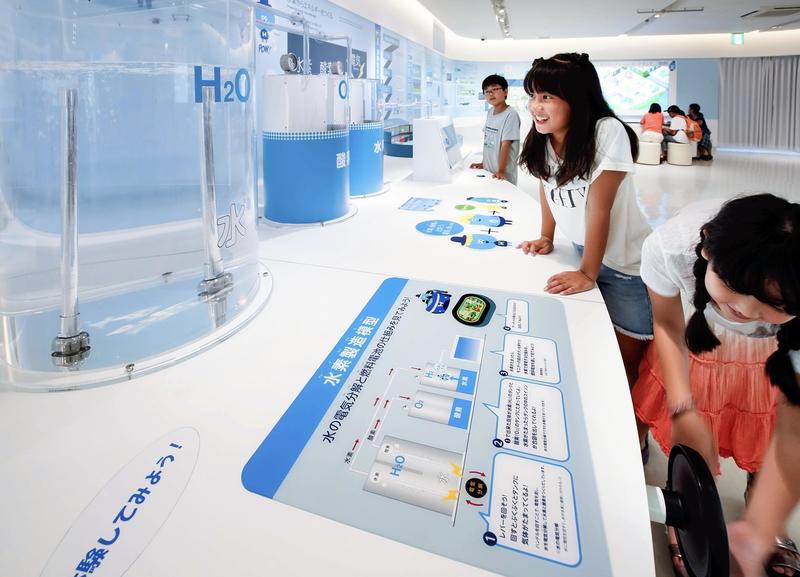
In the exhibition room on the first floor of the museum, the properties of hydrogen are explained in such a way that even elementary and junior high school students would be able to understand.
An exhibit showing how hydrogen can be generated from water by electrolysis immediately caught my attention.
When a wheel attached to a water-filled tank containing electrodes is turned, an electric current is generated, causing bubbles of hydrogen and oxygen to appear in the water.
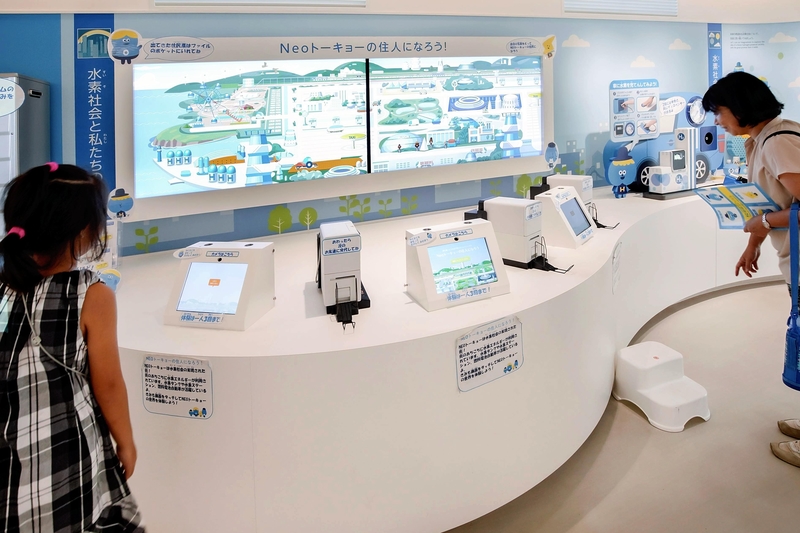
Another exhibit features displays showing a virtual society in a hydrogen-powered future world with avatars created by visitors. After having a photo taken to create their avatars, visitors can choose whether their virtual representation will do work or recreation in the computer-generated world. Avatars appear on the displays riding a hydrogen-powered vessel, a rocket or a roller-coaster. People who create avatars are issued with "certificates of residence" as commemorative gifts.
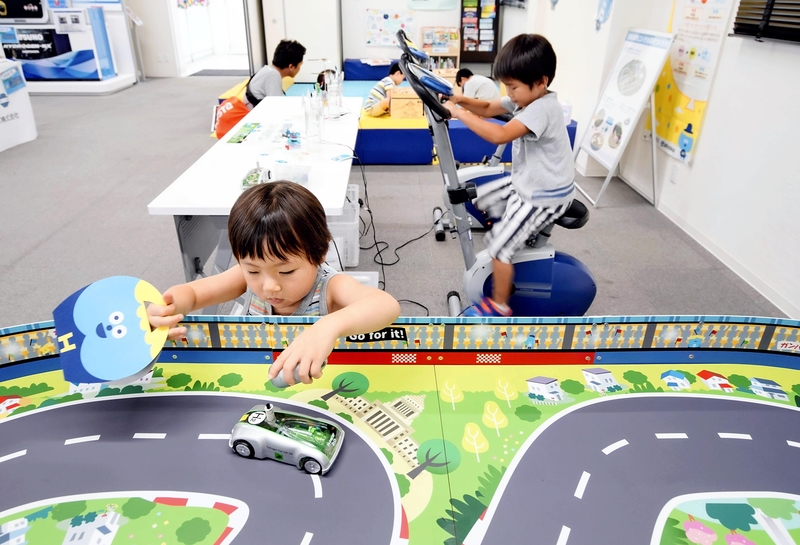
Visitors can witness the future fuel at work in small-scale hydrogen-powered model cars. By pedaling on an exercise bike, visitors can generate the electric current needed to produce hydrogen gas, which is injected into miniature fuel cells that power model vehicles.
An elementary school boy living in the ward, Kota Moriyasu, 8, pedaled on an exercise bike, generating hydrogen gas to power the miniature car and dragonfly. "I want to try flying a miniature plane powered by hydrogen, too," he said enthusiastically.
On weekends, the museum holds public experiments and workshops, among other events. A group of about 20 people including parents and children cheered when they successfully generated hydrogen gas using hydrochloric acid and aluminum.
It is hoped Japan will show off its technological prowess at the 2020 Tokyo Olympic and Paralympic Games.
Hydrogen gas produced in Fukushima Prefecture, which was devastated by the Great East Japan Earthquake, will be used to fuel the Olympic flame, among other things.
Chizu Hirose of Tokyo Environmental Public Service Corporation, which manages the museum, said, "We want people to easily be able to experience hydrogen, an element that is invisible to the human eye."
-- Tokyo Hydrogen Museum
Tokyo Environmental Public Service Corporation opened the museum in July 2016 in its former head office. The museum showcases cutting-edge hydrogen-related technologies and gives demonstrations in which home electric appliances are powered by fuel cells. Last fiscal year, about 20,000 people visited the museum.
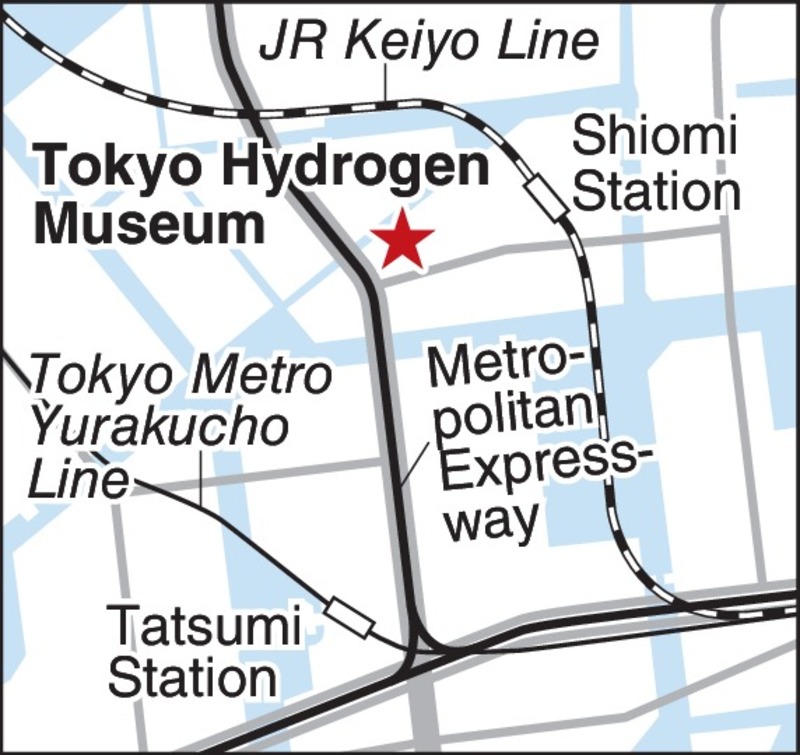
Address: 1-3-2 Shiomi, Koto Ward, Tokyo
Open: 9 a.m. to 5 p.m. (Last admission 4:30 p.m.). Closed Mondays (or the following weekday when a Monday falls on a national holiday), and during the year-end and New Year period.
Admission: Free
Information: (03) 6666-6761
Read more from The Japan News at https://japannews.yomiuri.co.jp/