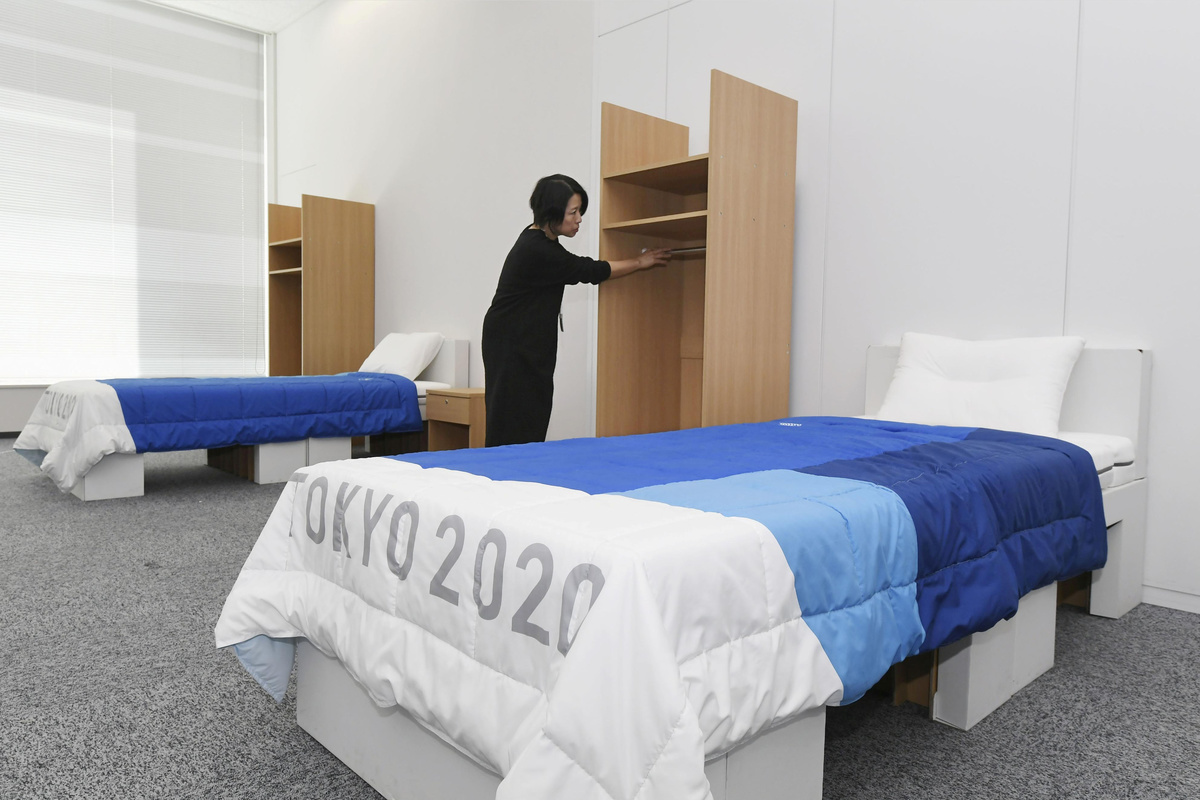
Athletes competing at the Tokyo 2020 Olympic and Paralympic Games will sleep on bed frames made from recyclable cardboard, with mattresses formed of polyethylene materials that will be reused for plastic products after the Games.
The environmentally conscious sleeping arrangements were put on display for the media for the first time on Thursday at a mock apartment in the Tokyo 2020 headquarters, though construction of residential sections of the Olympic and Paralympic village were completed in December.
In all, 18,000 beds will be required at the village, nestled in Tokyo Bay and in sight of the iconic Rainbow Bridge, during the Olympics that begin on July 24. Only 8,000 will be needed for the Paralympics.
At 2.10 metres long, the beds should be suitable for all but the very tallest athletes, and the manufacturer, Airweave, is confident they can bear a weight of around 200 kilograms, which is more than any athlete weighed at the 2016 Games in Rio.
Construction of some communal areas of the Olympic village, like the main dining hall and the village plaza, is still underway. After the Games, its apartment units will be sold privately, with prices starting from a little over 50 million yen (US$457,500).
The organisers are making a concerted effort to reduce carbon emissions generated by the Games, according to Junichi Fujino, an environmental researcher on the city’s taskforce.
All medals will be made from metal extracted from recycled consumer electronics, including about 6.2 million used mobile phones. The Olympic torch is made from aluminium waste, and the podiums from recycled household and marine plastic waste.
Electricity for the Games will come from renewable sources.
(Reporting by Jack Tarrant; Editing by Simon Cameron-Moore)