I agree with Owen Jones’s assertion that first-past-the-post is an anachronism that has become dysfunctional in our plural, multiparty politics (Opinion, 1 May). This will have been abundantly clear in the minds of voters casting utterly wasted votes on Thursday, and on Friday when it once again fails to deliver one of its stated advantages: strong, stable, single-party government. I also agree that the AV referendum was a farce. The Lib Dems should never have agreed to such a “miserable compromise”, which has set back this vital debate. However, Owen commits the mistake that many advocates for electoral reform continue to do: he does not tell us what he would replace our current system with, and instead talks vaguely about proportional representation.
In my mind this is a no-brainer. The additional member system, used to elect the Welsh assembly and Scottish parliament, has so many virtues it is hard to believe it has not been a serious part of the Westminster electoral reform conversation. First, it gives us some continuity with our current system because it retains a FPTP element. This means we keep a local representative, and one who is highly accountable. It then provides us with a strong element of PR through a second vote under the party list system. This would allow minor parties with strong but thinly spread support (Lib Dem, Ukip, Green) to gain a much more representative share of seats by gaining regional MPs. Giving the voter two votes widens choice, meaning that we are no longer restricted to making the agonising decision of choosing between a good local candidate who is from the wrong party, and a party we like that has a weak local candidate. It would reduce the need to vote tactically and ensure that at least one of our votes would count in the final result, something that FPTP fails to do if you live in a safe seat.
Finally, it is the only PR-type system that provides the possibility of stable, single-party government. Crucially though, it only allows this where there is a clear popular mandate, and there would be no return to 2005, when an unpopular Labour party won just 35% of the popular vote but secured a comfortable overall majority. AMS fulfils all the democratic functions of an electoral system by providing choice, a representative outcome, accountability, and, where it is warranted and truly legitimate, single-party government. What’s not to like Owen?
John Gaston
Teacher of government and politics, Hove, East Sussex
• One point that Marina Hyde (Coalitions should stay where they belong – in Borgen, 2 May) and others miss about possible UK post-election alliances is that in Danish elections, coalition partnerships are mostly formed before the election takes place. This results in parties negotiating a “ticket” on which they can campaign together, in addition to the individual parties competing with each other for votes and seats during the election.
Denmark, of course, has a PR system in which the qualifying threshold is as low as 2% and therefore guarantees that no party would win an overall majority. Here, the 2010 coalition was negotiated after the results were in. The two main parties still rely on first-past-the-post to deliver an overall majority for their party and see no reason to go into an election in partnership with another party.
The spectacle of British parties drawing their red lines in such profusion defies reality in a slowly crumbling two-party tradition. It can only result in non-negotiable positions being negotiated or another election in the near future. Let us now recognise the growing multiparty nature of British politics and reform the electoral system so that future elections will reflect that there are too many parties, too many voices, for them to be represented in two parties, left and right, Labour and Conservative, in a two-party system.
Per Sandland-Nielsen
Worcester
• In Italy, Matteo Renzi has introduced a controversial new electoral system, the so-called Italicum, under which the party (or pre-planned coalition with a single leader and a single manifesto) that gains more than 40% of the popular vote is automatically awarded an absolute majority of seats in the parliament. If no party or coalition gets the necessary 40% in the first round (much the most likely scenario), there will be a second round of voting between only the leading parties. This is designed to ensure that there will always be a clear winner and a “stable” five-year government of a kind Italy has rarely, if ever, had in the past.
Would something similar not work here? Instead of trying to sort it all in one go, which may never work again, we could if necessary have two rounds of voting. After the first round, on the present FPTP, single-member constituency system, all parties would keep the seats they had won. However, if no party had a majority in the Commons, there would be a second round of voting in which the electorate would be asked to decide which of the two largest parties should form the government. The party winning more than 50% of the popular vote would then be given a sufficient number of “ghost” members to have an outright, safe majority in parliament and we would have a “stable” government elected, with a strong element of proportionality, by all the people of the UK.
Malcolm Snell
London
• George Monbiot’s article (6 May) is probably the nearest we will get in the mainstream press to a robust critique of an electoral process fostering the illusion that political power is somehow distinct from economic and social power. Despite a compliant media constantly telling us that we live in a “democracy”, the Westminster parliamentary structure exists to limit public participation in decision-making, which is why western powers are so keen to promote its use in other parts of the world they would seek to control.
The principal role of elected governments in the UK, regardless of party affiliation, is to create and maintain the optimum conditions for economic growth in the interests of an all-powerful corporate elite. Unsurprisingly, given that they are rarely, if ever, presented with an alternative, the electorate do not largely dissent from this view, despite the inevitable exploitation and inequality it incurs. For trade unions, the decision to invest significant time and resources in party politics is born out of a pragmatic desire to extract the maximum benefit for their members from a deeply flawed system, even though many of their activists are under no illusions about the incompatibility of capitalism and any meaningful concept of democracy.
Bert Schouwenburg
International officer, GMB
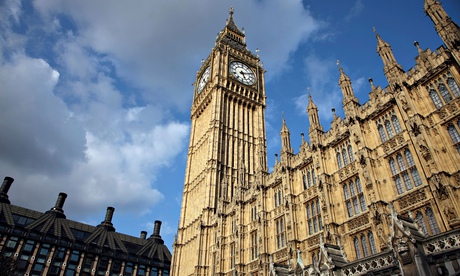
• As we’ve heard so much this year about the rising costs of repairing and restoring the fabric of the Palace of Westminster, why not grab this exciting opportunity to pull it down, or turn it into something else, and build a brand-new circular parliamentary chamber to accommodate the many interests of our modern vibrant community where they could also vote electronically? What an opportunity for real change this could be.
Anna Ford
London