WHEN the federal government began unveiling its COVID-19 stimulus response in March last year, the degree of the spending was so extraordinary that Prime Minister Scott Morrison found it necessary to reassure his supporters that the Liberal Party had not suddenly embraced socialism.
History will be the final judge of the various measures, although a federal election, perhaps this year, may well provide an interim judgement.
Regardless, the government has begun reducing its stimulus spending. JobKeeper levels are cut again today, and the program is due to end entirely on March 28.
Labor, unsurprisingly, is opposed to any reductions, and there are plenty of economists who would agree.
But the Coalition has spent - and just as importantly, borrowed - more heavily than any Australian government in modern times, and the largesse cannot last forever.
With all eyes on COVID and the day-to-day effort of keeping the country afloat, concerns about the national debt have been largely put to one side by an electorate thankful for a relatively easy ride through this global nightmare.
Concerns have been assuaged, too, by central banks insisting that interest rates will stay at record lows for many years, and if they do rise, inflation will reduce the repayment burden.
At the mid-year economic and fiscal outlook issued a month ago, the government predicted an underlying deficit this financial year of some $197 billion - 9.9 per cent of gross domestic product - created by spending commitments of $670 billion and income of $473 billion.
These are extraordinary numbers.
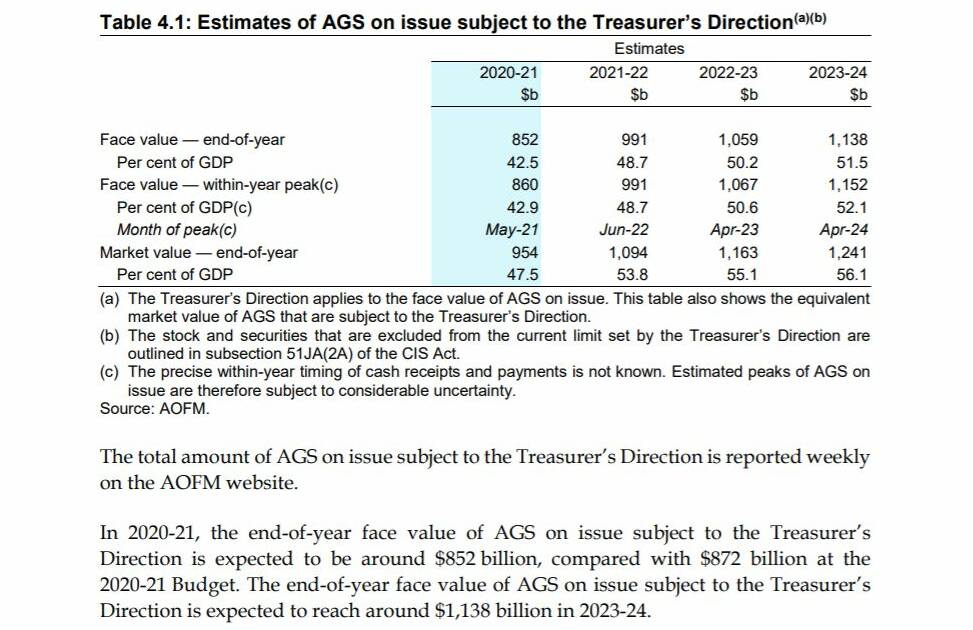
Gross government debt this year is put at $852 billion (42 per cent of GDP).
The net figure, offset by government financial assets, reduces to $691 billion (34 per cent of GDP).
Longer term, gross debt is projected to hit $1.1 trillion in 2024 (51 per cent of GDP) and to "stabilise at around 53 per cent of GDP in the medium term". Interest on government debt is now more than $17 billion a year.
This amount does not eat into the capital: it keeps the national debt treading water.
Overall, Australia has avoided the worst of the pandemic - health-wise and economically.
But even with record low interest rates, there is no such thing as "free money".
Our exit from stimulus - its method and timing - could prove as crucial as our entry into it.
ISSUE: 39,506
For faster access to the latest Newcastle news download our NEWCASTLE HERALD APP and sign up for breaking news, sport and what's on sent directly to your email.
IN THE NEWS: