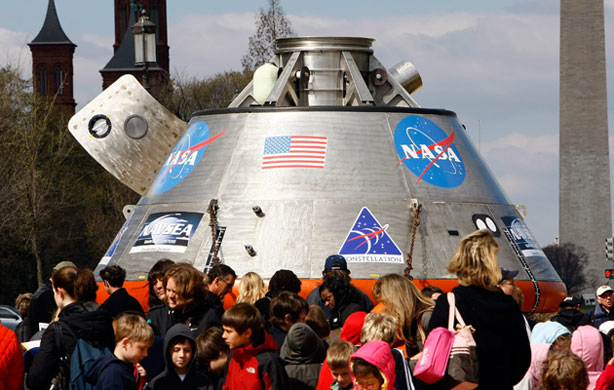
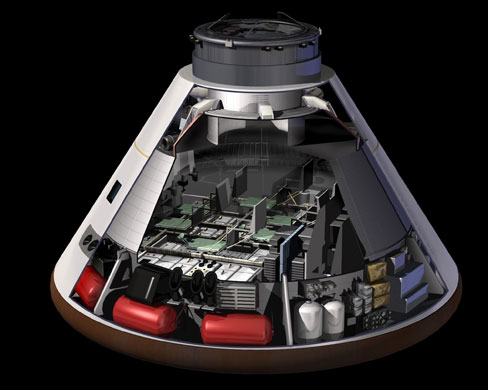
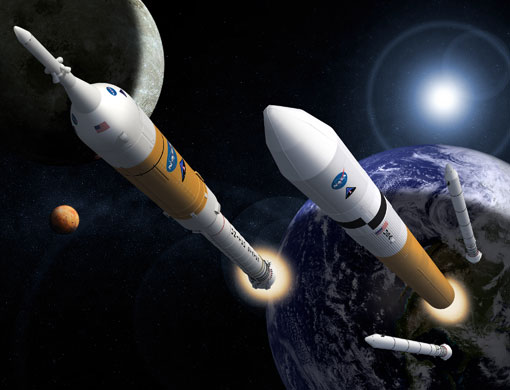
Schoolchildren gather around a mockup of the Orion crew exploration vehicle at the National Mall in Washington DC last month. The vehicle is scheduled to begin carrying humans to the International Space Station in 2015Photograph: Win McNamee/Getty ImagesThe crew module of Orion with the outer skin removed to reveal the pressure shell and equipment baysPhotograph: NasaArtist's impression of the Ares I crew launch vehicle (left) and Ares V cargo launch vehicle. Ares I will carry Orion into orbit, while Ares V will launch large-scale hardwarePhotograph: Nasa/MSFC
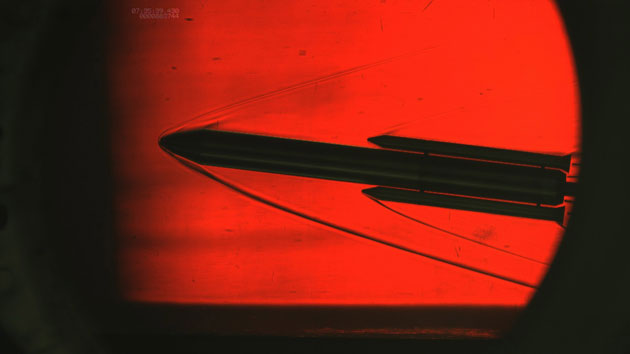
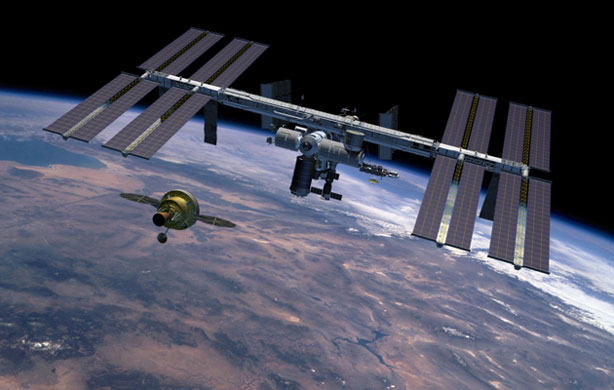
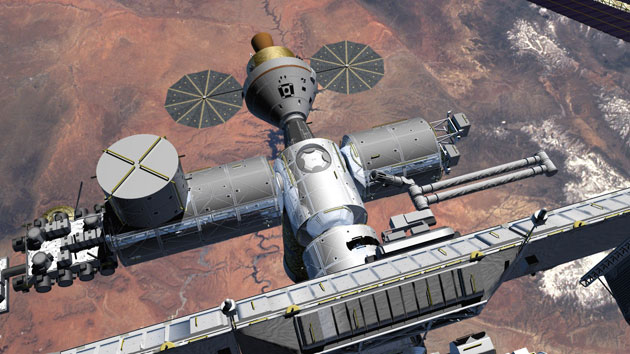
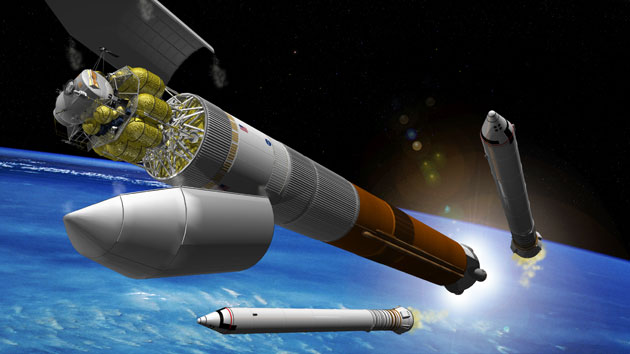
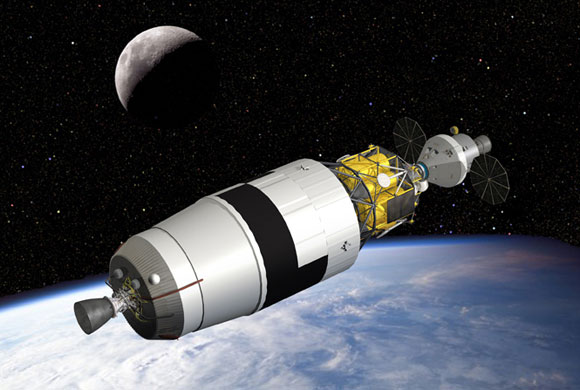
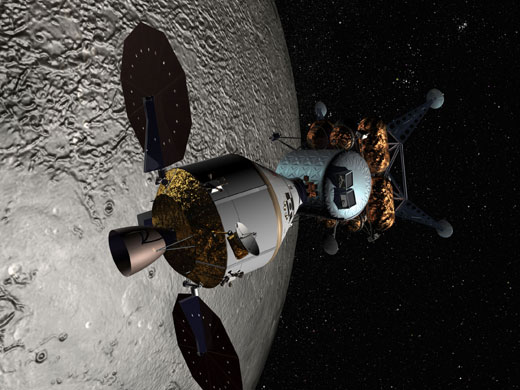
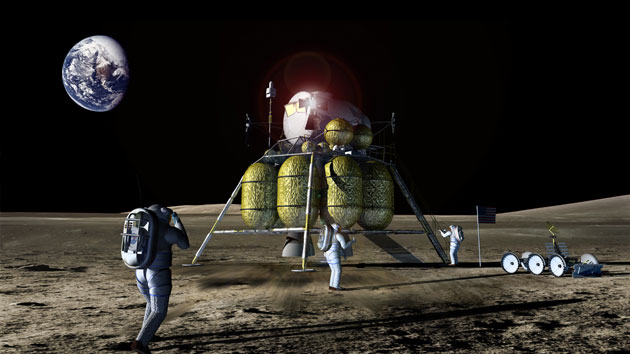
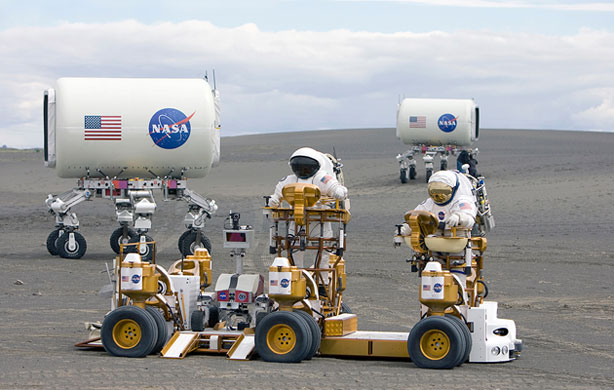
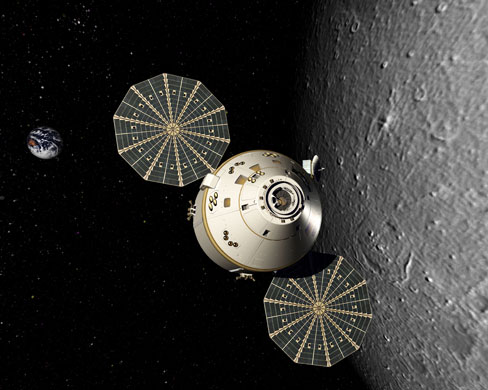
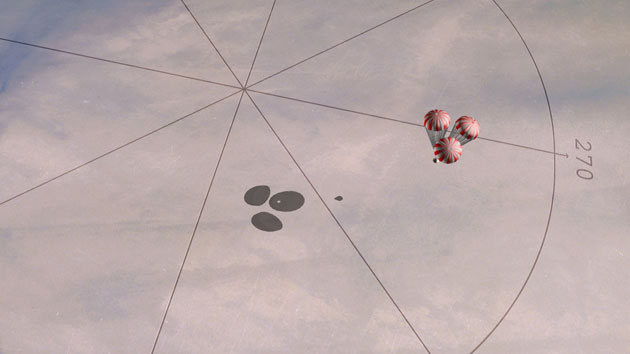
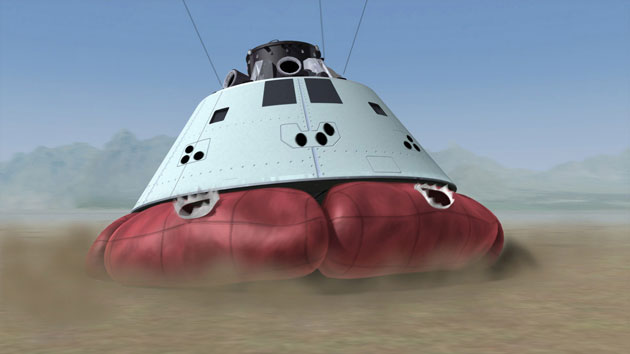
Wind tunnel test demonstrating air flow over a model of the Ares V heavy cargo launch vehicle at Mach 4.5. Engineers at the Marshall Space Flight Centre in Huntsville, Alabama, are collecting aerodynamic data that will help them determine basic requirements for guidance, navigation and control of the vehiclePhotograph: Nasa/MSFCThe Orion spacecraft approaching the International Space Station (ISS)Photograph: NasaOrion docked to the ISSPhotograph: NasaThe Ares V heavy-lift launch vehicle will put hardware needed for a moon mission into Earth orbitPhotograph: NasaThe Ares V Earth departure stage, docked with the Orion crew capsule and Altair lunar lander (yellow)Photograph: MSFC/NasaOrion and Altair in orbit around the moonPhotograph: NasaAltair will be capable of landing four astronauts on the moon, providing life support and a base for week-long surface exploration missions. Unlike the Apollo spacecraft, the new system won't require anyone to remain in orbit while the other astronauts work on the moon's surface. Altair will return the crew to the Orion spacecraft, which will bring them homePhotograph: NasaResearchers try out a prototype lunar truck and K10 robot at Moses Lake, Washington state. 'One feature is its high mobility,' writes Nasa on its website. 'Each set of wheels can pivot individually in any direction, giving the vehicle the ability to drive sideways, forward, backward and any direction in between' – a bit like a supermarket trolleyPhotograph: Sean Smith/NasaOrion in lunar orbit with its solar arrays deployedPhotograph: Lockheed Martin Corp./NasaFor its return to Earth, Orion will be equipped with a system of parachutes and shock absorbersPhotograph: NasaArtist's impression of Orion touching down, air bags softening the impactPhotograph: Nasa
Sign up to read this article
Read news from 100’s of titles, curated specifically for you.