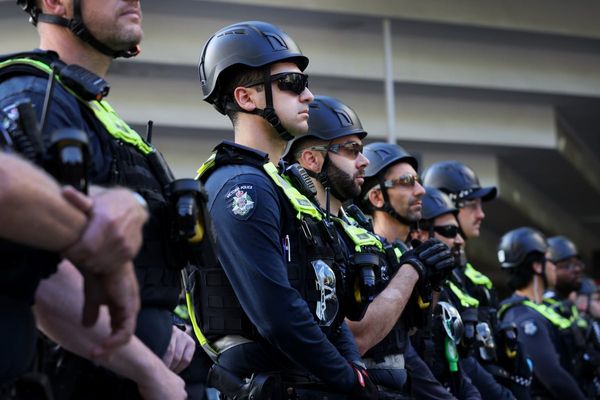
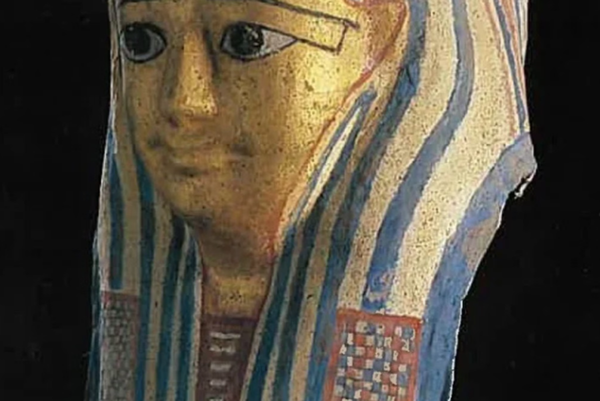
The silly season is here again. Photograph: Dan Chung
I had, like many others, been looking forward to the long, languid weeks of silly season - the link goes to our special report on the matter from 2004, when the burning questions of the day were "Is Beckham the new Diana?" and "Can you make a postman go to work by putting him in a prize draw for a new car?"
I enjoy the silly season partly for its obvious implication that there's really nothing too awful going on, the kind of feeling you get from last Saturday's Telegraph front page photograph, which showed three young blonde women at a clay pigeon shoot.
But then, I thought to myself, everything about silly is not jolly, either. The history of the word silly - now a vaguely approving, almost flirtatious word - has quite a nasty side to it. Around 1225, says the OED, one of the word sely's principal meanings was "pious" "holy" or "good", but quickly, by 1290, it came to mean "innocent" "defenceless", with the specialised sense of "suffering undeservedly" - the implication being that good or holy people expose themselves to undeserved suffering. From there you can almost feel the attitudes hardening, as the harmless folk turning the other cheek are seen to be bringing it upon themselves through their naivety, their idiocy, until, by 1529, it means foolish.
The idea that it is foolish to be meek and gentle, or more particularly, to be religious, stands out not only in the history of "silly". Cretin is a very direct development from French "chrétien" - Christian. Collins puts a kinder spin on the development of this word, saying that it arose as a way of alluding to the essential humanity of the mentally ill, but I wonder if many of the people using the comparison were not also making a statement about what they thought of devout Christians.
Returning to silly, the OED reveals that even in 1587, enough of the old meaning (or perhaps the old sensitivity) clung to the word (by that time spelled as it is now) for it sometimes to mean "helpless, defenceless, esp. of women and children". Perhaps, in the news from Lebanon and Israel, we are experiencing a "silly season" of a particularly disagreeable sort, after all.