Only roughly one in four people stockpile at least one-weeks' worth of food and drinking water in preparation for disasters, according to Sumitomo Life Insurance Co.'s online survey conducted in last December of 1,000 people with ages ranging from 20s and 60s nationwide.
The government's Basic Disaster Management Plan recommends a stockpile that can last a one-week period in the event of homes become isolated due to large-scale storms or floods. However, the fact remains that no progress has been made.
"When people heard the word 'stockpile,' they tend to think of only special foods that can be stored for a long time. Because it can be hard to adequately procure all of them, that deters the process of preparation," said Mie Nagashiba, representative director of the Tokyo-based association of disaster management stockpile planners. She recommends having a rolling stockpile.
In this way, you can keep maintain your supply by buying slightly greater potions of what you usually eat and making sure you enjoy your food in order, starting with things nearing their expiration date, then replenishing the amount you've eaten with newly bought food. Even in the midst of a disaster, you may find it less stressful to consume what you normally would on regular basis.
You can refer to the Agriculture, Forestry and Fisheries Ministry's website to find what kind of food is suggested in this type of stockpile.
The website recommends a stock of 3-liters of water per person per day, pouched rice, dried noodles, canned foods, pouched foods and snacks, and also have a gas camping stove in the event of a power failure. There are also tips for the elderly and infants.
Generally, water is stored in plastic bottles, but foods can be stored in a variety of ways.
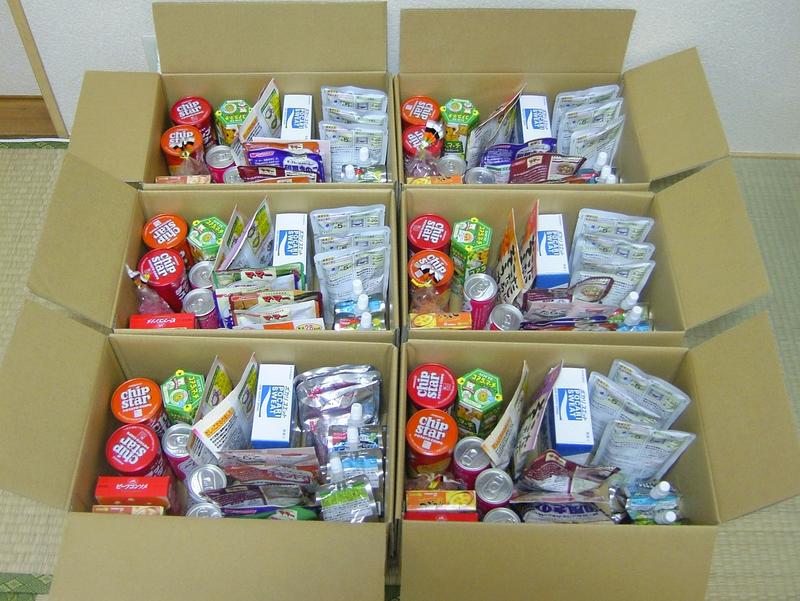
The least stressful way to start your stockpile is to use a long box normally used for storing documents. Then, fill one box with ready-to-eat rice and food and canned food for a day, and prepare seven boxes in total. You can maintain your week's supply by eating and refilling one box regularly.
"During the chaos that follows a disaster, you'll feel more at ease if your food needs are met," Nagashiba said.
Disaster management adviser Tomoya Takani presents the idea of an "in-house delivery box" as a way of enjoying stockpiling. It is well-suited for families with a large storage space.
Get 10 cardboard boxes and fill them with food with expiration dates a year or longer away, such as your family's favorite pasta sauce, ready-to-eat foods, cereals and snacks. Consume one box a month and refill as necessary.
The name "delivery box" comes from the idea of sending food to yourself and your family up to 10 months in the future.
"It will easily become a fun ritual if you add things like high-quality pasta sauce and so on as a gift to yourself in the future," he said.
Ten boxes will provide sustenance through just about any disaster.
"There is no need to prepare 10 boxes from the beginning. Please start with a number you feel comfortable with and begin adding items gradually," Takani said.
Read more from The Japan News at https://japannews.yomiuri.co.jp/